

In the early summer of 1533, Desiderius Erasmus received the following written request: ‘I implore you again and again to take care to finish a little book on the preparation for death, as soon as you can’.1 Erasmus, by then sixty-three years of age, took to this task immediately, and his De praeparatione ad mortem was published in early 1534, dedicated to the author of the letter, Thomas Boleyn.2 The study was to be a transcontinental publishing phenomenon with some twenty editions published in Latin and translations made into French, German, Spanish, and English. The first Latin copies found a readership among London’s elite, including, somewhat ironically, the woman whom Boleyn’s daughter had recently supplanted. According to Eustace Chapuys, the Imperial Ambassador to England, Catherine of Aragon found much solace and comfort in Erasmus’s words as she lay on her deathbed at Kimbolton Castle, Cambridgeshire, in January 1536.3 When news of Catherine’s death reached the royal court, the reaction was mixed. For some, the true Queen had died; for others, including Henry and Anne, the death enabled the living to move on from the past.
By the time the first English translation of his work appeared, in an anonymous translation in 1538, both Erasmus and Anne were also deceased.4 A wider English readership was now reminded, in an ars moriendi that combines tropes from both contemptus mundi and memento mori traditions, that the best way to live is in ever-readiness for death; after all, ‘This holle lyfe is nothinge elles but a rennynge to deathe, and that very shorte, but death is the gate of euerlastynge lyfe’ (A4r). Thus, Erasmus cautions, remember to prepare your estate, give charity widely, forgive your enemies and pray that they forgive you (L6r–L7r). Repeatedly, Erasmus invokes this state of vigilance and preparedness, for, he suggests, it is a foolish person who neglects, or, more precisely, forgets their mortal condition. What is significant, however, about Erasmus’s work is not its instructional wisdom, which ars moriendi treatises had been recycling for decades. What is significant about it is that Erasmus, the prince of humanists, had used his scholarly publishing platform to broadcast the teachings of memento mori.
Early modern English writing tirelessly underscores the complicity between memory and mortality thanks to the widely disseminated ars moriendi. For example, Christopher Sutton’s Disce mori. Learn to Die, bears the telling subtitle A Religious discourse, moouing euery Christian man to enter into a serious remembrance of his ende.5 To remember one’s end was a familiar injunction that served to guide the experience of the living. As was frequently asserted in the scores of how-to-die-well manuals and sermons published in the sixteenth and seventeenth centuries, a virtuous life is the best preparation for death. Befitting the high stakes involved, such preparation was a serious business that required daily practice: as Jeremy Taylor advises in his popular The Rule and Exercises of Holy Dying, ‘every night we must make our bed the memoriall of our grave, so let our Evening thoughts be an image of the day of judgement’.6 Mortality, an entropic step towards oblivion and thus a natural enemy to memory, must be kept uppermost in one’s mental storehouse.
The struggle between memory and mortality went well beyond theological treatises, inspiring the plots and conceits of various literary genres. From the morality plays of the late fifteenth and early sixteenth centuries, where an eponymous figure such as Everyman or Mankind must learn to live virtuously to prepare himself for death, to Shakespeare’s extraordinary sonnets about the relentless march of time (think of Sonnet 60: ‘Like as the waves make towards the pebbled shore / So do our minutes hasten to their end’7) where the grave threatens to efface the image of the living, scenes of memento mori captivated the poetic imagination. Stephen Batman’s The Travelled Pilgrim (1569), a loose translation of Olivier de La Marche’s Le Chevalier Délibéré, features an allegorized everyman who follows Dame Memory, his personal guide and governor, as she leads him through life, corrects his judgements with continual reminders, and ‘comforteth him to provide and arm himself against Thanatos’: ‘the ugly corpse, that bony figure he, / Is Thanatos which ends the life of every degree’.8 Both personifications loom over the pilgrim’s existential condition and look forward to Spenser’s sophisticated allegory of the House of Alma in The Faerie Queene, where the librarian Eumnestes works to preserve faerie and human genealogies in his turret archive, while outside Maleger, the skeletal captain, lays siege to the fortified building.9
Chroniclers from the period also reminded their readers repeatedly that they must look to the lessons of the past to better live their lives in humble anticipation of the grave. Among the period’s popular historical books, The Mirror for Magistrates, which underwent multiple editions, memorialized accounts of famous heroes and princes, many of whom take the form of ghosts to reflect upon their earthly deeds and their precipitous falls from fortune,10 while John Foxe’s Acts and Monuments (or Book of Martyrs, the 1563 edition, the first of several in English), with its compilation of instances of proto-Protestant and Protestant martyrology from the Lollards to the Marian persecutions, contributed to a wave of anti-Catholic feeling through its vivid exempla of past deaths.11 Such creative and historiographical engagements indicate the extent to which memory and mortality were at once in opposition and agreement.
This volume’s chapters examine the interplay between memory and death in the lives, literature, and visual imagination of Renaissance England. Although each of the guiding concepts has been developed over the decades by its own separate scholarly field, we want to highlight their intense friction and collaboration within the period. While acknowledging the lasting importance of both memory studies and death studies, this Introduction argues for the benefit of mapping out their areas of intersection, where the chapters broadly situate themselves. One cannot regard memory and mortality in isolation from one another, since the period’s cultural activities and products bear the deep impression left by their never-ceasing encounters.
Memory Studies
Whether personified, figured as a constituent aspect of the soul, or put to work as a method in all manner of activities and crafts both sacred and secular, memory long has been subject to the metaphorical process associated with the classical rhetorical tradition which has enabled – and taught – us to think through images. The names with which to conjure in this field of endeavour justifiably are well known: Volkmann, Rossi, Yates, Carruthers, Bolzoni.12 And this area of intellectual enquiry has blossomed considerably as a result. Among the studies that offer descriptive surveys of recent activities in the emerging subfields associated with memory studies are those by Neil Rhodes and Jonathan Sawday, on ‘knowledge and technology in the first age of print’ involving Renaissance systems of memory that locate objects of knowledge in terms of schematized places; Rebeca Helfer, on the application of applied mnemonics in English literary history; and Raphael Lyne, on the diachronic movement from the claim that artificial memory was ‘vital to intellectual life in the period’ to taking this as a scholarly ‘starting point in a literary-critical enquiry’.13 Historians and literary scholars, variously using the headings of mnemology, mnemotechny, and memory studies, have juxtaposed and aligned a wide range of topics and approaches pertaining to early modern efforts to counteract the effects of sinfulness, ignorance, forgetfulness, idleness, and oblivion.14 And this encompasses sacred meditative practices and visualization techniques both private and public,15 as well as secular pedagogical uses of mnemonic schemes, and extends also to take into account Neoplatonic and pseudo-scientific treatises on recovering and interpreting, generating and deploying symbols, ciphers, and emblems so as to make things happen in the world. But the net has been cast further still, as exemplified in the essays in this volume, to apply analytical frameworks that are at once hermeneutic and heuristic, specific to particular cases and also instructive more generally for what they reveal about the ways memory both conditioned and intersected with every facet of cultural life and lived experience in the Renaissance. As Frances Yates presciently argued in The Art of Memory, renewed attention to the memory arts is a prerequisite for advances in Renaissance scholarship. She was convinced that the history of the organization of memory touches at vital points on the history of religion and ethics, of philosophy and psychology, of art and literature, of scientific method, and of political and social life broadly conceived – all of which has been borne out, among other places, in the recent six-volume set A Cultural History of Memory.16 It is in the interest of Renaissance scholarship to continue recovering and applying some of the key assumptions underlying an ongoing tradition involving mnemonic thought and a wide range of both fairly standard and also sometimes quite idiosyncratic memory practices. Among the benefits of such a line of enquiry is that it provides fresh insights into the period by focusing on the writings as well as other modes and media of cultural production that incorporate and augment, whether by design or unintentionally, the memory arts – and memory’s art.
Death Studies
Death studies has grown up separately from memory studies, having made a significant contribution to Renaissance history, literature, and art. The pioneering work of Philippe Ariès invigorated the field with the social constructionist assumption that death is not a natural given but something historically variable and culturally specific; however, his methodology, stemming from the l’histoire des mentalités, which developed out of the Annales school of historiography, has had a negligible influence on shaping the approaches pursued in the English context.17 The field of death studies in Renaissance England began in earnest during the 1990s with a spate of important monographs, which are committed less to affirming epochal narratives about changing mental dispositions than to recovering a diversity of practices, experiences, and testimonies as they unfold within institutional settings. Inductively accumulating a comprehensive range of archival evidence and detail, David Cressy and Ralph Houlbrooke respectively gave contours to the incipient field and demonstrated its potential for continued investigation.18 Around this time further ground-breaking scholarship by Nigel Llewellyn, William E. Engel, and Michael Neill sounded the theoretical implications of analysing death’s images and artefacts, acknowledging the influential Germanic tradition of the totentanz and the French danse macabre.19 The early research performed in this field collectively indicated the great degree to which death, far from being a solitary terminal event, constitutes an ongoing dimension of daily living and social activity.
Since the 1990s, death studies has increasingly expanded its domain. One way of spatializing the field today is to envision an individual’s biological expiration as only one point in a continuum stretching from birth through the ante-mortem period to the posthumous. We may group death studies according to five broad areas that correspond to temporal zones along this continuum.20 The first area covers the lifelong devotional preparations leading up to the deathbed, epitomized by the ars moriendi, prayer, and meditation, which include depictions of the Dance of Death and other pictorial renderings of the Grim Reaper, vanitas, and contemptus mundi.21 The second deals with the public side of dying, drawing within its ambit plague deaths and state-sanctioned execution,22 such as regicide, the hanging of criminals, and the martyrdom of saints. The third focuses on the funeral with its processions, customs, and rituals in and around burial.23 The fourth encompasses grief, mourning, and bereavement – the affective response to the loss of a loved one.24 And the fifth examines the beliefs in and manifestations of a person’s afterlife, whether otherworldly, as with ceremonies and doctrine revolving around heaven and hell,25 or earthly, as with epitaphs,26 monuments,27 and exhumed ruins.28 These five areas of study – the art of dying, public death, funerals, mourning, and memorializing the dead – suggest that individuals and their communities in Renaissance England were continually paying tribute to mortality.29 Since death was not just an abstract topic of learning in philosophy and theology, but a part of ordinary thinking, activity, and craft, it has left behind tangible signs of its fundamental importance to the social imaginary. In its methodological approach, current death studies thus has leaned more towards material culture than towards a straight-up history of ideas.
Areas of Intersection
Even though memory and death studies lend themselves towards being demarcated as distinct fields of Renaissance research, the division of the two areas tacitly minimizes if not ignores their inseparability in premodern societies, where they complement, supplement, and even depend upon one another. Their separation may be a by-product of modernity’s secularizing impulse, which brackets off religion’s fundamental role in cultural production – albeit the religious turn in contemporary early modern scholarship has questioned the previous generation’s prevalent Enlightenment assumptions. One of the major binding agents between memory and mortality in the period is clearly faith, confession, creed.
This volume merges the two thematic fields to acknowledge the historical importance traditionally ascribed to their intersection. The combination, we want to argue, is a methodological prerequisite for studying today the relevant aspects of Renaissance England. To understand one field requires us to engage with and understand the other. With their combination, too, in-between spaces emerge. The double focus not only signals a heuristic for further thinking but also stakes a claim for fertile yet overlooked territories in which intriguing research can take place. A few problems arise, however, when we map out the territories. One needs to disentangle the accidental from the necessary, since polyvalent terms and competing definitions may lead us away from the historical particularity of Renaissance memory and death. The memory studies conducted in the Anglo-American context should be distinguished from the German social-science field of cultural memory studies, which conceptualizes culture in terms of a ‘collective memory’.30 It should also be distinguished from a French tradition that separates memory and history, such that ‘far from being synonymous appear now to be in fundamental opposition’.31 In the Anglo-American context, within which our project is conceived, memory is not privileged over historiography. Moreover, the interrelationship between the two thematic fields of memory studies and death studies is not strictly reciprocal and will require careful parsing.
As the contributions to this volume bear out, memory holds greater prominence within death studies than does death within memory studies. The zones of the previously mentioned continuum corroborates this observation, revealing the two dominant kinds of culturally specific remembering that tenaciously cling to mortality.32 During the ante-mortem phase, deathward preparations fall back on what can be generally called memento mori – the remembrance that you too will die – while during the posthumous phase, the areas of the funereal, bereavement, and the afterlife draw upon commemorative remembering. These two types of memory can easily be conflated and confused because they regularly occur in the same context where they often bolster each other’s ends; for example, brasses, tombstones, and Protestant funeral sermons may at once memorialize the deceased and invite the viewers or listeners to reflect upon their own mortality, pressuring them to remember because it will be only a matter of time before they suffer the same fate. Memento mori remembering is a self-reflexive activity, which, looking towards one’s future deathbed, shakes one out of the here and now. It considers death to usher in the climactic event when God’s final sentence will be passed on the soul’s spiritual condition, and thus for the period, the four last things did not treat death in isolation but deemed it a transition from the earthly to a supernatural reckoning yielding either infernal punishment or heavenly reward.33 Recalling the thinker from ephemeral, fleshly concerns, that is, the day-to-day distractions of the senses and their concomitant desires, the existential jolt of gazing upon a skull or a danse macabre prompts her or him to enter a higher mental state, intent on bringing the soul into conformity with biblical teachings. This type of remembering does not consist in the retrieval of a single idea. It involves a reminder to alter one’s entire mindset and focus on caring for one’s spiritual life to properly prepare for the final judgement. Memento mori cognition thus relies upon visual and verbal cues to initiate the intensely individualized introspection associated with Protestant and Catholic Reformation teachings.
Commemorative remembering, in contrast, is oriented to others, essentially conferring upon a dead person an afterlife through ritual, artefact, or writing. Such an afterlife can be sorted according to secular and sacred modes. In the latter case, the Reformation disrupted commemorative practices that honoured the dead. Christianity, a memory religion (‘do this in memory of me’), foregrounds through its repeated services and traditions various forms of engagement with the past. The most controversial church teaching to emerge from this, and one which helped precipitate the Reformation, was the existence of Purgatory and the idea that the living could intercede on behalf of the dead. The living, fearful for their post-mortem state, thought they would be reliant on those they left behind to remember and pray for them. Being forgotten, in this context, would only lead to longer suffering. The flourishing of memorializing practices (month’s minds, obits, trentals) in the late medieval and early modern period attest to the influence of the idea of the communion of the living and the dead. The English Reformation, which jettisoned Purgatory from state church instruction, severed this memorial connection between those living and those departed. So, too, it brought with it, through its dissolution or destruction of church properties, objects, and images, an enforced collective forgetting of the past.34 Still, traditions hold strong within communities, and long-assumed ideas about death, how it should be remembered and memorialized, remained pervasive in the newly Protestant state.35
Protestantism shifted remembering’s attention from the afflicted Purgatorial soul to the individual’s former life. Because scholars no longer take the Reformation to be a single event of rupture but a protracted religious revolution to reinvent the nation’s confessional, liturgical, and devotional forms,36 the Protestant proscription of masses and prayers for easing the suffering of the departed not only created new means of commemoration but also left lingering resistance to these reforms as the Laudian Church of England and the Restoration attest. The secular mode of commemoration allowed more scope to fame and honour than did the Reformers, basing its remembrance upon the dead’s exemplary active virtue in contradistinction to heraldic memory’s emphasis upon rank and pedigree. Both secular and religious commemoration, though admitting different blends, involves discharging a debt or duty to the dead by revivifying them in memory. Such a mapping out of the dominant intersections clarifies why memory is so integral to death studies. Memory is the Renaissance social remedy par excellence – ultimately a balm, anodyne, and palliative – for the terminal affliction of mortality: memento mori reflection tends towards the pre-emptive and the prophylactic, whereas commemorative remembering strives to be therapeutic and restorative.37
Death thus does not hold the equivalent sway in memory studies. When we consider the individual with respect to cognitive and personal – which is to say existential – memory, then death as an object of thought is only one of many things that life offers us to reflect upon. Memory, always implicated in some way with the full range of mental activity, potentially mediates most of what we think and do. Death bears no comparable relation as implied by the imperative of memento mori: it all too easily slips out of one’s mind, given the pressure of immediate experiences, the world’s countless diversions. However, when we change our perspective from the individual to the social, memory, especially evinced by early modern institutions, can be seen to significantly grapple with mortal issues. The law, heraldry, and antiquarianism channelled its resources towards preserving the continuity of the family name, whether it be royalty, nobility, or gentry.38 For a society that valorized primogeniture, the genealogical line’s termination with the dissolution of an estate or the lack of an heir signalled a death worse than death itself.39
Although church ceremony need not be mentioned again, religious education provides another crucial nodal point where memory studies touches upon mortality. Death played a formative role in the primary Christian narrative and throughout the narrative’s supporting doctrines. By introducing sin into a perfectly created world, Adam’s fall necessitated the punishment of humankind with the mortal condition. However, the sacrifice of the second Adam, Christ, lifted the curse of death that the first Adam introduced. This narrative, in effect, bestowed upon humanity more than one kind of death: along with the natural (external or bodily), there was a spiritual (internal or ‘ghostly’) and an eternal (of both body and soul).40 More dangerous than the first death was the second, since if one died spiritually, then the third – the most terrifying – death was assured. In conformity with the teachings of Paul and Augustine, believers thus fought off spiritual moribundity by contemplating and studying God’s word.41 And how did the believer contemplate God’s word? By storing it up in his heart as the Psalmist says.42 Memory held a privileged cognitive position with respect to studying Scripture because it was through permitting the divine word to grow in one’s heart that one could overcome the barrier between God and one’s moribund humanity.43 This death-bound theology was thus mnemocentric. The period’s steady stream of print products – catechisms, commentaries, prayer books and psalters, doctrinal treatises, meditation and devotional guides – stored up scriptural knowledge and facilitated its ready recollection.44 The student’s memory whilst serving the highest power of the soul, which Aristotelian psychology designated as the intellect in contrast to perception and nutrition, sought to embrace the eternal truths of the Bible, since, aside from the elect, only God’s word would last forever where earthly matters were concerned.45
In reviving the study of classical languages and literature with their values, mores, and ideas, humanist education cultivated the student’s faculty of memory too and that faculty could address questions of mortality. Humanism did not promote learning for learning’s sake but argued for the ethical dimension of memory in the service of civic virtue. A syncretic moral philosophy based on the ancients could be accessed by recycling sayings and exempla, which the educated civil servant would remember at the appropriate time to help guide him in his decision-making and advance his social status.46 Philip Sidney’s view of poetry as a speaking picture that impresses upon the reader’s mind a noble ideal for emulation is a literary elaboration of what Erasmus, Elyot, and others recognized as occurring when one read classical texts for memorable and edifying commonplaces.47 Hence, humanist students implemented a cult of the dead that enshrined noble action, while humanist writers recalled, to a lesser degree, the ethical significance of the deaths of Greek and Roman ancients, such as the suicides of Socrates, Cato, and Seneca, suggesting alternative models to saints and Protestant martyrs, inspiring numerous Elizabethan and Jacobean tragedies, and fuelling a different kind of memento mori and contemptus mundi thinking.48 It would be wrong, however, to regard humanism as diametrically opposed to religious education with reference to death; for example, both Elyot and, as we have seen, Erasmus contributed treatises to the ars moriendi tradition. Both types of education shared mnemonic resources as well. Ramist schemes were applied to the Bible as well as classical texts,49 and, though strongly associated with the occult tradition and the development of science, the loci and place method, derived from classical rhetoric, was used by some divines to structure sermons and religious treatises and by some auditors to memorize sermons.50
Memory studies does not reserve an essential place for death in the same way that death studies does for memory. And yet if we consider how death was for early modern culture much more than the mere cessation of vital functions, then the intersected area between the two fields comes into greater focus and achieves a greater relevance. The worst fate that could befall an early modern individual was not physiological termination in and of itself. Because the afterlife, the worldly and the otherworldly, deeply mattered to a culture consumed by questions of honour, virtue, and salvation, the irreversible state of being forgotten posed the greatest existential threat to the individual. The relationship between the two fields is accurately described by the period’s term ‘oblivion’, the common foe against which both the memory arts and death arts applied their energies. In early modern culture, there were at least three major kinds of oblivion: damnation,51 that is being forgotten by God; erasure or erosion from the record, that is, being forgotten by humanity and society; and, as opposed to knowing thyself, forgetting thyself, that is, being forgotten by yourself. Forgetting thyself was a classically inflected form of spiritual death, which explained moral deterioration in the here and now.52 To be clear, oblivion was not physical death, but a more permanent form of annihilation, which occurred in the afterlife. The threat of oblivion best explains the interrelationship between death studies and memory studies. Life was a matter of preparing one’s memory for the afterlife and this started with cultivating one’s own mnemonic faculty. No one can avert his or her mortal fate, but to a certain degree everyone can do something in the here or now to be remembered when he or she is gone.
Memory Arts and Death Arts
The ubiquitous early modern motto memento mori, like the death’s head, reminds viewers that someday they too must die and so should make proper provisions towards this end. Confronting and contemplating such expressions of mortal temporality also can bring something else into view, which might be considered the metacognitive dimension; namely, the ways in which and the extent to which a wide range of related early modern cultural activities fuse the memory arts with the death arts. While the death arts depend on monitory and commemorative cues, not every memory art involves the death arts, but of course many do – going back to the origin story of the classical memory arts involving the performative poet, Simonides, identifying the dead bodies in the collapsed banqueting house of Scopus based on his recollection of where each was seated.53 And so too this volume, full of essays that engage creatively with and tease out the strands relating to the death arts and those of the memory arts, links our two critical anthologies. Put differently, this present volume of essays bridges the epistemological brook between the territories covered in our two previous studies, The Memory Arts in Renaissance England (2016) and The Death Arts in Renaissance England (2022).
Even as we began laying the foundation for the first volume nearly a decade ago, we were aware that we were embarking upon a much larger project. The critical essays of this present collection are in effect practical applications of the kinds of materials we wanted to make available to a wide range of readers. The Memory Arts anthology, we were aware from the outset, needed to contain a representative sampling of entries involving mourning, loss, and mortality; even as we recognized that The Death Arts anthology would need to explore also early modern cultural expressions of remembrance, commemoration, and active recollection. Our two anthologies in effect have recuperated over 130 printed works and associated images with the goal of curating, organizing, and annotating, so as to offer a way to comment critically on these mutually involved cultural activities and forms of expression engaged with memory and mortality. This present volume realizes and makes explicit the kinds of connections that remain implicit throughout our two previous anthologies between these two modalities of creative expression during the English Renaissance: the memory arts and the death arts.
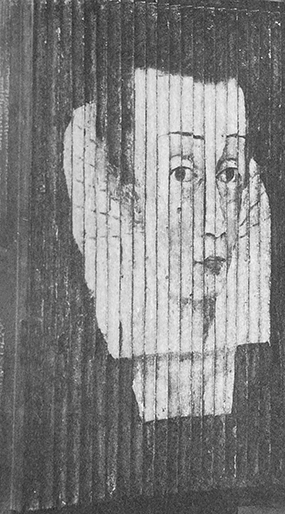
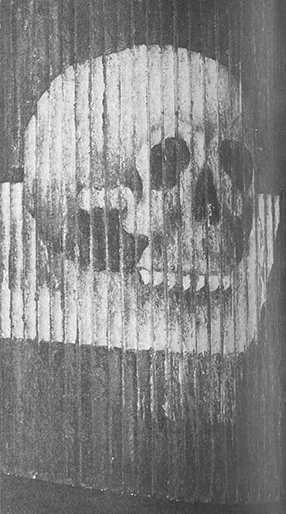
To be sure, some entries in The Memory Arts book just as easily might have been included in The Death Arts, and vice versa. Moreover, some of the same authors appear in both volumes (though using different passages), so representative and exemplary did we consider their writings, but of course examined with an eye towards the memory arts in the first volume and the death arts in the second.54 Although we want to highlight the most productive points of contact between the two fields, we must recognize that the terrain shifts depending on where one stands to evaluate and assess the traces of these expressive forms. Another way to think of it, in terms familiar to the people in Renaissance England, would be to consider what Robert Burton, in his Anatomy of Melancholy, refers to as ‘turning pictures’: ‘stand before which you see … on the one side an ape, on the other an owl … wise on the one side … fools on the other’.55 Among the extant ‘turning portraits’ from the period, painted on angled wooden slats, is the likeness of a lady of consequence (possibly Mary, Queen of Scots, c. 1580) looked at from left to right to reveal the human head changing into a death’s head (Figures 0.1a and 0.1b).56
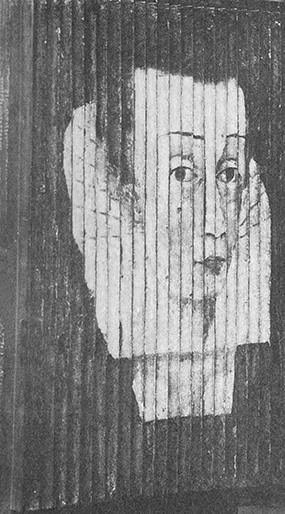
Figure 0.1a. Memento Mori Anamorphosis, portrait (view from left), 1580. Called Mary, Queen of Scots. Scottish National Portrait Gallery. Accession number: PG 1989.
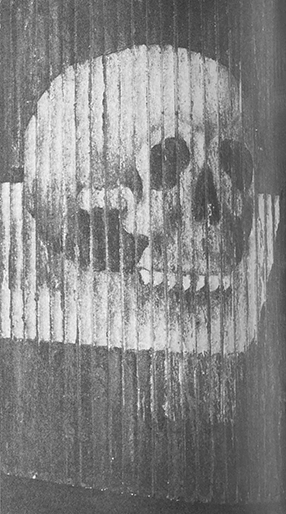
Figure 0.1b. Memento Mori Anamorphosis, skull (view from right), 1580. Called Mary, Queen of Scots. Scottish National Portrait Gallery. Accession number: PG 1989.
This three-dimensional work of art evokes the same eerie sense of recognition of one’s mortality as that experienced with Holbein’s famous distorted anamorphic shape at the bottom right of his justifiably celebrated vanitas double portrait, The Ambassadors, that resolves into a death’s head when viewed at an extreme sidelong perspective. Another version of this dialectical relationship of memory and mortality is foregrounded, among other places, in one of the border illustrations in the series of allegorical virtues depicted trampling – which is to say triumphing over – their opposites in A Book of Christian Prayers (see Figure 0.2).57

Figure 0.2. Memory and Oblivion. A Book of Christian Prayers, 1608, S4r.
Memory is personified in classical habiliments, shown as a recorder with her stylus and book: ‘Memory is a treasure house’ whereas ‘Oblivion is as a grave’. She stands over, seemingly unconcerned by the presence of, a shrouded corpse positioned beside a spade (the visual metonymy associated with work involved in Christian burial) crossed by a scythe (the traditional symbol of reaping, associated originally with Saturn or Chronos and later with the skeletal figure of Death). And even health manuals and books about medicine and surgery, insofar as they provide memorial records of what has been attempted and been proven successful for the preservation and extension of life, at the same time express an anxiety over the need to keep death at bay.58 In this regard both The Memory Arts and The Death Arts participate in representing the larger cultural activities and daily practices that the present volume of essays explores in further – and in more particularized – detail.
***
Memory and Mortality in Renaissance England is organized around three perspectives on the conjunction between memory and mortality. Part I, ‘The Arts of Remembering Death’, covers chapters that explore the ways in which writers prepare for death by marshalling variations on the ars moriendi and the ars reminiscendi. While weaving together rich traditions, learning how to die – consistent with other premodern arts – could be surprisingly pliable, plastic, and inventive. Part II, ‘Grounding the Remembrance of the Dead’, raises the issue of establishing the place of commemoration. Before the dead could be remembered, they needed to have a stable monument. Far from stable, however, such a ground often betrayed anxieties over posterity’s ability to make good on its duty to remember. And Part III, ‘The Ends of Commemoration’ presents four different treatments of how remembering the dead in the period served disparate and often oblique agendas. The cultural work of mourning royals and nobles could advance different objects of remembrance altogether.
The volume’s contributors offer a range of approaches through their case studies, drawing on literary criticism, intellectual history, art history, historiography, performance studies, theology, church history, and religious studies. But, as their chapters highlight, we remember the past as we anticipate the future. The present enterprise thus offers a roadmap for studies at the intersection of memory and mortality and, at the same time, realizes that there are many further territories to explore. The fraught problems raised by these two conceptual domains are inextricably intertwined in some of the most engaging and most frequently taught works of Renaissance English literature, including Shakespeare’s Hamlet, his sonnets, the poetry of John Donne and of George Herbert, Browne’s Urne-Buriall, and Milton’s Paradise Lost. But, as the contributors make clear in their case studies, literature is only one area in which such creative interplay exists between the domains. Our goal with this volume is to illuminate and explore the interrelationships of these fundamental categories of Renaissance knowing and doing, theory and praxis, establishing the rich vein connecting these two fields of investigation, and gesturing towards new directions and future work.