





Introduction
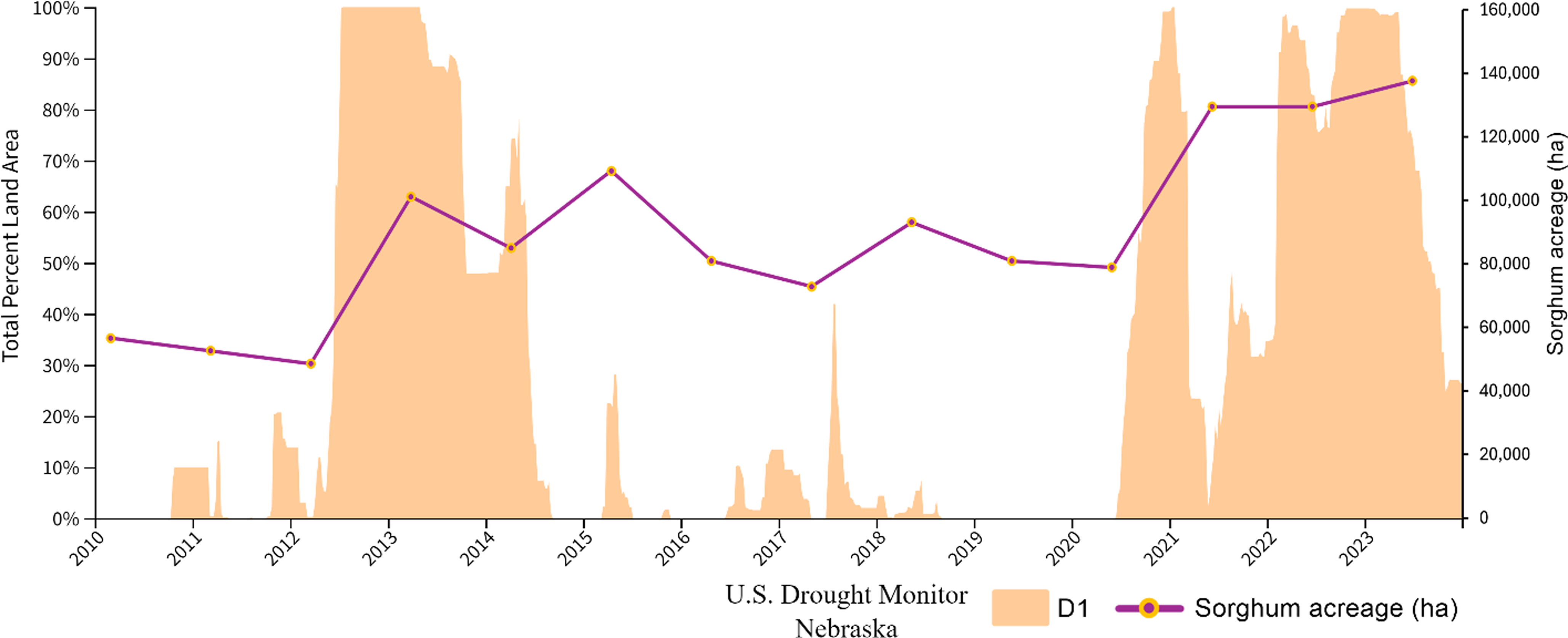
Nebraska is one of the largest corn-producing states in the United States, ranking third nationally in 2023 (NDA 2023). Corn production totaled approximately 44 billion kg from 4 million ha, contributing US$8.6 billion to Nebraska’s economy in 2023 (USDA-NASS 2023). Nebraska is also a leading sorghum-producing state, with approximately 137,593 ha under cultivation in 2023 (USDA-NASS 2023). Of these, 91,054 ha were harvested for grain, yielding 417 million kg and contributing US$75.9 million to the state’s economy (USDA-NASS 2023). Sorghum is a drought-tolerant crop, often favored for planting when drought conditions are anticipated (Assefa et al. Reference Assefa, Staggenborg and Prasad2010). In Nebraska, sorghum planting has increased following major drought events over the past 13 yr (Figure 1). For example, planted sorghum area more than doubled from 48,562 ha in 2012 to 101,172 ha after the 2012 drought. Similarly, acreage increased by 64%, from 78,914 ha in 2020 to 129,500 ha in 2021, following the 2020 drought. In 2023, grower interest in sorghum remained strong in Nebraska, with a 6% increase in planted area, reaching 137,593 ha (USDA-NASS 2023).

Figure 1. The total percentage of land area under moderate drought (D1) and sorghum planted area (ha) in Nebraska from 2010 to 2023. The historical drought graph was adapted from the U.S. Drought Monitor (2024). The D1 category is cumulative and includes severe, extreme, and exceptional drought areas. The data for sorghum planted acreage were obtained from USDA-NASS (2024).
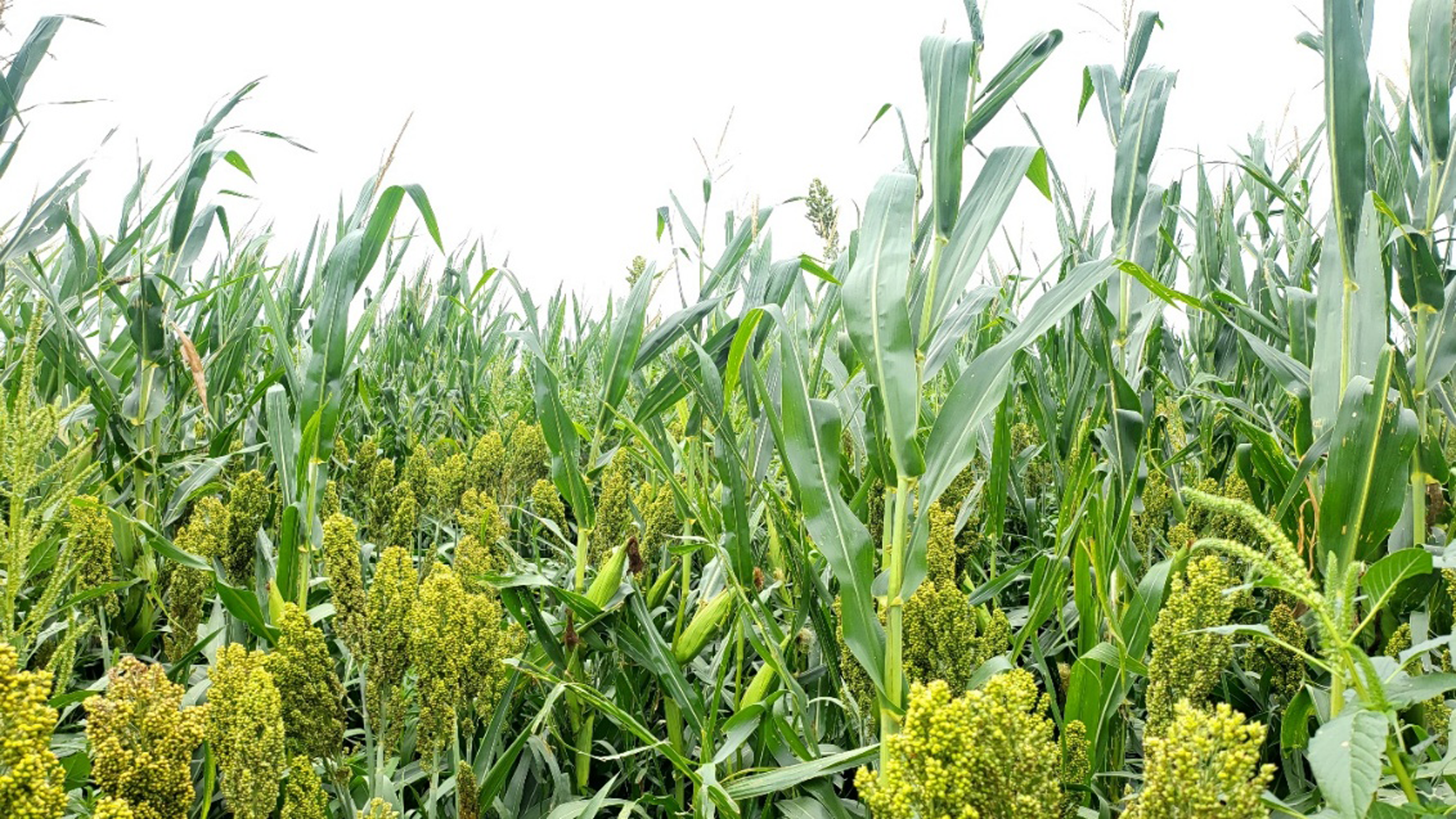
Some sorghum fields may follow corn, although corn-soybean [Glycine max (L.) Merr.] and corn-corn are the major cropping rotations in Nebraska. In such cases, volunteer corn could become a significant problem weed in fields rotated to sorghum (Alms et al. Reference Alms, Moechnig, Vos and Clay2016; Krupke et al. Reference Krupke, Marquardt, Johnson, Weller and Conley2009; Figure 2). Volunteer corn grows from seeds lost or shattered during the harvest operation or adverse weather event (Chahal et al. Reference Chahal, Jha, Jackson-Ziems, Wright and Jhala2016). It is usually a problematic weed in corn-based rotations in the midwestern United States (Jhala et al. Reference Jhala, Beckie, Peters, Culpepper and Norsworthy2021). It can be particularly challenging to manage if sorghum is grown in rotation after corn because (1) grass weeds are often challenging to control in sorghum due to limited availability of selective POST grass herbicides and (2) sorghum is not genetically engineered for glyphosate or glufosinate resistance, thus preventing the use of these herbicides.
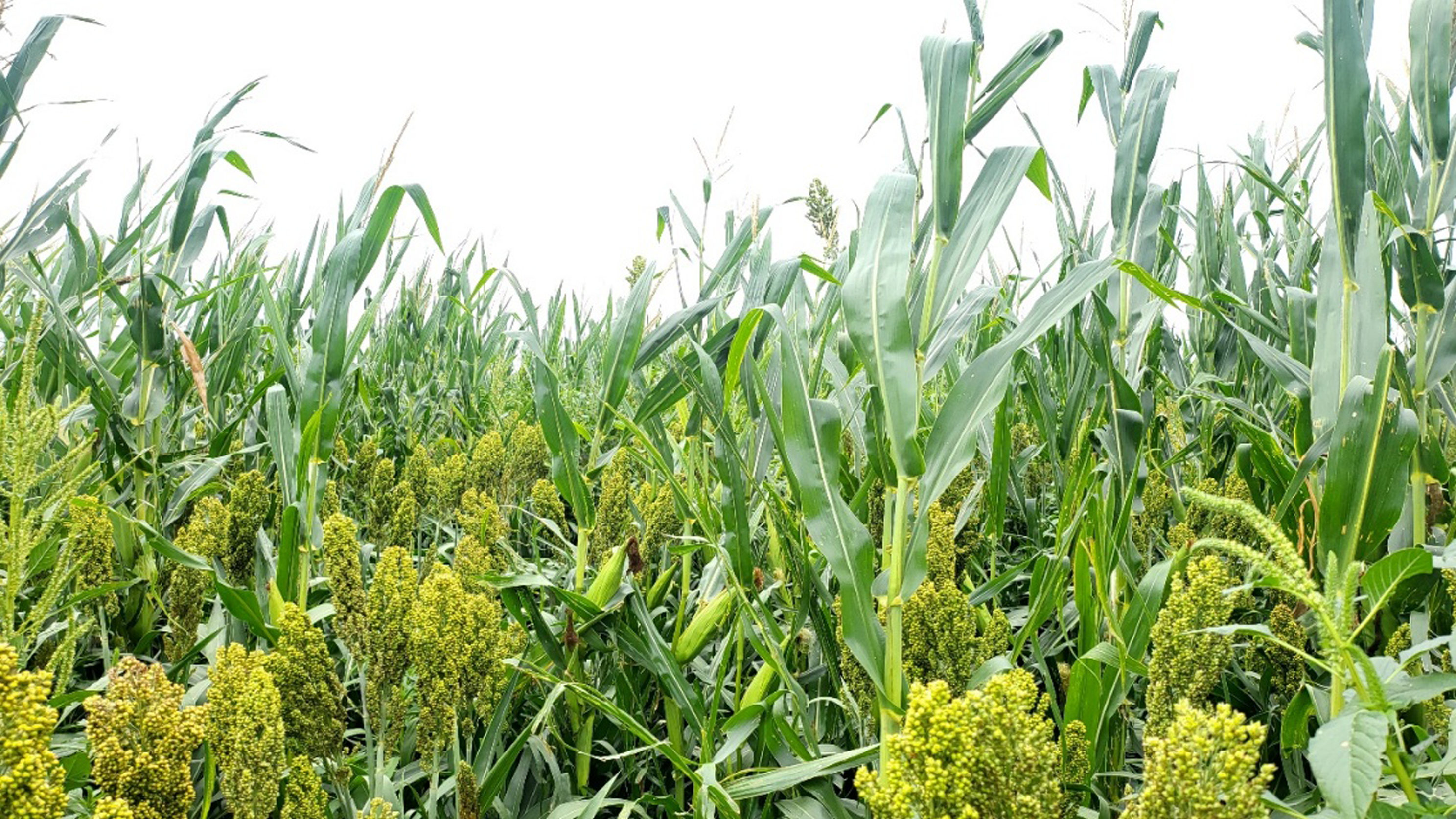
Figure 2. Volunteer corn in a sorghum field in south central Nebraska. Photograph by Amit Jhala.
Only a few herbicides, such as atrazine and quinclorac, are registered for selective POST control of grass weeds in sorghum. No POST herbicide is available for selective control of volunteer corn in sorghum. Imazamox-resistant (igrowth®, UPL, King of Prussia, PA, USA, and Alta Seeds, College Station, TX, USA) sorghum was commercially released in 2021, which enabled the PRE and POST use of imazamox (IMIFLEX®, UPL) to control grass weeds. Similarly, quizalofop-resistant (Double Team™, S&W Seeds, Longmont, CO, USA, and Adama, Raleigh, NC, USA) sorghum was introduced in 2021, which provided quizalofop (FirstAct™, Adama) as a selective POST herbicide option for managing grass weeds.
Herbicide-resistant sorghum cultivars offer an option to seed corn producers who are looking for an alternative crop for soybean that can control corn volunteers, especially during drought years. These producers can now rotate corn to igrowth® or Double Team™ sorghum and use imazamox (Weed Science Society of America [WSSA] Group 2, acetolactate synthase inhibitor) or quizalofop (WSSA Group 1, acetyl-CoA carboxylase inhibitor), respectively, for controlling grass weeds; however, growers are looking for guidelines for control of volunteer corn in igrowth® and Double Team™ sorghum. The objectives of this study were to evaluate the efficacy of imazamox and quizalofop for control of glufosinate/glyphosate-resistant corn volunteers in imazamox (igrowth®)- and quizalofop (Double Team™)-resistant sorghum, respectively, as well as their effect on volunteer corn density, biomass, and sorghum yield.
Materials and Methods
Experimental Site and Design
The field experiments were conducted in 2023 and 2024 at University of Nebraska‒Lincoln’s South Central Ag Lab near Clay Center, NE (40.58°N, 98.14°W). The soil had a pH of 6.8 and organic matter of 3.6% with silty clay loam texture (0.15:0.58:0.27; sand:silt:clay). Two separate field experiments were conducted, one for imazamox (igrowth®)-resistant sorghum and another for quizalofop (Double Team™)-resistant sorghum. The field experiments were designed as randomized complete blocks with three replications. An individual plot size was 3 m wide and 9 m long and included four sorghum rows spaced 76 cm. The imazamox-resistant sorghum experiment consisted of six herbicide treatments: imazamox at 53 and 79 g ai ha–1 applied PRE, early POST (E-POST), and late POST (L-POST). Ammonium sulfate (AMS) at 2.5% v/v and non-ionic surfactant (NIS) at 0.25% v/v were mixed with imazamox for the E-POST and L-POST applications. The quizalofop-resistant sorghum experiment consisted of six treatments: quizalofop at 58 and 73 g ai ha–1 applied E-POST, L-POST, and E-POST followed by (fb) L-POST. Quizalofop was mixed with NIS at 0.25% v/v. Nontreated and weed-free controls were included in both experiments for comparison.
Agronomic Practices and Herbicide Applications
To simulate volunteer corn, the bin-run glufosinate/glyphosate-resistant corn was cross-planted 4.5 cm deep in 76-cm rows at 55,000 seeds ha–1 on April 27, 2023, and May 15, 2024. The imazamox-resistant (‘Advanta G2168IG’) and quizalofop-resistant (‘SP 58M85’) sorghum were planted at 285,000 seeds ha–1 on May 5, 2023, and May 15, 2024. To control other weeds, both experimental sites received preplant application of atrazine/mesotrione/S-metolachlor (Lumax® EZ, Syngenta Crop Protection, Greensboro, NC, USA) at 1,286 g ai ha–1 in 2023 and atrazine/mesotrione/S-metolachlor at 2,779 g ai ha–1 + glyphosate (Roundup PowerMAX®, Bayer Crop Science, St. Louis, MO, USA) at 1,541 g ae ha–1 along with 3% v/v AMS and 1% v/v crop oil concentrate in 2024. For control of Palmer amaranth (Amaranthus palmeri S. Watson), the experimental sites received separate POST application of dicamba (Clarity®, BASF, Research Triangle Park, NC, USA) at 280 g ae ha–1 + acetochlor (Warrant®, Bayer Crop Science) at 1,681 g ai ha–1 on June 5, 2023, and dicamba at 280 g ae ha–1 + atrazine (Atrazine 4L, Winfield Solutions, St. Paul, MN, USA) at 1,400 g ai ha–1 on June 7, 2024. Weed-free treatment in the imazamox-resistant sorghum experiment received a POST application of imazamox at 53 g ai ha–1 + dicamba at 280 g ae ha–1 + NIS 0.25% v/v. For the quizalofop-resistant sorghum experiment, weed-free treatment received quizalofop at 58 g ai ha–1 + bromoxynil/pyroxasulfone (Huskie®, Bayer Crop Science) at 216 g ai ha–1 along with NIS 0.25% v/v.
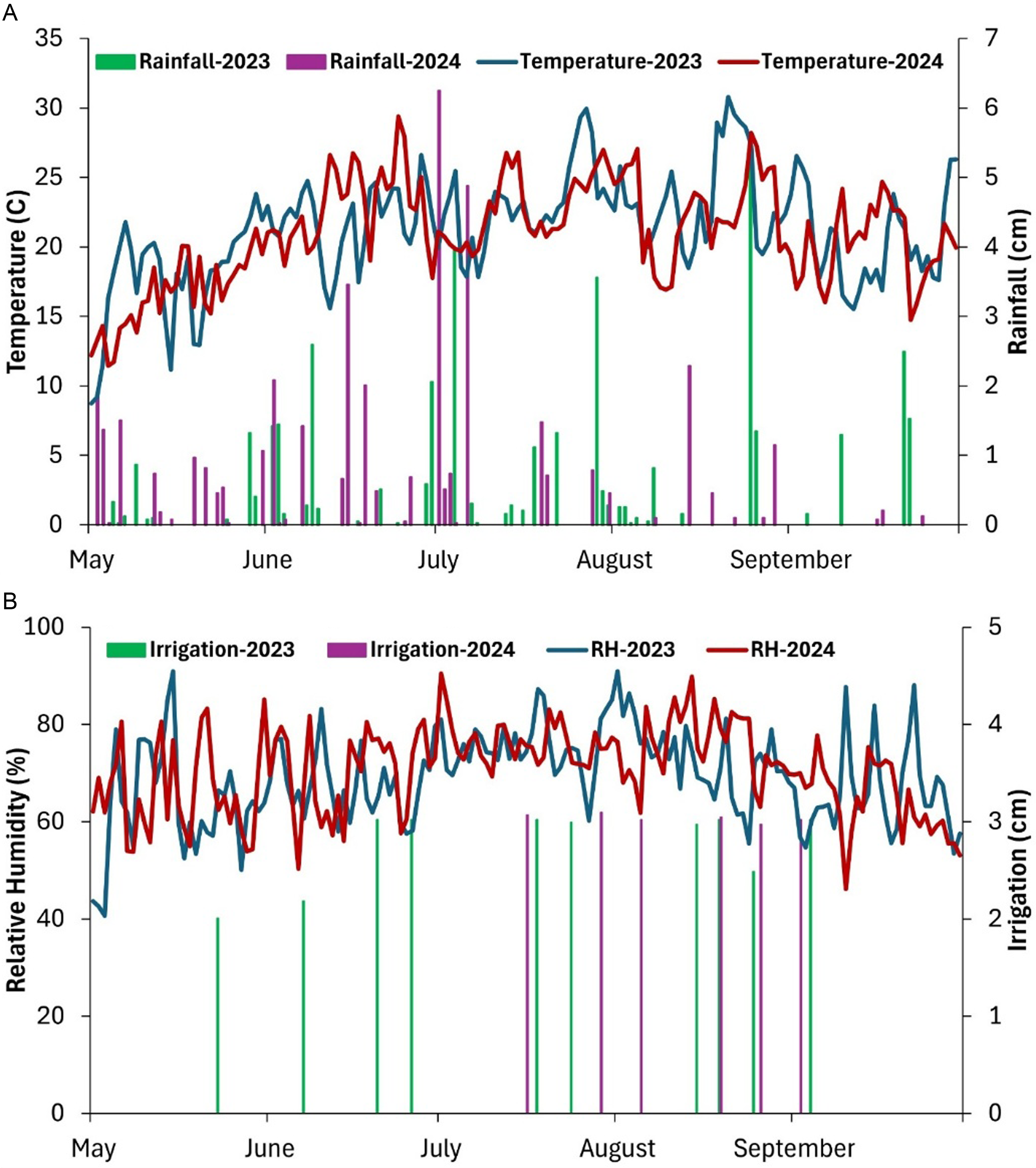
In the imazamox-resistant sorghum experiment, E-POST herbicides were applied on May 30, 2023 (10-cm sorghum and V4 volunteer corn), and June 7, 2024 (15-cm sorghum and V3 volunteer corn). Late POST herbicides were applied on June 12, 2023 (46-cm sorghum and V7 volunteer corn), and June 19, 2024 (51-cm sorghum and V6 volunteer corn). In the quizalofop-resistant sorghum experiment, quizalofop was applied E-POST on June 5, 2023 (15-cm sorghum and V5 volunteer corn), and June 10, 2024 (15-cm sorghum and V4 volunteer corn). Quizalofop was applied L-POST on June 12, 2023 (46-cm sorghum and V7 volunteer corn), and June 19, 2024 (46-cm sorghum and V6 volunteer corn). In 2023, the average temperature and relative humidity during the week following E-POST herbicide applications were approximately 22 C and 68% to 69%, respectively; for L-POST herbicide applications, they were approximately 19 C and 65% (Figure 3), respectively. In 2024, the week following E-POST applications had average temperatures of approximately 23 to 24 C with relative humidity of 64% to 65%, while for L-POST herbicide applications, the temperature was approximately 25 C with 71% humidity. Herbicides were applied using a CO2-pressurized backpack sprayer with five TeeJet® AIXR 11002 nozzles (Spraying Systems, Wheaton, IL, USA). The sprayer delivered 140 L ha−1 of spray volume at 276 kPa.

Figure 3. Mean air temperature and rainfall (A) and relative humidity and irrigation events (B) during the 2023 and 2024 growing seasons at University of Nebraska–Lincoln’s South Central Ag Lab near Clay Center, NE.
Data Collection and Statistical Analysis
Volunteer corn control was visibly assessed on a scale of 0% (no control) to 100% (complete control) 14, 28, 42, and 56 d after application (DAA). The sorghum injury was assessed on a similar scale of 0% (no injury) to 100% (completely dead plant) 14 DAA. Volunteer corn density was recorded at 28 DAA by counting the number of volunteer corn plants in a 1-m row (n = 3). Volunteer corn biomass was determined by cutting the plants from 0.25 m2 quadrat in each plot and drying the biomass to constant weight in an oven at 70 C. In 2024, imazamox-resistant sorghum was harvested from the central two rows in each plot using a plot combine, then grain yield was adjusted to 14% moisture content.
Data were analyzed using R software (version 4.2.2; R Core Team, Reference Core Team2024). Treatment and year interactions was evaluated, and data were combined if year and Treatment × Year interactions were nonsignificant. The nontreated (0% control) and weed-free (100% control) treatments lacked variance; therefore they were removed from the analysis for volunteer corn control data. In the analysis of variance (ANOVA) model, treatment was considered a fixed factor, and replication was treated as a random factor. The normality assumption of ANOVA was checked using shapiro.test. If the data were normal, they were modeled using the lme4 package (Bates et al. Reference Bates, Maechler, Bolker, Walker, Christensen, Singmann, Dai, Scheipl, Grothendieck, Green, Fox, Bauer and Krivitsky2023). If the data did not fulfill the normality assumption, they were modeled using the glmmTMB package (Brooks et al. Reference Brooks, Bolker, Kristensen, Maechler, Magnusson, McGillycuddy, Skaug, Nielsen, Berg, van Bentham, Sadat, Lüdecke, Lenth, O’Brien, Geyer, Jagan, Wiernik and Stouffer2023) with beta distribution (link = “logit”) for percent volunteer corn control data and negative binomial distribution (link = “log”) for volunteer corn density data (Stroup Reference Stroup2015). Tukey’s ad hoc test was conducted using the emmeans package to separate treatment means (Lenth Reference Lenth2025).
Results and Discussion
Volunteer Corn Control
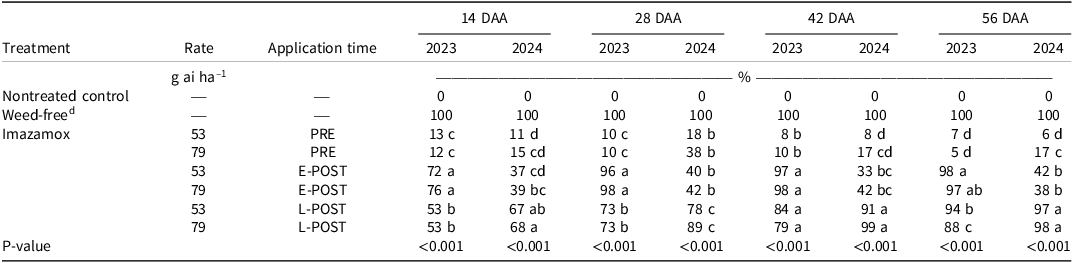
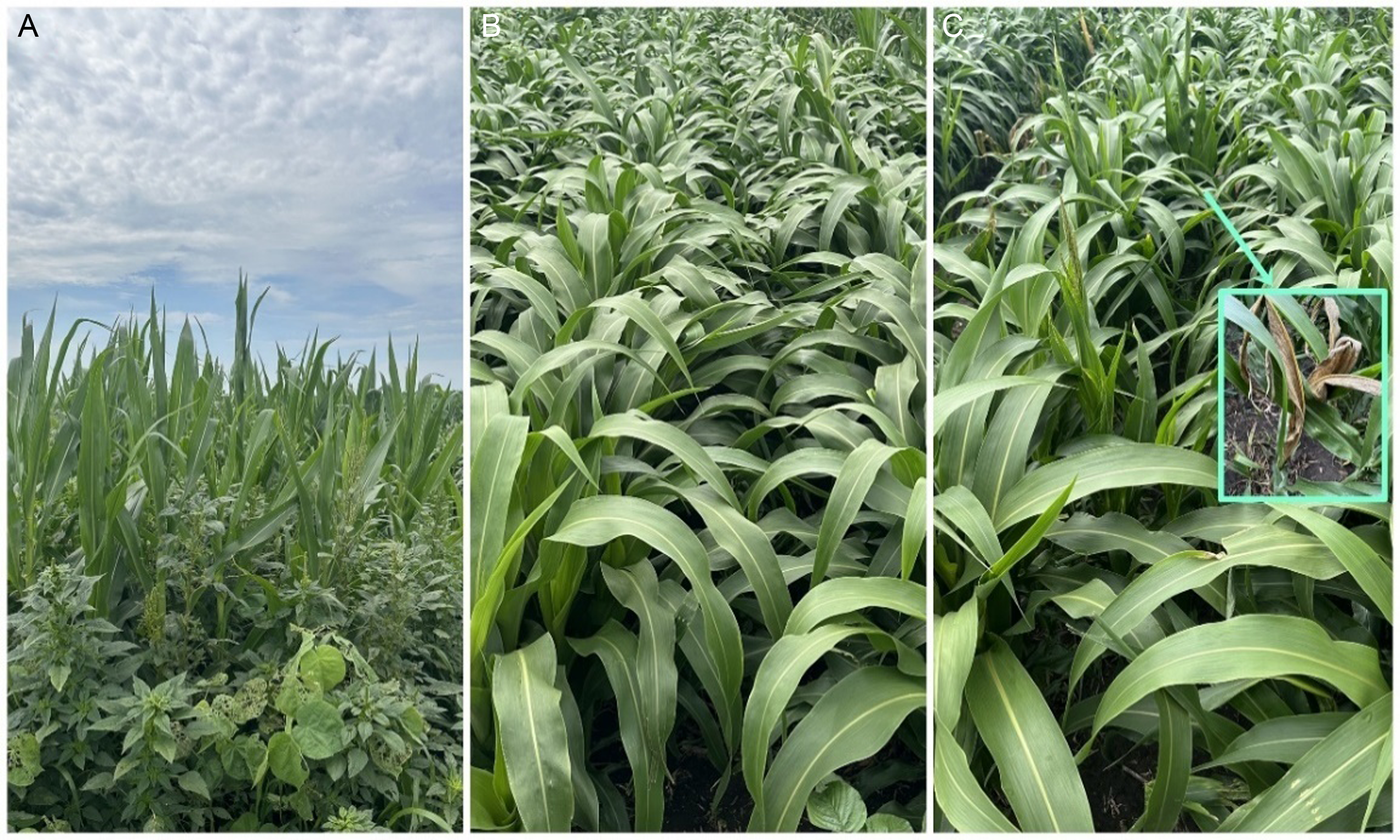
Volunteer corn control differed between years (2023 and 2024) in both experiments (Tables 1 and 2). In the imazamox-resistant sorghum experiment, imazamox at 79 g ai ha–1 applied PRE provided 38% control of volunteer corn 28 DAA in 2024 (Table 1). Control of volunteer corn was relatively lesser in 2023, likely because volunteer corn had already begun germinating at the time of imazamox applied PRE. Currie and Geier (Reference Currie and Geier2022) reported 63% volunteer corn control 28 DAA with imazamox applied PRE at 79 g ai ha–1 in Kansas. E-POST applications of imazamox provided ≥96% control of volunteer corn 28 DAA in 2023 (Figure 4), though reduced efficacy was observed in 2024. Atrazine + dicamba was applied for Palmer amaranth control on the day of E-POST application in 2024, which may have impacted imazamox efficacy. Schuster et al. (Reference Schuster, Al-Khatib and Dille2007) reported reduced absorption and translocation of Group 2 herbicides when mixed with atrazine and mesotrione. Additionally, although imazamox is recommended to be applied at least 1 h before rainfall (Anonymous 2020), 1.4 cm of rainfall occurred on the night of the E-POST application in 2024 (Figure 3), which may have further affected efficacy. Currie and Geier (Reference Currie and Geier2022) found that imazamox (53 g ai ha–1) applied to 25- to 30-cm volunteer corn achieved 99% control 42 DAA in imazamox-resistant sorghum in Kansas. Imazamox applied L-POST provided ≥73% control 28 DAA.
Table 1. Volunteer corn control with imazamox in imazamox-resistant (igrowth®) sorghum 14, 28, 42, and 56 d after application (DAA) in field experiments conducted in 2023 and 2024 near Clay Center, NE.a,b,c

a The experimental site received preplant application of atrazine/mesotrione/S-metolachlor (Lumax® EZ, Syngenta Crop Protection, Greensboro, NC, USA) at 1,286 g ai ha–1 in 2023 and atrazine/mesotrione/S-metolachlor at 2,779 g ai ha–1 + glyphosate (Roundup PowerMAX®, Bayer Crop Science, St. Louis, MO, USA) at 1,541 g ae ha–1 along with 3% v/v ammonium sulfate and 1% v/v crop oil concentrate in 2024 for early-season weed control.
b Abbreviations: DAA, days after application; E-POST, early postemergence; L-POST, late postemergence; PRE, preemergence.
c Means presented within each column with no common letter(s) differ significantly as per Tukey’s test at P ≤ 0.05.
d Received a postemergence application of imazamox at 53 g ai ha–1 + dicamba at 280 g ae ha–1 along with 0.25% v/v non-ionic surfactant.
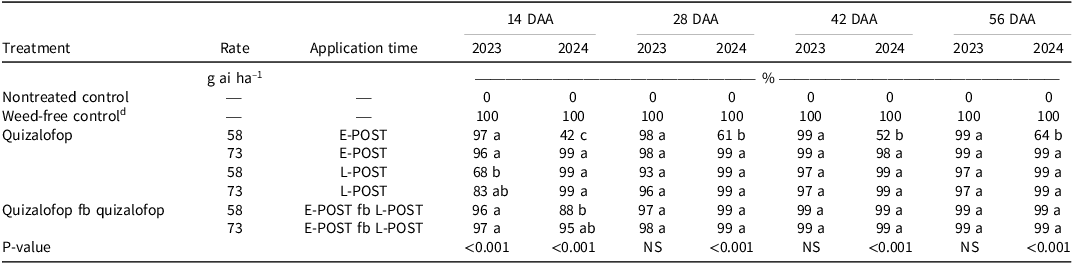
Table 2. Volunteer corn control with quizalofop in quizalofop-resistant (Double Team™) sorghum 14, 28, 42, and 56 DAA in field experiments conducted in 2023 and 2024 near Clay Center, NE.a,b,c

a The experimental site received preplant application of atrazine/mesotrione/S-metolachlor (Lumax® EZ) at 1,286 g ai ha–1 in 2023 and atrazine/mesotrione/S-metolachlor at 2,779 g ai ha–1 + glyphosate (Roundup PowerMAX®) at 1,541 g ae ha–1 along with 3% v/v ammonium sulfate and 1% v/v crop oil concentrate in 2024 for early-season weed control.
b Abbreviations: DAA, days after application; E-POST, early postemergence; fb, followed by; L-POST, late postemergence; NS, not significant.
c Means presented within each column with no common letter(s) differ significantly as per Tukey’s test at P ≤ 0.05.
d Received a postemergence application of quizalofop at 58 g ai ha–1 + bromoxynil/pyroxasulfone (Huskie®, Bayer Crop Science) at 216 g ai ha–1 along with 0.25% v/v non-ionic surfactant.

Figure 4. Volunteer corn in nontreated (left), imazamox at 53 g ai ha–1 31 d after early postemergence application (center), and imazamox 53 g ai ha–1 19 d after late postemergence application (right) in the imazamox-resistant (igrowth®) sorghum study conducted near Clay Center, NE, in 2023.
By 56 DAA, L-POST applications demonstrated increased volunteer corn control, achieving 88% to 94% control in 2023 and 97% to 98% control in 2024. Currie et al. (Reference Currie, Geier and Lancaster2023) reported 93% volunteer corn control 52 DAA using imazamox (53 g ai ha–1) mixed with atrazine (1,120 g ai ha–1) applied to volunteer corn at 8 to 15 cm and imazamox-resistant grain sorghum at the 4- to 5-leaf stage in Kansas. A higher imazamox rate (79 g ai ha–1) did not result in substantially greater control compared to the lower rate (53 g ai ha–1) across PRE, E-POST, and L-POST applications. In 2023, L-POST applications exhibited 19% to 23% lesser volunteer corn control 14 DAA (53% vs. 72% to 76%) and 23% to 25% lesser control 28 DAA (73% vs. 96% to 98% control) compared to E-POST applications. This difference likely reflects the smaller growth stage (V3) of volunteer corn at the time of E-POST application compared to the later stage (V6) during L-POST application.
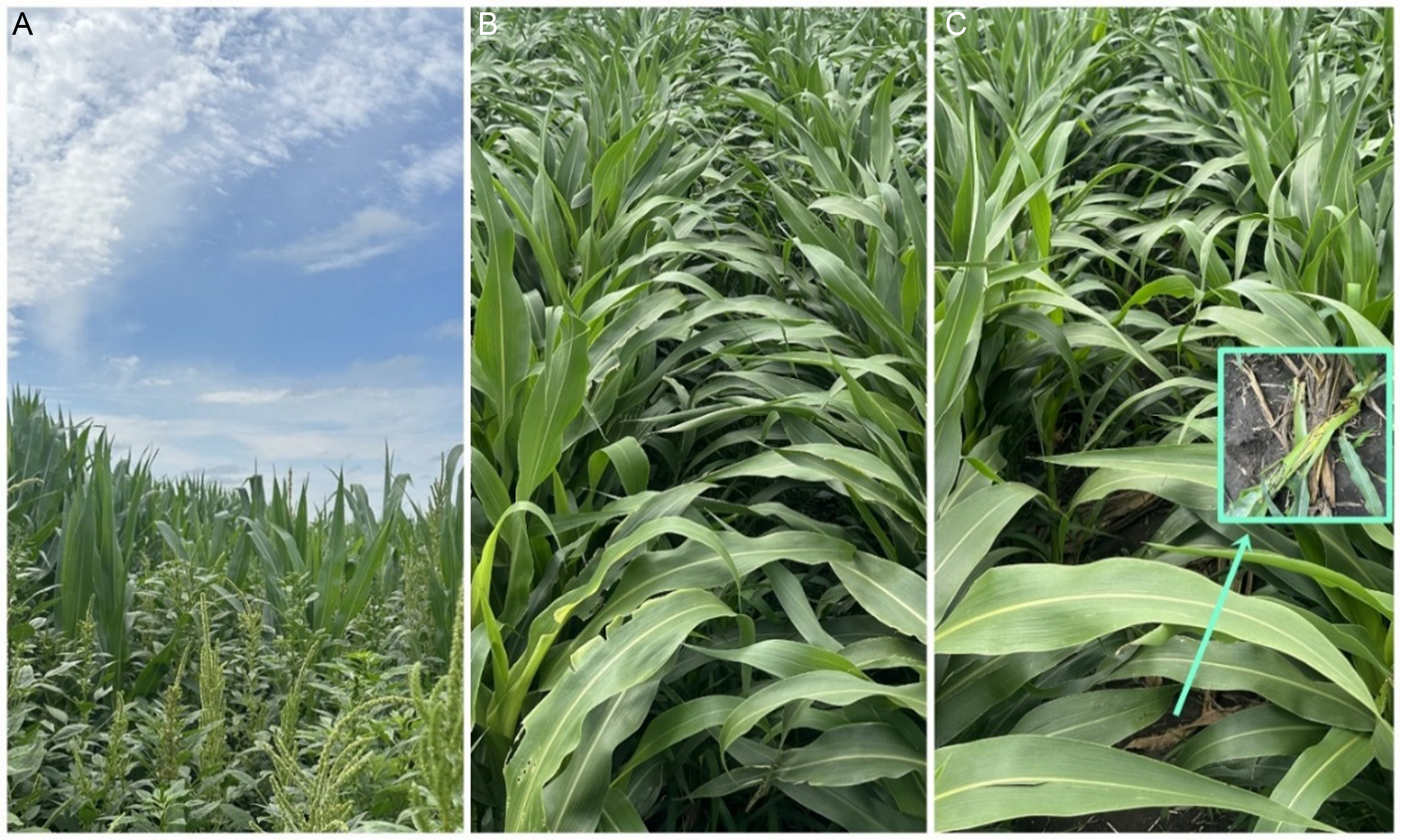
Quizalofop, applied E-POST or L-POST, usually provided ≥93% control of volunteer corn by 28 DAA across both years, except for the lower rate applied E-POST in 2024 (Table 2; Figure 5). This might be due to potential antagonism from dicamba applied 3 d before quizalofop for Palmer amaranth control. It has been reported that applying a broadleaf herbicide, such as dicamba, 3 d before quizalofop is not sufficient to alleviate graminicide antagonism (Culpepper et al. Reference Culpepper, York, Jennings and Batts1998). A 7-d interval after a POST broadleaf herbicide is recommended for sequential applications (Anonymous 2021).

Figure 5. Volunteer corn in nontreated (left), quizalofop at 58 g ai ha–1 28 d after early postemergence application (center), and quizalofop at 58 g ai ha–1 19 d after late postemergence application (right) in the quizalofop-resistant (Double Team™) sorghum study conducted near Clay Center, NE, in 2023.
Quizalofop is an effective herbicide for controlling volunteer corn, and usually a single application is sufficient. For example, Striegel et al. (Reference Striegel, Lawrence, Knezevic, Krumm, Hein and Jhala2020) reported 99% control of V5 and V7 glufosinate/glyphosate-resistant volunteer corn with quizalofop (31 and 39 g ai ha–1) 28 DAA in Nebraska. Similarly, Singh et al. (Reference Singh, Kumar, Knezevic, Irmak, Lindquist, Pitla and Jhala2023) reported 99% control of V3 and V6 glufosinate/glyphosate-resistant volunteer corn with quizalofop at 46 and 93 g ai ha–1. There was no difference in quizalofop efficacy between the two rates at any time point among L-POST and E-POST fb L-POST applications. On average, 2% to 5% sorghum injury was observed with quizalofop 14 DAA in an E-POST fb L-POST program (data not shown).
Volunteer Corn Density and Biomass
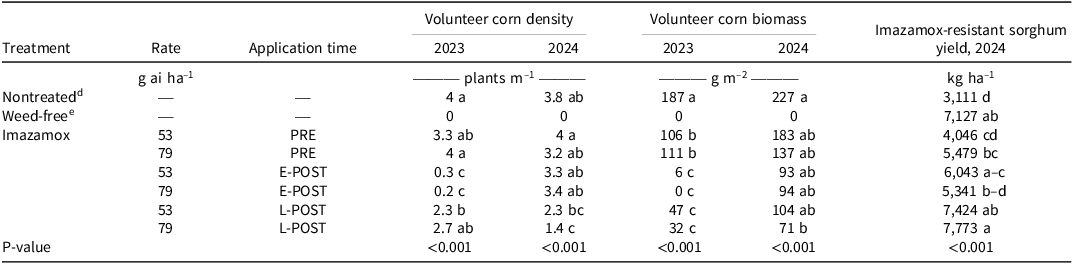
Volunteer corn density in the imazamox-resistant sorghum study ranged between 3.8 and 4.0 plants m–1 when no herbicide was applied (Table 3). Imazamox applied E-POST decreased volunteer corn density to 0.2 to 0.3 plants m–1 in 2023. The volunteer corn biomass for nontreated control was 187 g m–2 and 227 g m–2 in 2023 and 2024, respectively. Imazamox applied POST reduced volunteer corn biomass to 0 to 47 g m–2 and to 71 to 104 g m–2 in 2023 and 2024, respectively.
Table 3. Effect of imazamox applied at different timings on volunteer corn density and biomass 28 DAA and grain yield in imazamox-resistant (igrowth®) sorghum in field experiments including in 2023 and 2024 near Clay Center, NE.a,b,c

a The entire experimental site received preplant application of atrazine/mesotrione/S-metolachlor (Lumax® EZ) at 1,286 g ai ha–1 in 2023 and atrazine/mesotrione/S-metolachlor at 2,779 g ai ha–1 + glyphosate (Roundup PowerMAX) at 1,541 g ae ha–1 along with 3% v/v ammonium sulfate and 1% v/v crop oil concentrate in 2024 for early-season residual weed control.
b Abbreviations: E-POST, early postemergence; L-POST, late postemergence; PRE, preemergence.
c Means presented within each column with no common letter(s) differ significantly as per Tukey’s test at P ≤ 0.05.
d Included the biomass of volunteer corn and other weeds.
e Received a postemergence application of imazamox at 53 g ai ha–1 + dicamba at 280 g ae ha–1 along with 0.25% v/v non-ionic surfactant.
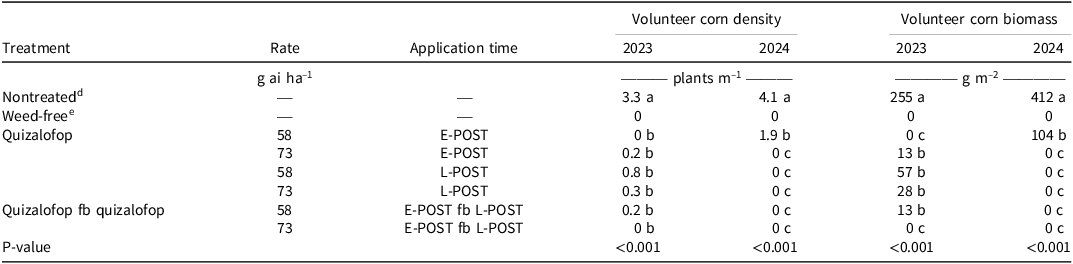
The nontreated control in quizalofop-resistant sorghum experiment has volunteer corn density and biomass of 3.3 to 4.1 plants m–1 and 255 to 412 g m–2, respectively (Table 4). Quizalofop reduced volunteer corn density and biomass compared to the nontreated control in both years. Soltani et al. (Reference Soltani, Shropshire and Sikkema2015) reported 62% to 74% and 75% to 82% reduction in volunteer corn density and biomass 42 DAA, respectively, with quizalofop (36 and 72 g ai ha–1) applied POST. Striegel et al. (Reference Striegel, Lawrence, Knezevic, Krumm, Hein and Jhala2020) noticed a 66% reduction in glufosinate/glyphosate-resistant volunteer corn biomass with quizalofop at 31 g ai ha–1.
Table 4. Effect of quizalofop applied early postemergence and late postemergence on volunteer corn density and biomass in quizalofop-resistant (Double Team™) sorghum 28 DAA in field experiments conducted in 2023 and 2024 near Clay Center, NE.a,b,c

a The entire experimental site received preplant application of atrazine/mesotrione/S-metolachlor (Lumax® EZ) at 1,286 g ai ha–1 in 2023 and atrazine/mesotrione/S-metolachlor at 2,779 g ai ha–1 + glyphosate (Roundup PowerMAX) at 1,541 g ae ha–1 along with 3% v/v ammonium sulfate and 1% v/v crop oil concentrate in 2024 for early-season residual weed control.
b Abbreviations: E-POST, early postemergence; fb, followed by; L-POST, late postemergence.
c Means presented within each column with no common letter(s) differ significantly as per Tukey’s test at P ≤ 0.05.
d Included the biomass of volunteer corn and other weeds.
e Received a postemergence application of quizalofop at 58 g ai ha–1 + bromoxynil/pyroxasulfone (Huskie®) at 216 g ai ha–1 along with 0.25% v/v non-ionic surfactant.
Sorghum Yield
The imazamox-resistant sorghum yield correlated with the level of volunteer corn control. The nontreated control (3,111 kg ha–1) had 56% yield loss compared to the weed-free control (7,127 kg ha–1; Table 3). This yield loss may have occurred as volunteer corn is reported to be significantly competitive with sorghum (Singh et al. Reference Singh, Irmak, Kukal, Kumar, Lindquist, Knezevic, Pitla and Jhala2024). Studies on sorghum yield loss due to volunteer corn interference appear scarce, although recent research addresses its control in sorghum (Currie and Geier Reference Currie and Geier2022; Currie et al. Reference Currie, Geier and Lancaster2023). Imazamox applied L-POST had a similar yield (7,424 to 7,773 kg ha–1) to the weed-free control. Imazamox applied PRE at 79 g ai ha–1 (5,479 g ai ha–1) had 1,668 kg ha–1 less yield than the weed-free control (7,127 kg ha–1).
Practical Implications
Results suggest that recently developed herbicide-resistant sorghum technologies provide growers with flexibility to rotate from corn to sorghum while managing glufosinate/glyphosate-resistant volunteer corn through POST applications of imazamox and quizalofop in imazamox- and quizalofop-resistant sorghum, respectively. Some variability in efficacy was observed when applications were made close to broadleaf herbicide applications. Additionally, volunteer corn from Enlist® hybrids (Corteva Agriscience, Indianapolis, IN, USA), which are resistant to aryloxyphenoxypropionates, could pose a challenge. If quizalofop-resistant sorghum is planted following Enlist® corn, quizalofop will not control Enlist® volunteer corn; however, imazamox will remain effective in imazamox-resistant sorghum. Therefore selection of herbicide-resistant sorghum should be made carefully, based on the herbicide-resistant traits of corn planted in the previous year. In addition, herbicide-resistant sorghum should not be grown in consecutive years (Anonymous 2020, 2021). For example, imazamox-resistant sorghum requires an 18-mo interval following imazamox application before it can be planted again in the same field (Anonymous 2020). Furthermore, there is an 8.5-mo planting interval for corn (non-Clearfield® [BASF] field corn, seed corn, sweet corn, and popcorn) after imazamox application (Anonymous 2020). Soybean has no planting interval after imazamox application; thus soybean can be planted in rotation with imazamox-resistant (igrowth®) sorghum.
Acknowledgments
We thank Gary Justesen, Mark Kirk, Payne Burks, Ryan Bryant-Schlobohm, and Zachary Carpenter for providing herbicides and herbicide-resistant sorghum seeds. We are grateful to Alex Chmielewski for his help in conducting fieldwork for these projects.
Funding statement
We thank USDA NIFA Crop Protection and Pest Management (Award no. 2024-70006-43500 “Nebraska Extension Implementation Program”) for supporting this project.
Competing interests
The authors declare no competing interests.

 Open access

