There is little on this earth more outmoded than the live theater.
Is the theatre really dead?
1.1 Beam Me Up
I want to begin not with theatre, but with television, old-fashioned television remediated to the internet that I began watching while confined by the pandemic in 2020: Star Trek, now known as Star Trek: The Original Series. It’s a pleasure to watch a show that I was allowed to see only incompletely and intermittently as a kid, since it was on after my bedtime. The cardboard-looking sets, the suburban LA scenery of various “planets,” the unconvincing “aliens,” the interstellar ubiquity of English, the troubling gender and racial politics are at once new and familiar, but one retro element of Star Trek is, for me, particularly striking. In later series, such as Star Trek: The Next Generation, the communications devices that the crew use to call the Enterprise are lodged in the metal insignia they wear on their chests – slap the insignia, speak, and Riker or Data or Worf will hear you back on the ship. But in the first series, they use an avatar of the flip phone, a handheld device that hinges open to broadcast. It was, of course, well ahead of its time then, magically summoning both the voice and the performing body, captured in the phrase unspoken on the show yet etched in popular memory, “Beam me up, Scotty.”
More arresting today, though, is how the communicators work. When Kirk or Spock flips one open, they’re wielding a two-handed engine, as one hand cradles the device while the other apparently turns a dial – tunes in. Much has been made of the ways emergent technologies are predicated on their predecessors: how the acting in early films appropriated the styles of the theatre; how the powerful computers in our pockets, bags, and backpacks today are still conceptualized as “phones.” Despite dilithium crystals and antimatter, for Kirk and the gang in 1966, to boldly go involved bringing a familiar technology along for the ride, a small, forward-leaning device that still required analog tuning: transistor radio.
This archaeological perspective on the projection of analog technology into the digital future registers a principal theme undergirding Star Trek: the human versus the machine. In several episodes, notably “Return of the Archons” in the first season (February 9, 1967) and “The Ultimate Computer” in the second (March 8, 1968), Kirk outwits a computer by posing to it a self-canceling choice, reframing the affectual language of ethical dilemma to defeat the binaristic protocol of machine thinking (recall, too, the endless sparring between McCoy and Spock about emotion and logic). For me, at least, this tiny detail indexes the series’s conceptual mission to its technological imagination. Star Trek maps the future on the anxiously passing present, on retrogressive mechanical and social technologies, on analog radio, on the gender relations that make space a sexual playground for Kirk and McCoy (and very occasionally for Spock, too), on design that often seems to clothe its “new civilizations” in the colorful castoffs of Orientalist fantasy.
Obsolescence haunts Star Trek today; the original series, alongside Star Trek: The Next Generation, Star Trek: Deep Space Nine, Star Trek: Voyager, and Star Trek: Enterprise, was made for broadcast television, but is now typically streamed to a laptop. A future consigned to its always already passing technology: this temporality, this conjunction of material, social, and aesthetic technologies, is where Star Trek is most closely dialed in to the obsolescing stage. Like Kirk’s analog communicators, like television on my laptop, the temporal modality of the theatre as a technology is not so much the passé as the en passant. Writing in his landmark study Technics and Time, Bernard Stiegler notes the transformative interactivity of the categories of the human and the technological, the who and the what, a transformation especially suggestive of the interactive technologies of theatre, “the one, bio-anthropo-logical, the other, techno-logical,” creating a relation in which “the who itself redoubles […] the what: conditioned by the what, it is equally conditional for it” (Technics and Time 2:7). Taking “humans” to be “prosthetic beings, without qualities” (2:2), Stiegler sees this relationship as “transductive,” a dynamic “catalyzed by the advancing of the what (insofar as it is already there, and insofar as it tends spontaneously to differentiate itself in advance from the differentiation of the who, since the who is always inscribed in a system of whats overdetermined by technical tendencies)” (2:7). Theatre uses bodies (who) and things (what) that are mutually transformational; the who of an actor is also a what for the audience, itself a who transformed into a what by the theatre.1
How do the theatre’s technologies – the stage and auditorium (if there is such a structure), the writing of plays (if plays are written), the conventions of acting – dramatize what a given theatre is and does? And how do those changing technologies change the theatre’s implication of the human? Theatre, in this view, cannot articulate a perdurable, universal “human,” though that sensibility is often reinforced by the drama and theatre’s use of bodies as their matériel. Rather, the signifying embodiments, signifying materialities, and signifying narratives of theatre as rhetoric and practice at once articulate, depend on, and are altered by the reflexive emergence of a conceptual “human” – or posthuman, antihuman, transhuman – defined by its inscription in and of the technological. Long before the new materialism, things (what) onstage have had the potential vitality of a who: Philoctetes’ suppurating foot is a useful example of something that is part of a who that becomes a what, exerting its own action in the play, anticipating Othello’s handkerchief, Nora’s letter box, The Foundling Father’s nibblers. Moreover, theatre also depends on technologies of showing, of making visible and audible: the orchestra and the skene door, the pageant wagon heavens whence Lucifer falls to the hellish streets of York, Hamlet’s sterile platform, the raked stage of the Restoration rake, the gilded box of the St. James’s society dramas of the 1890s, the Performance Garage festooned with mics and screens. In Theatre as Technology, I explore a potentially controversial perception, that the theatre’s immersion in and foregrounding of technology render it always already obsolescent, making obsolescence the temporal and medial condition of theatre. Or, to put a spin on Paul Simon’s question, the theatre is never “really dead,” but always appears to be passing away.
An axiom: theatre is a technology that uses technology to represent a technological interface with the human; or, differently put, theatre is an ecology of technologies with different temporalities and different kinds of purchase on the human. A second axiom: conceptions of the human and of the technological are dialectically entwined; the theatre, and especially the technics of acting, foregrounds this tension. As Yuk Hui puts it, human beings “have always lived in a hybrid environment surrounded by artificial and natural objects,” in which the “artificial and the natural are not two separate realms,” but instead “constitute a dynamic system that conditions human experience and existence,” the being of “the human” itself (On the Existence of Digital Objects 1). On the one hand, the theatre relies on and projects human bodies as its instrument and object of representation. And yet, as elsewhere, the “human” in the theatre is sustained and defined by the technologies of its making. Much as the pervasive digital animation animating more recent made-for-streaming series like Star Trek: Discovery and Star Trek: Strange New Worlds frames the passing of the televisual, the entire apparatus of theatre – its dramatic language, formal dramatic and theatrical genres, conventions of gesture and movement, the design of lighting and machinery, the architecture of the stage and audience, the location of performance space in social place – witnesses the constant change of what theatre does, and is. As technology changes, the “human” it both extends and defines changes as well, a dynamic especially visible in theatre, where the “human” is visually constituted at the intersection of bodies and technologies. And while the “new” – Ezra Pound’s summons to modernism to “make it new” – is not the summons of all theatre (traditional theatres in a sense operate under the banner “keep it the same”), and both “the new” and “the obsolete” are grooved to the epistemologies of capitalism, the theatre’s predication as a technology locates its temporality on the cusp of passing.
The technologically contingent theatre represents a contingent humanity. One of the salient dimensions of theatre, whether conceived in terms of its institutional identities, its technological armatures, or its engagements with other forms of representation, is the feeling that theatre operates under the sign of its waning capacity to engage an emerging humanity. Aristotle, for example, conducts a naturalist’s description – an autopsy, really – of a genre of representation manifested as a script, a text, or poem that does its tragic work, katharsis, most perfectly when the noise and distraction of the theatre, the technologies of spectacle, are left behind.2 Taking up mainly old plays, plays that survived the collapse of Athens and the reinvention of its theatre, Poetics documents another dimension of theatre’s constant evanescence: the affectual amplitude of a lost technology, the homeliness, perhaps, of speaking on a telephone, of Shakespeare in doublet-and-hose, of turning the dial to bring in the radio voice, of broadcast television. Much as Aristotle does in analyzing tragic theatre by anatomizing what it leaves behind, Aristophanes’ Frogs skewers its theatre by mocking the performance style of plodding Aeschylus and screechy Euripides. We, Aristophanes seems to say to his audiences, don’t live in that theatre anymore, much as we might still long to hear its harmonies, for David Wiles, “the harmonies of citizenship” (Theatre and Citizenship 39).3 In this sense, Aristophanes anticipates Thomas Elsaesser’s sense that “Obsolescence names the grieving and mourning, the denial and disavowal, but it also nurtures an insane hope and hubris that we might be able to bring this embalmed past” – and the humanity embalmed there – “back to life” (Film History as Media Archaeology 341).
Ventriloquizing the absent voice of tragedy, Frogs records one dimension of the theatre’s enactment of nostalgia, but a feel for the obsolescent particularly marks the invention of modern professional theatre, where a savvy disdain for the outmoded is the sign of the salable. From Marlowe’s Tamburlaine in the 1580s scorning “the jigging veins of rhyming mother-wits” (Tamburlaine, Prologue l.1) to Hamlet’s echo of Marlowe in the mighty, old-fashioned line of his “Pyrrhus” speech (Hamlet 2.2.288), to say nothing of the jigging veins of The Mousetrap, this theatre urgently claims the value of the new by incorporating the technology of the old.4 The Stage Keeper in the Induction to Ben Jonson’s Bartholomew Fair recalls the scurrilous playing of Tarleton and the more festive theatre of an earlier generation (l. 33), all pushed aside when the Book-holder and Scrivener arrive to outline the play’s newfangled “Articles of Agreement” with the audience (l. 57), a contract that excuses the ignorance of those who take “Jeronimo or Andronicus” as “the best plays yet” (even as the audience’s judgment has “stood still these five and twenty, or thirty years”) and confirms today’s up-to-date playwright as “loth to make Nature afraid in his plays, like those that beget Tales, Tempests, and such like drolleries” (ll. 95–98, 114–16). Perhaps Jonson was just envious. Shareholding, landowning Shakespeare (whose long career, of course, spanned the decades from Titus Andronicus to The Winter’s Tale and The Tempest) both transformed and benefited from the capitalist stage in ways that Jonson, at once a jobber in the theatre system and feudally patronized by the king, never quite managed. At the same time, Jonson’s salty prologue ironically confirms the stage as the instrument of a kind of happy obsolescence, still marked today by that pervasive Broadway term for staging a classic: revival. And, of course, Jonson here also occupies a long critical tradition, alongside essays from Lope de Vega’s 1609 Arte nuevo de hacer comedias in este tiempo to Bertolt Brecht’s “Short Description of a New Technique of Acting which Produces an Alienation Effect” that contract the future, the new, by asserting a medium entwined in the past, the obsolescing old it restores as it repudiates.
Nostalgia promises return, and Aristophanes’ satire evokes it as desirable and possible; Aeschylus’ and Euripides’ plays are still available, and their theatre persists as a viable artistic, ethical, and technological instrument. It might be fun to dial up a transistor radio in a media archaeology lab, but it will operate only as long as analog broadcast remains profitable. As a gathering of social and aesthetic technologies, theatre stands in a different relation to obsolescence than any of the technologies it deploys at a given moment in history: a specific device (Pepper’s ghost), instrument (stage lights), or practice (darkening the house). When Siegfried Zielinski avers that technology “is not human; in a specific sense, it is deeply inhuman” (Deep Time of the Media 6), he alerts us to the ideological dimension of theatre’s implication in and of the human, perhaps most visible in the likening of theatre to that most powerfully naturalizing instrument of ideology, the body. But while the summons to dissever theatre from organicism, “the conception of theatre itself as a living, reproducing, and dying body,” is powerful, simply replacing that metaphor with a different one – the “network,” as Sarah Bay-Cheng and Amy Strahler Holzapfel elegantly suggest (“The Living Theatre” 9) – misses a key dimension of the deep time of theatre. For although theatre’s “temporal processes” are, like those of any technology, “dynamic and inherently unstable” (24), the notion of theatre’s essential ephemerality is confined not to individual performances but to the instrument itself. Insofar as “discarding and obsolescence are in fact internal to contemporary media technologies,” so, too, obsolescing is the condition of theatre (Parikka, Geology of Media Reference Parikka142).
The provocative variety of the obsolescing stage is crystallized by a list of terms brought forward in a special issue of October, a list used to characterize “the obsolescent today”: ruin, relic, slum, passé, outdated, decline, decay, down-market, overlooked, imperfection, cliché, dilapidated, repulsive, worn-out, ridiculous, backwards, discard, pathetic, failure, dysfunctional, trash, pariah, stench, clunky, despised, orphan” (“Introduction” to Obsolescence 4). While all of these terms are regularly applied to superseded devices and media, most also participate in familiar ways of talking about theatre, even apart from any specifically “antitheatrical” discourse, especially when theatre is compared with the technologies used to record, display, and broadcast performance developed from the late nineteenth century onward (theatre fails, is passé, outdated, full of clichés, backward, while film, television, and digital media succeed in remaining contemporary, future-leaning, cool). In the contemporary critique of media, theatre mainly appears, when it appears at all, as an orphan.
Yet the orphan theatre awkwardly fails to disappear in the face of media understood as, unlike theatre, technological. Perhaps theatre’s temporal slack has to do with its instrumental use of human bodies, which seem to signify an unmediated liveness and presence, and with its intermedial character, combining technologized bodies with a range of other technologies, each with its own distinctive history, relation to nontheatrical dispositifs, and temporality. As Craig N. Owens suggests, theatre “stubbornly preserves its most ancient technologies, deploying them along with its most advanced,” suggesting that theatre “is not simply an architectural artifact; it is also a machine and an archaeology, a cabinet of curiosities” (Staging Technology 9). More to the point, as the Dramaturg for Brecht’s Messingkauf observes, in the “houses of fabricated dreams,” the contemporary theatre, one
can see both the old and the new machinery that we use to deceive you. Every age has contributed its own few tricks. Since the invention of powerful lamps we’ve been able to represent night-time on stage. The techniques of perspective, which are somewhat older, have helped a great deal. And recently we’ve started using projectors.
Rather than disappearing “entirely into the dramatic effects they produce” (Craig N. Owens 10), the multiple temporalities of the technologies absorbed into the theatre apparatus keep those technologies visible, and make the theatre’s representation of its own technological mediality essential to its work.5 Moreover, as an apparatus, theatre participates in the “double operation of this term – as designating both individual scientific machines and a larger, overarching social machinery that produces, manifests, and manages desires,” indeed, in which a change in the apparatus articulates changed modes of subjection, clearing “away the old subject, replacing it with a newly reshaped one, constituted by new desires, which are above all the desire for apparatuses” (Parisi, Archaeologies of Touch Reference Parisi22). Less “a medium” than “a set of media,” perhaps “even a privileged example for the convergence of media in, or on, what we now call a platform” (Harries, “Theater and Media before ‘New’ Media” Reference Harries12), theatre’s avant edge, by inveterately staging new technologies alongside their creaky avatars, the projection screen upstaging the fire curtain so to speak, sets up shop in a distinctive temporal wound, what Wendy Hui Kyong Chun memorably calls “the bleeding edge of obsolescence” (“Enduring Ephemeral”).
Perhaps because its objects – films, recordings – persist on the medial horizon, film and film studies instructively engage with obsolescence conceived as “a mimetic impulse towards re-enactment, recovery, and redemption” (Elsaesser, Film History Reference Elsaesser334) in ways that revealingly sideline theatre. Although Elsaesser’s understanding of film’s occupation of and interactivity with other media doesn’t extend to theatre, he does outline an altered perspective in which obsolescence as “a negative term within the technicist-economic discourse of ‘progress through creative destruction,’” and mediated through the “principle of ‘planned’ or ‘built-in’ obsolescence” of manufacturing and marketing in the 1950s, has shifted, “signifying something like heroic resistance to relentless acceleration, and in the process has become the badge of honor of the no-longer-useful,” even providing a “rallying point for sustainability and recycling while also making an eloquent plea for an object-oriented philosophy and a new materialism of singularity and self-sufficiency of being” (Film History 335). Obsolescence, “understood as the survival of a witness to past ‘newness’ while renouncing past utility, can therefore also harbor utopian aspirations and even be the vehicle of lost promises and unfulfilled potential” (346). The objects of obsolescence provide a critical perspective that Elsaesser terms the “loop of belatedness” (348–49), in which film’s “peculiar ontology of undeadness and not-aliveness” (349) locates critique in an expressive and interactive temporality, “a special relation of past to present,” where the “present rediscovers a certain past, to which it then attributes the power to shape aspects of the future that are now our present” (348).6
This perspective, Elsaesser reminds us, “has not gone without discontent, critique, and outright rejection” from archaeologists, social and cultural historians, and “from within the fields most directly affected and addressed by media archaeology such as cinema studies, film history, media studies, media theory and art history” (Film History 352). Perhaps this setting-aside of theatre is, now, just a professional reflex among scholars of newish media, but perhaps it also arises from theatre’s alternative occupation and practice of obsolescence. While historical critique can replicate Elsaesser’s attention to earlier modes of theatre, those objects are long gone. Hamlet at the Globe, En Attendant Godot at the Théâtre de Babylone, Hair at the Public do not populate our present in the way that, say, the 2020 Disney+ film of Hamilton on Broadway does, or that even more recondite films do: Shakespeare silents, for example, or the films and footage that Ethan Hawke’s Hamlet composes into his film-within-a-film in Michael Almereyda’s 2000 Hamlet. And yet, much as Hamlet’s film to catch the conscience of a king marks a moment of technological temporality (Hamlet digitizing analog VHS tapes and then editing them for projection), theatre bears its obsolescence within it. The theatre’s reputation for constant desuetude is articulated by its productive use of, and signification of, technologies, including human technologies, that are sometimes emergent, but always marked as passing, by a sense of pastness.
Film’s temporalities are evident across the contemporary horizon, as old and new technologies, aesthetics, practices, rub cheek-by-jowl with the recorded archive. Theatre’s obsolescing is visible and sensible at the fraying interfaces between its intermediated technologies, including the embodied technologies of acting, the scriptural technologies of writing and of its transmission (manuscript, print, photocopy, digital), and the material technologies by which theatre claims to repair, renovate, and retemporalize itself: the third actor, Bottom’s jigging verse as much as the Player King’s, the machina versatilis, the electric lighting that immediately colored gas lighting with nostalgia, the digital screen. The persistence of the technological past involves theatre in nostalgia, perhaps most visibly at moments of technical (dramatic and theatrical) innovation; streamed to my laptop, Kirk summons the affective embrace of both his medium (television) and his instrument (transistor radio). European theatre at the turn of the twentieth century also witnessed such a moment, in which the “new drama” took shape on, and shaped the rhetoric of, the emerging apparatus of the fully electrified, technologized house. Much as late nineteenth-century realist theatre is reflexively compared to, and often reductively depreciated for, its apparent replication of the superficiality of the photograph, the inventors of modern realism – Ibsen, Strindberg, and Chekhov – imagine a theatre suffused by, and implicitly reimagining, the recording media of photography: in the Ekdals’ photographic studio in The Wild Duck, when the young officers freeze the life of the Prozorov family long enough to capture a photograph in Three Sisters, or in the thought rays that destroy the Captain in The Father, reflecting Strindberg’s parallel efforts to capture the emanation of the soul on specially treated photographic plates. When Erwin Piscator combined George Grosz cartoons with slide images of World War I soldiers in his stage production of The Good Soldier Schweyk in 1928, the modern stage had already been absorbing and representing the discourse of recorded media for several decades.7
Theatre is not only a decisively intermedial practice, at once both using and representing a temporally diverse platform, but its technological development also challenges the notion of theatre as a single perdurable medium, leading Samuel Weber to argue that theatricality, an abstracted principle of paradoxically un/distanced viewing rather than the material vehicles and instruments of performance, localizes the medium in question.8 It’s easy to see why Weber leans in this direction. Theatre’s material infrastructures and performance practices are too mutable, too divergent historically, geographically, culturally, and technologically to be claimed (without evident distortion and appropriation) as a singular instrument. Indeed, Weber’s swerve to theatricality – rather than theatre – as medium evokes the challenge of describing theatre as a practice without locating in within a specific temporal and technical armature, a challenge anticipated, but not resolved, by Eric Bentley’s well-worn description of the “theatrical situation,” “A impersonates B while C looks on” (Life of the Drama 150). Does it matter whether A, B, and C are assumed to be human beings? puppets? robots? objects? Is B understood as a “character” or as a “role,” as a represented person or as a set of directions, and what do those directions look like? What does “impersonates” mean in this context? Does it matter whether that “impersonating” activity is inflected by the mid-1950s Method or mid-1960s epic theatricality? Or arises from a conventional mask, or set of gestures and postures? Does it matter that A, B, and C share common geotemporal coordinates, are physically present to each other and to the audience? Have I activated the “theatrical situation” when I do any role-enhanced repetitive activity before an audience, teaching, for example? When I wash the dishes while my cat watches? Does the “my” in this sentence imply social or power relations that obviate or sustain theatrical observation, relations visible if A is a Russian serf, or C is Louis XIV? Was a hired man at the Globe in 1600 impersonating the same B that, say, a shareholder like Burbage or Shakespeare was? Are technicians also A?
The historical indeterminacy of the site, practices, and technologies of theatre – including dramatic technologies (in what ways do a script by Shakespeare and one by Elfriede Jelinek share a sense of the written drama’s theatrical utility?) – challenge the notion of theatre as medium, and so challenge the notion of the history of the theatre. Theatre witnesses a persistent impulse toward remediation, the representation of one medium in another (Bolter and Grusin, Remediation); yet staging an alternate past theatrical technology in the present theatre witnesses the complexity of any notion of theatre as one. Think of the 1585 staging of Oedipus the King in the Teatro Olimpico, the remediation of the Stuart masque in The Tempest, William Poel’s experiments in “Elizabethan” staging in London theatres at the turn of the twentieth century (or his simultaneous work with the Sanskrit classic Shakuntala), the persistent efforts to restore the architecture of early modern theatres – Shakespeare’s Globe, the Sam Wanamaker Playhouse, the American Shakespeare Center’s Blackfriars Playhouse – throughout the twentieth and twenty-first centuries, or the claims of a distinctly modern form of performance, Original Practices Shakespeare.9 An analogous perception might arise from the contemplation of performance forms originating outside the legacy of European theatre. As a technological ensemble, the highly formal conventions of, say kutiyattam – the relationship between conventions of speech, the gender of the performers, the carefully articulated disciplines of (facial, hand, arm, torso, leg, and foot) gesture, the specific display of makeup and costume, the role of music, to say nothing of the specific site and disposition of the audience – have been remediated to the terms of modern performance expectations; beyond that, they are specifically theatricalized when remediated to a proscenium stage and the attendant mechanical and social apparatus of a modern theatre. Noh and kabuki, kathakali, jingju, wayang kulit, and other forms of performance underline the way theatre-as-technology-representing-technology negates or at least defers a sense of theatrical essentialism: the cultural and imperial nostalgia dramatized when these technologies, disciplined under the sign of theatre, are remediated in theatre as theatre. Much as Shakespeare’s 1623 Folio on a laptop screen is, in being remediated, no longer a book, gaining and losing functionalities, the remediation of past theatre, or of culturally distinct performance genres, to the present apparatus ironically dramatizes theatre as contingent. These designs can be remediated to the modern theatre precisely because they are remade as theatre on a modern stage, participating in genres of entertainment, sociality, aesthetics, performance that can be remediated to our theatre precisely because the technological apparatus defining this medium is not that one.
In the material theatre, the past is always present, suffusing built theatre spaces, dramatic genres, acting training, and audience expectations. For this reason, the slightest pressure on A, B, or C tends to dramatize medial difference rather than identity, as well as dramatizing the interplay of who and what, how the passing technology of the scene of performance alters these conceptual performers, A, B, and C. Even a hypothetical “First Folio” production of Hamlet today, for example, in a contemporary venue like Shakespeare’s Globe, in which a weary scribe might have been hired to hand-copy scrolls for all the actors (from the printed Folio, of course, not the playhouse manuscript) to use in rehearsal, is never performing the King’s Men’s play but is instead remediating early practice through decisively modern canons of restored behavior, living history, “original practices,” their associated modern technologies, and a contemporary understanding of the remediating power of theatre as, pace Brecht, entertainment rather than instruction. Where do you find a quill pen today? Theatricality as a principle seems to transcend the material variety of theatre, providing a conceptual point of repair from the thingy multiplicity of the stage. And yet insofar as theatre attends to the passing of its technologies, its constitutive obsolescing poses a critical challenge to the notion of a coherent or essential medium or mediality. The theatre is a passing fiction; a theatre is always obsolescing into something new.
Finally, taken as a technology, theatre dramatizes the definitional tensions animating the term technology itself. Originally entering European languages, as Shane Denson notes, “around the time of the Industrial Revolution – coinciding roughly with both the steam engine and the advent of philosophical aesthetics” (in Brock et al., “Ten Statements on Technics” Reference Brock, Chateau, Coleman, Denson, Egbe, Furuhata, Gunning, Kirkwood, Mulvey, Plantin, Baer and van den Oever32), technology continues to maintain a kind of triple duty, referring at once to mechanical instruments (a steam engine, a light bulb, a laptop), the means of its use (sometimes falling under the term technique, as the technique of epic, or Method, or Viewpoints acting), and technic, arising mainly in German as Technik, referring more broadly to the analysis and study of technology as a social, cultural, and ideological practice (the technic of modern stage realism).10 This sense of technics is usefully promoted by Don Ihde: “Technics stands in between the too abstract ‘technique’ which can refer to any set action with or without a material object, and the sometimes too narrow sense of technology as a collection of tools or machinery. Central to my understanding and use of technics is the sense of human action engaged with, through, among concrete artifacts or material entities” (Existential Technics, qtd. in Baer and van den Oever, “Technics: An Introduction” Reference Baer, van den Oever, Baer and van den Oever17). The complexity of theatre as a productive cultural apparatus is, in this sense, intensified by its technological multiplicity. Theatre at once represents the work of theatre-as-technology (technic), through conventionalized practices (technique) applied to a range of instruments (technologies) – here including props and costumes, but also scripts, architecture, and actors’ bodies.
“Technologies are systems,” as Bernhard Siegert puts it (Dhaliwal and Siegert, “Knowing, Studying, Writing” Reference Dhaliwal, Siegert, Baer and van den Oever129), and theatre precisely enacts this sense of the systematic, and so ideological, functioning as-and-of technology. As a technology, theatre is, and its many subordinate technologies (acting, the proscenium, lighting) are, “always situated,” situated “within an ecology of materials, agents, actions, agencies, and so on” (143). The kind of attention to theatre that I’m proposing here, moving from the theatre to a theatre continually remade as a technological encounter, resonates with Siegert’s sense that contemporary German media theory articulates a shift of attention from “the representation of meaning to the conditions of representations of representation, from semantics itself to the exterior and material conditions of what constitutes semantics” (Siegert, Cultural Techniques 2). The technologies of theatre, theatre as a technology is inevitably a technique of “hominization” (9), and, like all machines, in Siegert’s pointed phrase, theatre materially fashions the human it represents: “The machine, in other words, is an anthropotechnique” (54). And in attending to the passing of its technologies at the moment of their representation, theatre necessarily attends to the constant passing of a specific human, the passing of a what marking the passing of a who, or, more carefully, the passing of a specific form of human who engrained in a specific network of technological what. A technology at once absorbing and representing human, mechanical, and now electronic technologies, theatre technologizes the human. Marking theatre as always under the sign of passage, technology marks the interface of the theatre and the human with the sign of obsolescence as well.
1.2 Orphan Archaeologies
There was no theater before media.
How the theatre’s technological infrastructure situates its cultural and representational work is usefully prolonged, and complicated, by the theoretical and methodological interests of a potentially cognate field of inquiry, media archaeology. Media archaeology is the study of the materiality of (mainly) communications media through the analysis of the objects, the technological alternatives and avatars, left behind. Some of those objects – typewriters come to mind – still remain, if just barely, on our horizon, called for perhaps more often as stage props than for real-world use.11 Locating a number of attractive methods and priorities for understanding modern theatre as a technology, and for understanding the technological interactivity of theatre historically, media archaeology avoids taking medial development as a smoothly progressive narrative of technological supersession, instead attending to the intersection of the material, the social, and the ideological, in part by focusing attention on “zombie-media: living deads, that found an afterlife in new contexts, new hands, new screens and machines” (Parikka, What Is Media Archaeology? Reference Parikka3). But media archaeology is not merely about inspecting dead media as the juncture of alternative futurities. Instead, the various designs of media archaeologies, from Zielinski’s “anarchaeology” to Wolfgang Ernst’s “epistemological reverse-engineering” (qtd. in Elsaesser, Film History Reference Elsaesser42), share a common practice: to “alienate,” so to speak, the historical interaction of technologies so as to undo a narrative naturalizing the inevitability of their present-tense formation, what Nele Wynants calls “the dominant teleological narratives of media and technology histories” (“Media-Archaeological Approaches” 3).
Media archaeology provides a potentially instructive orientation toward technologies of performance and their intersection with the dramatized human. First, media archaeology attends to the work of media objects. In the most radical version of its practice, perhaps associated most strongly with Ernst’s provocative work, the “essence of technical media is only evident in their operative implementation” (Ernst, Chronopoetics 205), a relentlessly materialist perspective that he takes to be different “from discourse analysis in cultural and socio-technological studies” that remains nonetheless dependent on the (discursive) “‘close reading’ of the technologies involved” (viii). Although this attention to objects may appear to fetishize “dead media” or “zombie media,” what’s critical here is not an antiquarian fascination, a steampunk ideology, so to speak, but an alienation of the ideological formation of technology in the present, in which the consequences of past media persist in coercive, perhaps even cannibal ways.12 If, as Friedrich Kittler put it, “Media determine our situation” (Gramophone, Film, Typewriter xxxix), then by attending to the “materiality, and material ecologies of media objects, systems and processes,” media archaeology enables a critical attention to the “ecologies of human, non-human and machinic entities, the inorganic, organic, and […] geological strata” informing the deep work of media (Goddard, “Opening up the black boxes” Reference Goddard1762), and potentially informing the precise interaction of human, nonhuman, and technological agencies animating theatre at any moment of its history.
As a practice, media archaeology is usefully and constitutively obsessed with the obsolescent, as a means of engaging “the multiple other times that still persist: the time of the old, the obsolete, the fading, the slowly emerging, the parallel, the returning deep time” (Parikka, “Remain(s) Scattered” Reference Parikka, Jucan, Parikka and Schneider10).13 And while the attention to materiality articulates a “valuable rejection of humanist tendencies,” it can have the effect of underplaying the kind of cultural, social, and political interrogation more familiar in the discursively oriented critique generally sustaining the interpretation the institutions of theatrical performance (Goddard, “Opening” Reference Goddard1769). Indeed, while media archaeology is committed to “exploring all potential affordances of technologies” of the past (Ellis and Hall, “Introduction”), the specific affordances of theatre – a practice defined by its vanishing performances – as an instrument of the technologized human, remains marginal to, though not entirely absent from, the potentially useful inquiry of media.
One index of the fashioning of this disciplinary horizon is how Walter Benjamin’s work is ritually located as central to media archaeology, especially when the interaction between the emerging film attractions and their interaction with audiences in the nineteenth century is at issue.14 The Benjamin invoked in media archaeology is almost exclusively the author of the Arcades project, a writer with apparently little stake in the apparatus of theatre, despite the significant role of his writing about theatre – “The Author as Producer,” “Conversations with Brecht,” “What Is Epic Theatre?,” and of course “The Work of Art in the Age of Its Technological Reproducibility,” among others – in defining the critical practice of theatrical modernity.15 Similarly, when Zielinski turns to Bertolt Brecht’s interest in the interface of theatre and film, he does so by reading a “forgotten” text, “totally unfashionable, dusty, more than half a century old – Bertolt Brecht’s Kleines Organon für das Theater” (Variations on Media Thinking 79). Predictably, perhaps, Zielinski absorbs Brecht’s engagement with the technological (film) to the exclusion of Brecht’s specific, and historically consequential, purposes: to reimagine the ideological work of theatre through the importation of the alternative ideological/technological opportunities offered by film and radio. Brecht certainly “knew already in the 1920s that art without technology was sheer absurdity” (Variations xi), much like the realist theatre’s effort to occlude its technology, and he shrewdly foregrounded the ideological implication of that set of technological relations in the production of capitalism and its culture. What he also knew, as the ongoing, contemporary relevance of the Kleines Organon für das Theater to theatre and theatre critique witnesses, is that theatre is a technological sphere of activity, only fully conceivable – as, presumably film and radio are – in its invocation of and interaction with other media of performance, as well as with those it intermediates onstage, including its trained-and-technologized human media. Though they are often invoked as foundational to the orientation and practice of media archaeology, two of the modern theatre’s most powerful theorists – Benjamin and Brecht – are deployed in ways that implicitly exclude theatre from the notion of the modern, the medial, and the technologically critical.
And yet this exclusion reciprocally sustains the palpable friction generated by the obsolescing theatre. Thomas Elsaesser’s magisterial Film History as Media Archaeology is a useful case in point. On the one hand, Elsaesser is specifically concerned with tracking the multifarious and often underappreciated ways that film occupied what I’d call the performance horizon of late nineteenth-century urban life. And yet, while theatre was arguably the dominant segment of that horizon, it plays little part in the account of the emergence of film, other than passing mention of some “clunky eighteenth-century stage machinery or the elaborate illusionism of a Pepper’s Ghost phantasmagoria” (Film History 86). For Elsaesser, “rapid media change” is characterized by the
volatility, unpredictability, and even contradictory nature of the dynamics between the practical implications of the new technologies (their industrial applications and economic potential), their perception by the popular imagination (in the form of narratives of anxiety and utopia, panic and fantasy), and the mixed response (eager adoption or stiff resistance) they receive from artists, writers, and intellectuals.
This volatility can be captured by attending to technological interaction. Film cannot be derived from the magic lantern alone, but is part of a “visual culture that included the stereoscope and the phantasmagoria, neither of which could be straightforwardly appropriated as a ‘precursor’ of cinema” (25). For Elsaesser, not only have the histories of “the telegraph, the radio, the gramophone, and the telephone” been “much more intertwined with that of cinema” (24) than is often recognized, but the instruments themselves, conceived in the spatializing terms of archaeology rather than the linearity of progressive narrative, dramatize a dynamic intertechnological encounter.
Take the film projector:
In its very dispositif – made up of mechanisms that are reverse-engineered or adapted from the magic lantern, the sewing machine, and even the machine gun – the film projector (as indeed the cinematograph) is a bricolage assemblage of very different but nonetheless distinct and related technologies. Apart from focusing light, they are concerned with transmission and transport, with conversion and interaction: grips and sprockets, eccentric discs like the Maltese cross, springs, and pick-up mechanisms. In its outer appearance and inner workings, the film projector has retained an identical shape and construction for more than 100 years, long after the technologies to which it owed its existence had been modified or altogether replaced.
In this archaeological perspective, the instruments dramatize film’s technological and aesthetic development as an ongoing site of material and ideological interaction and appropriation. So do the various locations in which early films were experienced, the illuminated parlor, the fairground booths of a cinema of attractions, venues that located a different social performativity in the audience’s relation to film before the “period of classical narrative cinema – i.e., the projection of moving images in purpose-built theaters with a darkened auditorium and separate séances” (62).
As Jussi Parikka suggests, technology and the arts “work in a co-determining network of historical relations where aesthetics is also tightly interwoven with science and technology” (What Is Media Archaeology? 69). Technology is inseparable from the sense of the human it refracts; it is also an agent within a medial array, and so part of the ideological formation that defines what any medium is conceived to be, to do, to be able to do, and to represent as an activity and as a structure of materialized representation. For Elsaesser, “cinema, television, internet,” extended to “the telephone, radar, the computer, and all the other technologies said to be driving these media toward convergence” (Elsaesser, Film History Reference Elsaesser81). While this rhetoric of inclusion is inclined to “take digital media as the chance to rethink the idea of historical change itself,” to alter its conventional “horizons and boundaries” (73), theatre as a distinctive technicity is situated outside or behind this convergence. So while “No medium replaces another or simply supersedes the previous one” (87), theatre – whether we mean today’s heavily intermediated and technological space or the houses participating in “the sheer ‘diversity’ of nineteenth-century visual culture” (86) – is largely absent from the archaeologizing gaze, a technology bypassed in the disciplining of media archaeology and its objects: “cinema studies, film history, media studies, media theory and art history” (352).
An engaging exception to this rule is the collection of essays edited by Nele Wynants, Media Archaeology and Intermedial Performance. Here, though, while noting that theatre “has always embraced ‘new’ media” (Wynants, “Media-Archaeological Approaches” 1), and that “the histories of theatre and media are closely intertwined” (3), the volume defines theatre as instrumentalizing technology rather than as a distinctive technological apparatus, attending moments of the theatre’s “adoption of technological media” such as “spectacular live shows” rather than conceiving theatre itself as a social and aesthetic technology, characterized by its appropriation and representation of other “technological media” (2–3).16 Indeed, as Wanda Strauven points out about the cinema of attractions, “moving pictures for public consumption first appeared among slot machines and fairground attractions, in a context where bodily interaction with the apparatus” – and with other participants – “was common” (“Observer’s Dilemma” 156) and, it might be noted, had considerably more in common with the experience of theatrical spectating at the time than with modern notions of the hushed, individualized behavior of cinema audiences. The notion that archaeology requires a “spatialized concept of time and transformation” (Elsaesser, Film History Reference Elsaesser40) ought to apply to both emergent and residual forms of aesthetic performance in the era, and indeed to forms of performance that remained – and remain – socially interactive. Despite the sense that media change articulates the “contradictory nature of the dynamics” between new technologies, their “industrial applications and economic potential” (52), and their interaction with the public, the constant interplay between film and theatre at film’s initial efflorescence is typically represented as closed, terminated by the erection of purpose-built cinemas. That closure to the theatre may be true of cinema, but it’s hardly the case in the theatre, where the avant edge of dramatic and theatrical innovation throughout the following century often involves staging a reflexive medial interaction with film: in Erwin Piscator’s use of World War I film footage as a scenic element onstage in the 1920s, in Peter Handke’s invocation of famous film actors – Emil Jannings, Heinrich George, Erich von Stroheim – to define the roles in The Ride Across Lake Constance in the 1970s, in the past half-century of theatrical “restorations” of popular film and television shows from The Brady Bunch to The Lion King, in the use of TV monitors in the then-experimental plays of Spalding Gray with The Wooster Group, in the interaction between live actors and film icons in Adrienne Kennedy’s A Movie Star Has to Star in Black and White, and now in the relatively pervasive use of digital projection – sometimes of remediated films – onstage today (and on stages that are themselves part of digitally driven houses).
Even that consolidating moment of narrative cinema, the “purpose-built theaters with a darkened auditorium and separate séances” (Elsaesser, Film History Reference Elsaesser62), is inscribed within its theatrical origins, a technological structure largely appropriated from contemporary dramatic theatres, replicating their effort to draw a middle-class audience through a greater evocation of domesticity and luxury, and in the ways the public is materialized in the aesthetic dispositif, a dispositif that Noam M. Elcott traces more narrowly to Wagner’s technologies of darkness at Bayreuth (see Artificial Darkness ch. 2). For as the candle-chandelier fully lit theatres of the eighteenth and early nineteenth century were illuminated first by gas and then by electric lighting, it became possible to isolate the aesthetic performance onstage more comprehensively, separating it from and privileging it above the fascinating – and often highly poised, “theatricalized” – performances taking place in the house.17 The relatively dark auditorium, frontally oriented toward an illuminated “aesthetic” space separated by the increasingly prominent frame of the proscenium was not invented by the cinema but appropriated from the long development of seventeenth-, eighteenth-, and nineteenth-century theatrical technologies (lighting, scenography, theatre design) in the service of a classically derived perspectival realism that, in the now-darkened house, “defines itself by the fundamental subtraction of the body from the constitution of a visual field” (Crary, Suspensions of Perception Reference Crary220). As Noam Elcott argues, it’s precisely this assembling of available technologies that enabled the invention of cinematic darkness as the climax to the “Wagnerian darkness revolution” systematically constructed at the Bayreuth Festspielhaus (Artificial Darkness 47), and that enabled the appropriation of the rhetoric of the proscenium to the cinematic frame, “not as the container of a view but rather as a process of organization and delimitation” (Rogers, “Theories of Frame and Framing” Reference Rogers, Baer and van den Oever243). Cinema, for Elsaesser, “re-purposed aspects of magic lantern technology and parasitically occupied part of its public sphere”; but much as television “has not ‘evolved’ out of cinema nor did it replace cinema,” and digital imagery was “not something the film industry was waiting for, in order to overcome any felt ‘deficiencies’” (Film History 83), so, too, theatre is neither surpassed by film, television, or digital modes of performance, but constantly invokes an ongoing social and technological interaction with the changing media of the screen.
Often sidestepping the history and materiality of theatre, then, media archaeology sometimes represents theatre in ways that oddly echo the “anemic” evolutionary or successive paradigm that it otherwise firmly rejects (Druckery, “Foreword” vii). This tendency to regard theatre as film’s past is also occasionally visible in Zielinski’s suggestive treatment of the ways the industrialization of time in the nineteenth century created both the concept of leisure and the temporally and socially located spaces of urban entertainment. Zielinski notes that cinema “did not immediately create its own spaces and places,” but “sneaked into the existing and commercially proven venues of entertainment culture” (Audiovisions 76). While early films depended on acting styles trained in a variety of theatrical traditions, these popular theatres are set outside the realm of the dramatic theatre, associated narrowly with the “[m]iddle class domination of the publicly spoken and written word – reflected in the censorship regulations” (76).18 And yet, while Zielinski is surely correct to note the strict social class division of nineteenth-century London theatres (a division often embodied in theatre architecture), the proliferation of theatres after the 1843 revision of the Licensing Act not only provided for a wider range of “theatrical” entertainments, but also tended to subvert the absolute distinction between spoken/written drama in English and forms of musical and spectacular performance. That is, Zielinski articulates the practice and performative experience of film in ways that falsify the social practice of what was the still-dominant mode of aesthetic performance entertainment: theatre.
Much as emerging genres like burletta and the migration of melodramatic affect into a wider range of dramatic writing witness the permeability of theatrical genres, so, too, does the increasing use of the technological spectacle available to all theatres with the rise of electrification. “Spectacle” is sometimes taken as a class-defining term by historians (and contemporary theatre critics, too), used to depreciate specific genres, locations, and audiences of performance. And yet the technological advances that enabled “mere spectacle” sustained performance at all theatres, and appealed to all appetites, lowbrow to highbrow. Henry Irving’s electrified Faust in the 1880s (playing Mephistopheles, he had a costume that sparked) was performed hundreds of times at his upper-class Lyceum; Beerbohm Tree’s famous Midsummer Night’s Dream at Her Majesty’s in 1900 featured a reproduction forest onstage, live rabbits evoking the theatre’s effort to materialize a spectacular photorealism well before Max Reinhardt’s famous 1935 film. In 1929–30, Konstantin Stanislavski imagined opening Othello on a Venetian canal stretching across the proscenium. The gondolier was to row Roderigo and Iago onstage and tie up the gondola at Brabantio’s door, and Stanislavski provides specific directions for how electric fans would blow into a long sack to create a realistic water effect while concealing the wheels of the gondola (Stanislavski Produces Othello 13–14). The “luxurious auditoriums” (Zielinski, Audiovisions Reference Zielinski and Custance101) developed for film precisely reflect the longer trajectory of the “domestication” of the theatre house, the effort – usually identified in London theatre with the Bancrofts’ management at London’s Prince of Wales Theatre in the 1870s, George Alexander’s at the St. James’s Theatre in the 1890s, and so on – to make theatergoing feel safer, more domestic, and more elegant. The dispositif of cinema began with, and extended through, a protracted negotiation with the theatre, and with theatres, as a diversified institution in a socially and technologically changing landscape.
Theatre is often the constitutive other of media in media archaeology, unmentioned among the long list of “user types” and “[t]ypes of sources” – various genres of literature and film, radio plays and television series, advertising, various forms of technical manuals and literature, videos, installations, software, and “reenactments” – in Andreas Fickers and Annie van den Oever’s comprehensive chart of experimental media archaeology practices (“Doing Experimental Media Archaeology” 50). Similarly, none of its technologies or devices appear among the illuminating series of articles in the Routledge Companion to Media Technology and Obsolescence, which features lucid pieces on the index card, the slide rule, the punched card, the typewriter, the overhead projector, nitrate film, the cathode-ray tube, remote control devices, vinyl records, Kodachrome and Polaroid film, the videocassette, floppy disks, CDs, DVDs, and so on (Wolf), a list that might suggestively have included the limelight, footlights, the star trap, the theatre curtain, let alone embodied technologies like the teapot stance or the “Broadway voice.”19
And yet, while theatre, its instruments, and its technologies are often absent from the field, several media archaeology theorists nonetheless call for a methodological and pedagogical practice surprisingly resonant with a persistent theme in the rhetoric of theatre studies and performance studies as professional disciplines and pedagogical practices: the once, and perhaps still, fashionable conjunction of “theory and practice.” Even though performance studies emerged as a field in the 1980s by both refining and resisting theatre and theatre studies as a defining object and critical paradigm, many of the research concerns and institutional practices of theatre and performance studies are mutually interwoven, however much they remain programmatically distinct. I am particularly thinking here of the sense in which critical and theoretical research is productively engaged with modes of making and doing. The older version of this paradigm was the “scholar-practitioner” ideal of many PhD programs in theatre studies, but this juncture is expressed today in the work of performer-scholars, in the ongoing development of canons of “practice as research,” and in renewed interest in the consequences of “performative writing” as a mode of scholarly production.20 A cognate methodological fusion, the attention to material means of critical re-performance as well as to its implication in critical practice, is widely echoed in media archaeology, as when Wanda Strauven proposes “to think of media archaeology as a laboratory for history writing and theory making, by engaging with various hands-on media-archaeological methods, such as creative hacking, non-narrative modes of presentation, media bricolage and play” (“Media Archaeology as Laboratory” 23); “doing media archaeology” emerges as “a method of trial and error, of hands-on exercises, of creative thinking” (24).21
In its distracted, somewhat occluded emphasis on performance, media archaeology does not so much eschew the unmentionable disciplines and objects of theatre and performance studies as it replicates them. The notion of studio work as part of an informed methodological critique is one aspect of this convergence, as is a sensitivity to one of the most influential methodological paradigms joining theatre studies to performance studies, Richard Schechner’s “restored behavior.” Strauven’s account of watching television, that is, watching a cathode ray tube, resonates precisely with Schechner’s sense of performance articulating the past in the incommensurable movements of present behavior.
For instance, when we are put in front of an early black-and-white cathode ray tube in a living room that looks like a living room of the 1960s, we will watch it with our (altered) knowledge of colour TV, flat TV, internet TV, etc. That is to say, we will be re-sensitized as twenty-first century TV viewers.
Restored behavior does not restore history, but encodes past activity in/as the landscape of present behavior (Schechner, “Collective Reflexivity” Reference Schechner and Ruby51), and Strauven’s sense of the complexity of an evening of watching the (cathode ray) tube rubs shoulders with the appetite for “restoration” animating theatrical venues like Shakespeare’s Globe, the Wanamaker Playhouse, and the Virginia Blackfriars, and enlivening the genre of re-performance, such as the Wooster Group’s Poor Theatre, Hamlet, and Since I Can Remember, among many other venues and performances. As Ernst suggests, re-performing old media instruments requires “the concept of an operative media theatre, with its core theoretical assumption being that a technological artefact is in its medium state only when it dramatically unfolds in signal transmission, recording, and replay, and in operative symbol processing,” when it performs (“Media Archaeology-As-Such” 19). Indeed, we might think that The Wooster Group’s experimental remediating and re-performance of film and video – taking shape in the 2019 Since I Can Remember (later retitled Nayatt School Redux), which both remasters and reenacts photos, videos, and props from their 1978 production of Spalding Gray’s Nayatt School – precisely responds to Ernst’s principle of reanimation, which Mark Goodall characterizes as the archaeological remediation of the analog, where sound (all that audible, crackling interference) or video provides a “hauntological” signature and “symbol of postmodern experience” (“Ghosts of Media Archaeology” 79).
This interface between “media,” theatre, and the categories of the human they articulate is productively troubled by Jussi Parikka and Rebecca Schneider in a dialogue that complicates without quite resolving the placement of theatre as an object of media archaeology. In “Remain(s) Scattered,” Parikka takes up a key term of Schneider’s influential book, Performing Remains, noting that media archaeology is “one term for the broad field where remains remain at the forefront.” While theatre isn’t mentioned here, it nonetheless also abrades the smooth “urgency of the supposedly new with the multiple other times that still persist,” times always recorded in its physical structure and representational practices: “the time of the old, the obsolete, the fading, the slowly emerging, the parallel, the returning, the deep time, the time that is not reducible to a linear history” (Parikka, “Remain(s) Scattered” Reference Parikka, Jucan, Parikka and Schneider10). Theatre architecture sediments technologies; an elderly Broadway theatre like the Lyceum (built in 1903) houses technologies that originated in the eighteenth century (the steel fire curtain) alongside digital equipment and software from the current millennium, interacting within an early twentieth-century architectural infrastructure redolent of its period’s notions of art, class, and propriety, and subjected to practices (acting, design, directing) that at once evoke historical precedents and are constantly changing as well. And, of course, Broadway itself has its own social history, the first entirely gaslit thoroughfare in New York City tracing its way along a Wecquaesgeek trail that predates the arrival of European colonists.
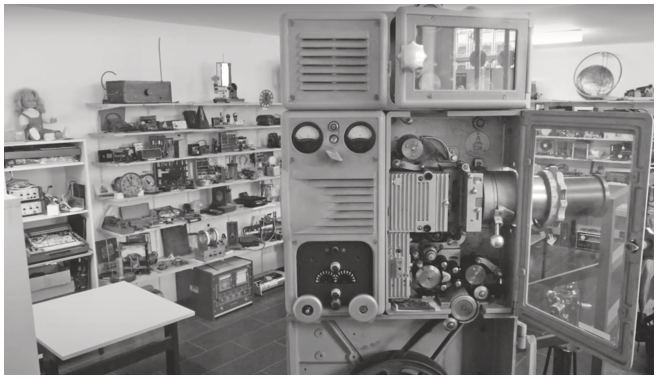
But while Parikka, citing Schneider, offers a suggestive sense that the “performative dimension” of media archaeology “offers a dynamic way to understand the archival and move beyond oppositions of live and documented, live and recorded, to the productive liveness of the archival as an embodied situation” (27), Schneider’s parallel recognition, that “there is little on this earth more outmoded than the live theater” (“Slough Media” 72) jibes more closely with the representation of theatre in media archaeology. Indeed, the occluded terrain of theatre in media archaeology is vividly charted at the most widely known media-archaeological studio, Wolfgang Ernst’s Media Archaeological Fundus at Humboldt University in Berlin (see Figure 1.1). According to Ernst, when Media Studies was established at Humboldt, “it replaced former Theatre Studies,” and its distinctive spaces as well: “All of the sudden, spaces like the student practicing stage and its relating fund of objects for rehearsal were empty. This was the ideal moment for the Berlin school of media studies (insisting on the materialities of communication and epistemic technologies) to claim such rooms under new auspices,” in which the stage became “the Media Theatre where technical devices themselves become the protagonist, and the fundus” – the old prop closet – “became the space for a collection of requisites of a new kind: media archaeological artifacts” (Ernst, qtd. in Parikka, “Remain(s) Scattered” Reference Parikka, Jucan, Parikka and Schneider17).22
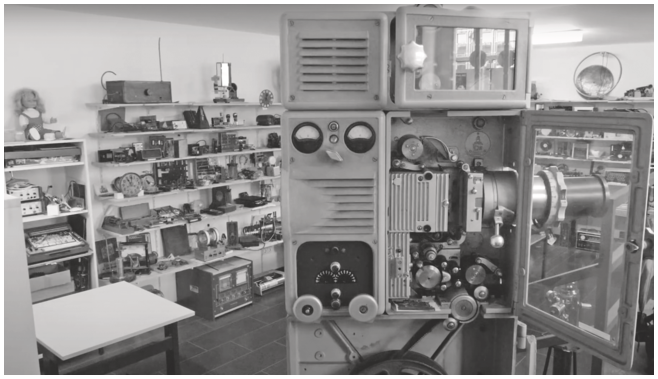
Figure 1.1 The Media Archaeological Fundus Berlin.
In the academic landscape as elsewhere, geography is power, and Ernst’s narrative urges us to accept the transfer of power as a simple transfer among media, much like the apparently inevitable relegation of theatre by film. As he describes it, the “legacy in performance and theater was transferred and transposed into a different sort of relationality, which was also tied to certain spatial practices involving objects” (Ernst, qtd. in Parikka, “Remain(s) Scattered” Reference Parikka, Jucan, Parikka and Schneider18). Perhaps. But what seems more visible is a specific act of re-territorialization, in which the social and material practices of theatre – sustained by a studio space used for medium-specific practices of theatrical training and rehearsal – are evacuated, replaced by alternative objects and alternate ways of doing justified by the assertion that they represent a more significant, legitimating agenda as “materialities of communication and epistemic technologies” (18). That is, despite Ernst’s sense that the function of media archaeology is “not the negation of the historical disciplines but the necessary complementary perspective on what constitutes culture,” theatre seems to occupy its usual, precarious, always already superseded place among those disciplines (“Media Archaeology-As-Such” 18), barely understood as occupying a present complementarity however much its technologies (acting), tools (props, scenery, lighting), and topographies (the dispositif of frontal, darkened spectating) continue both alongside and in interaction with, say, cinema. While the Media Theatre and the Fundus appropriate the methodological emphasis on doing characteristic of theatre and performance studies, these “hands-on approaches, methodologies of tinkering and collective ‘doing it together’ spirit” here appropriate, displace to erase, similarly inflected practices, the hands-on tinkering and collective training and doing of theatre training and rehearsal and the space required to engage them (Ernst, qtd. in Parikka “Remain(s)” Reference Parikka, Jucan, Parikka and Schneider21). Although Parikka calls for a more urgent recognition of the performative dimension of media archaeology, and assesses the human dimension of what might be called Fundus performativity, that performativity is visualized here precisely as the conquest and dispersal of theatre as a consequential cultural practice.
As her slant reference to Brecht implies, Rebecca Schneider’s “Slough Media” more carefully positions theatre among the objects of media archaeology, alongside photography, film, video, digital arts, and other “gestic techniques of the body”; theatre becomes exemplary of the “play-replay nature of media” (51). Schneider understands the function of media as entwined with the human body: “bodies are the extension machines for media, and obsolescence is the mode of that extension” (59). The “scandal of the obsolete is precisely that it isn’t” (59), and as the repurposing of theatre space at Humboldt witnesses, the theatre is always fading into pastness, irrelevance, and yet remains in a way that stages its own persistent foregrounding of the implication of bodies and technology. It may be that “there is little on this earth more outmoded than the live theater” (72), but theatre’s mediality consists in an ongoing process of technological appropriation and remediation that is, like gesture (one of its constituent media), both “emergent and obsolescent simultaneously” (68). From Frogs to Hamlet to Trelawny of the “Wells” to The Dresser to Venus, plays about the theatre often represent theatre as outmoded, past, out of sync with the behavioral conventions of the framing world, reproducing in historical terms a syncopation within the present that Gertrude Stein thought constitutive of theatrical performance. Since theatre, for Stein, is “always either behind or ahead of the play, at which you are looking and to which you are listening,” your “emotion as a member of the audience is never going on at the same time as the action of the play” (“Plays” xxix). What theatre instantiates is the archaeological itself. Any performance today, in any theatre, however new, is built on technologies that not only owe their origins to previous instantiations, but depend on the deep time of handmade aesthetic work: the pins in the costume shop, the hand props that so fascinated Brecht, the practices of rehearsal and acting, the social imagination and cultural ambitions reified in auditorium design, and so on.
Modern theatre is particularly suggestive not in its intermedial character – theatre has always been intermedial – but in its intermedial incorporation of recorded performance within, and in relation to, its apparent liveness. Despite J. L. Austin’s setting aside of speech acts onstage as “in a peculiar way hollow or void” (How to Do Things with Words 22), Stiegler suggests that the Derridean critique of Austin “does not inevitably mean the destruction of all intentionality, but rather its being located on the side of the what as much as of the who” (Technics and Time 2:61–62). Theatre is a technology that constellates a range of technologies (what) that articulate and are articulated by a who or whos. One illustrative instance of the shifting interplay of who and what arises from the changing form and functionality attributed to the script in the theatre, a tekhnē distinctive of the apparatus of European theatre since the classical era. The instruments of dramatic writing – a papyrus scroll, a scribal manuscript of the kind recorded in the York Register, the now-lost manuscript of a Lord Chamberlain’s Men play, the 1603 Hamlet quarto, a Shavian rehearsal typescript, the Dramatists Play Service playscript of Suzan-Lori Parks’s Venus, a PDF downloaded to an iPhone acting app – each materialize writing, and so authorship and literary drama, as a moment in the changing technology of writing and publishing, and in the use of writing in the fluid apparatus of theatre-making. To take the “text” as determining the work of theatre, as the phrase “text-based theatre” implies, is to universalize a contingent set of modern technological relations as essential to theatre. It dramatizes the asynchrony between technological development and its lagging conceptualization, a sense of the ways any technical assemblage is historically specific and socially and ideologically interactive, attitudes Jennifer Buckley shrewdly sees as “axiomatic in the field of media history” and “now crucial to the constellation of approaches called media archaeology” even if they are not natively or reflexively applied to theatre (Beyond Text xii). Today, for instance, print is almost entirely a metaphor, since only a tiny number of textual objects are actually produced by the imprinted impression of inked type on paper, while a much, much larger number of objects are “printed” through photoreproduction, and an even larger number of objects merely replicate print-form shapes on a virtualizing screen (see Galey, Shakespearean Archive). Onscreen, “print” is a skeuomorph, a residual marking of past technology, much as the conception of “text-based” theatre today typically ignores the material and instrumental variety of those “texts” – some books, some “performance editions” like those of Samuel French and Dramatists Play Service, but also printed-out PDFs, photocopies, texts used directly from mobile phone and tablet apps, all variously trimmed, cut, inscribed, and annotated – and so how they sustain only the most deliquescent sense of a “base.”
An intimate technology of the human, acting is – like writing – a technology of passage, differentially materialized by its performers, for instance, being masked or not, literate or not, paid or not, professional or not, legal or not, live or not, and, now, onstage or virtual or not. Although it’s tempting to say that acting is essentially the embodied practice of representing fictional and nonfictional people in virtual action, acting is hardly imaginable outside the specific apparatus within which it is practiced. As a technology, acting is inseparable from both its immediate social outside – how its conventions (the teapot stance, cheating out) engage the social world they represent – and its theatrical inside, the platform it shares with costume, scenography, the opportunities afforded by dramatic writing. It would be hard, in this sense, to align the material practice of, say, Richard Burbage, David Garrick, Sarah Siddons, Sarah Bernhardt, Mei Lanfang, Helene Weigel, Kate Valk – to speak only and purposefully of Western theatre – in some essential way without instantly recognizing the loss or betrayal of their work, of the cultural and artistic specificity of that technology called acting. While actors today may well move from the stage to a television studio to a film location to a laptop in their bedrooms, what they do in each of these sites, as a practice, engages with and represents acting in the terms of its encounter with other technologies of performance.
As Martin Harries elegantly remarks, the attention to liveness in the era of digital mediation has tended to polarize theatre among the media in ways outlined here, replacing “the universal fetish of the live with the universal complacency of the mediated” (“Theater and Media before ‘New’ Media” 10). Theatre’s liveness, usually identified with acting, is nonetheless a function of its mediation, anticipated in relation to the technologies it absorbs, uses, and represents at a given historical moment. Liveness is a contentious term, especially when – in problematic conjunction with assumptions about presence – it is used to discriminate between, and privilege among, modes or media of performance. Philip Auslander’s now-famous notion that “liveness was made visible only by the possibility of technical reproduction” (Liveness 57) is unexceptionable, but has not resolved the problems generated by taking liveness as essential to theatre. Even critics at pains to articulate theatre within a long trajectory of intermedial, intramedial, and transmedial technologies often resist the notion that technologies mutually define their purposes and social identities; theatre is understood to be “generally and primarily defined by its liveness” (Georgi, Liveness on Stage Reference Georgi82), a liveness seen to be unmediated, framed within the “co-presence of performers and spectators, the ephemerality of the live event, the unpredictability or risk of imperfection, the possibility of interaction, and finally a specific quality of the representation of reality” (5). Yet Alain Robbe-Grillet was certainly right to see that Beckett’s Waiting for Godot was uniquely reflective of the “major function of theatrical representation: to show of what the fact of being there consists” (“Samuel Beckett or Presence on the Stage” 20), taking the being-thereness of the play to be framed and so defined within the cultural and technological constraints of theatrical being-thereness. What is lurking within the attribution of an uncomplicated liveness to theatre is a notion of the human as a category of presence and experience unchanged by the terms and practices and technologies of its making. And yet, as stand-ins for notions of the human, liveness and presence emerge as part of an ensemble of what Bernhard Siegert calls “cultural techniques,” allowing “the actors involved to be both human and nonhuman; they reveal the extent to which the human actor has always already been decentered by the technical object,” or indeed by the suite of theatre technics (Cultural Techniques 193). While from the 1950s onward, surely under the impact of the translation of Artaud’s The Theater and Its Double into English, liveness and presence become terms used to define theatre as a human endeavor, what makes theatre actively human is its changing technological identity, the fact that it is an inhuman thing that constitutes the human, the who from the perspective of an inhuman, mediating, and so potentially dehumanizing, what.
Although media archaeology often fails to locate theatre in its critical sights, it provides a crucial heuristic for thinking about theatre, and for thinking through theatre’s engagement with, definition by, and performative representation of the technological human. In its attention to the technological apparatus, rather than solely to the representational “work” produced through a given medium, media archaeology offers a distinctive analytical inspiration for thinking about and through an obsolescing theatre. Western theatre, largely since the rise of professional theatre in the sixteenth century, does its distinctive work through the interaction of its objects, technologies, and practices. And insofar as media archaeology attends to the ineluctable obsolescence of instruments, it enables an alert attention to the ways that the multitemporality of a theatre’s instruments locates theatre as a practice of temporal passing, of obsolescence. Theatre represents the technologies it appropriates to the stage: the movement of the phalanx, perhaps, by the Greek dramatic chorus; printed books in Hamlet; electricity in The Wild Duck; photography in Three Sisters; stage machinery like the turntable in Mother Courage and Her Children; the proscenium house and the stage room in Endgame; the conventionalized armature and social implications of formalized behavior called acting in The Death of the Last Black Man in the Whole Entire World. Media archaeology, in its sense of the persistence of “zombie media,” enables a particular kind of skepticism toward the notion of the live, of liveness as definitive of theatre as a mode of cultural production, but also toward the technologically mediated liveness offered by new media, the simultaneity of digital interactivity.
Theatre stages the fictive possibility of unmediated encounter, the fiction of presence in both political and philosophical terms. Insofar as the technological cannot be other to the category of the human, so liveness cannot be other to the category of the technological. In mediating the ways the human appears, and appears as live, theatre incorporates the fiction of liveness into its technology of mediation. Theatre as Technology tracks the interaction of object, medium, technology, and performance practice to mark the temporal passage of modern theatre, and so the temporal passage of a modern “human.” In Chapter 2, “Zoom(ing) Theatre; or, Theatreness,” I consider a moment of explicit obsolescence, the impact of new technologies on the public practice of theatre itself during the global pandemic of 2020–21 and beyond. So-called Zoom theatre provides the opportunity to ask how a new technology works to replace theatre, and in so doing represents theatre. How does Zoom theatre provide a kind of allegory of the work of theatre at the moment of its displacement, its perhaps-feared, perhaps-sought permanent consignment to obsolescence? Tracking several developments of Zoom theatre through the first eighteen months of the pandemic, I suggest that Zoom theatre can also be understood to occupy a horizon shared with theatrical works undertaking an experimental relation to other forms of recording technology, focused here by Samuel Beckett’s Not I, and with works undertaking a thematic interrogation of the relationship between new (recording) and old (theatre) technologies, such as Anne Washburn’s allegory of the Obsoloscene, Mr. Burns, a Post-Electric Play.
Chapter 3, “The Whirligig of Tech: Theatricalizing Technology at The Wooster Group,” moves from the stage onscreen to the screen onstage, opening from an alternate engagement between theatre and the media of recorded performance: the use of film, radio, digital production, and recorded sound in the theatre. Although this practice extends back into the nineteenth-century theatre, the interaction between the live and the recorded is pervasive in nearly all “live” performance today. Is there a stage production at any level of achievement, from the schoolroom to Broadway, that does not score the performance with recorded sound and music? I begin by returning to a widely discussed landmark production of the first decade of the new millennium, The Wooster Group Hamlet. Much of the analysis of this tech-forward Hamlet has addressed the production’s animating gesture, the actors downstage replicating the movements and vocal tonalities of the 1964 Theatrofilm by Electronovision recording of the John Gielgud/Richard Burton Broadway production, projected on several screens upstage and alongside the actors’ performance. Here, though, I suggest that this Hamlet takes up a more complex interrogation of the temporalities of theatre and film, in part by focusing on the other films staged by The Wooster Group and their distinctive modeling of technology and temporality. The Gielgud/Burton film’s replication of theatrical liveness, then, speaks to the slippage between analog and digital performance in Michael Almereyda’s 2000 Hamlet, and to the competition with print fantasized by Kenneth Branagh’s 1996 film. The Wooster Hamlet, that is, undertakes a complex archaeological gesture, summoning the enactment of broadcast, of analog and digital recording, and of print, to envision theatrical temporality not merely in relation to film, but in relation to a broader technological horizon of performance. I then turn to The Wooster Group’s 2021 production of Brecht’s The Mother. While theatre is often understood to stand apart from recorded film and video, even the most conventional theatre uses recorded sound. In The Mother, theatrical sound, especially the complex interface posed between the actors’ live and recorded voices, provides the means to refigure the operation of technology within the refractive ideological work of Brecht’s stage.
Chapter 4, “Proscenium Subjects,” takes up the definitive instrument of the modern theatre: the proscenium. Although the proscenium defines the social and artistic relations of modern theatricality, it operates as part of a specific, technologically overdetermined apparatus: the theatre as a fully administered, technically demanding “black box.” Modern theatre, that is, while locating its invisible spectator as the silent, engaged consumer of individualized aesthetic experience, simultaneously represents the spectator as part of its totalizing technological functionality; recalling that other black box, the enclosed electronic device first defined in this way during the Cold War, the proscenium spectator functions as both input and output, transformed in the technological box. In this chapter, I trace the implication of the proscenium in the technologies that define the aesthetic and cultural work of black box theatricality, particularly the lighting and sound instruments that register this theatre’s distinctive mode of individualized immersion. Opening by considering how this familiar apparatus is implicated in the racializing machinery of contemporary society in Jackie Sibblies Drury’s Fairview, I then turn to a reading of Beckett’s theatre, where the work of the proscenium dramatizes the intersection of technical obsolescence and the fitful passing, and possible persistence, of the modern subject.
In Chapter 5, “Theatre and the Artifice of the Human,” I conclude by framing a dialogue between Annie Dorsen’s 2023 Prometheus Firebringer – a meditation on the use of artificial intelligence in the arts – and a more homely, nonetheless experimental performance almost entirely eschewing modern theatrical technology, Forced Entertainment’s Table Top Shakespeare. How might these two performances and the technologies they share (proscenium theatricality, lighting, an authorizing script, a seated performer, and one of the modern theatre’s defining instruments, a table and chair) – help to refocus our attention on the implication of theatre in what is, in Prometheus Firebringer at least, a technological crisis mapped in the theatre as a representational crisis: the staging of artificial intelligence in dialogue with the artifice of the human?
Theatre as Technology arises from a specific time and place of theatre – New York City in the early 2020s – but also traces the longer technological durée of the modern theatrical machine, reading back through the before-time of the pre-pandemic, through Beckett and the experimental theatre of the 1960s, 1970s, and 1980s, through Brecht and Benjamin and the slipping of mechanical reproducibility to the stage, to the realist materiality of late nineteenth-century drama and the revolution of theatrical darkness, springing from Wagner’s Bayreuth, that enabled it. For over a century now, theatre has been threatened with extinction by forms of recorded performance, a narrative that reflexively reveals the reciprocal fallacy of media succession, as though the apparently definitive “liveness” of theatre confirms its inevitable obsolescence. Yet if media archaeology has anything to teach us, it might be that the irregular fits and starts, the sidesteps and backsteps that characterize technological change, alert us to the inadequacy of “linear narratives and the ideological association between technical and social progress they imply” (Parisi, Archaeologies of Touch Reference Parisi28), particularly the narratives of progress, both in terms of technical realism and in terms of the ability to register social progress, that continue to rationalize contemporary theatre. The fact that theatre stages the co-creation of human and the technological is the source of both progressive, utopian narratives and a distinctive dystopian duality as well: the fear that without technology, society will devolve to inhuman brutality, or that the technological will evolve to eliminate an inferior humanity altogether. This second fantasy is bred into the theatre, too. What would happen if the tekhnē of acting became pervasive in the ambient culture, in effect replacing the human with an indistinguishable imitator? This is Plato’s nightmare, and Rousseau’s, too, but also has its part in Medea’s calculated performance of feminine weakness to Creon in Euripides’ play, in Dionysus’ seduction of Pentheus in The Bacchae, in the theatricalized Vice of medieval morality drama, in concern for the propriety of “actions that a man might play” from Hamlet to Tartuffe, in the Chinese-box of acting/“acting” in modern plays like Luigi Pirandello’s Enrico IV or Anthony Shaffer’s Sleuth, in the shifting dynamics of audience casting in Suzan-Lori Parks’s Venus, or in the anxious intercalation of human and artificial “intelligence” animating Prometheus Firebringer. The theatre’s occupation of the obsolescent articulates the fear that in the interactive co-constitution of the human and the technological, the “human” is itself undone by what it creates, and by what creates it, a trepidation about the implication of the inhuman, nonhuman, ambiguously human, posthuman that is, for us, the moment of theatre.
The classical image of the actor gazing into the mask is one image of this unravelling, but to conclude I would like to recall another, again from the passing future of Star Trek, though this time from an episode of Star Trek: The Next Generation, “The Descent: Part II,” first broadcast to open the series’s final season on September 20, 1993. I should perhaps say that I first saw this broadcast on a TV set, then again in reruns, and now digitally streamed to my laptop; this episode is organized by my technological temporality, too. In this continuation from the previous season’s cliffhanger, the Enterprise is again threatened by the android Lore and, surprisingly, by his “brother,” Lt. Commander Data. Lore is the android prototype created before Data, the prototype Data was created to supersede, though in large part by devolving from Lore’s more advanced capacities. As a consequence of Lore’s emotional volatility and impulsiveness, which, combined with his extraordinary nonhuman computational abilities and physical strength, made him threateningly ungovernable by his human creators, Data was created without the ability to feel or express emotion, and spends much of the series learning to be “human” by approximating “emotional” activities – playing music, having a pet, rehearsing Shakespeare parts, briefly raising a child. The androids intensify the fearsome dynamics at the heart of the technologized human (and, as an aside, of the technologies of acting, too): Lore becomes dangerous by surpassing the human, Data is safely programmed never to achieve it. Lore appears several times over the course of The Next Generation, and in this episode has not only succeeded in reprogramming Data to his own evil wavelength, but has also recruited an army of Borg soldiers; having been infected by a strain of “individualism” introduced in a previous episode, they have replaced their hive-mind with fealty to Lore, “The One.” Here, then, at the opening of The Next Generation’s final season, that anxious motif of the original Star Trek series – the human versus the machine – returns in a new, posthuman key. In Kirk’s day, machines could be tricked by the resourceful, aleatory human imagination, the analog impulsiveness of the living defeating the algorithmic order of the machine. But while the Vulcan Spock had to struggle to suppress the risky power of emotion, Data’s search to inhabit “human” life, while it is hedged by his inability to feel that risk, doesn’t quite founder on it. For in this next generation, what the human, the engineered part-human cyborg (thinking here both of Geordi LaForge’s visor, of the Borg, and of course of Voyager’s Seven of Nine), and the created human android all share is life, a lifeness that no longer appears (as it always only appears) to divide the technological from the human, a digitally mediated from a physiologically unmediated embodiment. And in that moment, the human is recognized – as its theatre is recognized – as defined in its passing by the technologies it creates, and that create it. As Lore puts it to the humanist archetype of enlightened command: “The reign of biological life-forms is coming to an end. You, Picard, and those like you, are obsolete.”