

Introduction
Between 450 and 350 BC, many European Iron Age societies experienced significant social, economic, and political transformations. However, this has attracted little attention when compared to other significant changes, such as the end of the Late Bronze Age (hereinafter, LBA) and the spread of fortified settlements (Kristiansen Reference Kristiansen, Feinman and Price2010; Knapp & Manning Reference Knapp and Manning2016). I am not suggesting that the social turmoil between 450 and 350 BC has not been recognised yet; the year 400 BC is usually mentioned as a milestone between different social dynamics (see Hornung Reference Hornung2008; Fernández-Götz Reference Fernández-Götz2017). However, the transformations that took place between the 5th and 4th centuries BC are usually regarded as a ‘transitional milestone’ rather than as a subject of specific study.
This situation may be caused by the brevity of this period, together with the limitations of archaeology in accurately classifying and identifying short time spans. This is further complicated by the absence of precise absolute dates due to the ‘Hallstatt Plateau’ issues in the calibration curves (Hamilton et al. Reference Hamilton, Haselgrove and Gosden2015). In addition, it is also possible to add a certain (and reasonable) reluctance to the models proposed by historical-cultural historiography because of the ‘Celtic migrations’, which were used to underpin nationalist and xenophobic attitudes (see some examples in Kristiansen Reference Kristiansen2001, 435). Although the debate has recently been reinvigorated free from these elements (Fernández-Götz et al. Reference Fernández-Götz, Nimura, Stockhammer and Cartwright2022), these studies have not yet reached the depth of other areas of research. Indeed, the misuses of certain terms and ideas should not be an obstacle; concepts such as ethnicity have also been manipulated and distorted by xenophobic positions and restructured from other perspectives in recent decades (Jones Reference Jones1997; Roymans Reference Roymans2004; Mac Sweeney Reference Mac Sweeney2009; Nión-Álvarez Reference Nión-Álvarez2024a).
In addition, I believe that there is another influential factor which is deeply rooted in archaeological research. Unlike social anthropology, archaeology has always been attracted to change. In contrast to the ‘stable’ anthropological views on societies (Leach Reference Leach1982, 36; Lévi-Strauss Reference Lévi-Strauss1997, 331), archaeologists have a particular interest in crises and breakdowns (Cunningham & Driessen Reference Cunningham and Driessen2021). Rooted in stratigraphy, typology, and categorisation, archaeology has been based in the recognition of change as the driver of historical narrative, in opposition to anthropology, which requires stable, structural contexts to unfold its methods. As archaeologists, we usually focus on change, even if we do not understand the real social impact of some of the changes we unearth (Crellin Reference Crellin2020).
However, problems arise when the timeframes of some contexts are particularly short (in archaeological terms), making it impossible to anchor these changes in an archaeological sequence. Brief and abrupt shifts, such as in our current case study, are eventually perceived as ‘transitions’, failing to acquire real shape in historical and archaeological narratives. Nevertheless, from a Bergsonian and Deleuzian perspective on time (see Deleuze Reference Deleuze1991, 59), archaeology encapsulates time in materiality, regardless of its duration, and should therefore be analysed accordingly. Our job is to identify the differences expressed in several contexts, objects, and subjects, to which could be added, to analyse any transformations as common entities rather than as mere ‘transitions’ from one phase to another, regardless of their duration. We must acknowledge each archaeological setting and adapt our approach to the rhythms and temporalities of the past (Olivier Reference Olivier2004, 205–6; Crellin Reference Crellin2020, 8) offering a fluid narrative that is not dependent on teleologies (Scott Reference Scott2017, 3) or determinism (Wolf Reference Wolf1982, 10).
Hence, this paper aims to analyse this abrupt transition between the 5th and 4th centuries BC. I will begin by presenting a broad and general overview of the events in different European regions, exploring how these changes materialised and how they were reflected in later periods. I then define a broader framework of analysis for a particular case study in the north-west of the Iberian Peninsula. Several sites will be described and analysed, focusing on what changed, when, and how, and what the consequences have been. Rather than providing a single systematic or unambiguous answer, my aim is to understand the main trends in the case study and to correlate them with other sudden changes traced in other European contexts. I seek to analyse how this process of social instability can be traced in different regions that are not directly connected, and the extent to which it influenced the social models that ultimately prevailed during the second half of the 1st millennium BC.
The ‘Crisis of the 400s’: An abstract social transformation
It is difficult to deny the existence of a generalised process of instability, transformation, and/or change in the social dynamics of the European Iron Age between the 5th and the 4th centuries BC. Some authors, such as González-Ruibal (Reference González-Ruibal2006–7, 269), have referred to this series of conjunctures as the ‘Crisis of the 400s’. According to our current definition of crisis, we cannot say whether this period can truly be described as such. However, its Greek etymology, κρίσις, literally means ‘separating and distinguishing’. In this vein, the ‘Crisis of the 400s’ may not be a crisis in the contemporary sense, but it certainly reflects a difference between different periods that can be used to explain how European Iron Age societies experienced a significant shift in their way of life.
The main common thread to these changes is the chronological coincidence: they happened at the same time, but they show a high degree of variability. Some regions show a marked break, with the emergence of a social model leaning to hierarchisation and centralisation. The south-west German Fürstensitze are a particularly striking example. Their appearance is associated with processes of intense social hierarchisation and political centralisation around the hinterland of settlements, such as the Heuneburg or Mount Ipf (Brun & Chaume Reference Brun and Chaume2013; Fernández-Götz & Ralston Reference Fernández-Götz and Ralston2017), between the 6th and the 5th centuries BC. The emergence of large aristocratic tombs and central sites was interrupted between the 5th and 4th centuries BC (Bintliff Reference Bintliff, Attema, Seubers and Willemsen2016, 6), giving way to a process of occupational decentralisation from the 4th century BC (Buchsenschutz et al. Reference Buchsenschutz, Gruel and Lejars2012), when large central sites lost their hegemony and were abandoned or destroyed (Fernández-Götz Reference Fernández-Götz2017, 128). In other relatively nearby regions, such as the Nitra-southern Slovakia area, even the existence of a stable occupation in this period (450–380 BC) is not confirmed – there is hardly any evidence of fortified settlements, or any other kind of occupation, as opposed to later periods with an intense population density (Kovár Reference Kovár and Berecki2016, 223–4).
If we consider other German areas, the Dutch region of Meuse-Demer-Scheldt shows a significant change in the forms of occupation around 400 BC. Small, conspicuous, fortified settlements were abandoned (Gerritsen Reference Gerritsen and Beck2007, 158) in favour of new settlements focused on the family unit (Roymans & Gerritsen Reference Roymans and Gerritsen2002). This is a process of socio-political transformation, whereby the unit of social organisation in the village is replaced by extended family nuclei, diversifying the occupation models. This change represented a paradigm shift in the way the landscape was inhabited during the following years.
In other examples, such as in southern Britain, there is no consensus about what changes occurred in this period, although it is usually highlighted as a chronological milestone for several transformations. Authors such as Moore (Reference Moore, Haselgrove and Pope2007) suggest a relatively brief and short-lived transition, which can be observed in regions of northern and central Britain. However, a significant shift has been observed around 400 BC in some areas, with regions such as Essex undergoing a substantial population decline (Sealey Reference Sealey2016). These variations could potentially support the existence of migratory processes of regional impact (Hill Reference Hill, Haselgrove and Moore2007, 23–4). Still, it is important to note that this process of demographic reduction is concurrent with population growth in other nearby regions, as evidenced by the case of the Midlands (Willis Reference Willis, Gwilt and Haselgrove1997, 208–9). Whatever the causes and the consequences may have been, this demonstrates that several changes happened during this period, which were apparent in every field of daily life, such as the domestic environment, burial practices, and material culture (Haselgrove & Pope Reference Haselgrove, Pope, Haselgrove and Pope2007). While the regional contexts may differ, all of them underscore the importance of 400 BC as a significant milestone.
South-west Gaul shows a divergent and complementary context. Between the 6th and especially the 5th centuries BC, a process of complete social reorganisation in this region took place (García Reference García2004, 76–7). There is evidence of a resurgence of traditional beliefs during this period, as shown by the reoccupation of the stelae shrines; this could be seen as a reaction against the prevailing sociocultural model (Golosetti Reference Golosetti, Fernández Götz, Wendling and Winger2014, 59). This process appears to have occurred slightly earlier than some of the examples above (5th century BC), but it is coherent as an initial part of a 50–100-year process of instability and social transformation. In addition, the consequences seem to be different: rather than leading to a period of decentralisation, it encouraged a process of social hierarchisation and the emergence of large, fortified settlements (Dietler et al. Reference Dietler, López-Ruíz, Kohn, Moya i Garra and Rivalan2008).
Finally, significant changes occurred in the Iberian Peninsula around 400 BC. Despite the diversity of social dynamics within the territory and the uneven influence of Mediterranean colonisation, some similarities can be traced (Armada et al. Reference Armada, Rafel Fontanals, Montero Ruiz, Celestino Pérez, Rafel Fontanals and Armada Pita2008). In those areas not influenced by Mediterranean colonialism, such as the northern Cantabrian façade, evidence indicates widespread settlement abandonment and changes in housing and social dynamics during the 4th century BC (Marín Suárez Reference Marín Suárez2011, 350). Similar processes have been identified in various Celtiberian regions (Burillo Mozota & Ortega Ortega Reference Burillo Mozota, Ortega Ortega, Arenas Esteban and Palacios Tamayo1999, 134; Rodríguez-Hernández Reference Rodríguez-Hernández2019, 143–6) and is particularly evident among the Vettones. Around 400 BC, a process of synoecism occurred, resulting in a reduction in the number of settlements and the emergence of large, fortified central places that controlled extensive areas of cultivated farmland (Ruiz-Zapatero Reference Ruiz-Zapatero2011, 301). Similar trends relating to increased social stratification and the emergence of oppida have been documented in the east (Grau-Mira Reference Grau-Mira2019, 158) and the south-west Iberian Peninsula (Fabião Reference Fabião, Berrocal-Rangel and Gardes2001, 240), as well as in the territory of present-day Extremadura (Armada & Grau-Mira Reference Armada, Grau-Mira, Haselgrove, Rebay-Salisbury and Wells2023, 318). The latter case is of particular interest: the social model of the 6th–5th centuries BC, based on small population centres around altars or centres of territorial control, disappeared completely around 400 BC, within a context of marked instability with recurring evidence of conflict (Rodríguez Díaz Reference Rodríguez Díaz2009, 209–13).
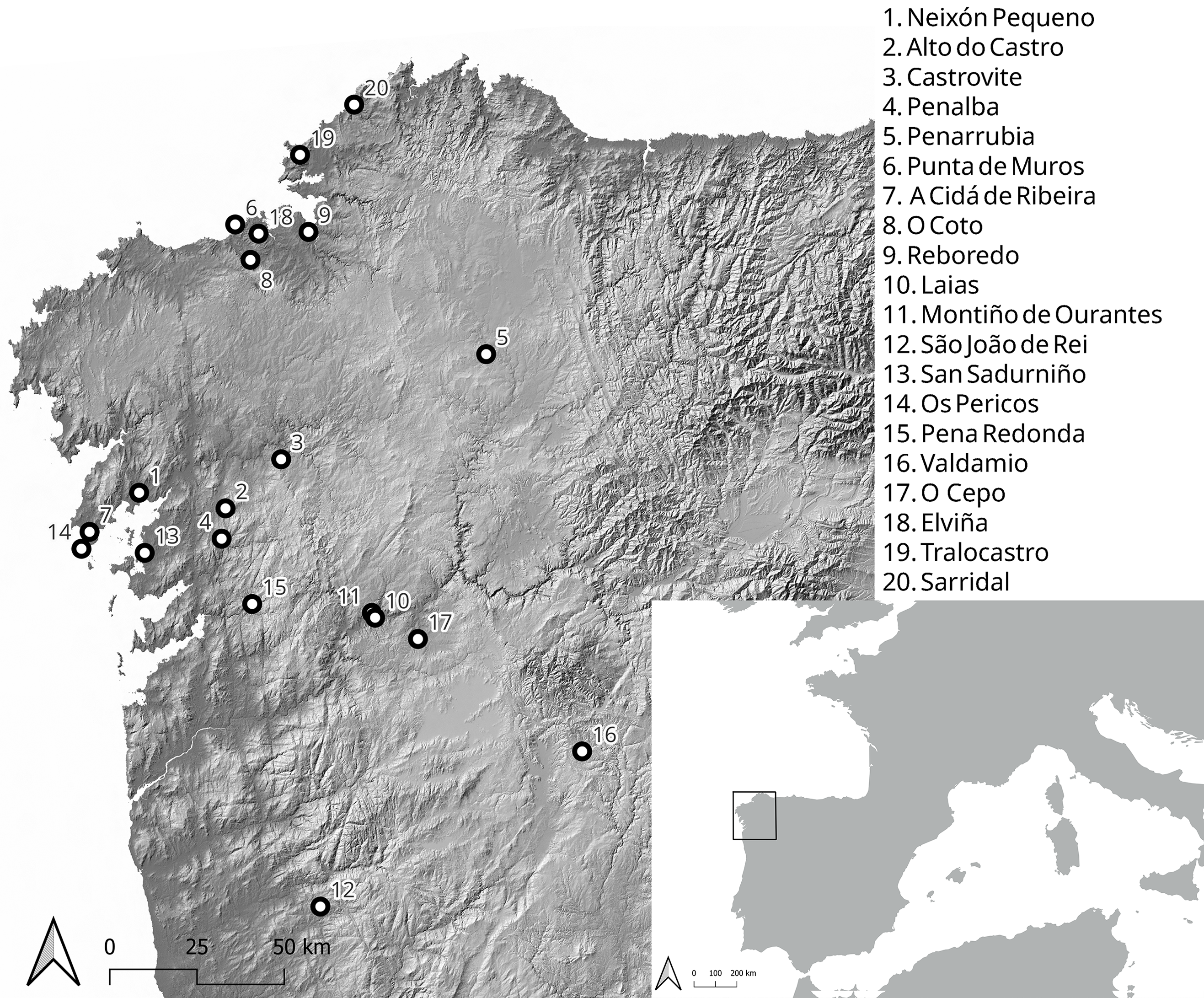
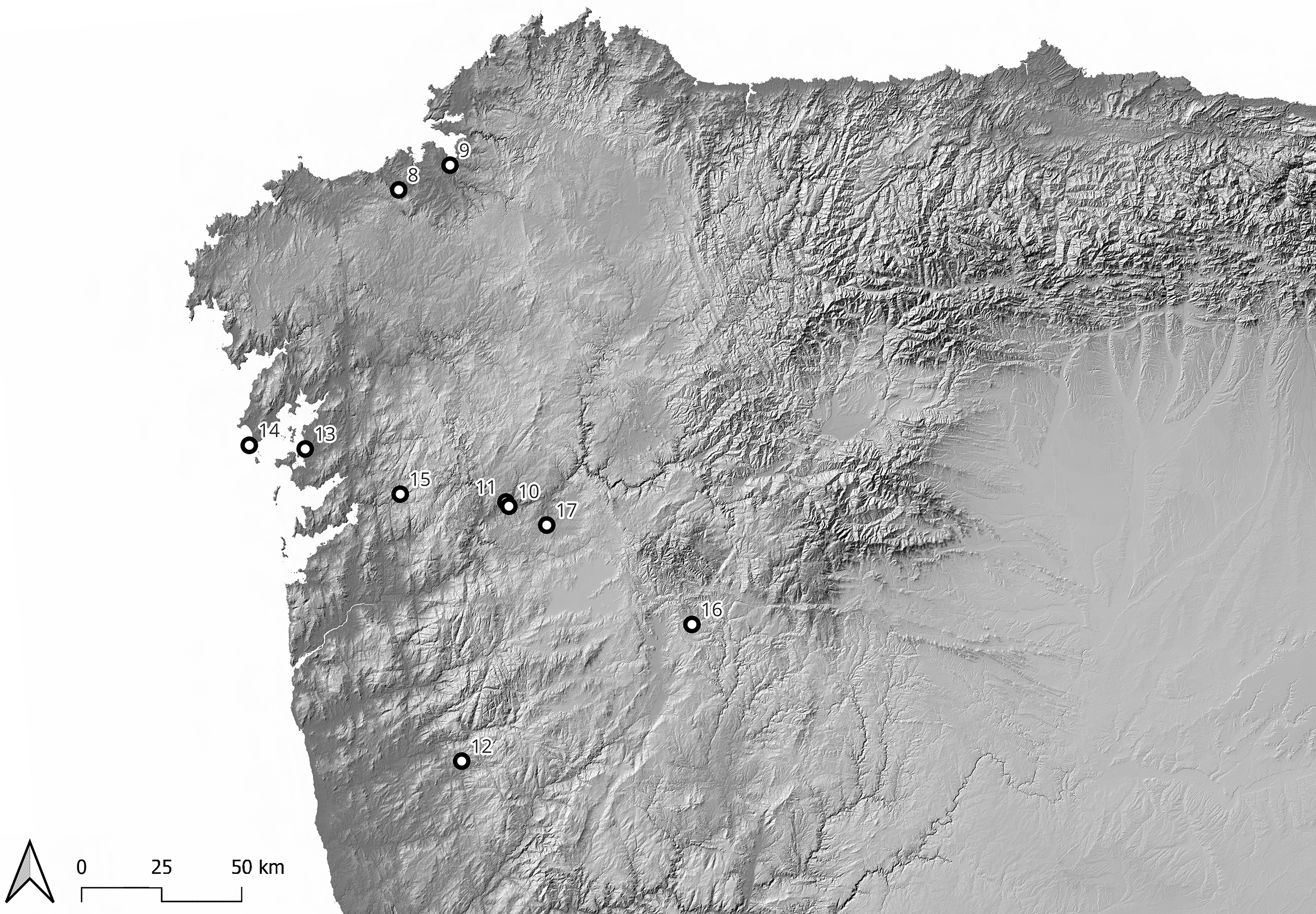
In conclusion, this panoramic review shows that 400 BC marks a significant turning point, with major changes in several regions at the same time. Nonetheless, the nature of these changes is far from being uniform, and the consequences may even be diametrically opposite in some cases. Still, this period works as a chronological milestone of social changes. In the following pages, we will explore a specific case study – the north-west Iberian Peninsula –, where much significant evidence has been documented (Figure 1). Our aim is to draw up some trends over this brief, but significant, time span.

Figure 1. Case study and sites mentioned in the text.
A tale from north-west Iberia: Sudden changes, open villages and unexpected settlements
Social dynamics in the Early Iron Age
To comprehend the impact of the transformations that occurred between the 5th and 4th centuries BC, it is essential to briefly acknowledge the social dynamics of the Early Iron Age (hereafter, EIA) in the north-west of the Iberian Peninsula. The EIA is defined by small, fortified sites, usually less than 1 ha in size, placed in prominent locations of difficult access (Parcero-Oubiña Reference Parcero-Oubiña2000, 86–7). A natural defensive topography and long-distance visibility seem to have been relevant criteria for choosing those locations, creating a highly fragmented social landscape without any dependency relations between settlements (Fábrega Álvarez Reference Fábrega Álvarez2005). It is worth noting that those conspicuous settlements meant moving far from areas with greater agricultural potential, a trend that was combined with an increasing productivity of the farming system. The EIA was also characterised by the beginning of the monumentalisation of settlements, building large-volume walls for the first time in the region and ultimately moving from semi-nomadism to a fully sedentary lifestyle (Méndez Fernández Reference Méndez Fernández1994). From this point until the Roman conquest (29–19 BC), fortified settlements became the main settlement type in the north-west, which marks a difference with common trends of the European Iron Age. Here, there are no open villages, creating a fortified social landscape similar to that in Scotland (Armit Reference Armit and Armit1990) or Nuragic Sardinia (Webster Reference Webster2015). While recent research has begun to identify occupations beyond the walls (Parcero-Oubiña et al. Reference Parcero-Oubiña, Nión-Álvarez and González-Álvarez2025), only a few areas are related to domestic environments, and most of them date to the time range covered in this work, as we will see. This process of fortification was widespread across the north-western territory, but less extensive than occupation in the Late Iron Age (hereafter, LIA): according to a general review of several regional studies, only 20–30% of fortified settlements can be linked to the EIA, with the remaining 70–80% being founded after 400 BC (Parcero-Oubiña et al. Reference Parcero-Oubiña, Ayán-Vila, Fábrega Álvarez, Teira Brión and González García2007, 171–3).
One of the most important aspects of this period is a significant break in occupation patterns. Several EIA settlements were abandoned around 400 BC (Parcero-Oubiña et al. Reference Parcero-Oubiña, Armada, Ayán-Vila and Celestino2017), while most of the LIA sites were founded between the 4th and the 3rd centuries BC. This chronological trend has already been highlighted by a broad chronostatistical analysis of the radiocarbon dates taken in north-west Iberia (Jordá Pardo et al. Reference Jordá Pardo, Abad Vidal, Picón Platas, Francés Zandueta, Rey Castiñeira, Marín Suárez, Centeno, Morais, Soeiro and Ferreira2020, 51). A significant part of the EIA hillforts was destroyed or abruptly abandoned, such as Neixón Pequeno (Ayán-Vila et al. Reference Ayán-Vila, Costa Casais, Tallón Armada, Rodríguez Martínez and Franco Fernández2011, 141), Alto do Castro (Parcero-Oubiña & Cobas Fernández Reference Parcero-Oubiña and Cobas Fernández2006), Castrovite (Carballo Arceo & González-Ruibal Reference Carballo Arceo and González-Ruibal2001), Penalba (González-Ruibal Reference González-Ruibal2006–7, 279), or Penarrubia (Arias Vilas Reference Arias Vilas1979), among others, all of them showing levels of destruction and/or burning that affected archaeological structures between the 5th and 4th centuries BC.
This fact, which represents a significant milestone in these studies, also highlights a problem for archaeological analysis. It is not possible to determine how relevant the evidence described in this paper was in terms of the general dynamics of occupation. There are several reasons: as we have seen, settlements are abandoned and founded within a time frame of less than 100–150 years. Absolute dating does not allow for more precise margins, so it is impossible to determine whether the LIA settlements were founded just before the EIA ones were abandoned, or if a period of time elapsed. Furthermore, in contrast to fortified villages, many of the sites discussed were unknown prior to excavation. Therefore, it is not possible to assess the representativeness of the sample using current data. A chronometric approach, grouping the dates into clusters, may provide more information in this regard.
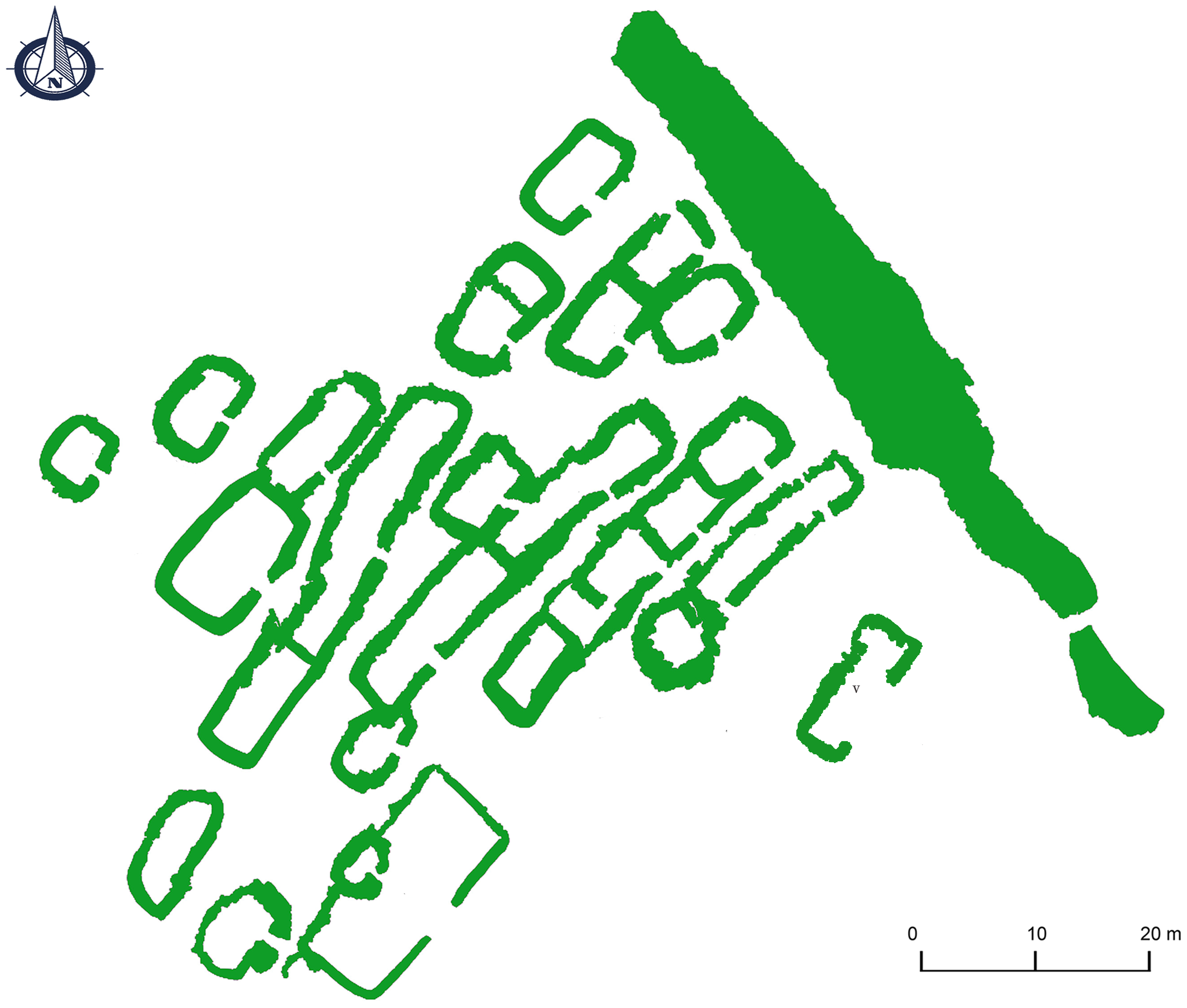
Regarding social dynamics, it is interesting to consider the case of Punta de Muros. This coastal settlement offers a broad and informative sequence between the 9th and 4th centuries BC (Cano Pan Reference Cano Pan2012). Between the 9th and 6th centuries BC, its occupation is consistent with the aforementioned social trends for the north-west Iberian EIA. However, a dynamic of social fragmentation and inequality has been recognised in the last decades of the 6th century BC (Nión-Álvarez & González García Reference Nión-Álvarez and González García2023, 64–5) due to the unequal dynamics between different domestic units, together with a new settlement layout (see Figure 2), a higher degree of work specialisation in specific tasks, and a shift towards more hierarchical forms of worship (Nión-Álvarez Reference Nión-Álvarez2024b, 264). At present, this is the only example with such social transformations during the EIA. There are other settlements with similar urban dynamics and domestic patterns, such as A Cidá de Ribeira (Vidal Lojo & Naveiro López Reference Vidal Lojo, Naveiro López, Centeno, Morais, Soeiro and Ferreira2020), but the absence of absolute dating does not allow us to dig deeper into their temporalities.

Figure 2. Second (and last) phase of occupation of Punta de Muros (Nión-Álvarez Reference Nión-Álvarez2025, 57).
Punta de Muros, like many other settlements, was abruptly abandoned in the early 4th century BC (Nión-Álvarez Reference Nión-Álvarez2023a, 9). The alignment of the end of Punta de Muros with the dynamics outlined above raises some questions: was this abandonment the consequence of a generalised process of instability, an internal rejection of the dynamics of inequality, or the structuring of a new social model that required new settlements? Could this widespread abandonment of EIA hillforts around 400 BC have happened due to the emergence of inequalities?
Moving to the lowlands
These questions cannot be answered categorically, but we can keep them in mind in order to understand how and why the Iron Age underwent significant changes during this short period. It is now generally accepted that, from the 4th century BC onwards, there was a consistent preference for valley areas with good natural communications and areas of agricultural productivity (Parcero-Oubiña Reference Parcero-Oubiña2003, 287–8). This meant that human occupation began to deeply shape the landscape rather than adapt to it (Parcero-Oubiña et al. Reference Parcero-Oubiña, Ayán-Vila, Fábrega Álvarez, Teira Brión and González García2007, 169). This milestone marked the beginning of a gradual process throughout the region, but with a higher intensity in coastal areas. Still, this process may not have been as gradual and regular as originally expected. As we will see, this transition towards the valleys was initially accompanied by a series of experimental occupations (what Lévi-Strauss called bricolage: Reference Lévi-Strauss1997, 55–9), with new, briefly occupied sites close to the valleys, while rejecting fortification between the 5th and the 4th centuries BC.
One of these examples is O Coto, a small settlement occupied during the EIA, which underwent an enlargement with a second walled line between the 5th and 4th centuries BC (Aboal Fernández et al. Reference Aboal Fernández, Cancela Cereijo, Castro Hierro, Rivas Nódar and Varela Campos2009, 195). This expansion approached the valley areas and was connected to developing specialised activities, such as ironworking. However, this occupation was particularly brief and cut short at the beginning of the 4th BC (interestingly, coeval with the case of Punta de Muros, located just 10 km away).
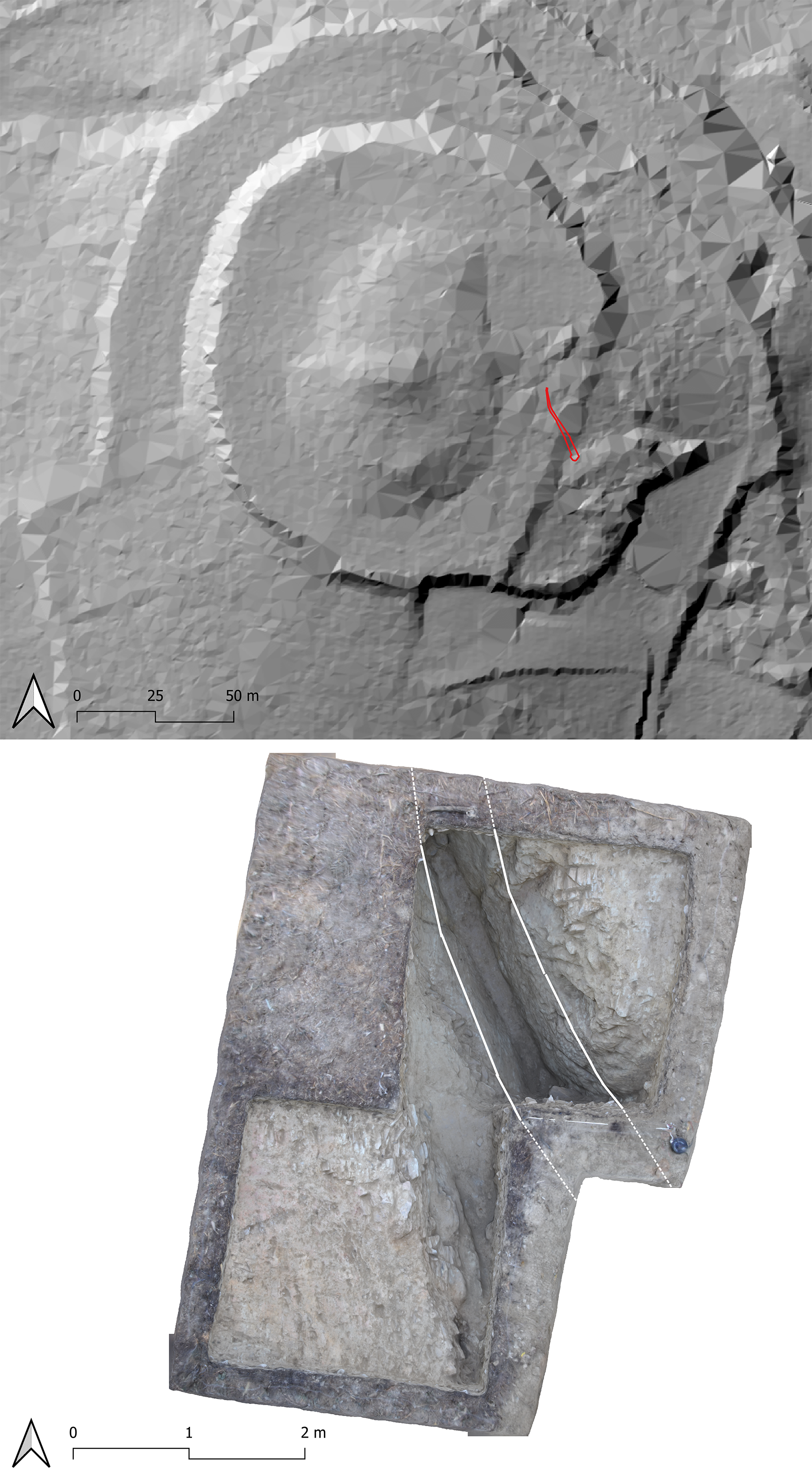
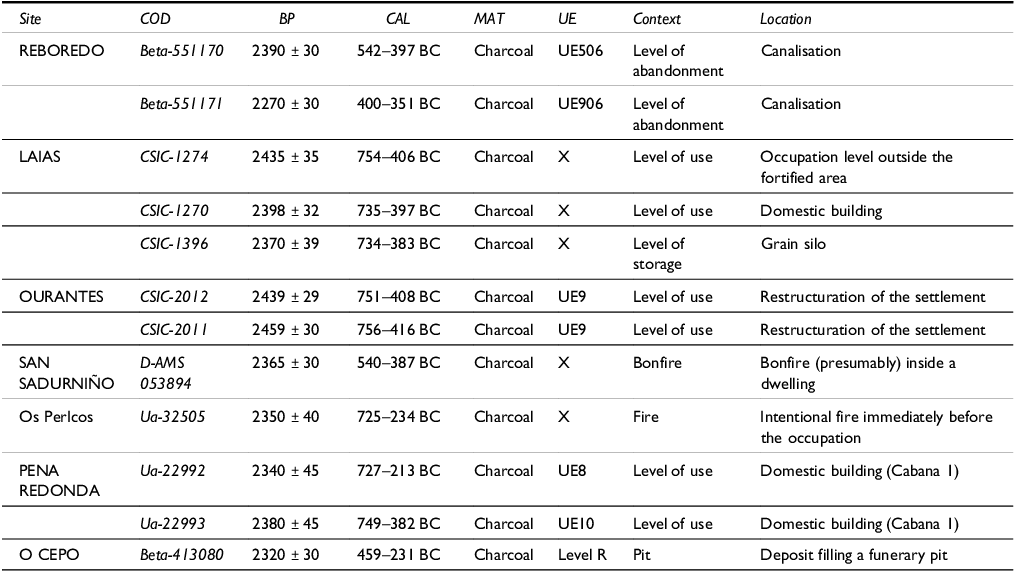
Another example of brief and fortified occupation is Reboredo. The site covers an area of almost two hectares surrounded by two lines of wall. Its morphology and location are consistent with other LIA settlements. Nonetheless, Reboredo lacks evidence of domestic, productive, or agrarian activities within. There is only one structure related to human occupation: a large water channelling structure (Figure 3), over 30 m in length and 1 m in depth (although this can vary along its length). This channel is connected to a small cistern dug into the bedrock, 3 m long, 2.5 m wide, and 40 cm deep (Nión-Álvarez Reference Nión-Álvarez2025, 71). Two radiocarbon dates (see Table 1) indicate that these structures were abandoned during the 4th centuries BC, and the material contexts found in their fills point towards their use between the 5th and the 4th centuries BC. The functional use of this canalisation, which is not comparable to other drainage, water supply, or agricultural supply systems, is as yet unclear (Nión-Álvarez Reference Nión-Álvarez2025, 73). In any case, Reboredo shows a brief and experimental occupation approaching the valley, another bricolage experience around 400 BC.

Figure 3. Reboredo: layout of the canalisation within the hillfort (in red, above) and detailed view (below).
Table 1. 14C dates from new occupations between the 5th and 4th centuries BC. The radiocarbon dates have been calibrated using the INTCAL20 calibration curve (Reimer et al. 2020), OxCal v4.4 (data collected from González-Ruibal (Reference González-Ruibal2006–7); Parga Castro et al. (Reference Parga Castro, Prieto Martínez, Sánchez Blanco, Barceló, Bogdanovich and Morell Rovira2017); Jordá Pardo et al. (Reference Jordá Pardo, Abad Vidal, Picón Platas, Francés Zandueta, Rey Castiñeira, Marín Suárez, Centeno, Morais, Soeiro and Ferreira2020); Álvarez González (Reference Álvarez González2021); Nión-Álvarez (Reference Nión-Álvarez2025))

Rejecting (Briefly) Fortification
Despite these two fortified examples, most of the occupations that emerged and were abandoned during this period do not have defensive systems. This means a paradigm shift from the main dynamics of the north-west Iberian Iron Age: the hillfort had been the exclusive kind of site since the mid-9th century BC (Parcero-Oubiña et al. Reference Parcero-Oubiña, Armada, Nión-Álvarez, González Ínsua, Currás and Sastre2020, 169) and would remain so until the Roman period. An interesting example is Castelo de Laias, a prominent hill with a broad (and discontinuous) chronological sequence between the LBA and the 3rd century AD (López González & Álvarez González Reference López González, Álvarez González and Oliveira Jorge2000, 528). Laias was occupied from the top to the bottom of the slope, with different evidence such as rock art, metalworking, and pottery production areas, as well as later Roman occupations in the lower section that were directly linked to gold mining (Tereso et al. Reference Tereso, Ramil-Rego, Álvarez González, López González and Almeida-da-Silva2013, 3867). Within this sequence, Laias also has a brief occupation phase between the 5th and the 4th centuries BC. During this period, only a small area of the hillside was occupied: some dwellings were found without any kind of walled system (Álvarez González Reference Álvarez González2021, 130) outside the fortified enclosure that would be built later. Indeed, the site was re-fortified in the mid-late 4th century BC (see dating CSIC-1275: Álvarez González Reference Álvarez González2021, 229). This dynamic is strictly replicated in the nearby settlement of O Montiño de Ourantes (Álvarez González Reference Álvarez González2021, 339).
In relation to this non-fortified stage in Laias, some grain silos were found (although they also exist in earlier and later periods: Álvarez González Reference Álvarez González2021, 266, 73). These silos were intended for large-scale cereal storage, with evidence of oats, barley, common millet, and wheat (Tereso et al. Reference Tereso, Ramil-Rego, Álvarez González, López González and Almeida-da-Silva2013, 3871–3). The presence of substantial cereal storage is not common in the Iron Age, although there are other examples of similar age in which analogous processes occur, such as the aforementioned case of Castrovite (González-Ruibal Reference González-Ruibal2006–7, 248) or São João do Rei, so perhaps there is some chronological or social relationship regarding the development of cereal storage strategies. At the latter site, moreover, another brief and non-fortified occupation has been documented as its first phase of occupation, which was also abandoned at the end of the 5th century BC (Martín-Seijo et al. Reference Martín-Seijo, Oliveira and Bettencourt2023, 113).
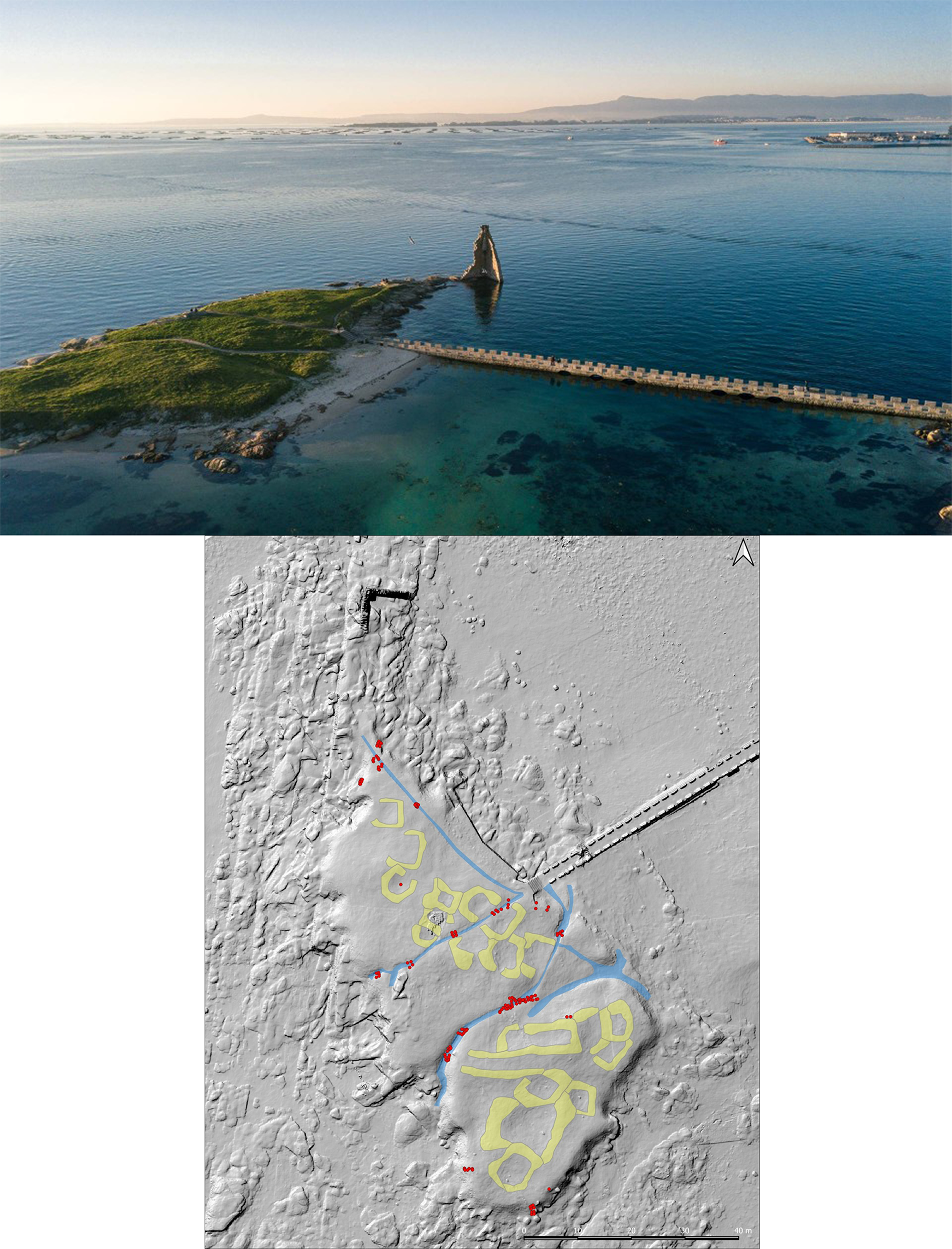
Another example of non-fortified occupation is the coastal settlement of San Sadurniño. Initially excavated with the aim of finding a medieval tower, some Iron Age domestic structures were identified without any evidence of fortification (Parcero-Oubiña et al. Reference Parcero-Oubiña, Nión-Álvarez and González-Álvarez2025, 111–12). This site has been dated to between the 5th and 4th centuries BC thanks to a radiocarbon date (see Table 1). In addition to the excavation of these dwellings, recent geophysical surveys have identified a large number of structures of apparent complexity (Otero Vilariño Reference Otero Vilariño2024) (see Figure 4), although it is possible that some of them date to the medieval period. A similar context is Os Pericos, a site first occupied during the LBA, fortified and occupied in the 9th century BC, but abandoned immediately (Vilaseco Vázquez & Fábregas Valcarce Reference Vilaseco Vázquez and Fábregas Valcarce2008, 107). Several sheltered areas and two dwellings have been dated to between the 5th and the 4th centuries BC (Vilaseco Vázquez & Fábregas Valcarce Reference Vilaseco Vázquez and Fábregas Valcarce2008, 108–9), which were also rapidly abandoned around 400 BC. This site displays very similar characteristics to San Sadurniño: non-fortified coastal settlements occupied at the same time and visually connected to each other through the Ria de Arousa.

Figure 4. Aerial view of San Sadurniño (above) and possible structures identified with geophysical survey (below) (Otero Vilariño Reference Otero Vilariño2024) (right).
Pena Redonda, further inland, shows a similar picture – it had a first occupation in the 8th century BC, but it was occupied intermittently throughout the Iron Age (González-Ruibal Reference González-Ruibal2007). Two radiocarbon dates (see Table 1) can be associated with a small domestic building dating between the 5th and 4th centuries BC. This area has no stratigraphic relationship with earlier or later contexts (González-Ruibal Reference González-Ruibal2007, 32), showing a phase of reoccupation after a previous abandonment. Furthermore, although Pena Redonda was fortified during the EIA (Parcero-Oubiña et al. Reference Parcero-Oubiña, Nión-Álvarez and González-Álvarez2025, 112), it is likely that the defences were not in use during this period.
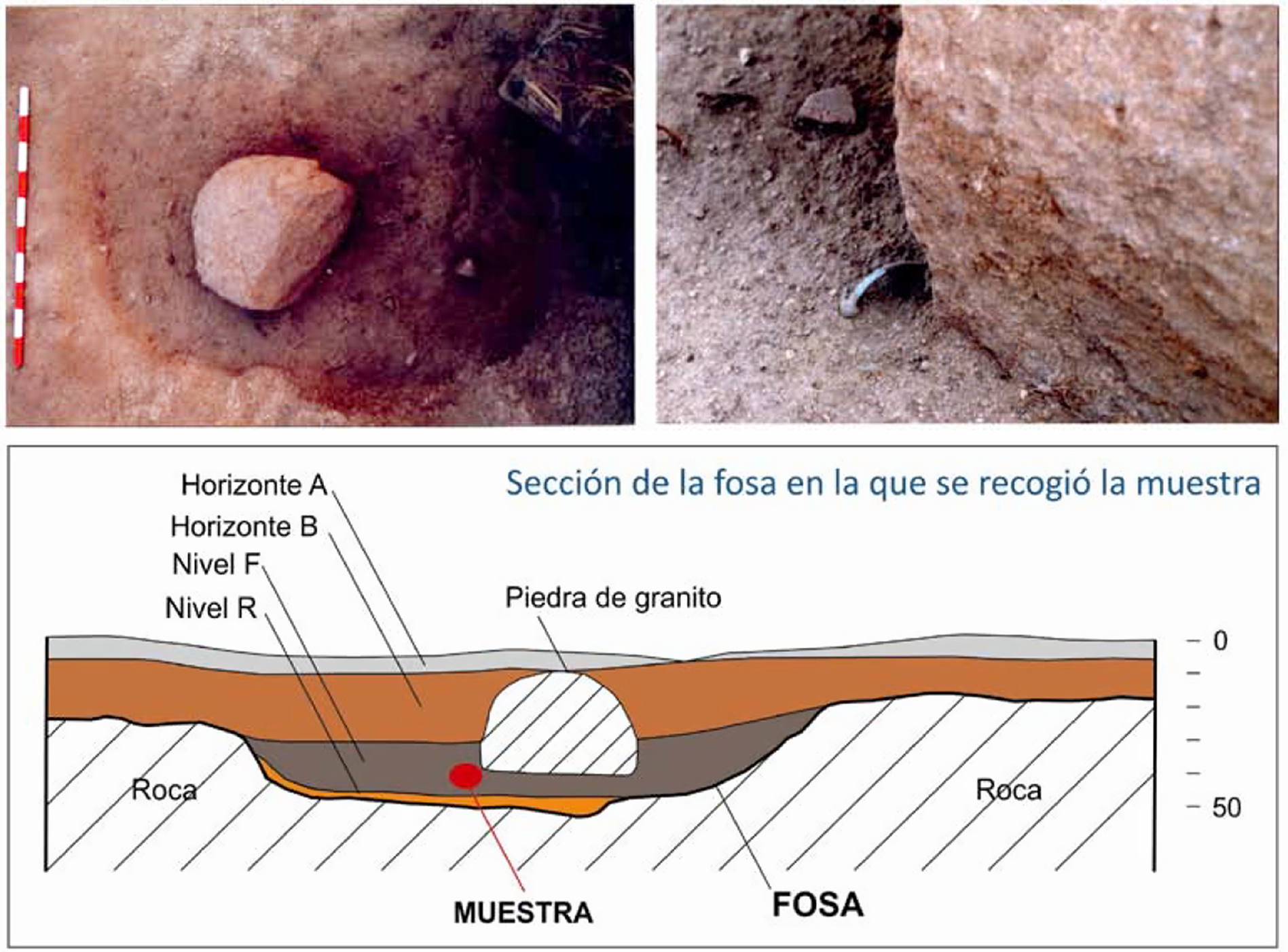
Finally, we can mention two cases of non-fortified occupations that combine domestic activities with funerary and/or votive phenomena. The first case is Valdamio, an open, non-fortified settlement, defined by several dwellings built in perishable materials, and a total of nine pits (Concheiro Coello Reference Concheiro Coello2009). Eight of the pits, as well as some dwellings made with perishable materials, are dated between the 5th and the 4th centuries BC, according to the material record, particularly some diagnostic Early Punic imports. It is interesting to note that both the pits and the dwellings are structured around a LBA burial, which could have worked as a lieux de mémoire (sensu Nora Reference Nora1989) linked to collective and cultic activities (Nión-Álvarez Reference Nión-Álvarez2023b, 123). The second case is O Cepo, an open settlement defined by a small wood palisade around large granitic outcrops (Parga Castro et al. Reference Parga Castro, Prieto Martínez, Sánchez Blanco, Barceló, Bogdanovich and Morell Rovira2017, 264), morphologically similar to Valdamio. In the central part of the area, two pits containing a large quantity of pottery and metalwork have been identified (Figure 5), probably functioning as grave goods (Nión-Álvarez Reference Nión-Álvarez2023b, 119). The radiocarbon dates indicate that this process occurred between the 5th and 4th centuries BC (Parga Castro et al. Reference Parga Castro, Prieto Martínez, Sánchez Blanco, Barceló, Bogdanovich and Morell Rovira2017, 264–5).

Figure 5. Pit 2 from O Cepo (Parga Castro et al. Reference Parga Castro, Prieto Martínez, Sánchez Blanco, Barceló, Bogdanovich and Morell Rovira2017, 265).
Short but present: Unusual occupations in the 400 BC
As we have seen, several abandonments, new occupation strategies, and a trend towards a shift in social dynamics can be traced around 400 BC. While it is true that the sample is still limited, which makes it challenging to examine some features in such a heterogeneous set of settlements, it is possible to trace certain trends that appear to be consistent across the region.
-
There is a progressive movement towards both coastal and valley areas. Consequently, the prominent locations of the EIA were abandoned in favour of less elevated areas and new occupation strategies (Parcero-Oubiña Reference Parcero-Oubiña2000, 86–7). It has been suggested that this process may be indicative of a shift arising from the unsustainability of the old forms of occupation: the move to the valley may allow for more productive agricultural crops and the interaction with more distant communities (Parcero-Oubiña Reference Parcero-Oubiña2003).
-
While this is a coherent explanation for the success of subsequent occupation strategies, it does not directly address the emergence of the brief and experimental occupations we have identified. The move to the valley seems to be coherent across our case studies, but this marks a significant break not only with previous forms of occupation, but also with those that will be predominant during the following centuries. A clear example is that most of the sites avoid fortification or do not regard it as a significant factor, thus rejecting the dominant occupation trend between the 9th and the 1st centuries BC. This ‘reluctance to fortification’ is mostly observed in settlements located in southern areas (see Figure 6). The rupture is also evident in the context of ‘alternative occupations’: they show ritualised spaces and even funerary activities (very unusual in north-west Iberia, see Nión-Álvarez Reference Nión-Álvarez2023b). In this regard, the 5th and 4th centuries BC show a significant shift from earlier and later contexts, which makes it difficult to understand this as a linear development towards the social model of the LIA.
-
Indeed, what makes this period relevant is that all the new occupations emerged and collapsed within a very short period (less than 100 years) around 400 BC. All of them were completely abandoned during the 4th century BC and lacked any kind of integration within the social landscape that emerged from the 4th century BC onwards.
-
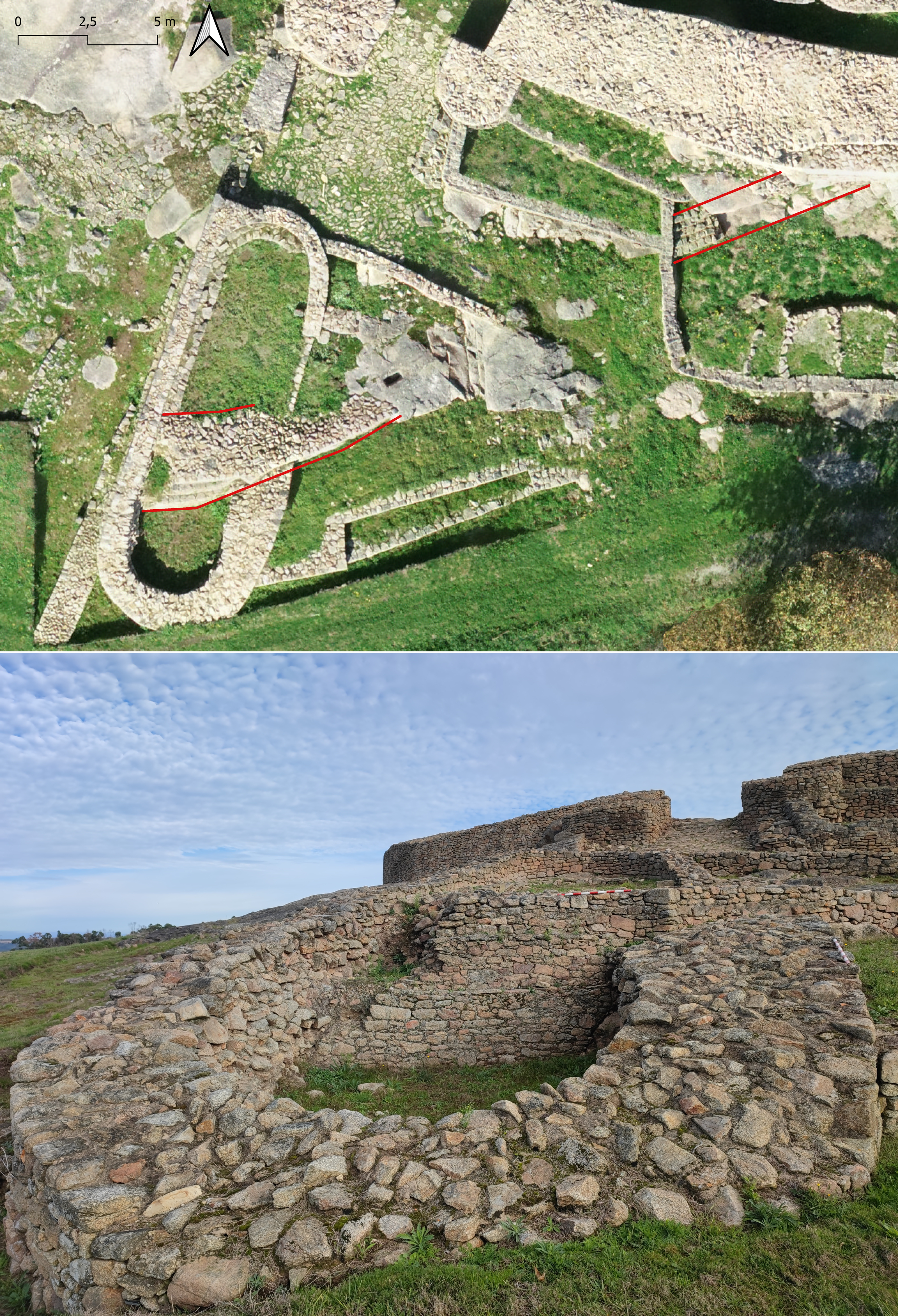
This brevity is also marked by the abandonment, destruction, and/or restructuring of several EIA settlements during the 5th and 4th centuries BC. My research suggests a common trend in abandoned settlements, with significant levels of burning and destruction (perhaps intentional, perhaps a consequence of the abandonment). We can examine three specific cases in more detail: Elviña, Tralocastro, and Sarridal. All three are located in the same cultural region (the Artabrian Gulf) and show a common dynamic: the destruction of previous structures and the creation of new fortified settlements around the 4th century BC. In the case of Sarridal, several domestic constructions were destroyed to build a new wall; in Elviña, the settlement was completely restructured after the intentional destruction of the entire wall (Figure 7), rebuilding a new fortified settlement with three lines of defence (Nión-Álvarez Reference Nión-Álvarez2025, 144). During the 4th century BC, the three settlements underwent a profound transformation, with monumental and intricate defensive and access systems and collective buildings, following the common trend in coastal areas (González-Ruibal Reference González-Ruibal, Stoddart and Cifani2012, 159).

Figure 6. Distribution of new settlements between the 5th and 4th centuries BC: (8–9) ‘alternative’ fortified settlements and (10–17) open settlements. Numbering according to Figure 1.
In short, the diversity of these short-lived settlements around 400 BC appears to suggest a new, but brief, dynamic with a limited effect on long-term social dynamics. The archaeological evidence suggests a period of social instability, marked by the emergence of new settlements and the abandonment and destruction of old ones. This was a time of experimentation with new and unusual occupation strategies, as people sought to escape traditional models. This process was particularly short in duration, which underlines the necessity to understand social dynamics from long-term, non-linear perspectives. Instability, unpredictability, and social experimentation are pivotal factors in grasping historical change (Haas Reference Haas and Haas2001; Wright Reference Wright2006). In this regard, the brevity and discontinuity of these archaeological sites highlight how unsuccessful social forms are also part of the material record. It is therefore essential to make them visible in order to understand the whole picture of how ancient societies changed over time.

Figure 7. Elviña: Location of the remains of the old wall (in red, above) and front view of the collective building, the old wall, and the new wall (below) (Nión-Álvarez Reference Nión-Álvarez2025, 140).
Discussion
In the previous section, we have shown several sites that broke with the main dynamics of the north-west Iberian Iron Age: non-fortified settlements with unusual cultural expressions and, above all, particularly brief. These settlements appeared when a significant part of the EIA hillforts was abandoned and/or destroyed between the 5th and the 4th centuries BC. In the mid–late 4th century BC, new fortified hillforts (or old restructured sites) emerged, and these non-fortified occupations completely disappeared. In this section, I will attempt to establish an interpretive framework that encompasses this context at different territorial scales, aiming to grasp a broader view of these processes.
It is difficult to provide a broad and insightful view about what triggered these social changes, but it seems reasonable to understand them as a series of reactive responses to the social context of the EIA. There are different possibilities: it is feasible that these were experimental occupations on the way to the valley, as it was the main trend during the LIA. Still, based on the available data, there is a significant dissimilarity between the brief settlements of this period and the later hillforts and oppida, and it is difficult to trace continuities between both. Regarding other options, I consider that they may correspond to strategies of ‘fission and segmentation’, maybe as a resistance towards the emergence of inequalities, in order to preserve the indivisibility of the community ethos (Clastres Reference Clastres1994, 155–6). Such processes and interpretations have already been suggested for other territories, such as Gaul, where mobility and social division in the Middle Iron Age were understood as part of a segmentation process (Fernández-Götz Reference Fernández-Götz2014, 148–50). In any case, if this was the intention, it was far from successful. Most of the case studies are located on the Atlantic façade or around the Miño river, areas in which the move towards less elevated areas during the LIA resulted in more unequal social models, the emergence of central places, and the standardisation of cultural and material patterns (González-Ruibal Reference González-Ruibal, Stoddart and Cifani2012, 259). In this sense, we can (cautiously) argue that the brief occupations between the 5th and the 4th centuries BC were part of a reluctance to change and a rejection of inequality, but which failed in favour of more hierarchical models that expanded throughout the LIA in north-west Iberia. This interpretation is based on two aspects: the gradual emergence of social inequality, as evidenced in the final stage at Punta de Muros, and the consolidation and expansion of a social model that favoured social inequality and which would prevail in much of north-west Iberia until the Roman conquest (Nión-Álvarez Reference Nión-Álvarez2025, 73).
Regardless of this proposal, it is possible to suggest two broader and more complex observations considering the previously outlined European contexts. First, during the 5th and the 4th centuries BC, most of Central, Western, and Southern Europe seems to show a period of turmoil and instability. This fact has been repeatedly highlighted in numerous investigations (eg, Brun Reference Brun, Berrocal Rangel and Gardes2001; Hornung Reference Hornung2008; Fernández-Götz Reference Fernández-Götz2014), raising different and mainly generalist responses. Some authors (Aubet Reference Aubet1987) have suggested that the commercial crisis resulting from the fall of Tyre in the 6th century BC was of significant influence as part of a world system. In my opinion, however, this must have been relevant in the Mediterranean area, but not in a plethora of regions completely alien to these processes. Without going any further, our study region lacks contacts with Punic cities, and there was no interaction between both cultures until the 4th century BC (García Fernández Reference García Fernández2019, 147). It is also important to remark that the influence of commercial dynamics would not have affected these groups in the same way, given that their economic system was not based on currency.
Mobility is another frequently suggested response. Although their archaeological reflection may be open to criticism (eg, Demoule Reference Demoule and Vitali2006; Hakenbeck Reference Hakenbeck2008), migration and depopulation can be well-characterised, as has already been achieved in regions such as Essex (Sealey Reference Sealey2016), the Ardennes (Diepeveen-Jansen Reference Diepeveen-Jansen2001), or Champagne (Charpy Reference Charpy2009). This includes the sacking of Rome by Celtic populations displaced from the north in 387 BC. In any case, even though some migrations can be traced to these dates, it is a regional phenomenon. In addition, migrations are not a cause, but a consequence – or, failing that, a further trigger – of a generalised process of social instability. Although it may have generated conflict in the ‘host’ territories, displacement must have been motivated by a previous factor. Along a similar line, Arnold (Reference Arnold2007, 110) proposes that migrations may have been triggered by a wide range of factors, including ‘war, disease, crop failure, climate change, institutionalised raiding for loot, high bride-prices, laws of primogeniture, religious intolerance, banishment, humiliation or simple annoyance with the neighbours’. As Fernández-Götz (Reference Fernández-Götz2014, 155) has emphasised, this dynamic comes from a socio-political and demographic conjuncture, resulting from the need to establish social fission mechanisms driven by an internal political control in the face of unsustainable demographic growth (Fernández-Götz Reference Fernández-Götz2017, 131).
It is also common to relate these transformations to climatic changes. It is true that there was a period of cooling and decreasing solar activity during the 1st millennium BC (Brun & Ruby Reference Brun and Ruby2008, 55). Far from denying the impact of these factors in social dynamics, this influence should be considered from non-deterministic perspectives. Changes in climate were particularly variable on an interregional scale, being much more aggressive, for instance, in areas such as the British Isles (Bell Reference Bell, Champion and Collis1996, 12–15) than in north-west Iberia (Martínez-Cortizas et al. Reference Martínez-Cortizas, Costa-Casais and López-Sáez2009, 86), where climatic transformations were much more benevolent at the time (Fábregas Valcarce et al. Reference Fábregas Valcarce, Martínez-Cortizas, Blanco Chao and Chesworth2003). In this sense, environmental changes are not a uniform factor, not only from a climatic point of view, but also in terms of their influence on human societies. Undoubtedly, climate is a relevant agent in human interactions. Still, this statement is as obvious as it is lacking in content; the relevant factor is not human adaptability, but the capacity to generate different strategies to adapt and achieve their objectives, because the influence of climate does not generate a univocal social response. As Godelier (Reference Godelier2014, 183) highlights, we humans are not adaptive beings, but creatures that reinvent ourselves. Adaptation does not work as a theoretical overarching concept that assumes a unilinear action-reaction of any human community to the same stimulus. Reflections on adaptation should acknowledge the wide range of responses and motivations, as change is not defined by climate, but also by the social responses of human communities.
In this regard, I advocate for an emphasis on an approach that highlights the non-linear and discontinuous nature of socio-political evolution. There is no single formula for deciphering human societies (Giddens Reference Giddens1984, 244–5), and social forms can change according to diverse variables that are not always within our reach. We may assume that these brief periods of instability and even crisis are brought about by several, regionally variable factors and causes, which could have generated a chain effect that influenced different populations in different forms. It is possible that a region impacted by a slight climatic variation, an unstable social context with great political changes, and/or the migratory (and perhaps bellicose) influence of other populations, among other factors that perhaps we cannot understand materially, ended up generating a context of social instability, causing, in turn, comparable phenomena in other territories. For this reason, I consider the term ‘social turmoil’ to be appropriate for this case: it was a period of instability and complexity, during which a widespread change took place in a large part of Europe at similar dates. However, the short, medium, and long-term consequences of this change were heterogeneous, and the underlying reasons were also diverse.
This brings us directly to the second aspect: the non-existence of a univocal and generalised response that would lead to similar social and cultural results. Although there may be a chronological correspondence in the trigger of change, the transformations follow very different forms and paths: in some cases, hierarchical dynamics are truncated (southwest Germany); in others, they are promoted (south-east Gaul). Sometimes, there has been a significant population reduction (Essex), but in other nearby cases, the opposite has happened (Midlands). The only thing that all these phenomena have in common is that they happen at the same time. These data not only emphasise the aforementioned ideas, but also reveal highly heterogeneous processes, whose only similarity is their chronological co-occurrence. In this regard, the social turmoil during the crisis of the 400s can be defined as a domino effect, where a series of elements cause others, eroding and altering stable social structures and giving rise to new forms of community organisation. Overall, it is my opinion that we lack sufficient data to formulate a comprehensive interpretation about such a large process. Instead, this work only aims to show some archaeological evidence to rethink how we understand this brief and unstable period in the European Iron Age, and propose potential avenues for future research.
Conclusion
This paper explores a short and uncertain period in the European Iron Age: the 5th and the 4th centuries BC. Focusing on a case study in north-west Iberia, it aims to analyse a series of significant changes in settlement occupation and contextualise them with other contemporary European contexts.
As we have seen, a particularly striking process took place in north-west Iberia at this time, in which old, fortified settlements were abruptly abandoned and new areas near the valley were occupied. Nevertheless, many of these occupations were of a very brief nature, employed unconventional strategies, and avoided fortification, in clear contrast to the general dynamics of the region. The data indicate a period of heightened instability, which may have also led to an escalation in conflicts. However, it appears to be a relatively brief episode that lasts less than 100 years. In the mid-4th century BC, the fortified settlement strengthened its position and constituted a more unequal and probably more hierarchical model, redefining urbanism, social patterns, and moving towards a standardisation of certain cultural elements, at least along the western façade of north-west Iberia.
From a wider perspective, the existence of a generalised process of social instability at a European scale has been suggested, which was likely not caused by a single factor, and generated heterogeneous consequences. In this regard, the ‘Crisis of the 400s’ can be understood as a European-scale phenomenon. Through regional studies such as this, we have the opportunity to develop new useful research for a broader comparative analysis across Europe that may allow us to understand how this brief and unstable period brought about such multivocal and miscellaneous expressions.
Acknowledgements
This work has been carried out under the project JDC2022-050335-I, funded by the Spanish Ministry of Science and Innovation/ National Research Agency and the European Union NextGenerationEU/PRTR. I would like to thank Manuel Fernández-Götz (University of Oxford) for his insightful comments and suggestions about the original version of the manuscript. I am grateful to Carlos Otero Vilariño and César Parcero-Oubiña (INCIPIT-CSIC) for providing the artwork from San Sadurniño, which belongs to the ArqDePo project. I also would like to thank Tamara Barreiro Neira for reviewing and proofreading the text and the anonymous reviewers and the Editorial Board for their insightful comments and suggestions.

 Open access

