


In December 2017, Carl-Ludwig Thiele, at the time a member of the German central bank (Deutsche Bundesbank) executive board, wrote an article for the online publication of the World Gold Council (WGC) Gold Investor, entitled “Transparency – At Least as Valuable as Gold.”Footnote 1 The article focuses on policy changes and public relations moves undertaken by the Bundesbank in response to fears among the public that German gold was at risk by being stored outside the country or even that it was “not really there.” One such response to these types of public concern was the transfer of 674 tonnes of gold from vaults in London and New York to Frankfurt. He outlines four “steps to increasing transparency”: the disclosure of the amount of gold in the bank’s possession and of the transfer of gold from Paris and New York to Frankfurt, the commissioning of a film to document the transfer, and the publication of “all German gold bars, totalling around 270,000 in number” (Thiele Reference Thiele2017). The year after this article was published, to mark the completion of the gold transfer program, the Bundesbank also produced a striking coffee-table book, Germany’s Gold.
In framing these changes in this way, the article links the gold transfer program to broader trends toward “transparency” within gold markets. These transparency projects have expanded tremendously in the last three decades as a particular iteration of “audit culture” (Power Reference Power1994; Strathern Reference Strathern2000). In this chapter, I consider how transparency and gold are established and maintained as “global values” and how actors differently positioned within gold markets seek to align them, with greater and lesser degrees of success. I trace how this happens in three clusters of transparency projects: certification schemes and voluntary frameworks for mining companies; efforts to use blockchain technologies to increase transparency in the supply chain; and efforts to verify (and perform the verification of) gold’s presence in European central banks, especially the Deutsche Bundesbank. Exploring these specific sites where transparency and gold convene, both supporting and tugging against each other, illuminates a critical moment in gold’s history and also allows us to consider transparency from an angle that, unlike many other discussions, does not only operate “within the limits of the very ideology of the phenomenon under examination” (Ballestero Reference Ballestero2012a: 161). In particular, I view gold and transparency as engaged in competitive processes of value-making (and unmaking).
As part of this volume’s attention to “the comparative establishment of the position of transparency in a broader system [or systems] of value” (see the Introduction), this chapter assesses transparency as a global value in relation to the seemingly more self-evident (perhaps, or perhaps not) global value of gold. This approach must first take account of the dynamic and processual nature of transparency as a value – and, indeed, of value (or, more precisely, value-making) itself. Elsewhere (Ferry Reference Ferry2013) I have argued for seeing value-making as a two-part process, consisting both of “making meaningful difference” and also, critically, of “making difference meaningful.” By this last phrase, I mean the often messy process through which it is established that it is worth distinguishing between two or more given values. One can say that one bar of gold is finer (has a higher percentage of gold) than another, or that one policy for informing the public about central bank holdings is more transparent than another, and that can be taken as an important and relevant comparison. And this comparison can be the subject of contention or consensus.
However, for there to be any point to that comparison, at least some people must recognize that it is worth making distinctions between gold and transparency. The historical, political nature of this aspect of value often escapes notice, and yet it is arguably the site of most politics around value. We can frame the emergence of transparency in the past few decades in these terms, as the relative stabilization of value-making acts such that transparency becomes something for which differences are meaningful – that is, something valuable.
Indeed, this is what efforts at ethical marketing aim to do: to establish some chosen characteristic as worth making distinctions between – organic or shade-grown coffee, Malagasy vanilla, conflict-free diamonds (Bell Reference Bell2017; Osterhoudt Reference Osterhoudt2017; Roseberry Reference Roseberry1996).Footnote 2 Getting people to buy these ethical products is one kind of value-making act (and each successful or uncontested value-making act helps to make the next one more successful), but so are actions such as the establishment of metrics and certification systems, press conferences, or, as in this case, alignment with another value that seems to be secure or uncontested. Hence the headline “transparency – at least as valuable as gold” or the familiar phrase that something is “worth its weight in gold” (even when that something is not a tangible, weighable object, as in the case of transparency). In these phrases, gold is taken as the stable and self-evident form of value. and whatever is being aligned with it is claimed as also (like gold) worth making distinctions between.
But wait. It appears from the title of the Gold Investor article (which is, as you may be able to tell, aimed primarily at investors in gold) that transparency is the thing that needs to be argued for, whose value must be shored up by reference to the self-evident value of gold. But in a broader context, gold as a global value is not as stable as you might think. Thiele is arguing for the value of transparency to the immediate audience of gold investors (who are likely to be among gold’s staunchest allies, one may presume), but on a broader scale the article and the actions it describes can be read as an attempt to shore up gold’s shaky status as a global value by linking it to transparency.
A Brief and Imperfect History of Gold as Global Value
In order to understand what is happening with gold now, we need some sense of how it has been established as valuable, especially in European and Euro-descended contexts.Footnote 3 For centuries, gold has been viewed as a substance with distinctive and impressive material semiotic force (Green Reference Green2007; Maurer Reference Maurer2005; Vilar Reference Vilar and White2011) that is linked to value and sovereignty and thus to market and state (Hart Reference Hart1986). In particular, gold’s close association with money is both a consequence and a driver of its tremendous cultural power over the course of many centuries. During these centuries, gold functioned primarily as a method for large payments and as a reserve currency (with silver and copper much more commonly in circulation), as well as a means of adornment and of the display of power and transcendence (Bernstein Reference Bernstein2012).
While Britain moved to a single gold standard in the early nineteenth century, most other countries operated on either a silver or a bimetallic standard. Only after 1870, because of Britain’s dominance as an industrial and financial power, did most European and American countries, and others outside these zones, move to a gold standard (Eichengreen Reference Eichengreen2019: chapter 2). The gold standard as an international system lasted until 1931 (barring an interruption from World War I to the mid 1920s) (Green Reference Green2007), though not without continual adjustments and coordinated action between countries to maintain its efficacy in times of crisis. The system depended on an “overriding commitment on the part of central banks to external convertibility” (Eichengreen Reference Eichengreen2019: 32) and was ultimately challenged by the rise of fractional reserve banking, since this form of banking depends on a central bank as backstop or “lender of last resort,” leading to a structural tension between external convertibility and domestic financial stability.
Obviously critical to gold’s value, and equally obviously beyond the capacity of this chapter to capture adequately, are gold’s uses as a sign of power, luxury, and transcendence. From the gold halos of saints in Byzantine art, to the crowns on the crowned heads of Europe, to John Donne’s lines in “A Valediction: Forbidding Mourning,”
to the gold plates of aristocracies, to the gold toilet on display at the Guggenheim museum (titled America), to the Yellow Brick Road leading to the Emerald City where trickery and illusion reign (Graeber Reference Graeber2011: 53), to the gold-induced madness in The Treasure of the Sierra Madre – we could go on and on – gold signifies a bewildering range of things: power, transcendence, truth, falsity, idolatry, shit, and so on. Many of these meanings come from (or are perceived as coming from) its material qualities of malleability, mass, luster, nobility (non-reactivity), and color. And these ways in which gold acts as a global value endure, even as its value as a reserve currency has been displaced.
Gold’s status as reserve currency came to an end over the course of the twentieth century, first in the 1930s and again in 1971 when Richard Nixon ended the convertibility of gold with the dollar at a rate of $35 per ounce. As we will see below, although much of the world’s gold is still held in central banks (especially in the US, Germany, UK, France, and China), it no longer plays any significant functional role in national economies,Footnote 4 although it may serve to project confidence and security (as Thiele suggests in his article).
In the years following this decoupling of gold and the dollar (and therefore much of the world’s money supply), gold’s price rose precipitously, culminating in the early 1980s at a price of $850 per ounce (London Fix Price).Footnote 5 The price then declined through the 1980s and was driven yet further down when the Bank of England sold off over half its reserves (395 tonnes) (Ash Reference Ash2019). This began to reverse as the prices for commodities in general, and gold in particular, rose in the early 2000s. Gold reached a nominal high of just over $1,900 per ounce in 2011 (when adjusted for inflation, the high at the beginning of 1980 is still the historical high in real terms).Footnote 6 For several years after this, gold’s price wandered in the range of $1,100–$1,300 per ounce, in many cases close to the cost of production. In the summer of 2019, gold rose again above $1,500 and above $1,800 during the Covid pandemic, invasion of Ukraine, and rising inflation. This is in part because of gold’s generally accepted value as a barometer for fears of instability and crisis,Footnote 7 and the fact that its price tends to move independently of other important asset classes such as the US dollar and the stock market (Baur and Lucey Reference Baur and Lucey2010). As of this writing, in September 2024, gold reached a historical (nominal) high at $2,580 per ounce, with the 400-ounce gold bar topping $1 million in August 2024 (Maruf Reference Maruf2024).
Notwithstanding these recent high prices, gold-mining companies since the 2000s have faced a series of ups and downs. The dramatic Bre-X hoax concerning an alleged gold mine in Indonesia brought lots of unwanted publicity to the ill-regulated field of “junior mining” and what one interlocutor described as a “nuclear winter” in mining investment (Tsing Reference Tsing2000). A few years later, high metals prices spurred exploration and production in many brown- and greenfield sites, building on existing or newly exploited facilities, as well as artisanal and small-scale mining in Latin America, Africa, Australia, and Papua New Guinea; these in turn have sparked conflicts both explosive and grinding (Kirsch Reference Kirsch2014; Li Reference Li2015; Luning Reference Luning2012; Rosen Reference Rosen2020). These years have increased public awareness of the links between gold mining and armed conflict, and the severe environmental damage caused by both “informal” small-scale mining and large-scale mining, especially open-pit mining (Verbrugge and Geenen Reference Verbrugge and Geenen2020). Calls for further controls, transparency, and ethical practices in the gold sector have grown more and more insistent.
Gold faces opposition in financial circles as well. Because it is listed as a commodity, many institutional investors (such as pension funds) cannot invest in it. Many financial professionals dislike it as an investment because in its physical form it gives little to no return and in other forms (as mining equities or exchange-traded funds) it can be risky and its price movements complex and difficult to understand. One interlocutor, when asked why many financial advisers don’t like to invest in gold, licked his finger and held it up as if testing the direction of the wind, and said, “It’s too hard to interpret.” Its cultural and affective associations as outdated and fetishized (“idolized” or “worshipped,” as my interlocutors would tend to describe it) and the vocal presence of “gold bugs”Footnote 8 (called by one of my interlocutors “the tinfoil hat crowd,” in reference to the farcical Facebook attempt to pit conservative news commentator and gold bug Glenn Beck against a poodle in a tinfoil hat) make it seem kooky and cranky to some investors, and organizations such as the WCG spend time distinguishing their perspective on gold from these more extreme positions and seeking to burnish gold’s reputation as a sensible, rational investment.
Of course, gold is still recognized widely as a valuable asset and it still commands cultural force the world over. Its price is high and demand for gold in China, India, Southeast Asia, and the Middle East booms; and, as the recent prices attests, it continues to work as a safe-haven asset in times of uncertainty, and to respond to changes in interest rates. Technologies for investing in gold (such as exchange-traded funded and asset tokenization) continue to be invented. Nevertheless, gold’s age as a global currency is over, and its integrity as a stable nexus of value-making practices has been fraying for some time. Moreover, its associations with money laundering and arms trading and the environmental damage caused by mercury use, large-scale open-pit mining, and unregulated small-scale mining have placed the industry on the back foot, causing some actors and institutions to mobilize transparency as a strategy to “clean up” the industry and “burnish” its reputation.
Transparency talk can be found throughout gold extraction, circulation and, investment these days; this chapter centers especially on the invention of technologies to render the supply chain more transparent, the mobilization of blockchain technology (discursive and material) in these technologies, and, drawing on the topic of the Gold Investor article with which I began, efforts by central banks to project simultaneously transparency and security with respect to their gold reserve holdings.
Transparency’s Trajectory
Transparency technologies have been defined by Andrea Ballestero in the introduction to a 2012 Political and Legal Anthropology Review special issue on the topic as “a political and legal device … intended to correct the democratic deficits of existing forms of law, bureaucracy, and even subjectivity” (Reference Ballestero2012a: 160). They aim to infuse institutions with rationality, fairness, and accountability, and are generally contrasted with opacity, secrecy, conspiracy, and corruption.
The story of transparency’s journey to prominence and proliferation as a global value can be told in several different ways: as, for instance, a descendant of glasnost (the term describing movements toward “openness” within Soviet institutions during the Gorbachev period) promoted by NGOs (especially environmental ones) in the former Soviet republics (Zakharchenko Reference Zakharchenko2009). In this context, transparency projects are positioned as part of the movement for “democratization” and against “corruption.” The organization Transparency International, which was founded in 1993, has developed a ranking system to measure governmental corruption, an early use of metrics.
The language of transparency also became enfolded into emerging audit culture in the 1990s (Power Reference Power1994; Shore and Wright Reference Shore and Wright1999; Strathern Reference Strathern2000), both as a normative discourse and as a set of tools and institutions. For instance, in 1999, Shore and Wright, in speaking of the particular iterations of audit culture within British higher education, wrote: “Foremost in the new semantic cluster associated with audit culture are ‘transparency’, ‘accountability’, ‘quality’ and ‘performance’, all of which are said to be encouraged and enhanced by audit” (Reference Shore and Wright1999: 566). In this sense, the language of transparency provides the discursive infrastructure for audit culture in its various iterations. In addition to these semantic uses of the language of transparency, technologies of transparency have emerged in multiple areas. These include systems of certification that attest to the ethical sourcing of commodities; the Extractive Industries Transparency Initiative standard, to which national government can sign up to improve transparency surrounding revenues from oil, gas, and mining; and chain of custody protocols and infrastructures – including, as we will see, digital technologies like blockchain. This chapter attends briefly to the ways in which a language of transparency is deployed (as, for instance, by Thiele, in the article discussed above) in order to help establish the gold market as ethical and ethics as a meaningful component of the gold market, and then moves to a discussion of several technologies of transparency in supply chains and in the verification of gold in central bank vaults.
Transparency’s trajectory has brought it to the realms of gold mining, refining, transport, and finance. In recent years, the hidden aspects of gold’s expressions as a global value (its presence and location in vaults, the London Fix Price, the OTC marketFootnote 9 in London, its use in arms dealing and narcotrafficking) have come under increasing scrutiny. Within these contexts, transparency emerges as both the idiom through which those who insist on knowing more about how gold moves through the world operate, and also the procedures and infrastructures by which those who are invested (literally and figuratively) in gold seek to defend themselves. These actors use transparency to combat “political risk,” to broaden markets for gold through “ethical marketing” techniques and pronouncements, and to sidestep governmental regulation; at a broader level, they seek to shore up its status as a global value. The article by Carl-Ludwig Thiele and the “steps to increasing transparency” it describes reflect one example among many of these attempts to use transparency to shore up gold, even as the article also uses gold to ratify transparency. In what follows, I briefly discuss three sites where processes of transparency intersect with gold, paying particular attention to how both are made and unmade as global values through these intersections.Footnote 10
Supply Chains
One such site, with an accompanying set of technologies for creating transparency, is the gold supply chain from mine to refinery to market. These technologies include certification schemes – that is, methods by which consumers can learn the path that gold has taken from the mine, and through which different origins for gold are (putatively) “certified.” Many of these are collected in the OECD’s Due Diligence Guidance (OECD 2016). They can been used to ascertain (ideally) that the gold is “conflict-free” – that is, not sourced in areas that are “identified by the presence of armed conflict, widespread violence, including violence generated by criminal networks, or other risks of serious and widespread harm to people” (OECD 2016: 66) These systems occur at all points in the supply chain, though many are concentrated at the refinery or “choke point” stage, and refineries are now compelled by the London Bullion Market Association (LBMA) to follow its “responsible sourcing guidelines” as a condition for inclusion in the Good Delivery List (a list of accredited refineries, previously focused only on questions of gold purity and security).Footnote 11 In the words of Matthieu Bolay:
Through the idioms of transparency and responsibility, such initiatives [guidance frameworks, certification systems, and other technologies for ensuring that gold extraction and circulation follow ethical norms] pretend – although selectively – to render visible and legible the social life of gold and the networks that brought it into being prior to its legitimate and licit status as a commodity or financial asset.
Not surprisingly, gold supply chain certification programs range widely in their restrictiveness and are also frequently criticized either for being too utopian or as corporate “greenwashing.” This is, of course, a localized version of arguments that are common throughout the domains of ethical supply chains, fair trade, corporate social responsibility, and business and finance more generally (Falls Reference Falls2011; Kirsch Reference Kirsch2014; Rajak Reference Rajak2011; Reichman Reference Reichman2011; Tripathy Reference Tripathy2017; West Reference West2010). As in these other cases, there is a fundamental instability at the heart of these endeavors; as soon as a particular certification garners the support of corporations, it tends to alienate many activists, more or less by definition. Put in the terms I have been using in this chapter, the challenge of certification lies in the tension over whether values of transparency (and related concepts of ethics and accountability) and gold (as something produced and promoted by global corporations) are opposed or aligned.
Over the past eight or so years, the position of mining companies and member associations such as the WGC and the LBMA has shifted dramatically toward supporting certification and, at least nominally, greater transparency in general. To a significant but difficult to measure degree, their response has been provoked by the emergence and strengthening of guidance frameworks for responsible gold production such as the Initiative for Responsible Mining Assurance (IRMA) and Earthworks’ “Golden Rules” (part of its “No Dirty Gold” campaign), which tend to operate outside the industry or, in the case of IRMA, with only a few relatively small mining corporations participating.
Greater attention to responsible mining has been evident through the course of my research, including at the two LBMA conferences I have been able to attend. At the LBMA conference in 2014, there was a post-conference “Responsible Gold Forum” co-sponsored by the LBMA and the Responsible Jewelry Council, which lasted about two hours. Since many attendees were either leaving for the airport or socializing with colleagues, it was only sparsely attended. In one session, presenters were immediately put on the defensive by a member of the audience who complained that the acronyms and jargon of the proposed certification process were too hard to remember.
In 2018, one of the eight sessions and a keynote speech in the main conference were devoted to ethical concerns and transparency. In the panel session, entitled “Gold Bar Integrity Up the Supply Chain,” the deputy director of the NGO Enough Project, which works primarily in Congo, spoke to a robust audience about supply chain transparency to ensure conflict-free precious metals. Later, an executive of the WGC remarked to me that inviting a member of an NGO of this type (i.e., independent of a corporation or member organization) would have been unthinkable a few years before.
Within the industry, reasons given for the benefits of greater transparency are pragmatic as well as ethical, at least once one leaves behind the realms of websites and presentation slides. Van Bockstael argues:
[M]any current initiatives that are being supported by key players in the mining industry are promoting a host of principles dedicated to sustainability, but can also be seen as a way of insulating the “responsible” members of the mining industry from those who, by omission, are less so and who could, in the future, be responsible for the next environmental disaster due to mismanagement, or provide the spark for the next big activist campaign due to links with unsavoury regimes or atrocities.
Here, we can see a strategy of calculated display, not only as an act of compliance and ethical consideration, but also as a shield to protect other, more enclaved and opaque processes that may not be so ethically oriented.
Since these two conferences, the WGC, the member organization for the majority of the world’s medium and large gold-mining companies, has worked to produce information and strategies to bring transparency and related “responsible” practices to the gold market. In 2019, the WGC launched the Responsible Gold Mining Principles (RGMP), a framework of principles and guidance for its member companies with respect to mining and the supply chain.
Terry Heymann, chief financial officer for the WGC, who also oversaw the development of the RGMP, describes the framework in the publication Climate Action as “an overarching framework which sets out clear expectations to investors, consumers and downstream users as to what constitutes responsible gold mining” (Cooper Reference Cooper2020). The RGMP sets out ten principles, divided into “Governance,” “Social,” and “Environmental” (following the now canonical division within ethical/responsible business and finance). Issues related to transparency of supply chains, impact, and revenue are covered primarily in the first three and the tenth principles.
The RGMP comes with several supporting tools, including an “assurance framework” to help with implementation and oversight and a benchmark comparing the RGMP and the framework from the International Council on Mining and Metals (also a member organization, but for metals-mining companies more generally, not only gold-mining companies).
These “frameworks,” “guidances,” and “benchmarks” seek to perform a hortatory function and to set out a common set of standards for what responsible gold mining would look like. These are necessary technologies for building transparency or other forms of ethical practice, but they do not get into the specific details of how these can be met.Footnote 12
The WGC website states that “Conformance to the RGMP is a requirement for membership in the World Gold Council”Footnote 13 and the principles have achieved broad-based support as a metric used by companies to demonstrate their compliance with its goals, and maybe also to work toward greater compliance.
Blockchain
One rapidly emerging area for handling the details has been blockchain technology. The 2018 LBMA conference featured a slew of companies touting blockchain technology in a whole slew of applications, but especially to guarantee a transparent and clean “chain of custody” from mine to refinery. This guarantee is crucial to most precious metal certification schemes, and since refineries often bear the brunt of costs of certification, there is a strong interest in increasing trustworthiness and lowering costs at that stage of the journey (Bolay Reference Bolay2021).
Blockchain technology purports to provide this by means of a digital, distributed ledger that supposedly cannot be hacked. At the 2018 LBMA conference, as I mentioned above, there were numerous vendors advertising blockchain technology, as well as a keynote speaker and panel participant presenting on the possibilities of using the technology for greater transparency. A presentation by Sakhila Mirza, General Counsel for the LBMA, on “Gold Market Integrity” discussed at length the capacity of “technology” to create transparency while also ensuring the continued capacity for discretion in the highly specialized and secretive gold OTC market. Her presentation concluded with a call for proposals on how best to meet the requirements without exposing market participants too much (how to negotiate the divide between secrecy and display). Figure 7.1 is a slide in her presentation demonstrating how much blockchain technology is expected to be part of this solution.
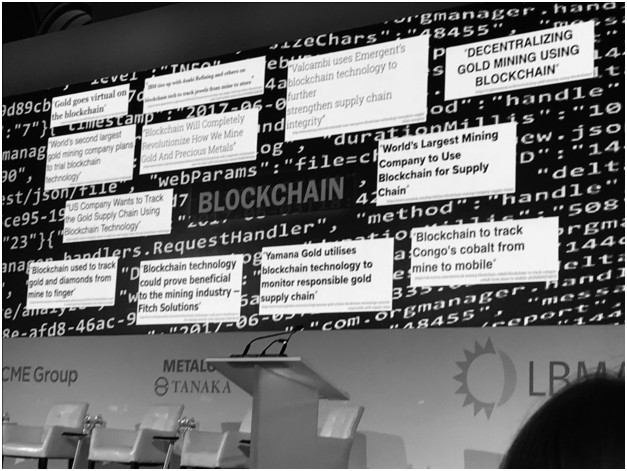
Figure 7.1. A presentation slide from the LBMA meeting, 2018.
In fact, using blockchain technology to bring transparency to the gold supply chain isn’t so easy to do, especially along the lines of the “private” or “proprietary” solutions I saw advertised at LBMA. Filipe Calvão notes this contradiction, saying: “The notion of centralized or permissioned database locations, which is to say, who controls access and dissemination of data, is … at odds with the principles of distributed accountability” (Calvão Reference Calvão2019: 129). One financial technology expert with whom I spoke, who had been invited to the LBMA 2018 conference, confirmed this point, saying:
A lot of what I saw [in the vendor booths] was based on a misguided understanding of what blockchain is. As long as it’s private you are just using an expensive database. You can’t put gold in a blockchain and think you’re putting transparency in the supply chain. You can’t truly put something on the blockchain, you’re just using the system as a pointer.
That is, you can record bars of gold in a database structured by blockchain technology, but there will be points of weakness in the system – who logs it in, how the bar is labeled or identified – so the very reason why you would use blockchain in the first place is lost.
Acknowledging this need for “human appreciations at the entry point” of digitized information on gold into the blockchain, Bolay (Reference Bolay2021: 97) also foregrounds other ways in which the technology creates new kinds of actors, networks, and possibilities, including the simultaneous storage of digitized information concerning gold’s movement through the chain of custody and the process of creating digital slices of gold as a transferable asset, or of the ethical inscriptions linked to it (as, for instance, conflict-free gold) through the process known as “tokenization.” Asset tokenization is a current trend in financial technology or “fintech” that has opened new possibilities for rendering gold as a physical object divisible and liquid through creating a “digital double” (Bolay Reference Bolay2021: 99) on a blockchain.Footnote 14
In an article in the journal Political Geography, Filipe Calvão and Matthew Archer (Reference Calvão and Archer2021) examine the ways in which blockchain technologies have proliferated in mining industries, arguing that these modes of creating, managing, and owning data by digital means are “parallel but … increasingly inextricable from the material extraction of minerals, developed under the banner of blockchain-based due diligence practices, chain of custody certifications, and various transparency mechanisms” (2). Like my interlocutor, they also note that, “in contrast to public blockchains like Bitcoin, these are primarily private blockchains that operate as permission-based centralized ledgers” (3). Not only do these “expensive databases” not provide the transparency and accountability they promise, Calvão and Archer show that they also carve out new channels by which value can be extracted from commodity chains, often in highly opaque and unaccountable ways.
In the past few years, it seems some of the buzz over blockchain as a technology for bringing transparency to gold supply chains has diminished (as we see with other “use cases” for blockchain), partly because the challenges and costs of implementing it at scale have become more evident. A November 2023 article in the environmental journalism magazine Mongabay outlines these challenges and costs in Brazil, noting that “blockchain shouldn’t be viewed as a panacea to an industry rife with social and environmental risks” (Espinosa and Lyons Reference Espinosa and Lyons2023).
Central Bank Vaults
As I have introduced above, transparency projects have also been coalescing around the verified presence of gold in (especially European) central bank vaults. And these, too, show us the process by which vying values of gold and transparency can at times be brought into (uneasy) alignment and at times work to undermine each other. For one thing, a dynamic by which transparency projects are made publicly visible – the ways in which they are performed – happens in all domains where transparency operates but intersects with gold in particular ways. For one thing, gold as a global value manifests, and arguably depends on, an oscillation between display and secrecy, at times flashing out spectacularly and at other times hidden away in vaults, graves, or hoards. This aspect of gold has been noted by several anthropologists, including Maurice Godelier (Reference Godelier1999) in his use of gold to demonstrate the “enigma of the gift,” which he sees as a dialectic between keeping and giving away (see also Weiner Reference Weiner1992), and Gustav Peebles, for whom gold operates as a key example in his re-theorization of “the hoard” as a fundamental principle of banking (Peebles Reference Peebles2014; see also Ferry Reference Ferry2020).
In an article in the journal Cultural Geographies, Erica Schoenberger draws on diverse archaeological and ethnohistorical sources to show how gold’s scarcity has been enhanced at certain moments through artificial restriction of its supply. Among other sites, Schoenberger points particularly to the necropolis of Varna in what is now Bulgaria, which dates to the fifth millennium BCE, in which large quantities of gold were sequestered in what she describes as “self-cancelling supply” (Schoenberger Reference Schoenberger2011: 7). That is, by burying gold, Varna’s chiefs simultaneously demonstrated their power and removed gold from circulation. While Schoenberger’s emphasis falls on the notion of socially constructed scarcity, the material she presents also suggests a counterpoint between display and removal from display. The golden objects associated with royalty are frequently displayed on ceremonial occasions such as coronations and weddings, but are then removed from display by being buried and placed in vaults away from public view. The process of “self-cancelling supply” described by Schoenberger can also be seen as a process of revealing and removing from view.
Schoenberger concludes her discussion by noting how the pattern of sequestering gold by burying it in tombs continues into the twentieth century with the practices of holding gold reserves in central banks. She writes, “From the graves of Varna to the underground vaults of the Federal Reserve Bank of New York, the history of the social value of gold is in part a history of different ways of creating artificial scarcity” (Schoenberger Reference Schoenberger2011: 19).
For one thing, between 1999 and 2019, many central banks signed a collective agreement restricting how much they could sell, in recognition of the potential to destabilize the gold price by flooding the market (as happened in the late 1990s). The WGC described this predicament and the agreements that have been developed to manage it thus:
Collectively, at the end of 2018, central banks held around 33,200 tonnes of gold, which is approximately one-fifth of all the gold ever mined. Moreover, these holdings are highly concentrated in the advanced economies of Western Europe and North America, a legacy of the days of the gold standard. This means that central banks have immense pricing power in the gold markets.
In recognition of this, major European central banks signed the Central Bank Gold Agreement (CBGA) in 1999, limiting the amount of gold that signatories can collectively sell in any one year. There have since been three further agreements, in 2004, 2009 and 2014.Footnote 15
This need to restrict the circulation of gold, at least periodically, overlapped with gold’s dual role as object of visual display and invisible hoard (Graeber Reference Graeber1996).
In September 2019, the CBGA was allowed to lapse, so banks no longer participate in this voluntary agreement to limit sales on the grounds that the market in gold had grown and matured since the 1990s and that banks had “no plans to sell.” The rationale that the CBGA is no longer needed is based largely on the idea that central banks continue to hold and buy gold, suggesting that the function of self-canceling supply continues to operate, even after the agreement has ended.Footnote 16
Strikingly, central banks – and central bankers – find themselves in a complicated position with respect to the gold reserves they hold. Because of the shift in gold’s position in the global economy since the end of dollar–gold convertibility in 1971 (as discussed above), the importance of gold as a national asset has inarguably declined, although observers differ by how much. Those who are more attached to the idea that gold has intrinsic value and who mistrust the very concept of “fiat money,” not surprisingly, feel that stewardship of gold reserves remains a critical task for central banks. Others – perhaps including many central bankers – are agnostic about or skeptical of the sound money thesis but recognize gold’s cultural and symbolic force, which make it a telling barometer for global crisis or instability.Footnote 17
Indeed, most central bankers, arguably, see the management of the money supply as a far more important dimension of their job.Footnote 18 As one interlocutor, former chair of a European central bank (though not one with large gold reserves), told me, “When I talk with other [central] bankers, we find gold a bit of a nuisance. We wish we could get rid of it.” Nevertheless, central bankers must, at least nominally, respond to the public pressure to keep the gold they have. In addition, central banker must be extremely careful about any information or publicity connected to their gold holdings. Public statements concerning gold in central banks tend toward “managed transparency,” including carefully timed press releases, public statements, and photographs demonstrating their careful stewardship of the nation’s gold supply.
The Deutsche Bundesbank gives a good example: in the face of (mostly right-wing) pressure to move the gold holdings housed in New York and Paris back to Frankfurt, framed in terms of a lack of transparency and a sense that perhaps the gold “wasn’t really there,” the bank instituted a transfer (called by some outside the bank a “repatriation”), which was completed in late 2017.
The many interviews, articles, press conferences, and other media artifacts (including the Gold Investor article), and the book and museum exhibition that accompanied its completion, can be seen from several angles: as full-throated celebrations of gold; as demonstrations of the bank’s “increased [though necessarily limited] transparency”; and as protections against the potential liabilities of gold as a kind of anti-value (as Van Bockstael argues above). These public performances of gold’s presence and the transparent actions that allow the gold to “shine forth” draw on powerful ideas about materiality (including qualities like mass and shine) and value as tied to white male and European bodies. Figure 7.2, an image included in an article on the Bundesbank website announcing the completed transfer of Germany’s gold from New York in 2016 (the transfer from London was completed in 2017), brings together a lustrous gold bar and some kind of testing or logging tool (which also looks a bit like a jeweler’s loupe, suggesting that its purpose is to “see” the gold either literally or figuratively) with the date of the bar and the word “Switzerland” (where the most trusted refineries are concentrated). In this image, transparency, accountability, gold, whiteness, and maleness converge in a coordinated act of making value.

Figure 7.2. Gold bars at a press conference, Deutsche Bundesbank, 2017.
Transparency infuses gold with value in each of the three areas I have described, but with different histories and different effects. As I suggested above, the frameworks for responsible and ethical supply chains fall within a broader range of attempts to establish ethical value chains for many different commodities and can be seen as and analyzed in terms of pressures from nongovernmental organizations, activist groups, and consumers concerned with environmental and social justice. Blockchain technologies are mobilized to meet these ends but also participate in other conversations with other concerns, such as freedom from governmental interference and the “transparency” of distributed ledgers, as well as the increased liquidity of digital assets, with the promise of a more “transparent” field for investment in gold. The transparency work done by central bankers is oriented somewhat differently, toward finding new solutions to a perennial problem they face – how to perform gold’s “real” presence in their vaults while also keeping it secure. These varied audiences and aims sometimes align, but not always. By viewing them next to each other, I hope to have highlighted the ways in which transparency and gold converge and vie against each other as global values.
Gold’s fortunes in mining and finance are up in the air these days. In mining, gold faces what companies and investors call “political” or “reputational” risk, narrow profit margins (especially as new technologies of transparency become more necessary), and impatient investors. In finance, actors vie to shore up its place as a globally recognized and trusted asset, or to relegate it firmly to a humbler place, according to its relatively restricted use values in jewelry and technologies, and as one among any number of commodities on which to build derivative contracts (futures, options, etc.). In these stormy seas, languages and techniques of transparency are conscripted to right gold’s ship, and, in doing so, to solidify transparency itself. As in other exercises in imperfect commensuration, gold and transparency both align and grind gears; in doing so, as David Graeber has written, they “bring universes into being” (Reference Graeber2013).
Transparency is a term inseparable from the idiom of sight and vision. The connotation is that being able to see through – to something true, authentic, and real – and being able to see clearly are necessary qualities of transparency, both as applied in this volume and as a sensory experience. It is a commonplace that for human beings the visual dominates all other senses, or at least that humans typically construct “sight-dominated cultures,” although this is not an unvarying characteristic (see Hutmacher Reference Hutmacher2019). Historically speaking, anthropology may be a particularly visually dominated discipline (see Goody Reference Goody2002); this is evident in the universal acclamation for an emphatic seeing-is-believing methodology, “participant observation,” and the manner in which the visual is the central component in the ethnographic trope of arrival. While some anthropologists developing “the anthropology of the senses” claim “to have dethroned vision from the sovereign position it had allegedly held in the intellectual pantheon of the western world” (Ingold Reference Ingold2011: 316), the elaboration of transparency does not contest the domination of the visual for us humans or for the anthropologists in this volume, such as myself. We instead agree to travel down the road with the refined sensibility of seeing, analyzing, and critiquing transparency, as a social fact, and transparently, as our analytic parameter, in the worlds that we contributors have explored. I write about my attempts to see processes by which mining is initiated, the valuation of different minerals, and the manner in which mining and minerals are instrumental to nation-building in my periods of ethnographic observation in Greenland, which have been brief: a month in 2019, a month in 2021, and in between, remote research and communication dictated by the conditions of the pandemic. In this research, climate change, natural resource extraction economies, and nation-building are all on view, so to speak.
I am not sure if, with respect to the topics I engage in this chapter, there is a definitive expression of what “seeing transparently” means for an outsider to Greenland, or what it might mean for an anthropologist. For that reason, I have opted to use the metaphor of different lenses. Lenses offer different visual perspectives from which to look into complex situations. In this article, the lenses focus upon four situations demarcated by: (1) the centuries of Danish colonization and ongoing coloniality; (2) more than four decades of advance toward the establishment of an independent nation in Greenland; (3) the development of gem mining involving both small-scale artisanal miners and resource extraction corporations; and (4) the globalized corporate push to mine rare earth elements that are central to the development of green technologies. In each case, transparency can be related to forms, levels, and mixtures of disclosure and nondisclosure by different interlocutors, which surface (or do not surface) in environmental studies and impact statements, corporate brochures, statements made and policies enacted by governments, and the critiques leveled by environmental organizations and small-scale miners.
I organize this chapter, then, keeping in mind the primacy of the visual as a project of transparency, recalling what we experience when we visit the optometrist and we are asked, as we look through different lenses that are exchanged and inserted into the strange machine in front of which we sit: Is the first lens or the second lens clearer? The third or the fourth? Arranged as elaborations of a sequence of lenses, I ask readers (and myself) which lenses make things clearer, and in what ways. In what follows, it should be clear as well that, notwithstanding the profound role of colonialism and its enduring aftermaths that suffuse each lens of transparency and opacity, the people of Greenland are not victims. They are not intrinsically vulnerable to a marauding modernity that by its very nature must corrode their identity, such that outsiders, like anthropologists or other scholars, can maintain a stance that understands what is going on in Greenland as describable by loaded terms such as “adaptation,” whether that refers to climate change or to the politics of postcolonial transformations (see Nuttall Reference Nuttall2010).
Lens One: Greenland’s Colonial History and Trajectory Toward Independence
In twenty-first-century Greenland, the collective imaginary is dominated by the goal of nationhood via full political independence from the kingdom of Denmark. All of the political parties proclaim that goal, although they propose or assert varying timelines and caveats about how much of a relationship with Denmark might or should be maintained. The great majority of Greenlanders are indigenous Inuit people whose ancestors migrated from the northern reaches of what is now Canada and Alaska after 1200, and who are the successors to a host of other indigenous peoples who have inhabited the land since at least 2500 BCE. Greenland’s lengthy relationship with Denmark is complex: Danes arrived on Greenland’s shores in 1721, in search of the Norse colonies that had been settled by Icelandic farmers at the end of the tenth century. Unbeknownst to the Danes, who were very much motivated to find the Norse descendants to convert them from pre-Reformation Catholicism to Denmark’s state religion of Lutheranism, those colonies had disappeared in the fourteenth and fifteenth centuries. The Danes instead converted the indigenous people, who are almost all Lutheran to this day; almost all have Danish surnames, many have some Danish ancestry, and Danish remains a dominant language (Rud Reference Rud2017). In these ways, Greenland is both a Nordic country and a colonized territory attempting to become the independent country of an indigenous people (see Dahl Reference Dahl and Wessendorf2005; Gad Reference Gad2009; Mazza Reference Mazza2015).
Home-rule government in Greenland was established by the Danish state in 1979 and further strengthened by self-rule provisions that the Greenlandic population voted in favor of expanding in 2009. Denmark provides the Greenlandic government with a block grant of a little less than $550 million each year. That might not sound like much in US economic terms, but the total population of Greenland is only a little more than 56,000 people. The home-rule government established Greenland’s nationhood. The official language is Greenlandic, in which the country’s name is Kalaallit Nunaat. Its flag and many other aspects of sovereignty, both substantive and symbolic, have been determined by the home-rule government, which initially controlled everything except foreign relations, defense, currency matters, and the legal system. With self-rule in 2009, the Greenlandic government gained control over the legal system and some aspects of defense, and increasingly Greenland conducts its own foreign policy – with Iceland, Canada, the United States, and, perhaps most importantly, China. Independence, the Danish government has made clear, will mean the end of the block grant, which at the current time the Greenlandic government deploys as it sees fit (Sejersen Reference Sejersen2015). Denmark is willing to phase out the block grant in stages as Greenland’s economy becomes self-sufficient, and has specified how much the block grant will be reduced as Greenland’s economy expands (Nuttall Reference Nuttall2017; Rasmussen and Gjertsen Reference Rasmussen, Gjertsen, Dale, Bay-Larsen and Skorstad2018).
Throughout the history of indigenous peoples in Greenland, food has been produced through strategically honed mixtures of hunting land and sea mammals and fishing numerous species; therefore, unlike most any other emergent national identity and nationalism that I know of (Rud Reference Rud2017), in Greenland the nascent nation-state is entirely divorced from an agrarian or agricultural imaginary.Footnote 1 At the same time, the contribution of local hunting and fishing to the daily diet of most Greenlanders has diminished drastically in relation to the central role of imported foods, and these two activities are very unlikely to ever produce the income needed to diminish Greenland’s dependence on Denmark’s block grant. For the political-economic class that rules the country, for whom, as Nuttall (Reference Nuttall2010) and Sejersen (Reference Sejersen2015) point out, anticipation about the future of Greenland is a subject of continuous debate, the shortest and surest route to self-sufficiency seems to be a resource economy based upon mining and fossil fuel extraction. Moreover, in Greenland, the development of an extractive economy is linked with an effort “to secure a collective safety net, a kind of livability for the future that involves an apparatus for redistribution, even if that is knitted at the expense of local resource practices and environmental integrity” (Hastrup and Lien Reference Hastrup and Lien2020: xv). The fusion between an extractive economy and a welfare state society, which Hastrup and Lien call the “welfare frontiers” of Greenland and other parts of the Nordic countries, also brings together very different regimes of transparency – or a lack of transparency. Prior to 1979, decisions about extraction, and economic development as a whole, were entirely in the hands of the Danish colonial authorities – and, by virtue of their nondisclosure to Greenlanders, they were certainly not transparent (see Rud Reference Rud2017). How much home-rule, self-rule, and the horizon toward full independence have addressed that opacity is explored in what follows.
Lens Two: A National Economy, Resource Extraction, Infrastructure, and the Technical Fix
Mining and large-scale industry are part and parcel of Greenland’s colonial history and nation-building present. Since the nineteenth century, when Denmark closely controlled the economy, and into the twentieth, mining has appeared on Greenland’s conceptual horizon both as a very real manifestation of colonial development and as an illusion or unrealizable dream of great wealth, which in the twenty-first century would be the basis for independence. In the case of the former, the mining of cryolite, a mineral that was essential to the purification of pure aluminum from mineral bauxite all over the world until a substitute was developed, was conducted in southern Greenland from 1854 until the deposit was exhausted in 1987. The essential contribution of Greenland to the industrial production of a key metal resource was therefore anything but an illusion. Yet resource and infrastructure megaprojects in Greenland often do not come to pass (see Nuttall Reference Nuttall2010; Reference Nuttall2012; Reference Nuttall2017; Rasmussen and Gjertsen Reference Rasmussen, Gjertsen, Dale, Bay-Larsen and Skorstad2018), and, as Hastrup and Lien write, “Resource imaginaries, in other words, are not that easily realized, and sometimes are just that: imaginaries” (Reference Hastrup and Lien2020: xii).
Massive resource extraction projects and the worlds of infrastructural construction that accompany them are discussed in technical terms worldwide; these are discourses that are explicitly ideological and political, linked to particular outcomes and visualizations of the future. In recent literature about the phenomenal economic and political power of the Gulf state monarchies, Günel, for example, has described “technical adjustments”:
Abu Dhabi’s renewable energy and clean technology projects, such as Masdar City, have aimed to generate technical adjustments as a means for vaulting ahead to a future where humans will continue to enjoy technological complexity without interrogating existing social, political and economic relations … Technical adjustments, which are intended to maintain existing values while inventing new technology to address climate change and energy scarcity, operate in opposition to environmentalism. The hope is that technical adjustments will allow humans to extend their beliefs and perspectives into the future without requiring them to ask new moral and ethical questions and without developing new virtues.
Kanna (Reference Kanna2011) described similar applications of technical adjustments in what must be called the fantastical development of the city of Dubai, under the rubric of neoliberal globalization, urbanist ideology, and the divas of global architectural design.Footnote 2
Meanwhile, in Greenland, technical adjustments in the form of mega resource extraction and related infrastructure projects are also seen as a fix, but that strategy is not necessarily seen as enabling a wholescale sociopolitical inertia, as Günel suggested is the case in Abu Dhabi. The technical adjustment in Greenland renders independent nationhood possible, and facilitates the ascendance of an elite social class and its worldview and values over others; perhaps one might see the technical adjustment as enabling both something new (i.e., Greenlandic nationhood) and simultaneously the entrenchment of the new elite’s values and ethics, as in the Gulf monarchies. On the subject of an enormous aluminum smelting complex that between 2007 and 2016 was intensively planned and designed to be built by the global hegemon Alcoa in the small town of Maniitsoq on Greenland’s southwestern coast, Sejersen wrote:
The technology complex in question (a smelter, two dams, electric transmission cables, etc.) carries with its large-scale systematic socio-technical nature and enormous potential. The astronomical economic investments that are required, its spatial and temporal consequences, and also the political expectations invested in the project gave it a certain momentum … The technology may thus reinforce a particular system of values and relations.
This project would have doubled Greenland’s CO2 emissions and its energy consumption. As part of the planning process, the Greenlandic government assessed the local hunting and fishing industries and the livelihoods they provide for Greenlandic communities. In that context, leading politicians proposed “re-educating” hunters and fishing people for new occupations associated with the aluminum complex (Sejersen Reference Sejersen2015: 124–125). Even without the intrusion of mega resource extraction and infrastructure projects, fishing and hunting in Greenland are already highly regulated by both national and international regimes that limit what can and cannot be caught and therefore consumed.
The processes of consultation by which the planning of the Maniitsoq aluminum complex was executed were intensely fraught; that is to say, they were far from transparent to the residents of Maniitsoq, and likely to the majority of Greenlanders, a characteristic that applies in the discussion of the development of mining projects more recently (see Nuttall Reference Nuttall2013). Sejerson noted:
In November 2010, the Greenlandic environmental organization, Avataq, accused the Greenlandic government of keeping the public in the dark about the human and environmental impacts of having an aluminum smelter.
That accusation, which hinged on the primacy of the visual, provoked demands from the government for proof, which Avataq in turn provided.
In 2020, an article in Arctic Today, a self-described “Arctic business journal,” declared:
The idea of building a hydroelectric plant for industrial production near Maniitsoq was first broached more than a decade ago. Negotiations dragged on due to a disagreement over who should fund its construction, and, by 2016, the administration admitted that it had given up on striking a deal with Alcoa.
Whether or not the lack of transparency, which here signals the government’s nondisclosure about the effects of aluminum smelting, was the main reason the project did not manifest, the debate around the aluminum smelter nevertheless revealed how technical adjustments figured in the ways Greenland’s government and political elite envisioned nationhood and what the Greenlandic people ought to be doing for work. There is, to be sure, the mirage-like character of large-scale resource extractive projects in the Arctic, which I referred to previously, but there is also the disjuncture between the “relative transparency of bureaucratic practices” (Hastrup and Lien Reference Hastrup and Lien2020: xvii) in Nordic countries such as Greenland, on the one hand, and the calculus of profit-driven, behind-closed-doors corporate decision-making for a company like Alcoa, on the other.
Lens Three: Competing Transparencies in Greenlandic Gem Mining
A ruby and pink sapphire mine, owned by the Norwegian-financed Greenland Ruby company, opened at Aappaluttoq in the southern part of Greenland’s vast Sermersooq municipality in 2017. Greenland’s ruby mine operates to produce gems, but also as a synecdoche: a part of the ongoing debate about mining and transparency, which effectually embodies the larger scenario. I would argue this case in two ways. First, the ruby mine as a new venture in resource extraction settles mining as a technical adjustment that supports the Greenlandic nation-building project. Second, Greenland’s ruby mine offers an opportunity to showcase corporate transparency in the soft light of an Arctic Scandinavian setting, for a gemstone that from Myanmar to Mozambique (Brazeal Reference Brazeal, Calvão, Bolay and Ferry2026) carries the weight of nightmarish human rights catastrophes and ugly environmental degradation.
In their glossy pamphlets and website promotional materials, the Greenland Ruby company declares:
Greenland Ruby gems are mined by adhering to the strict ethical, social, human rights and environmental laws and responsible practices. Transparency and traceability are extremely important aspects of our project. Gems come with a certificate or origin authorized and issued by the Government of Greenland. This certificate assures buyers these stones come from an ethical source.
Moreover, the company claims that “10% of the mine’s material is to stay in Greenland for tourist and local operators.” During my 2019 fieldwork season, I asked shop owners who sold jewelry in Nuuk whether their inventory included Greenlandic rubies, either as loose stones or set in particular pieces. There was only one to be found. In fact, in Greenland Ruby’s promotional materials, which one would expect to present the most favorable picture possible, it is at best quite unclear who has specified or will establish these “strict ethical, social, human rights and environmental law and responsible practices,” or how the company is to be held accountable to those standards. Greenland Ruby’s ideas about transparency are based, I would argue, primarily upon the traceability of the stones and legal frameworks mandating environmental policy, all in the context of an international corporate business framework of profitability. As we will see below, that kind of transparency contrasts sharply with a sector of small-scale, artisanal-type miners and gem polishers, who envision an autonomous and agentive role in bringing the stones from the ground to a marketplace that serves their local, Greenland-based set of interests (Brichet Reference Brichet2020).
The corporate domination of ruby mining in Greenland comes on the heels of fifteen years of contorted events and turnarounds, following the discovery of the deposit at Aappaluttoq by US geologist William Rohtert in 2005, at a time when ruby crystals, apparently quite a few of extremely high quality and potentially great value, could be picked up on or just below the surface. An extended struggle ensued in the pre-2009, pre-self-rule era. On the one hand, local residents claimed the right to gather and sell rubies as well as claiming to have had previous knowledge about them in that region; on the other hand, the first company to propose the mine, the Canadian-owned True North Gems, together with the Danish Bureau of Mines, actively repressed those locals’ gathering activities through a series of arrests and temporary detentions, confiscating many of the finest-quality gems that had already been gathered.Footnote 3 In this battle, so-called historical stones – that is, valuable stones collected before the self-rule government’s establishment of local laws and licensing in 2009 – were considered illegally mined, making current and past sales of such valuable stones mined before that date also illegal. True North Gems went bankrupt in 2016 following the scandals produced by these battles, but it was not long before the Greenland Ruby company was formed, and the same leases and permits were utilized to open the mine in 2017.
At the time Rohtert discovered the Aappaluttoq deposit in 2005, Greenlanders could apply for and receive licenses to take gems out of the country, to trade shows, and to sell them, under the 1999 Mineral Resources Act of Greenland, as administered by the Bureau of Minerals and Petroleum (BMP), which was still under Danish control. A local enthusiast group, the Greenland Stone Club, was regularly issued such export licenses. Ironically, Rohtert was one of the co-founders of True North Gems, the company with which the BMP colluded to restrict Greenlanders’ ability to gather rubies and sell them, which later led to arrests, confiscations, and detentions.
As reported on the Fair Jewellery Action website,Footnote 4 Rohtert was accused and charged with smuggling rubies out of Greenland in 2007, and detained by the police at the request of BMP. Earlier that year, he had been discharged from True North Gems after evaluating a large sample of rubies from Aappaluttoq and assigning them high wholesale values that were previously noted. Rohtert had also convinced True North Gems to fund gem prospecting, cutting, polishing, and jewelry design courses in Greenland, the first of their kind, which have had a ripple effect in the ensuing years as those who were trained in these classes in turn train friends and relatives.Footnote 5 His goal had been to create employment opportunities for Greenlanders, and to make it possible for Greenlanders to sell gems at the highest possible prices. Following his replacement as the project manager for Aappaluttoq, the gemstone cutting and polishing courses were discontinued and locals living near the deposit were informed, in spite of earlier assurances from BMP, that they were no longer allowed to prospect for rubies from either the exploitation or the exploration zones where True North Gems was operating. The rubies in True North Gems’ possession were without explanation re-evaluated as much less valuable, which not coincidentally reduced the projected revenue from the mine and the tax contributions that could be expected to the Greenlandic economy. A resonant ordeal unfolded for Greenlanders Niles Madsen, Christian de Renouard, and Thue Noahsen, among others, all of whom had worked with Rohtert and had extant collections of valuable rubies and had tried to continue their gathering activities. BMP, in collusion with True North Gems, had these individuals banned from such activities and from selling any gemstones in Greenland or abroad.Footnote 6
These events led to an international outcry and very bad press for the Greenlandic mining industry, and then to the founding of an activist group, the 16th August Union, named for the day a helicopter with armed police on board confronted Madsen at the site and banned his presence there. Subsequent and significant political and economic involvement and investment ensued, led by a fair trade organization, Fair Jewellery Action, based in Santa Fe, New Mexico. A petition supporting the local people who had been banned and had had their rubies confiscated collected signatures from almost 5 percent of the Greenlandic population in less than three weeks. In 2009, the Greenland ombudsman reviewed the Madsen case and decided that BMP had acted inappropriately. That same year, Greenlanders voted to endorse self-rule, and the new government began drafting new policies that affect small-scale mining and the sale of gems.
For the rubies of Greenland and the possible benefits of rubies for Greenlanders and Greenland, this is not a story that necessarily ends negatively, at least not so far. Perhaps in the context of gem mining and transparency, there are only comparatively better or worse outcomes rather than outcomes that can be seen as unmitigatedly positive or negative. For example, the current conditions for ruby mining and for ruby miners in both Myanmar and Mozambique (Brazeal Reference Brazeal, Calvão, Bolay and Ferry2026) are by comparison very much more negative. In Greenland, while, as indicated, there are many reasons for skepticism with respect to the large-scale corporate mine run by Greenland Ruby and its pledges to conduct itself according to standards of social and environmental responsibility, small-scale miners such as Ilannguaq Lennert Olsen, whom I interviewed, express a certain degree of optimism that, in Greenland, the mining of gems could be conducted in such a way as to include small-scale miners. A few years ago, Fair Jewellery Action and the 16th August Union drafted a comprehensive report entitled Creating a Prosperous and Inclusive Gem Industry in Greenland (Lowe and Doyle Reference Lowe and Doyle2013), with very specific and concrete policy recommendations that support what Ilannguaq is doing as president of the Nuuk Gemstone Guild (in Greenlandic, the Nuummi Ujaqqer Institute Peqatigiiffiat).
In a 2018 interview with the most widely read Greenlandic daily, Sermitsiaq, conducted by the newspaper’s chief editor Poul Krarup, Ilannguaq noted that post-2009 positive legislation has in fact created a licensing system that facilitates small mining by Greenlanders in the areas where rubies have been found, although these areas exclude the concession zone granted by the Greenlandic government to the Greenland Ruby company (Krarup Reference Krarup2018). From our conversation, I concluded that what is still lacking is the human and technological infrastructure that could make finished products of raw rubies. “We must help each other to invest money in both extracting and polishing many of our different gemstones,” Ilannguaq commented. “We Greenlanders are good with our hands. I believe also that many could easily learn to facet gemstones.” Ilannguaq worries that the laws in Greenland still do not adequately protect small-scale Greenlandic miners, and eventually gem cutters and polishers from foreign investors will attempt to conclude agreements that create exclusive relationships of dependency with and monopoly control over Greenlandic “partners.” One step in the direction that Ilannguaq and his guild support was the government’s Ministry of Raw Materials drafting a “Country of Origin” certificate, for which, one may recall, Greenland Ruby appears to take credit in its promotional materials. Ilannguaq’s organization is dedicated to substantive support for training and education for small-scale miners in the value-added industries of cutting, polishing, and ultimately jewelry design and manufacture. In my own interview with Ilannguaq in 2019, we imagined a situation in which Greenlanders mine rubies, Greenlanders polish and facet rubies, Greenlanders design and create jewelry with their rubies, and the rubies themselves are of such high quality that they are not subjected to the heat treatment that almost all corundum gems receive in Thailand, where the vast majority of stones are sent to be processed. The Greenlandic rubies we imagined would be the most valuable in the world. As Brichet (Reference Brichet2020), writes, such an imaginary is already decades old.
When the process that led to a ruby mine in Greenland began, it very much seemed like the companies involved operated opaquely, making claims about high ethical standards and traceability which were, at best, difficult to substantiate, but which nevertheless made for good public relations. But the development of legible standards in the legal frameworks of Greenland’s self-rule government has advanced, a development that may not be perfect but does demarcate traceability and the conditions of extraction. The changes are complex. By 2021, Greenland Ruby had opened a store in the Nuuk Center, the city’s prestigious shopping emporium, where one could purchase loose stones and also jewelry designed and produced by Greenlander artisanal jewelers. To what extent these developments responded to the experiences and interventions of Ilannguaq, Fair Jewellery Action, and the 16th August Union is not evident. In 2023, Ilannguaq was hired by the government of Greenland’s Ministry of Natural Resources (formerly the BMP), and his intention is to transform the laws regulating small miners.Footnote 7 At the same time, a recent public publication by Greenland Ruby repeats the same obfuscations regarding the history of ruby mining in Greenland and the same unsubstantiated claims about transparency (Henning Reference Henning2023: 48–49). More seriously, the Greenlandic daily Sermitsiaq reported in 2022 that Greenland Ruby was $100 million in debt and had yielded only $10 million in sales since production started at Aappaluttoq.Footnote 8 In 2023, the mine shut down (McLemore Reference McLemore2023), and in 2024, Greenland Ruby put the mine up for sale (Jeffay Reference Jeffay2024).
To repeat Hastrup and Lien’s wry observation, “Resource imaginaries, in other words, are not that easily realized, and sometimes are just that: imaginaries” (Reference Hastrup and Lien2020: xii). At the same time, the role played by Greenlandic miners and their allies like Rohtert from the beginning of the Greenlandic ruby industry to the current moment of uncertainty has interjected a demand for and a version of a kind of transparency that contrasts with that of the corporate entity and creates an unstable dynamism between the two. In the mining of rare earth elements that I discuss next, the confrontation with transparency is more stark and the stakes much higher.
Lens Four: The Opaque Worlds of the REE Economy
Not far from Aappaluttoq, and located in the far south Kujalleq municipality, sharply debated megaprojects center around two deposits of rare earth elements (REEs) that are closely located to one another: Kvanefjeld (in Greenlandic Kuannersuit), next to the town of Narsaq; and the Tanbreez mine Kringlerne, or Killavaat Alannguatin in Greenlandic, which is near the larger town of Qaqortoq.
The global market for REEs is highly constrained by China’s stranglehold over both the mining and the refining of these strategic elements; China produces up to 90 percent of REEs (Gronholt-Pedersen and Onstad Reference Gronholt-Pedersen and Onstad2021). There is certainly a drive, led by the US and the EU, to break or at least evade the Chinese monopoly on these high-value metals. The planned mines at Kvanefjeld and Tanbreez would exploit extensive, very high-quality deposits of REEs, which “the US Geological Survey says are the world’s biggest undeveloped deposits of rare earth metals” (Gronholt-Pedersen and Skydsgaard Reference Gronholt-Pedersen and Skydsgaard2021). Greenland Minerals and Energy (GME), an Australian-registered company, which is developing Kvanefjeld, describes the proposed mine as “a large-scale rare earth project with the potential to become the most significant western world producer of critical rare earths.”Footnote 9 The four largest shareholders in GME are Citicorp, J. P. Morgan Australia, HSBC Australia, and Leshan Shenghe Rare Earth of China, each of which has purchased a stake between 11.3 percent and 14.3 percent. Tanbreez Mining Greenland is owned by an Australian company which is itself a subsidiary of Westrip Holdings Ltd in the UK (Hansen and Johnstone Reference Hansen and Johnstone2019).
The REEs comprise a complex of seventeen distinct elements with widely varying, essential uses in key technological applications. Among them, neodymium, a prime component of the Kvanefjeld deposit, is used to produce the magnets used in wind energy technologies that are central to sustainable energy production globally; neodymium iron boron magnets are the strongest magnets known and a critical component not only in green energy technologies and fuel efficiency, but also in the miniaturization of electronic devices. Gearless wind turbines use approximately 200–300 kilograms of this element, hybrid cars like the Prius use 1 kilogram, and MRI scanning machines require 1–3 tons of neodymium. The Tanbreez deposit’s REE array is comprised mainly of “lanthanum and cerium – relatively plentiful metals used in telescope lenses and auto catalysts to cut emissions. About a fifth would be yttrium, which is in demand for lasers and the superconductors used in quantum computing” (Gronholt-Pedersen and Onstad Reference Gronholt-Pedersen and Onstad2021).
But neodymium and other REEs are not the only elements that would be purified from the Kvanefjeld mine. The deposit at Kvanefjeld contains not an insignificant amount of uranium ore, perhaps 20 percent of the total ore body; once purified, this can be used in power plants or in the production of nuclear weapons. As early as 1955, the Danish Atomic Energy Commission had identified uranium at the Kvanefjeld deposit, and Danish scientists had conducted technical studies relating to extracting uranium at Kvanefjeld; these studies continued for almost thirty years. Work on the Kvanefjeld deposit was abandoned in 1983 after the Danish government established what has been called a “zero tolerance policy” with respect to uranium and other radioactive materials, which affected all three countries in the Danish realm (Denmark, Greenland, and the Faroe Islands). In 2013, following extensive re-study of the Kvanefjeld deposit and already in the era of enormously increased demand for REEs for wind turbines and other uses, the Greenlandic parliament voted to remove the ban on uranium mining, independently and distinctly from the rest of the Danish realm, clearing the way for the exploitation of the Kvanefjeld deposit, which has been debated in Greenland ever since.
Environmental impact studies have been completed which show the project does not create significant issues for the local environment or residents of nearby communities. Extensive radiation studies show the increase in radiation exposure caused by the project is negligible. The level [sic] of dust generated by the project are very low and well below European standards.Footnote 10
Many residents of the immediately adjacent town of Narsaq fear the extensive tailings, both radioactive and toxic rare earth residue, that the mine will produce, as scholars have reported for almost a decade (see Hansen and Johnstone Reference Hansen and Johnstone2019; Nuttall Reference Nuttall2012; Reference Nuttall2013; Reference Nuttall2017). As early as 2013, Nuttall described the GME consultation process and corporate transparency as lacking substantive public participation, decision-making, and involvement in formal regulatory processes, which led to distrust of officially sanctioned assessments of social and environmental impact. In 2019, and as a result of ethnographic interviewing in and around the Narsaq and Qaqortoq communities, Hansen and Johnstone reiterated:
The decision-making processes [with regard to both Kvanefjeld and Tanbreez] were found lacking by our interviewees in many respects, in particular as regards the time taken and the exchange of information … the alarm caused by risk can create an atmosphere of powerlessness and paralysis among citizens. This points to the need for strategic planning and support to communities at the early exploration stages.
In other words, GME’s assertion of transparency with respect to the central concern about radioactive contamination caused by the mining and extraction of uranium ore was highly contested by the adjacent resident communities.
The fact that a uranium mine has even been considered feasible in a part of the Nordic Arctic, in countries where equality, livability, and the benign role of the state seem to be taken for granted, underscores the challenges inherent in what Hastrup and Lien have called the “resource frontiers” of this region:
On the one hand, [the resource frontier] indicates that configurations of resourcefulness involve practices of exploiting, controlling, and even colonizing land seen as somehow peripheral, uninhabited, up for grabs, exploitable from elsewhere and in need of pioneering development and resource transfer. Hence the notion of “frontier.” On the other hand, “welfare frontiers” point to efforts to advance and realize particular democratic visions of good living conditions for all legitimate citizen-subjects, even in regions seen by state authorities as marginal in one way or another.
An Althusserian Marxist approach to such a situation (Althusser Reference Althusser2006) might reasonably consider the values and stated intentions of the welfare state in Greenland as part of the ideological state apparatus that works to obscure, or render opaque, the actual exploitation of resources and labor, which is the primary role and mechanism of the capitalist class in any capitalist country. This does not imply that either the Greenlandic government, in envisioning national independence as hinging on the technical adjustments of resource exploitation, or the Danish government, in insisting that Greenlanders pay their way to that independence, is intentionally, not to mention maliciously, deceiving Greenlanders – either specifically in Kujalleq or in the whole country. I would not, however, doubt that implication with respect to the corporate entities that are ready to develop Kvanefjeld and Tanbreez – or any other corporate mining venture, for that matter. For them, I would suggest, the welfare state component of the welfare frontier in Greenland is part of the specific conditions they need to work with in order to exploit the resource they want to extract; different conditions prevail elsewhere, but in each case, the corporation’s goal remains the same. (See Maguire [Reference Maguire2020] for a similar argument with respect to aluminum smelting and geothermal energy in Iceland.) The tense and intense differences between the intentions of the state and those of the corporations, particularly over the anxiety-ridden possibility of radioactive contamination and the use of uranium mined in Greenland in the production of nuclear weapons – by the United States or China – came to a boil in 2021 when snap parliamentary elections were called, precisely over whether the Kvanefjeld mine would finally receive approval to begin excavation. The Inuit Ataqatigiit (IA) party, which strongly opposes Kvanefjeld, while still leaving the door open for the Tanbreez project, won 37 percent of the vote; the Siumut party, which previously controlled the government, won only 29 percent. IA led the new coalition government, in which the welfare side of the welfare frontier in South Greenland has received new emphasis, and – for the moment at least – the transparency of a state’s commitment to welfare gains has taken priority over the formulae of and for corporate transparency (see Neuman Reference Neuman2021). As of 2023, the Greenland Ministry of Natural Resources formally terminated all contracts for the Kvanefjeld mine (Ianucci Reference Ianucci2023); the Greenland government was sued for $11.5 billion (Hartmann et al. Reference Hartmann, Bastida and Daza-Clark2024). In 2024, ownership of the Tanbreez mine was in transition, but operations had still not started (Bye Reference Bye2024).
Concluding Thoughts: Materiality, Transparency in the Era of Climate Change, and Nation-Building
In closing, I draw attention to the difficulties surrounding my deployment of “transparency” via the metaphor of lenses that this chapter has employed, and also reflect on the contrast between the materials that I have focused upon.
Greenland’s geographical and political adjacency to Scandinavia makes for a situation in which mining corporations are held accountable in ways that are not as demanding in other locations, such as ruby-mining regions in Mozambique or Myanmar. What is visible in my recounting of the history of ruby mining in Greenland is the deployment of the rhetorics of transparency by Greenland Ruby, for example, in addressing the demand for accountability. Yet the small-scale ruby miners seek a transparency that is not only about satisfying the discerning tastes of gem-buying consumers, and not even only about creating space for noncorporate kinds of mining, gem processing, and jewelry design, but, I would argue, also about these miners’ sense of belonging and inclusion in the emergent Greenlandic nation.
That point turns our attention to the aspirations of the political class that is planning Greenland’s political independence, and how resource extraction plays a central role in that process. With respect to REE extraction, that class – and the Greenlandic government as a whole – is accountable to the Greenlandic electorate in a country where elections do matter. That accountability highlights demands for information transparency around a substantive menu of environmental dangers that are posed by the very process of mining REEs, their transport, and the insinuation of uranium and radioactivity into all of these processes.
The ontological differences between the materials under discussion and on view – rubies and neodymium most notably – remain striking. These are natural materials, in a sense, but no less produced, no less manufactured, yet still agentive as entities. Faceted or polished rubies are all about visibility, about the explicit adornment of the body and the performance of adornment in a broad optic, about subjective qualities such as color, on exhibition in the brightest or most favorable possible light. By contrast, the presence of purified REEs such as neodymium is always opaque: not conspiratorially hidden but systemically behind the scenes, ensconced within the machines they make possible, never visible except as effects – profoundly powerful effects.
Rubies thus proclaim their presence through their exaggerated visibility, and each one is judged unique and individual, but such a treatment of rubies also obscures their origins – not necessarily in a geographical sense, since stated provenance deeply affects the calculation of their value, but certainly to cloak the relationships of labor exploitation, colonial and neocolonial control, and environmental destruction. Neodymium, yttrium and the other REEs are always invisible, and because their prices are standardized by purity and weight, their materiality is made generic: like for all metals, as an industrially produced mass, any one piece is equivalent to any other piece as long as weight and purity are equivalent, notwithstanding demands to render such generic materials “ethically produced” as well.
As Raymond Williams so saliently observed, all of these commodities, all of these phenomena – sight itself – are produced under a system of class domination:
[This] thus constitutes a sense of reality for most people in the society, a sense of absolute because experienced reality beyond which it is very difficult for most members of the society to move, in most areas of their lives. It is, that is to say, in the strongest sense a “culture” which has also to be seen as the lived domination and subordination of particular classes.
Publish What You Fund (PWYF) has been pursuing ambitious goals with limited means since 2008. Operating out of “a modest one-room office above an Italian restaurant on London’s South Bank” (Honig and Weaver Reference Honig and Weaver2019: 579) with an annual operating budget of less than £1 million, PWYF is dedicated to “the global campaign for aid and development transparency,” envisioning “a world where aid and development information is transparent, available and used for effective decision-making, public accountability and lasting change for all citizens.”Footnote 1 This ongoing campaign’s already significant impact owes much to PWYF’s flagship publication, the annual Aid Transparency Index (ATI), an open access “ranking of [the world’s largest] donor agencies” that aims to “galvanise major donors to progressively increase and improve the aid and development information they make available.”Footnote 2 Within just a few years, the ATI has become an essential source for the international aid industry’s key players, “as important for gaining prestige in the development aid sector as Guide Michelin is to high-end restaurants” (Hedlin Reference Hedlin2018: O506).
PWYF is just one of a “dazzling range of aid transparency and accountability initiatives [TAIs]” (McGee Reference McGee2013: S108) that have emerged since the turn of the century in response to the widely held understanding that previously acceptable ways of delivering international aid have been insufficiently scrutinized. TAIs proceed with the assumption “that, through greater accountability, the leaky pipes of corruption and inefficiency will be repaired, aid and public spending will be channeled more effectively and development initiatives will produce greater and more visible results” (Gaventa and McGee Reference McGee2013: S4). Whether or not these initiatives are successful in delivering on the promise entailed in this assumption, they have unquestionably brought the international aid industry’s most powerful stakeholders in line with a growing number of other transparency-focused global actors.
TAIs affecting the work of international aid have developed alongside a wide range of global transparency and accountability initiatives, including the Extractive Industries Transparency Initiative (EITI) discussed elsewhere in this collection. Indeed, PWYF was modeled on Publish What You Pay (PWYP) – a “global movement” of organizations and coalitions that has been campaigning for an “energy transition that leaves no one behind.”Footnote 3 As with PWYF and other TAIs of international aid, PWYP and the EITI are commonly represented and understood as necessary correctives to a corruption-ridden status quo. No matter what the industry, it seems, the effects of prescribed transparency are meant to be similarly cleansing. As Sovacool notes in a largely positive assessment of what the EITI has accomplished since 2002, “sunlight is the best disinfectant,” by which he means that “opening things up to heat (greater public scrutiny), light (independent data), and fresh air (institutional forms) offer a compelling antidote to corruption” (Sovacool Reference Sovacool2020: 1452; citing Matisoff Reference Matisoff2013). Questions remain, however, about the tangible effects that the EITI has had for the “citizens living in resource rich countries” (Klein Reference Klein2017: 773) whose empowerment and improved wellbeing are among the initiative’s goals. Most obviously problematic is that whatever is brought to light in the reports demanded by the EITI remains largely inaccessible to many of those whose interests these revelations are intended to serve, “locked up in pdf files” and written in “highly technical” language that demands “sophisticated levels of expertise in order to be critically analysed” (Klein Reference Klein2017: 773). Also concerning is all that is not revealed in these reports, including “the social and environmental [impacts] of extraction” and “accounts of public expenditures linked to extractive revenues” (Klein Reference Klein2017: 773), as well as the ambiguities entailed in small-scale extractive work, such as artisanal mining of gold and gemstones (Pederson et al. Reference Pedersen, Nielsen, Mempel, Bager, Jonsson and Corbera2021; Walsh Reference Walsh2004), through which the global extractive industries’ least powerful stakeholders operate at the margins of global markets, engaging in practices and relationships that can be incompatible with the EITI’s standards for transparency and accountability. It seems that whatever successes the EITI might be said to achieve, key stakeholders, sites, and dynamics are destined to remain in the dark.
In this chapter, I suggest that something similar is apparent in the global aid industry. Taking the qualitative approach that others have used to reveal what transparency initiatives in the extractive industries have left unexposed, I focus especially on what the aid industry’s TAIs do not and cannot tell us about what has been called “citizen aid” (Fechter and Schwittay Reference Fechter and Schwittay2019), “grassroots international non-governmental organizations (GINGOs)” (Appe and Schnable Reference Appe and Schnable2019; Schnable Reference Schnable2021), “demotic humanitarianism” (Taithe Reference Taithe2019), or, as I will call it, DIY aid – an increasingly prevalent means by which global citizens looking to help others are “connecting” (Fechter Reference Fechter2019), fairly directly, though often from afar, with people in need. Although DIY aid’s practitioners are commonly motivated by concerns shared by advocates of TAIs – for example, concerns over the perceived ineffectiveness of traditional ways of delivering aid – they tend to operate outside of the existing international aid arrangements that organizations like PWYF are looking to reform. Indeed, if PWYF and other small but increasingly powerful watchdog organizations are among international aid’s most promising start-ups – that is, a growing sector of small projects with the potential to revolutionize the existing aid industry from within – DIY aid might be understood as the domain of upstarts – that is, a growing sector of small projects that frequently defy, confound, and undermine the logics and systems of the existing aid industry.
Drawing from recent work on DIY aid generally as well as from ethnographic research with a specific project in Madagascar, this chapter addresses how DIY aid is incompatible with certain expectations of transparency and accountability. While DIY aid projects are unquestionably tripped up by many of the obstacles to effectiveness that TAIs are meant to identify, their small size and distinctive relational foundations and operations can make them resistant, if not immune, to the kind of corrective scrutiny that TAIs demand. This doesn’t mean they go unscrutinized, however. Rather, stakeholders in DIY aid tend to scrutinize themselves and one another in pursuit of what is most important to ensuring the effectiveness of the projects they share – that is, trusting relationships.
TAIs and DIY Aid
I first became aware of the growing importance of DIY aid while doing ethnographic research on conservation and artisanal mining in northern Madagascar in the early 2000s. The first decade of the century brought both an influx of visitors to the region (tourists, researchers, missionaries, gemstone traders, and Peace Corps volunteers, among others) and the telecommunications infrastructure needed to enable long-term connections between these foreigners and would-be local collaborators. The subsequent arrival of cheap smartphones, Facebook, and WhatsApp, and the spreading popularity of GoFundMe appeals and cellphone banking only improved conditions for DIY aid. By 2010, it hardly seemed strange to meet an Australian toyshop owner, Eve, devoting herself and her resources to the construction of a schoolhouse in an out-of-the-way Malagasy village. While visiting an eco-lodge in the region in 2008, Eve had learned from a frustrated local teacher that children in a neighboring community had to walk over five kilometers to and from the nearest school. She proposed to do something about the problem presented to her and, surprisingly to some, followed through with action.
I began referring to projects like Eve’s as examples of “DIY foreign aid” following Nicholas Kristof, who lauded the revolutionary potential of the form in a New York Times Magazine cover story (Reference Kristof2010). Kristof presented DIY aid projects as poised to succeed precisely where their large-scale counterparts fail. Emerging from the intimate collaborations of just a few “global” and “local” actors intent on achieving modest goals, they promise to achieve the truly participatory interventions that tend to elude international aid’s big players carrying out much more ambitious projects. What’s more, given that funding for DIY aid generally flows fairly directly from benefactors to beneficiaries through new social technologies, online fundraising campaigns, paid volunteering, and direct marketing to ethical consumers, it promises possibilities for short-circuiting dysfunctional global “aid chains” (Bebbington Reference Bebbington2005) that are traditionally mediated by the complex, impersonal, inefficient, corruptible, state-supervised arrangements that have inspired so many TAIs in recent decades.
The growing popularity of DIY aid has also raised red flags among those concerned with the emerging sector’s capacity to enable neocolonial “white savior” (Cole Reference Cole2012) fantasies and encourage problematic visions of international aid as the domain of selfless, apolitical, well-meaning people whose good intentions and resistance to reproach means they can work without oversight (Algoso Reference Algoso2010; McLennan Reference McLennan2014; Reference McLennan2017). Even the cover image accompanying Kristof’s story – a photograph of a young, white, American woman surrounded by Nepalese children – suggests a concerning cliché that is widespread enough to have been parodied through the popular “Barbie Savior” Instagram account (Schwarz and Richey Reference Schwarz and Richey2019). Critique and parody seem to have had little effect on the growth of DIY aid, however. In fact, as I will argue shortly, DIY aid’s practitioners are in many ways immune to the concerned scrutiny of critical observers who might question their intentions or methods.
Schnable’s Amateurs Without Borders (Reference Schnable2021) offers an excellent overview of DIY aid, drawing attention to the tremendous growth and developing patterns of what she terms grassroots international NGOs. That DIY aid operates outside of the international aid’s mainstream is maybe most obvious in the CVs of those who make it happen, the “amateurs” of Schnable’s title, who, although generally well educated, typically have “no professional experience in international development” (Schnable Reference Schnable2021: 3). These are people who tend not to aspire to careers in “Aidland” (Mosse Reference Mosse2011), where “professionalized” (Schnable Reference Schnable2021: 8; citing Hwang and Powell Reference Hwang and Powell2009) aid workers move “among NGOs, government agencies, and for-profit contractors” (Schnable Reference Schnable2021: 10; citing Mosse Reference Mosse2011; Reference Mosse2013) in ways that make learning the ways of the mainstream a must. DIY aid is also set apart in how it depends not on the “contract revenue or foundation grants” that makes the salaried work of aid professionals possible, but, rather, on the largesse of project founders, the purchases of ethical consumers, and the “volunteer labor and individual donations” (Schnable Reference Schnable2021: 2) of millions of supporters.
While DIY aid projects often stay afloat thanks to the modest contributions of many, they are almost always dependent on a few energetic individuals (Schnable Reference Schnable2021: 16) – people like Eve – whose visions, dedication, and, often, money make them happen. These individuals never act alone in realizing their projects, however. Another common feature of DIY aid identified by Schnable is that it always takes shape “in a personal, relational context” (Reference Schnable2021: 13) in which benefactors, beneficiaries, and an array of intermediaries engage with one another as something more than just stakeholders. Eve certainly couldn’t have built a schoolhouse in Madagascar on her own. Her project could never have been completed without the support and friendship of the English-speaking Malagasy guide who helped her negotiate the complexities of Malagasy banks and marketplaces, the collaboration of local teachers and parents, and the hospitality of villagers who hosted her every year. Although it was Eve’s proposal that started the project, it was her relationships with these others that drove it to completion.
The features that set DIY aid apart in the world of international aid – that it is dominated by amateurs, sustained by private donors, and driven by relationships – are also what render this emerging sector invisible to those in the aid industry’s mainstream. More than just unnoticed, DIY aid projects tend to fall “outside of the purview of governments, NGO registries and coordinating bodies, and other official systems” (Watkins et al. Reference Watkins, Swidler and Hannan2012: 291) in ways that make them hard to track or scrutinize in any systematic way. Not that practitioners of DIY aid are necessarily interested in, or likely to invite, such scrutiny. Drawing “resources from their personal networks” (Schnable Reference Schnable2021: 16, emphasis in the original), and without the ambitions of aid professionals, they have little use for what the mainstream offers and so need not play by its rules. In fact, some DIY aid practitioners avoid the mainstream as a matter of principle, contrasting their own bare-bones, action-oriented approach to helping others with what they portray as the bloated, corrupt, bureaucratic operations of international aid’s biggest players.
Over the past ten years I have been working with a team of Canadian and Malagasy colleagues and students to study the development, operations, and impacts of DIY aid projects in northern Madagascar. We have been following, and sometimes collaborating with, a variety of projects: the previously mentioned schoolhouse project, an urban home for neglected children, an early childhood nutrition program, and, the case I focus on here, Madagascar Health, a project dedicated to providing free medical care and education to residents of underserved communities. All these projects were conceived and founded by foreigners with good intentions but, in most cases, limited training or experience in international aid, and each has produced an array of new relationships between these and other foreigners and a wide range of Malagasy stakeholders with interests of their own. We learned early on that in choosing to do something for the people of Madagascar, the foreigners who catalyze and support these projects inevitably find themselves doing something with specific and heterogeneous groups of Malagasy people. Not surprisingly, the relationships produced in the process are characterized by the power differences, ambiguities, and potential for exploitation or corruption over which proponents of TAIs might express concern. As discussed in the following sections, however, these relationships can be hard to assess according to the “calculative rationalities” of “audit culture” (Shore and Wright Reference Shore and Wright2015: 421) so fetishized in the TAIs of international aid’s mainstream.
Scrutinizing Madagascar Health
Madagascar Health’s origins can be traced to the late 1990s when the project’s now seventy-something-year-old American founder David (a pseudonym) first traveled to northern Madagascar’s sapphire-rich hills to oversee local operations for a Thai mining company. Unhappy in the company’s highway-side base camp, David moved uphill and pitched a tent near the company claim where he joined a bustling rush of Malagasy artisanal miners. He soon began distributing basic medical supplies to anyone in need, and used his access to and expertise with a bulldozer to level a site outside of the claim on which he and his new neighbors could live more stably in a community that has come to be known as Ambatotsara.
Several years into his stay in the region, David was gravely injured when the bulldozer he was operating tipped over on top of him. Long-time residents of Ambatotsara recall hearing the commotion of the accident and then seeing David stumble out of the bush, bleeding and delirious. Responding quickly, they loaded him onto a makeshift stretcher and transported him to the highway for help. David was evacuated by the company, but, as the story goes, he vowed to come back, intent on repaying his debt to those who had saved him. Several years later he did just that, returning unannounced to Ambatotsara with a Malagasy interpreter and the promise to finance the construction of what would become Madagascar Health’s first clinic. The project has been operating ever since, albeit through many ups and downs. At one point a fire destroyed the clinic and David’s small mudwalled house, taking thousands of dollars’ worth of medicine and most of David’s belongings with it. David responded by returning to the US to drive a truck and earn the money needed to rebuild. Years later, in 2015, he explained his tenacious dedication to the project by describing it as his salvation. After a soldier’s life of violence, death, and trauma, Madagascar Health had brought him the peace of serving others.
Like all international aid, DIY or otherwise, Madagascar Health can be described as supply-driven – it wouldn’t have come to be without David’s decision to create it and wouldn’t continue operating (as of 2024) but for the ongoing support of a small group of other foreigners. That noted, there has never been any question of the demand, and need, for the access to basic healthcare and schooling the project has offered. Surveys we undertook in 2015 and 2023 revealed overwhelming support among the local population for the project’s existence. Not that local observers had only positive things to say, however. In 2015, local observers told us of the clinic’s frequent shortages of medicine, of their confusion over the services it would and wouldn’t offer, and of their dissatisfaction at being repeatedly called upon to contribute unpaid labor to maintaining the project’s infrastructure. And this was only some of what we heard and reported back to the project’s management.
My goal here is not to present a fully transparent account of all we learned about Madagascar Health during our research. Rather, I intend to discuss the project considering the relationships that have enabled it to be effective in the ways that it has been. These relationships have been and continue to be scrutinized, just not in ways idealized by TAIs. In fact, the sequence of best practices that justify TAIs – with expectations of greater transparency leading to greater accountability and more effective aid – can sometimes be upended in a project like Madagascar Health. As discussed here, the mutual trust and accountability of stakeholders in DIY aid projects may even serve to discourage transparency in the name of ensuring ongoing effectiveness.
After David’s departure from Madagascar in 2016, Madagascar Health has stayed afloat, and even grown, thanks to the ongoing aid of former volunteers. Having stayed connected with the project’s Malagasy manager, François, on Facebook, these foreigners show their support by sending money and by starting or sharing online fundraising appeals. In return, François regularly sends photographs of Madagascar Health’s operations and new projects in process, a practice he explained as an outcome of a perceived need “to let [supporters] know that things are going well in case they’re wondering ‘Where did my money go?’” Mejia, Urrea, and Pedraza‐Martinez might refer to what François is doing here as engaging in a strategy commonly found on crowdfunding platforms by demonstrating “operational transparency” that serves to reveal “the work that is performed behind a service or system, which increases [a donor’s] perceptions of effort and trust” (Mejia et al. Reference Mejia, Urrea and Pedraza‐Martinez2019: 1773; citing Buell and Norton 2011; Buell et al. 2016). This strategy only works, however, if the foundations of trusting relationships have already been established. Where strangers to Madagascar Health might reasonably expect some transparent and public accounting of how their donations to the project are being allocated, a good number of former volunteers clearly trust that François and other members of Madagascar Health’s local staff are pursuing the project’s goals just as diligently in their absence as when they were there. Simply put, then, Madagascar Health’s effectiveness at delivering foreign aid to intended beneficiaries depends not on how transparent its operations are to a global public of mostly unknown foreigners but on the well-established trust of just a few. How, then, is such trust achieved?
It isn’t unusual for DIY aid projects to be funded, at least partly, by people willing to pay for the “hands-on” (Schnable Reference Schnable2021: 16) experience they offer volunteers. In the case of Madagascar Health, foreign volunteers pay for the privilege of engaging in the daily work of the project’s medical clinic and school. In the process, the connection between their contributions of money and labor and the effective realization of the project’s goals becomes crystal clear – any doubts they have about the effects of their participation in the project are put to rest by participating in its work. In the recent past, before an endowment ensuring that the project’s clinic would always be stocked with medicine, the connection between volunteers’ participation and the project’s effectiveness was established even before their arrival in Ambatotsara. François would meet volunteers at the airport and then take them, almost immediately, to a bank to withdraw Malagasy money and then to a pharmacy to pay for the medicine they would be distributing over the course of their stay. To one group of volunteers I spoke with in 2018, traveling this circuit and then seeing the medicine they had bought be given out at the clinic cemented their confidence in a project they had previously known only through its Facebook page. As one of them told me, participating in the work of the project in this way brought the assurance that their money was “going to the right things.”
Working with Madagascar Health brings volunteers more than just satisfaction, however. It also brings experiences with and realizations of the great depth of need that drives local demand for what the project offers, as well as an appreciation of the complexities of delivering healthcare and education in the region. All fifteen medical volunteers I have communicated with over the years understood that their participation in the project did little to address the most pressing, chronic problems facing its patients and nothing to alter the underlying structural causes of their need. Several also identified the obvious problem of a funding model that, until recently, has been so dependent on the choices and presence of privileged people like them. One former volunteer recognized and expressed concern about how the locally celebrated presence of foreign volunteers at Madagascar Health’s clinic might devalue the care offered by Malagasy healthcare providers; another worried about the possibility that poorly trained volunteers might engage in misconduct. The most critical of the former volunteers I communicated with reckoned themselves complicit in reproducing what they considered to be a fundamentally flawed project: couldn’t the money they and other foreigners spent by traveling to Ambatotsara have been put to better use?, they wondered.
The concerns listed above were communicated to me in confidence, albeit with the understanding that I might refer to them in the way I have here. I have certainly never seen anything like these comments posted on Madagascar Health’s all-important Facebook page or in the project’s visitors’ book. That volunteers sometimes hold back from disclosing their concerns in public should not be taken as a sign of their lack of accountability, however. Those critically minded enough to discern Madagascar Health’s shortcomings were generally self-aware and modest enough to appreciate how little they knew of the complexities involved in running the project. Most of those I spoke with were certain that, whatever the project’s flaws, there is no question that it is effective in its own way. In volunteering with the project, they were unquestionably doing something to help the people it intended to serve, and this was always seen as better than doing nothing. Former volunteers were also conscious of the uncertainties facing the project’s staff and its local beneficiaries, and aware of how public critique might only exacerbate their situations. Given that many volunteers had first found the project through a search on Facebook, they understood that critical posts or comments might dissuade others from volunteering. And if volunteers stop coming and Madagascar Health ceases operations, they know who will suffer. Even the volunteer who confessed to feeling complicit in reproducing a flawed project abstained from public critique, choosing instead to put the project behind them and ignore new fundraising appeals.
That Madagascar Health’s former volunteers and steady supporters feel the way they do about the project owes a great deal to the project’s local staff. In fact, François and other Malagasy employees of the project contribute more than anyone to ensuring Madagascar Health’s ongoing effectiveness, in part by playing two key roles that mediators of DIY aid commonly find themselves in. First, they serve as the “trusted associates” (Schnable Reference Schnable2021: 24) of the foreigners who support the project, providing distant funders with photographs and reports of local operations and helping visiting volunteers adapt to life in Ambatotsara, working long days alongside them and sharing meals, bonfires, jokes, and the solidarity that results. At the same time, those who speak English and/or French as well as Malagasy act as “brokers” (Schnable Reference Schnable2021: 24), communicating the project’s plans to its intended local beneficiaries, while also translating local understandings, needs, and concerns for the project’s foreign supporters and volunteers. This can be difficult work, leading François to concern himself not so much with ensuring full transparency in all communications as with deciding how messages might be most effectively communicated to their intended audiences, and what might sometimes be better left unsaid for the sake of ensuring the project’s ongoing effectiveness.
All staff members I have spoken with over the years have noted the difficulties inherent in roles that require them to fulfill the (sometimes difficult to meet) expectations and needs of foreigner supporters and volunteers while managing the expectations and envy of their Malagasy neighbors, who often assume that they benefit more than they do from their proximity to foreigners. Obviously, staff members do benefit somewhat from the project, earning salaries and sometimes receiving small gifts brought, left, or sent by the foreign volunteers they come to know intimately. What troubled François when we spoke in 2018 were rumors of other, illicit, benefits that he and other staff members were said to be skimming from funds meant for the project’s intended beneficiaries. The only way he would win over local doubters, he told me, was with hard work and the results that would yield. He was especially committed to seeing through the construction of a long-promised larger clinic that would enable patients to stay for several days when in need of repeated treatment. Much like the trust of foreign supporters, the trust of local people could not be taken for granted – it had to be earned by demonstrating that it was deserved. This clinic was, in fact, completed in 2021.
For François, ensuring the project’s ongoing operations and effectiveness has meant interacting with others in particular ways. By sending photographs of work in progress to foreign donors or leading jet-lagged volunteers along the airport–bank–pharmacy circuit, for example, he enables the people who keep the project going to do so with confidence. By keeping in touch with these same people on Facebook, sending congratulations on degrees earned and children born, he keeps these relationships alive. The extent to which such interactions are calculated to encourage foreigners to continue supporting the project is not as important as the fact that they emerge from and foster existing social relationships, with all the ambiguities and complexities that entails. I hope it is clear by now that it is these relationships, and not the generosity of foreigners or strategic maneuvers of local staff, that keep Madagascar Health going, enabling it to be effective in the ways it is. Building and fostering trusting relationships among the project’s already implicated stakeholders have certainly figured more centrally in sustaining Madagascar Health’s work than have any efforts at ensuring the transparency of the project’s operations. Does that mean the project has always been as effective at delivering aid to its intended beneficiaries as it could possibly be? I have no idea and I don’t know how such a thing might be determined. The fact that projects like Madagascar Health are by their nature seemingly immune to the “calculative rationalities” of “audit culture” (Shore and Wright Reference Shore and Wright2015: 421), fetishized as ethical in the work of international aid’s mainstream, may be among their most promising features.
Having argued that Madagascar Health is not transparent or accountable in ways expected by the international aid industry’s TAIs, I should add that I am not sure how it might be made so. TAIs promise a kind of certainty – around finances, for example – that can be hard to achieve in even the best relationships. Not that anyone is asking for such strict certainty. Whatever anyone might think of it, this project will go on being effective in its own ways so long as the relationships that keep it afloat allow. This doesn’t mean that we should overlook what can be problematic about projects like this one or ignore the concerns of those who might expect more of them. In fact, as discussed below by way of conclusion, attending to those on the demand side of international aid (DIY or otherwise) tends to reveal a great deal of what can be overlooked or forgotten when foregrounding supply-side priorities and perspectives.
Conclusion
There are many reasons why the international aid industry’s most powerful players and ambitious start-ups have embraced TAIs. Some TAIs, like PWYF’s ongoing campaign, are enabled by and focus on the vast amounts of data generated by the aid industry’s biggest players, and while this work is inspired by the goal of serving “all citizens,” it most obviously affects those it scrutinizes; as noted earlier, a high ranking on PWYF’s annually published ATI means a great deal to those who secure it, and I imagine that a low ranking would be just as consequential. Aiming for different publics, “metacharities” (Singer Reference Singer2015) such as Giving What We Can, GiveWell, 80,000 Hours, and others use a similarly objective, data-driven approach to assessing the work of international aid’s smaller (but potentially powerful) players, producing rankings and certifications intended primarily for the perusal of independent philanthropists, many of whom embrace the tenets of “effective altruism,” convinced that “reason and empirical evidence” ought to govern their decisions in order “to ensure that … donations do the most good possible” (Rubenstein Reference Rubenstein2016: 513). Given the competitive marketplace of a world in which there will always be more demand for than supply of aid, a stamp of approval from one of these “metacharities” can give a project a significant advantage over others, making the incentive for pursuing certain kinds of transparency and accountability obvious.
Since the key stakeholders in TAIs are those who design them, those who are (or who hope to be) evaluated by them, and those who attend to their results, it follows that their impact will be most apparent in these stakeholders’ actions. More than that, TAIs shape how these stakeholders interact. In proposing certain standards of transparency and accountability as necessary preconditions for the delivery of effective aid, they present a clear path: (1) applying certain standards of transparency and accountability ensures the reputations of trustworthy projects and organizations; (2) certified reputations ensure deserved funding; and (3) deserved funding ensures effective aid. The implied possibility that international aid’s effectiveness might be predetermined is obviously attractive, especially to those, like effective altruists, who expect that their generosity should guarantee certain effects. In fact, what TAIs do most effectively is to simplify what could be fraught choices over what people, priorities, and projects are deserving of international aid. TAIs allow aid’s biggest suppliers to outsource their scrutinizing, propping up their confidence and assuaging their doubts while freeing them from the messy prospect of becoming too involved with aid’s local brokers or beneficiaries. In this sense, a commitment to the logic of TAIs can be liberating, delivering suppliers of international aid from concerns over the good that might or might not result from that aid by assuring the beneficence of good choices.
Whatever else might be said of DIY aid, it is anything but liberating. As I have experienced it and have come to understand it through the research discussed in this chapter, it is entangling in ways that can be as confusing and frustrating as they can be enlightening and rewarding. And this is what makes projects like Madagascar Health so interesting to consider alongside TAIs and other aspects of the international aid industry’s mainstream: they offer unparalleled opportunities for observing the fundamental dynamics of international aid in action, requiring that we attend not only to the varying experiences and imaginations of differently positioned stakeholders but to the relationships among them. As suggested in this chapter, these relationships are complicated – just like all human relationships – and this means not only that their internal workings can be hard to expose (with or without the light of TAIs) but also that whatever comes from them is just as likely to result from what is opaque as from what is clear to those they involve.
In the end, though, DIY aid is like all forms of international aid in one important way: it is a product of the choices of those who make it possible. For people living in and around Ambatotsara, Madagascar Health isn’t most obviously DIY (instead of mainstream), an upstart (rather than a start-up), or amateurish (and not professional). To them, this project is most obviously an outcome of that which has brought so much else into their, and their ancestors’, lives – the power of foreigners’ choices. And while the intended beneficiaries of this project are prone to scrutinizing foreigners’ motivations and intentions, they are as unlikely as I am to arrive at a transparent account of David’s motivations for creating the project or volunteers’ intentions in paying to work for it. Not that this lack of transparency matters too much to them. Our conversations with people around Ambatotsara consistently revealed the same simple point: why or how Madagascar Health does what it does is not as important as the fact that it does it and will hopefully do more. For them, benefiting from international aid means living in the uncertainty and opacity of others’ choices.
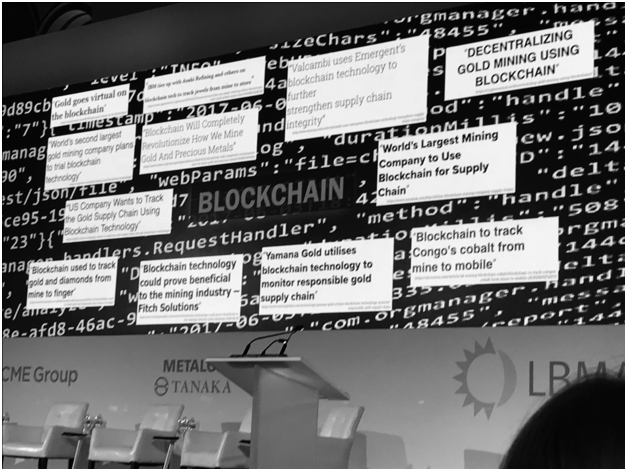


 Open access