

In July 1971, Chile’s socialist president Salvador Allende traveled to the mining town of Rancagua at the foot of the Andes cordillera to give a speech celebrating the nationalization of Chile’s copper industry. At the time, Chile was the world’s largest copper producer. Extraction and processing of low-grade ore in enormous, highly capital-intensive mining complexes by two North American producers, the Anaconda and Kennecott copper companies, motored the economy, producing 75 percent of Chile’s foreign earnings. Nationalization of Chile’s largest mines that compose the gran minería del cobre, Anaconda’s Chuquicamata and El Salvador, and Kennecott’s El Teniente, had long been a key plank of the Chilean Left, but the law expropriating the mines had been approved in Congress with a unanimous vote across the political spectrum (Finn Reference Finn1998; Klubock Reference Klubock1998; Vergara Reference Vergara2008; Cerda Inostroza Reference Cerda Inostroza2022). Allende’s speech and the expropriation of the North American copper mines have long been heralded as a major turning point in the country’s history, but one aspect of his famous declaration of Chile’s sovereignty over its natural resources has gone largely unnoticed: the Marxist president’s attention to an ongoing struggle over rights to water in the Río Salado in the arid province of Atacama.Footnote 1
Allende devoted some of his Rancagua speech to a brewing social conflict on the banks of the Salado, depicted in Figure 1, where hundreds of itinerant unemployed workers known as planteros made a living panning for copper tailings that were emitted into the river as part of a toxic stew of chemicals and heavy metals, residues from the El Salvador mine’s concentrating plant: “At this moment in the department of Chañaral is a river called the Río Salado. That is where they dump the tailings from Potrerillos [El Salvador]. For years private parties have extracted copper from the tailings, and according to figures that we have in our possession, two firms earned close to eight million dollars a year from the copper in the Río Salado’s tailings…. Now there is a true California of copper!”Footnote 2 Allende’s invocation of the California gold rush appears to be an unusual analogy to describe the apparent bonanza thrown up by the Río Salado. Rather than precious metals, the river carried the pollution produced by one of the world’s most profitable copper mines. Since the late 1930s, Anaconda’s Andes Mining Company had disposed of its waste, which included copper, zinc, aluminum, lead, arsenic, cyanide, and mercury, into the Río Salado, where it flowed into the Bahía de Chañaral and from there into the Pacific Ocean, creating an ecological dead zone absent all marine flora and fauna (Cáceres et al. Reference Cáceres, Jiménez, Hernández, Peres, Maldonado and Klarian2021; Cortés Reference Cortés and Manuel2010; Larraín and Poo Reference Larraín and Poo2010; Vergara Reference Vergara2011).Footnote 3

Figure 1. Chañaral and the Río Salado
By the time Allende made his speech, two crises had erupted from the toxic slurry dumped into the Salado. First, since the 1930s, more than 350,000 tons of tailings had built up enormous stretches of sand banks along the coast, as depicted in Figure 2, threatening the operation of the port of Chañaral and rendering a key entrepot for Pacific shipping unusable. Second, a struggle between the planteros, many of whom were unemployed mine workers, and three private copper companies over rights to the river’s water had become acute. Extracting copper tailings from the Río Salado had become a profitable business for mining companies that built industrial processing (concentrating) plants on the riverbank and a source of livelihood for hundreds of planteros, who panned for tailings using artisanal techniques that would indeed have been familiar to miners in nineteenth-century California. The planteros claimed rights to the river rooted in water legislation that defined water as a bien nacional de uso común (a national good for common use), while the mining companies asserted dominion over the river as their private property under Chile’s Mining Code. In 1971, Allende promised to end the concessions of water rights in the Salado to private mining companies and to let the unemployed miners “who are washing tailings in the most primitive form … return to their work [in the river].” For Allende, echoing the Water Code, the river’s water and the copper waste it carried belonged “to all of Chile” and should be extracted and reprocessed “to improve the conditions of Chañaral’s workers.”
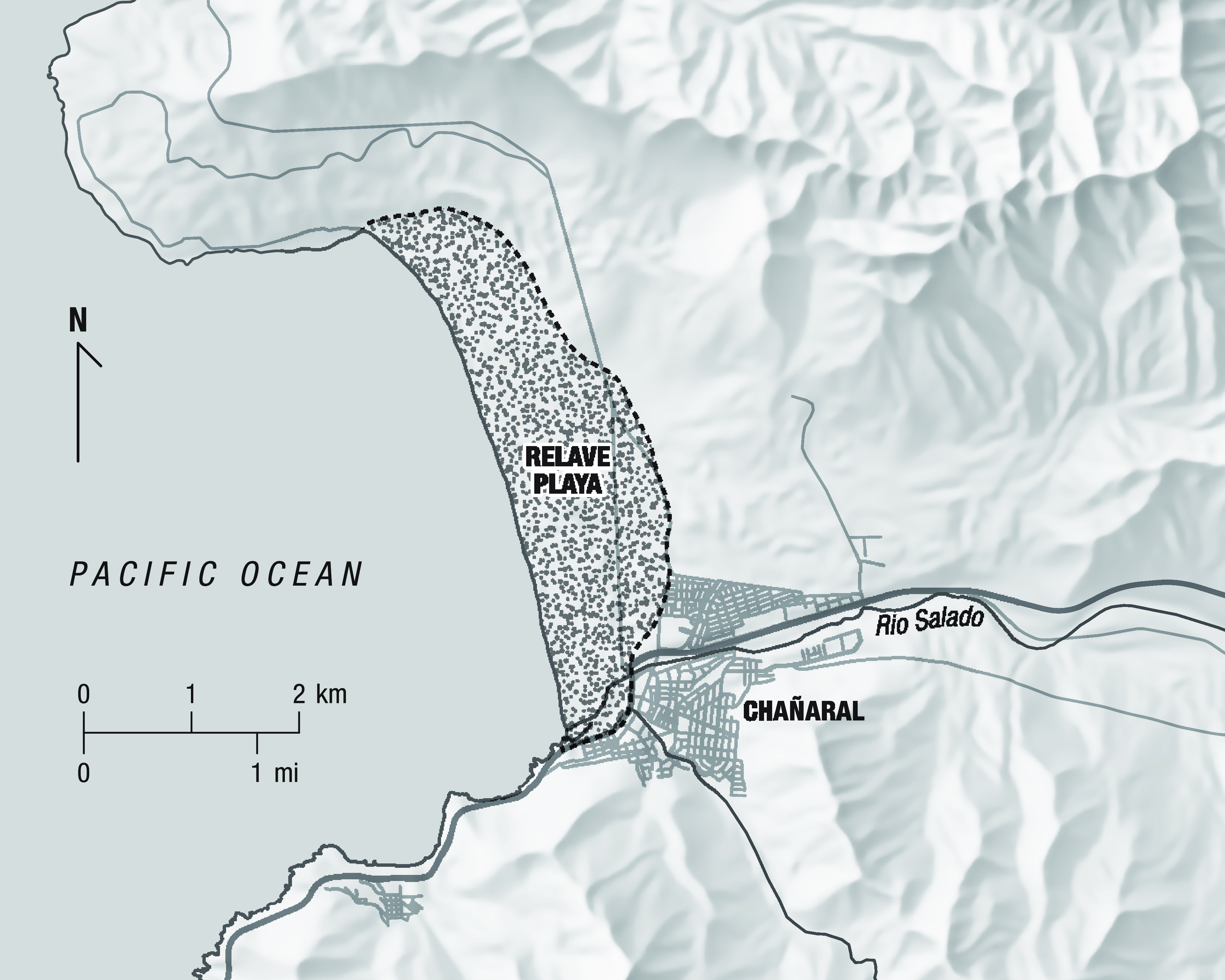
Figure 2. Chañaral and the Playa de Relaves
This article draws on hitherto-unexamined documents in the archives of Chile’s Ministerio de Obras Públicas (Ministry of Public Works) and its Departamento de Riego (Irrigation Department), the government agency that regulated and oversaw water rights, to address questions raised by this early “water war” in the Río Salado about the history of water and water rights in Chile. First, Chile is famous globally for its early introduction of a package of neoliberal economic reforms, including the privatization of water and water rights, that produced a supposed free-market economic miracle during the “Pinochet era,” roughly the period of the military dictatorship (1973–1990) and the transition democratic center-left coalition governments of the 1990s (Winn Reference Winn2004; Drake and Jaksic Reference Drake and Jaksic1999; Collins and Lear Reference Collins and Lear1995; Bauer Reference Bauer1998). Chile’s 1981 Water Code, imposed at gunpoint by the Pinochet dictatorship and designed by the regime’s economic advisers, los Chicago boys (economists trained in neoclassical economics at the University of Chicago and other universities in the United States), marked the first privatization of water and water rights in Latin America and served as a template for future privatization programs, often pushed by the World Bank during the 1990s, when privatization of water services led to well-known water wars in neighboring Bolivia and Argentina (Baer Reference Baer2014; Bauer Reference Bauer1998; Hines Reference Hines2022; Perreault Reference Perreault2006).
From the perspective of the Río Salado’s fraught social, environmental, and legal history, the privatization of water rights was not necessarily the rupture it has been described as in much of the literature on water and neoliberalism in Chile. Rather, privatization was built on a decades-long process of defining water as an economic commodity and prioritizing the rights of mining companies over the interests and rights of local users. In the case of the Salado, until the 1950s, government policy favored the water rights of the Andes Mining Company and three medium-sized and nationally owned copper companies over the rights of the planteros and the town of Chañaral, which suffered the ecological impact of the pollution over a hundred kilometers downstream from Anaconda’s Potrerillos and El Salvador mines.
Second, the conflicts over rights to the Salado raise the issue of river water’s status as property in Chile before the 1981 Water Code. In particular, the struggle over rights to the river’s copper waste underlines a tension and ambiguity in water law: Was water a form of private property subject to civil law, a bien nacional de uso común (a good belonging to the nation for common use) as described in water law, or a bien fiscal (a good belonging to the state)? Chilean law held a tension between the Mining Code, with colonial roots designed to give expansive property rights and guarantees to miners, including rights to water to be employed in processing ore, and water law, designed to regulate water as a bien nacional de uso común, over which property rights could not be constituted. Did administrative law exercised by government agencies or civil law, which governed private property rights, including especially, mining property, apply to rivers’ water?
The case of the Salado raises an additional question: Once the nature of the river was transformed through the pollution it carried on its current, and as it was dammed and routed through canals, did its legal status change? In the language of numerous petitioners for water rights in the Salado over the decades, once rivers were engineered to direct energy and water to the mining industry or when they carried valuable minerals, even in the form of tailings, could they be treated as mines subject to civil law and the Mining Code rather than sources of water subject to the Water Code and administrative law? Did the copper waste in the Salado and the network of canals and dams that allowed both mining companies and workers to extract tailings for reprocessing transform the river in legal terms into a mine over which private property rights might be established? The example of the Río Salado demonstrates how historically in Chile, miners’ need for water to generate energy and process ore more often than not superseded the regulation of water and water rights under water law, including the regulation of pollution, transforming rivers in legal terms into mines over which private property rights might be exercised. For decades during the twentieth century, miners’ argument that human engineering of rivers transformed them into private property prevailed over the claims of local users to riparian rights to a commons available to all Chileans.
Finally, the contamination of the Salado raises the question of when mining and industrial pollution were identified as a problem and regulated by the state in Chile and Latin America more generally. As the historian Ángela Vergara (Reference Vergara2011) has shown, despite the ecological devastation caused by Anaconda’s dumping of waste into the river and sea, environmental concerns were rarely introduced into either debates about water rights in the Salado or broader debates about the nationalization of the copper industry. The silence in Allende’s speech about copper mining’s pollution of regional ecosystems reflected the general absence of concern about nature and the environment in Chile, including in the politics of the Left, for much of the twentieth century. It was not until the 1980s, and largely as a result of global trends in environmentalism, that pollution and people’s legal right to live in an environment free of contamination, in the language of Chile’s military-imposed 1980 Constitution, began to reshape debates about water rights, the nature of the Río Salado, and the fate of the planteros.
This article contributes to the growing literature in history and the social sciences on extractive economies, the environment, and water crises in Chile and across Latin America to illuminate the historical processes that might provide a broader understanding of how water rights and water’s status as a form of property, or, today, increasingly a human right, came to govern the allocation of this essential resource. Historians and social scientists have charted the devastating ecological impact of mining on both rural and mining communities.
Social scientists have recently begun to look at the contemporary environmental history of mining pollution and its social effects, including the displacement of rural communities, during the recent commodities boom in Latin America, which has spurred a resurgence in mining from Mexico to the Andes. For example, anthropologist Fabiana Li has examined the spate of “mining conflicts” in the Peruvian Andes during the 1990s and 2000s. She shows that mining conflicts were often about water and new open-pit mining projects’ pollution of aquifers and irrigation canals (Li Reference Li2015). Similarly, Chilean anthropologists have examined the resurgence of foreign-investment-fueled mining and the conflicts the recent mining boom has incited with indigenous communities in northern Chile (Yáñez and Molina Reference Yáñez and Molina2008; Carrasco Reference Carrasco2020). Anita Carrasco (Reference Carrasco2020) has examined indigenous Atacameño communities and their relationship to mining and water in the Río Loa watershed, including the extraction of water by the open-pit Chuquicamata copper mine, owned and managed by Anaconda until 1971 and then by Chile’s state copper company, CODELCO.
Historians have contributed to this social scientific literature by tracing the long history of mining pollution and conflicts between rural communities and mining companies. Rocío Gómez, for example, applies the concept of an ecology of extraction to both water and underground ore to trace the social and environmental impact of silver mining in Zacatecas, Mexico, on local campesino communities during the nineteenth and twentieth centuries (Gomez Reference Gomez2020). She shows how toxins in the form of heavy metals from silver mines poisoned soil and water, as well as the bodies of humans and livestock, shaping conflicts between ejidos and mining companies over aquifers and the pollution of water used for consumption and irrigation during Mexico’s agrarian reform. Similarly, Israel G. Solares examines struggles between US industrial copper mining companies and ejidos over water and pollution in Mexico and the US Southwest (Solares Reference Solares2024). And Bernardo Arriaza and Damir Galaz-Mandakovic have charted the Chuquicamata mine’s extraction and monopolization of water in northern Chile. They show that increased pressure on scant sources of water in the Atacama Desert from Anaconda’s expanded mining operations during the 1950s pushed the city of Antofagasta to divert water from the Río Toconce with high levels of arsenic to provide drinking water to the city’s inhabitants (Arriaza and Galaz-Mandakovic Reference Arriaza and Galaz-Mandakovic2020), leaving behind a toxic legacy.
Historians have also joined anthropologists in examining the effects of a “hydropolitics” dedicated to producing water conservation, economic development, and, in the case of the Mexican and Bolivian agrarian reforms, a measure of social and water justice, on rural communities displaced by “technological invasions,” in the words of the historian Mikael Wolfe (Reference Wolfe2017). Wolfe (Reference Wolfe2017) examines the ecological crises caused by the Mexican state’s search for technological solutions to demands for both land and water to promote agricultural development, primarily the engineering of rivers with dams, during the agrarian reform initiated by Lázaro Cárdenas. In a similar vein, Eve Buckley (Reference Buckley2017) narrates the technological quick fixes developed by technocrats in state planning agencies, including the construction of dams and reservoirs, to address drought in Northeast Brazil without reforming the region’s gross inequalities in landholding. In both the Mexico and the Brazil cases, technological interventions to address water shortages exacerbated rather than ameliorated landed inequalities. Relatedly, there is a growing social scientific literature on the social movements that emerged to confront what are often referred to as hydraulic “megaprojects,” mainly dams and irrigation systems, designed to engineer nature to produce modernization and development (Blanc Reference Blanc2019; Folch Reference Folch2019; Wolfe Reference Wolfe2017).
Since the famous 2000 water war in Cochabamba, Bolivia, in response to the privatization of municipal water services, there has been growing social scientific attention to popular responses to water privatization schemes and what political ecologists have referred to as “extractivism” in the context of neoliberal economic reforms and a China-stimulated commodities boom in the early twenty-first century (Veltmeyer and Petras Reference Veltmeyer and Petras2014; Hines Reference Hines2022; Perreault Reference Perreault2006, Reference Perreault2013). In the case of Peru, Li shows that, despite decades of mining pollution, a concern with the environment outside of the workplace and workers’ bodies did not emerge until the 1990s, when a broad-based coalition of environmentalist groups, indigenous and rural communities, and NGOs organized to combat both hydroelectric megaprojects and mining extractivism. She charts protests in the early 2000s against the Yanacocha mining company’s pollution of aquifers and destruction of the Cerro Quilish mountain through open-pit mining. Hines similarly examines the popular mobilizations against water privatization in Bolivia in 2000–2001. However, in contrast to the case of Li’s Peruvian case study, she locates the origins of the Cochabamba water war in a long history defined by local traditions of water management, stretching back in some cases to the Inca Empire. Hines argues that a “popular hydraulic society,” representing a constellation of small holders and poor urban users, emerged over the course of the twentieth century, rooted in a democratic and collective or community management of water in Cochabamba, establishing “vernacular environmental governance.”
This article focuses on the pollution of the Río Salado and the Bahía de Chañaral by a North American mining company. Like many of the studies of mining and water cited here, including Vergara’s (Reference Vergara2011) important chronicle of the pollution of the Salado, the article tracks Anaconda’s pollution of the Río Salado and Bahía de Chañaral with waste discarded from its processing plants into the river and bay. However, the case of the Río Salado stands out because of the absence of settled agrarian communities of cultivators or haciendas that might have felt the effects of mining pollution along the river’s banks. And it is unusual because, unlike in other regions in Latin America, the waste carried by the Salado became both a source of value and a subject of contestation between informal workers and both large and medium-scale private mining companies. The water wars in the Salado were not waged among settled communities of either mestizo or indigenous peasants or small farmers, as they were farther north in the Andes or in Mexico, but between independent, small-scale miners (pequeños mineros or planteros, as they are referred to in the documents) and mining companies. And the conflict was not over water that might be used in irrigation or for drinking water for humans and livestock, but over the waste itself.
The article charts the way that effluvia from the Potrerillos and El Salvador mines acquired value and provided a livelihood to workers while becoming a source of bitter legal and social conflict. Rather than a cause of social displacement and ecological disruption leading to what Perreault has termed dispossession by accumulation of pollution as in other regions, mining pollution in the Río Salado provided employment for a large group of independently employed workers and generated revenue for the domestic copper industry (Perreault Reference Perreault2013). While the engineering of water in dams and canals to supply concentrating plants by both Anaconda and medium-sized copper producers shaped the Río Salado’s environmental history, the planteros introduced their own innovative and artisanal forms of water management and modes of extraction in competition with the more “high-modernist” schemes of both private copper companies and state planners in the Ministerio de Obras Públicas (Scott Reference Scott1999).
The planteros’ labor history resembles in many ways that of the cooperative miners in Bolivia described by the geographer Andrea Marston (Reference Marston2024). Their informal work and organization in cooperatives (as opposed to unions) meant that they asserted rights to the Salado and its waste against both the rights of the state and the rights of private mining companies. As in other regions, from Bolivia and Peru to Mexico, this movement “from below” imposed limits on private mining companies’ extractivist projects and the state’s schemes for managing the river to produce economic modernization and regional development. This article shows how generations of water law enshrining river water’s status as a national good for common or public use provided the planteros a tool in their battles to assert water rights. Finally, while much of the recent literature has traced the emergence of environmentalist movements based in broad coalitions of nongovernmental organizations, farmers, and rural and indigenous communities mobilized against hydroelectric and mining megaprojects during the 1990s and 2000s, the example of the planteros in the Río Salado provides an example of an alternative case in which the success of environmentalist citizens’ groups in Chañaral, combined with increased state management of the Río Salado, led to the eviction of the planteros from the river and eliminated their water rights. Putting an end to CODELCO–El Salvador’s pollution of the Salado effectively extinguished the artisanal industry built over decades by self-employed workers along the river’s banks and rooted in an understanding of the river, its water, and its waste as a commons belonging to all Chileans.
Large-scale copper mining and water rights in Chile
Chile’s “crazy geography,” as it is still referred to even today, has endowed the country with rich natural resources, from the world’s largest deposits of nitrates and copper (and today lithium) to abundant water flowing in numerous rivers from Andean glaciers to the Pacific coast (Subercaseaux Reference Subercaseaux1940). From the inception of the modern copper industry during the early twentieth century, rivers’ water was as important as veins of copper ore. The flow of energy and water between rivers’ banks was an essential input into the cables and wires connecting the rapidly industrializing North Atlantic economies. Anaconda’s and Kennecott’s copper mines were industrial complexes, with enormous amounts of capital sunk into the assembly of machinery used to extract low-grade porphyry copper ores, grind and mill the rock, and extract copper using a variety of sophisticated industrial and chemical processes. Rivers’ energy powered a vast complex of underground and open-pit mines, concentrating plants employing the flotation (for sulfide ore) and leaching (for oxide ore) processes, smelters, and railroads. Extracting copper from ore to be melted into bars with high levels of purity (over 99 percent) also required a good deal of water (Vergara Reference Vergara2011). North American copper companies mined not only underground veins of ore but also water for use in transforming low-grade ore into fine copper to be exported to the industrializing economies of the North Atlantic.
Almost simultaneously with purchasing land with subterranean veins of copper ore, usually shallow old and abandoned mines in which high-grade ore had been exhausted by Chilean miners during the nineteenth century, North American investors petitioned the Chilean government for mercedes de agua (grants or concessions of water rights), a phrase and legal concept of Spanish colonial origin, to varying liters per second of rivers’ water, a quantity abstracted from the river’s natural flow to make it intelligible to the engineers who staffed the offices of the Ministry of Public Works. Typically, the grants of specified numbers of liters of river water to mining companies ignored seasonal variations in the hydrological cycle and river ecology. In some cases, mining companies promised to return the water used to process ore to the rivers further downstream, as if this interruption in the rivers’ flow and pollution of its water left the river unchanged, since, as petitioners put it, the water was not “consumed” by their operations (for a similar process in Peru, see Li Reference Li2015, 196–197) In others, they stored water mixed with tailings and other residues produced by concentrating plants in enormous impoundment reservoirs, often built with dams constructed of tailings sand itself (Klubock Reference Klubock2021). In the case of Anaconda’s Potrerillos mine, William Braden, who had already developed the world’s largest underground copper mine at El Teniente and received water rights to nearby rivers flowing from high-altitude Andean glaciers, staked the first claims to water rights to fuel the mine’s operations and process its Andean ores in 1916. The mercedes de agua to water in the Salar de Pedernales and Río Ola, tributaries of the Río Salado, were essential to the mine’s operation.Footnote 4
As the river’s name suggests, the Río Salado was brackish and deemed unfit for either consumption or irrigation. In addition, the arid desert bordering the river was of limited agricultural importance. Beginning in the late 1930s, the Andes Mining Company began dumping tailings and other residues from its processing plants directly into the river with the explicit permission of government authorities. As late as 1959, a government decree granting Andes Mining Company a concession of eight hundred liters per second of water in the Ola River stipulated that the water was to be used in Potrerillos’s hydroelectric and concentrating plants and then returned the now polluted water seventy-three kilometers downriver in the Río Salado: “The Company will not be obligated to purify the water before restoring it given that the water of the Río Salado is not apt for drinking or agricultural cultivation.”Footnote 5
Pollution or bonanza? Mining the Río Salado
During the 1940s, three domestically owned copper companies began extracting copper tailings from the Salado and processing them in concentrating plants along its banks: Joaquín Gálvez, Sali Hochschild, and Sud-Americana. The latter was an independent company operated by Anaconda as a “Chilean-owned” business, immune from the increasingly heavy tax burdens levied on North American–operated copper companies. Hochschild, followed soon after by Gálvez and Sud-Americana, installed a series of small dams 1.5–2 meters high in the river. As the Salado’s water flowed over the dams, it was agitated, producing a great deal of foam containing copper sulfides from Anaconda’s tailings. The river itself did some of the work of a flotation machine even before the water arrived at the dams by producing foam carrying copper tailings on its surface. Water flowed over the dams, and then through wooden canals to small concentrating plants driven by diesel motors, where the foam containing the highest copper concentrations was separated out and then left in tanks to settle. Then the residues containing 5–20 percent fine copper were spread out on canchas (fields) to dry in the desert sun. The other residues from this concentration process, including heavy metals and toxic chemicals, were then “restored” to the river, in the language of water law, an important point in every petition for mercedes de agua, since the concentration process absorbed relatively small fractions of the water diverted through the network of canals and dams.Footnote 6
In 1951, just as Hochschild, Gálvez, and Sud-Americana began to realize significant earnings from reprocessing the Salado’s copper tailings, the government of Carlos Ibáñez passed Chile’s first Water Code. In keeping with the Chilean state’s efforts to accelerate economic modernization, the code was explicitly directed toward defining water as an economic commodity regulated by the state. Water rights were no longer defined as use rights (derechos de uso común), as they had been since the colonial period. The new Water Code defined them instead as derechos de aprovechamiento, or rights to exploit and profit from water, an explicit recognition of water’s importance to national development. The linguistic shift signaled the government’s determination to view water as an economic commodity. At the same time, however, the code expanded the state’s capacity to regulate water and water rights through the Ministry of Public Works’ Irrigation Department. Rather than deepen private property rights, or derechos reales, to water, the code increased the state’s jurisdiction over water and established water’s status as an economic good (Bauer Reference Bauer1998). Yet unlike neighboring Bolivia or Mexico, where constitutions dictated state ownership of water and rivers as part of agrarian reform and indigenista policies, Chile’s water law continued to define water as a national rather than state-owned good, a good owned by the public or a commons, to which only limited derechos de aprovechamiento, could be established. In the absence of an agrarian reform during this period (1930s–1950s), water remained a national good that could, theoretically, be claimed by a variety of users, from haciendas and mining companies to smallholders and, in the case of the Salado, planteros. And unlike in Bolivia and Mexico, the state did not embark on major irrigation or hydroelectric projects or embrace a modernist technocratic “hydropolitics” in the name of development or social reform (Wolfe Reference Wolfe2017; Vitz Reference Vitz2018; Hines Reference Hines2022).
The three companies immediately petitioned the Ministry of Public Works both for mercedes de agua that would make legal their mining operations in the Río Salado and a decree declaring the river “exhausted” so that no competing claims could be made to the river’s water and copper tailings. They also went to court in Chañaral and to the Irrigation Department in Santiago to get an order of expulsion of the many independent miners who worked the Salado’s waters. In response, the Irrigation Department sent an inspector to the Salado who ordered the planteros panning the Salado’s tailings to shut down their operations since they had not been granted mercedes de agua. For its part, the local court sent carabineros (police) to dislodge the pequeños mineros (small-scale miners), as the planteros were called in many of the documents held by the Ministry of Public Works, from the riverbanks.Footnote 7
Atacama province held the most significant agglomeration of small-scale miners in Chile. Pequeña minería, as it was called in Chile, produced a significant percentage of the province’s mining revenues. The Salado’s planteros joined a long tradition stretching back to the mid-nineteenth century of independent, self-employed miners, known as piriquineros, who scratched out a living from shallow deposits of ore. While the documents in the MOP archives refer to the workers in the Salado as planteros and pequeños mineros rather than piriquineros, they shared with piriquineros a number of characteristics. They were largely self-employed, used rudimentary artisanal methods for extracting and processing tailings, and enjoyed few, if any, social benefits. Rarely were they covered by Chile’s corporatist labor relations system or did they enjoy the benefits of its social security system. Like piriquineros, their labor was precarious and unregulated (Venegas Valdebenito Reference Venegas Valdebenito2012).
The three companies’ two-pronged legal strategy to evict the planteros from the Río Salado reflected a fundamental ambivalence in water law that had persisted since the colonial era: Did civil or administrative law govern water rights? By going to court, the companies resorted to civil law under the implicit assumption that their mercedes de agua constituted not use rights to a public good but property rights. In appealing to the Ministry of Public Works, however, they recognized the jurisdiction of administrative law under the 1951 Water Code, and river water’s long-standing legal status as a bien nacional de uso público. Implicitly, they also recognized the state’s authority to regulate water rights as limited concessions rather than private property that could be exploited freely under civil law.
During 1951–1952, the three companies made a number of legal arguments to strengthen their claims to both the water and the toxic waste running through the Salado’s banks. For its part, Sud-Americana contended that the slurry originally belonged to Anaconda’s Andes Mining Company and that the North American company had transferred rights to the discarded tailings to Sud-Americana, as it would any body of ore. Rather than shy away from accepting responsibility for polluting the Salado and port of Chañaral, Sud-Americana, serving as a subsidiary of the Andes Mining Company (the companies shared many of the same North American managers), claimed the waste as private property under civil law.Footnote 8 Sud-Americana cited Chile’s Mining Code, which allowed the constitution of private property over both underground mineral deposits and tailings or slag in cases where they had been abandoned by mines’ processing plants in “open terrain.”Footnote 9 While the water in the river might be a bien nacional whose use rights were available to the entire Chilean people, the pollution it carried was private property under both civil law and the Mining Code. Sud-Americana held notarized deeds registered in the local property registry, as in any private property transaction, which recorded the transfer of the waste from the Andes Mining Company. Andes Mining had built canals to transfer the waste from its concentrating plant to the Río Salado. Once the river’s water entered the canals, it became, according to Sud-Americana, private property. In fact, the company argued, the very fact that the river carried waste that could be profitably exploited downstream from the mine transformed the entire river into a canal whose sole purpose was the transportation of copper tailings. And water carried by canals, according to water law, was no longer a public good but a form of private property.
Perhaps the strongest argument for applying the Mining Code and civil law rather than the Water Code and administrative law to the Río Salado was put forward by Joaquín Gálvez. For Gálvez, the owner of a mining property held title to all the “freely acquired substances” that lay within the boundaries of their property. And, according to the Mining Code, having established a mining property, the miner had the legitimate right to petition for mercedes de agua to extract these substances. In Gálvez’s case, his mining property was the concentrating plant he had established on the riverbanks. Under the Mining Code, miners were permitted to build plants for extracting and processing minerals. These plants were understood to be extensions of the mining property. Miners enjoyed the “indisputable right” to build canals, dams, and pipelines for the use of these plants dedicated to the extraction and processing of mineral ore. And, he contended, “It would be absurd to recognize the right to build these canals, dams, pipelines … but not the right to the water that flows through them.”Footnote 10 In a telling claim that, like most of the legal language surrounding water rights, harked back to the colonial past, Gálvez argued (falsely) that he was “the first discoverer” of the Salado’s tailings, as if they were a seam of underground ore. And, citing language from the Mining Code, he contended that he had thus “acquired the greater right to constitute mining property over them, as I extract them in my works of exploration and recognizance.”Footnote 11 According to Gálvez, water rights were not simply use rights or rights to exploit water; they were property rights, derechos reales, that could be held in perpetuity, unlike the limited concessions granted in mercedes de agua, and could not be regulated by administrative agencies like the Ministry of Public Works’ Irrigation Department.
Key to Gálvez’s legal argument was his shaky application of the Mining Code’s definition of subsoil minerals as property of the state, bienes fiscales, that could be claimed by private parties to minerals suspended in rivers’ water. As Felipe del Puerto, a petitioner for a merced de agua in the Salado, argued against Gálvez’s invocation of the Mining Code, the tailings in the river were not like minerals under or above ground, or even tailings disposed of above ground: “Sr Galvez does not explain how there can be dominio fiscal (state dominion) over a bien nacional de uso público, as in the case of the Río Salado.” Because, he continued, “if in order to exploit the minerals that are carried by the waters of a river it is necessary to stake a mining claim or constitute a mining property, as Señor Gálvez says, this would mean that rivers are mines, and that they belong to the State, not to the Nation.” For Del Puerto, the Salado’s tailings, like its water, were not a bien fiscal, like subsoil minerals, but a bien nacional, and the Water Code, not the Mining Code, applied. Put simply, rivers were not mines, and their water could not be made into either state or private property.Footnote 12 As another petitioner put it, “The right to the use of [rivers’] water corresponds to all the nation’s inhabitants” rather than to the state or private parties.Footnote 13
The distinction was important. If water belonged to the state, as in the case of subsoil minerals, it could be ceded as private property to miners. If, however, as over a century of water law held, water belonged to the nation for public or common use, then only temporary use rights could be granted by the state, the nation’s and people’s representative. By codifying the nation’s (the Chilean people’s rather than the Chilean state’s) use rights to a public good, water law imposed limits on the centralizing and high modernist schemes of state-directed water management often in partnership with the appropriation by private capital of an essential natural resource in the name of economic development and modernization found elsewhere across the globe (Worster Reference Worster1992; Scott Reference Scott1999; Mitchell Reference Mitchell2002; Wolfe Reference Wolfe2017; Buckley Reference Buckley2017). In the case of the Salado, water law provided local users (the planteros) an instrument to claim rights to the river and challenge mining companies’ assertion of property rights, derechos reales, over both the river and the waste carried on its current.
Initially, however, both civil and administrative law favored Gálvez, Hochschild, and Sud-Americana. In August 1952, the MOP issued a decree granting the three companies mercedes de agua and rejecting all other petitions for water rights in the Río Salado. The MOP employed a piece of water law that applied specifically to water consumed in irrigation and channeled through canals, which became, for the effect of the law, private property, in decreeing the Salado “agotado” (exhausted) by the mercedes granted to the three companies.Footnote 14 The decree sparked a conflict with a large group of planteros who lined the banks of the Salado. Facing eviction from the river, the pequeños mineros petitioned Chañaral’s governor for support. The governor, in turn, requested that the MOP withdraw the decree of exhaustion and grant new mercedes de agua to the pequeños mineros or planteros. He noted that he had inspected the banks of the Salado and that rather than consume the water in their operations, the three companies were extracting water containing copper tailings and then returning it to the river so that the Salado’s water could not, in fact, be exhausted.Footnote 15 In addition, the governor echoed the planteros’ contention that the three concessionaires “recuperate only a very small part of the minerals in suspension.” The mining companies, he asserted, only extracted “a small fraction of this enormous wealth … that is today being lost to the national economy.”Footnote 16 According to the governor, “unlimited” mercedes de agua in the Río Salado would “benefit the State, national production, and, finally, employ a large number of men in these labors.”Footnote 17 Hochschild, Gálvez, and Sud-Americana had provoked alarm in Chañaral, he noted, “because they are trying to create a large monopoly and dispossess the many pequeños mineros’ rights to water and work.”Footnote 18
The question of whether the Mining or Water Code applied to the Salado and its tailings was also taken up by the Consejo de Defensa Fiscal, a legal body charged with defending the interests of the Chilean state. Lawyers for the Consejo concluded that because Anaconda dumped its waste into a “cauce nacional de uso público,” a national waterway for public use, it was not possible to stake mining claims or establish legal dominion over the tailings as privately held mining property. The Mining Code did allow for the constitution of mining rights over slag and tailings but referred only to cases where these materials lay on open land belonging to mines’ processing plants that had been abandoned by their owners. If Sud-Americana exploited the tailings before they were thrown into the river, lawyers reasoned, then the Mining Code would apply, and the tailings would be private property. But because Sud-Americana exploited them once they entered the river’s current, Sud-Americana, and Gálvez and Hochschild as well, had to petition the MOP for mercedes de agua, since the tailings “follow the fate of the waters which are of dominio público.” The Consejo determined that the Irrigation Department was the government agency that regulated these water rights under the Water Code: “Thus it is up to the Irrigation Department to determine who has rights to waters of dominio público…. Mining property [and by inference, state property] cannot be constituted over these waters.”Footnote 19 In December 1952, the MOP accepted the pequeños mineros’ petitions and followed the governor of Chañaral’s arguments in a new decree that allowed for the possibility of granting mercedes de agua in the Río Salado.Footnote 20
It is notable that the ecological impact of Anaconda’s pollution of the Salado and the Bahía de Chañaral was never mentioned in either the petitions for mercedes de agua in the Salado or government reports. The logic that drove the government’s decision in favor of the planteros was economic: The more miners who extracted tailings from the river, the greater was the level of copper production. This was especially important since the copper extracted by both the pequeños mineros, who used only their labor to pan for tailings, and medium-sized capitalized firms, like Sud-Americana, Hochschild, and Gálvez, would supply the state-owned Paipote National Smelter near the city of Copiapó. The smelter had been developed since the 1920s but began production of copper bars for export in 1951. For local and regional authorities, the Salado’s copper production was an important generator of revenue and employment, an economic driver both for the arid Atacama region, as well as a supply of primary material for a growing domestically owned copper industry.Footnote 21 Environmental concerns did not even enter the debate.
State regulation of mining in the Salado, 1964–1973
In 1959, Anaconda shuttered production at its exhausted Potrerillos mine and initiated operations at the neighboring El Salvador mine, a former site of Inca settlement and excavation. The North American company’s rights to El Salvador’s ore were transferred along with mercedes de agua in the Río Ola y Salar de Pedernales from Potrerillos.Footnote 22 The MOP’s straightforward 1959 declaration that the Andes Mining Company would not be required to filter the water carrying waste from its concentrating plants and “restored” to the Río Salado was reproduced verbatim in a new 1963 merced granting the North American mining company water rights to the Salado’s tributaries and the right to dump waste from its concentrating plant into the river.Footnote 23
Nonetheless, during the 1960s, the state’s interest in managing copper production increased under the Christian Democratic Party (PDC) government of Eduardo Frei (1964–1970). Frei entered office with a program of social and economic reforms, inspired in part by the United States Alliance for Progress, aimed at reigniting Chilean economic development as a means of preventing the rise of Chile’s revolutionary Left. In 1967, Frei’s government passed a new agrarian reform law designed to break up large estates and distribute their lands to cooperatives of small producers. In addition, it sought to establish Chilean control of the large North American-owned copper mines that composed the gran minería del cobre. Between 1966 and 1969, the Frei government implemented the “Chileanization” of copper by purchasing 51 percent of shares in Chuquicamata, El Teniente, and El Salvador. The mines were managed as partnerships between CODELCO and Anaconda and Kennecott, an arrangement that lasted only until their full nationalization in 1971.
The Frei government also took measures to end the conflicts over the Salado’s copper tailings and exercise state control over both the river’s water and its copper waste. In part, the Frei administration’s intervention in the water wars along the banks of the Salado was the product of increasing efforts by the town of Chañaral to prevent the further sedimentation of the port and gain revenue from the river’s tailings that could be used to invest in urban infrastructure, especially the supply of clean drinking water. Throughout the 1960s, both the region’s congressional representatives and Chañaral’s municipal authorities sought to have the Salado (and its tailings) rerouted north of the port. Maritime workers’ and miners’ unions, as well as the local organization Centro para el Progreso and local municipal authorities, critiqued Gálvez, Hoschshild, and Sud-Americana for extracting wealth from the river and taking their profits out of the region, contributing little to the city’s progress. As the region’s deputy, Raúl Barrionuevo of the Christian Democratic Party admonished on the floor of Congress in 1967: “How it is it possible that these two firms [sic] that do not even belong to Chañaral have been exploiting these tailings as exclusive concessionaires for many years and have done absolutely nothing for this town, that is the owner of this wealth.” According to Barrionuevo, Chañaral’s citizens could not even approach the banks of the Salado because the concessions exercised a monopoly over water rights and had converted themselves into “the absolute owners of the entire Río Salado,” as if the river could be made into private property. He also advocated on behalf of the pequeños mineros: “I believe like all the citizens of the department [of Chañaral] that these tailings should be absolutely free, so that the miner who is capable of doing so can work them.”Footnote 24
That same year, Alejandro Hales, the mining minister, called for the cancellation of the three concessionaires’ mercedes so that revenues from working the tailings could be invested in regional and national development.Footnote 25 Hales proposed state ownership and management of the river and its tailings to promote Chañaral’s development “by preventing embankment, promoting the development of mining in the region, development of infrastructure, tourism, and the fishing industry, which requires the investment of the national community.”Footnote 26 Public Works Minister Sergio Ossa concurred and supported transferring exploitation of the tailings to the state-owned mining company, Empresa Nacional de Minería (ENAMI), which had operated the Osvaldo Martínez processing plant in El Salado (founded in 1929 by the state’s Caja de Crédito Minero), near Chañaral, and the Paipote smelter since 1960 and 1952, respectively.Footnote 27 While both Hales and Ossa were primarily interested in establishing state control of the revenues generated by the Salado’s copper waste, they expressed new concern for the pollution of the Pacific coastline. If the fishing and tourism industries, along with mining, were to drive the region’s development, then something had to be done about El Salvador’s contamination of the Salado. Once rights to the river had been acquired by ENAMI, which worked to foment the development of small and medium-scale mining, Hales and Ossa proposed, the state company could reroute the Salado north of Chañaral and take charge of extracting and processing El Salvador’s waste.
MOP engineers also argued for the cancellation of the three concessionaires’ mercedes. They proposed transferring rights to the Salado’s water and waste to CODELCO-El Salvador (rather than to ENAMI), which would take charge of rerouting the river and building a network of dams, impoundment reservoirs, modern mills, and a concentrating plant along the banks of the Salado. This would produce the “decantation of the solids” through agitation and flotation: “Water will pass through the different dams until acquiring total purification.”Footnote 28 The MOP’s system of dams and concentrating plants would generate revenue for the state while resolving the problem of pollution of the river and the Bahía de Chañaral through establishing centralized state management of the river. In 1969, the Frei government decreed an end to all mercedes de agua in the Salado to private parties, employing the 1967 Agrarian Reform law and a new 1969 Water Code. The new laws empowered the president to decree an end to derechos de aprovechamiento when the development of a region required it, with indemnification for those who lost their water rights.Footnote 29 As in Bolivia and Mexico, the Chilean agrarian reform initiated by Frei’s PDC government relied on the assertion of state control over water and water rights (Wolfe Reference Wolfe2017; Hines Reference Hines2022).
But what of the planteros and their rights to the Salado’s water and waste? As Deputy Raúl Barrionuevo noted in Congress, “Motivated by the unemployment in the zone, caused principally by the closing of numerous mines as a consequence of the decline in the international price of copper, around 124 small plants dedicated to the extraction of copper pyrites that its waters contain have installed themselves along a 165 kilometer stretch of the river.” Many of the planteros employed their entire families in the work of extracting and processing tailings, signifying jobs for 360 people, including children. The planteros had proposed their own solution to the problems caused by sedimentation in the river and port. According to Barrionuevo, they had volunteered “to supply for free one man from each small plant on the riverbanks to work in the project of rerouting the Río Salado to the north, a fundamental public works which will solve the bitter problem of the embankment of the port of Chañaral.” For Barrionuevo, this proposal did not damage in any way the interests of either ENAMI and its Osvaldo Martínez plant or the El Salvador mine since “the Río Salado carries on average … 450 tons [of tailings] a day with an average grade above 10 percent, that is, enough waste to meet the needs of all producers along the river.”Footnote 30
The Frei government sought to address the conditions of precarious labor in Atacama province’s pequeña minería, including among the Río Salado’s planteros, by promoting producers’ cooperatives (Venegas Valdebenito Reference Venegas Valdebenito2012). While copper miners’ unions were a bastion of the Left and spearheaded movements to nationalize the North American–owned mines comprising the gran minería del cobre, the planteros, many of whom were unemployed mine workers, were largely unorganized. During the 1960s, they became a target of Christian Democratic party organizing, represented especially by the region’s PDC congressman, Raúl Barrientos. When Allende addressed the crisis in the Salado in 1971, he was attempting to resolve a political as well as social crisis of a large group of informal workers organized by the PDC rather than the leftist parties of his Unidad Popular (UP) coalition government. Shaping this incipient conflict between the planteros and the UP were differing understandings of the rivers’ status as either property of the state, like the recently nationalized mines, or property of the nation for common use. The planteros successfully imposed the latter definition and asserted their rights to the river and forms of organization rooted in cooperativism spearheaded by Frei’s PDC government.
The UP government built on the Christian Democratic government’s promotion of cooperatives of pequeños mineros and piriquineros throughout Atacama (Venegas Valdebenito Reference Venegas Valdebenito2012). By 1971, the planteros, numbering 460, working with roughly three to four family members in their artisanal operations, well over 1,200 workers in total, had organized themselves into two legally recognized miners’ cooperatives and, in keeping with Allende’s promise in his Rancagua speech, won the right to extract tailings from the Salado (Vergara Reference Vergara2011, 146).Footnote 31 Much like workers in the urban industrial sector who took over factories and demanded their socialization, the planteros were able to push the socialist government to recognize their rights to the river (Winn Reference Winn1988) and the workers’ cooperatives established under Frei. Despite both the Frei and Allende governments’ support for the MOP proposal and state management of the Salado, the planteros’ collective action to claim rights to the Salado’s tailings, like the water that carried them, as a commons belonging to the nation under the jurisdiction of water law rather than a mineral resource belonging to the state, bore some fruit. By 1973, a balance had been struck between the Chilean state’s centralized management of the Río Salado to drive regional development, according to the blueprint laid out by the MOP, and the planteros’ activities “washing” copper tailings, which they sold to ENAMI; in legal terms a balance had been struck between state-ownership of mineral resources and management of waterways and local control of use rights to the river’s water.
Military dictatorship, water privatization, and the emergence of environmental politics
The military regime headed by Augusto Pinochet came to power intent on reducing the role of the state in the Chilean economy. With the growing influence of the dictatorship’s Chicago Boy economists after 1975, the regime introduced a set of radical free market policies, which included a wave of privatizations and deregulations. One of the regime’s first measures was to halt and then roll back the agrarian reform. The expanding state control over water and water rights embedded in the agrarian reform law was also undone. Along with the privatization of Chile’s state-owned industries and the social security and education systems, in 1981, the regime implemented one of the world’s first experiments with the privatization of water by creating a market for water rights and significantly limiting the state’s capacity to regulate the concessions of water to private parties. Under the 1981 Water Code, derechos de aprovechamiento came to approximate more closely permanent derechos reales, private property rights free of government regulation (Bauer Reference Bauer1998).
The Pinochet dictatorship also introduced in 1981 a new law opening up foreign investment in the mining sector. While the military regime could not afford, either financially or politically, to reprivatize the large mines nationalized under Allende, the new mining law created a legal framework for building a competing privately-owned mining sector driven by foreign investment. Creating markets for water rights was essential to funneling water to emerging mining enterprises owned by transnational companies in northern Chile, which absorbed enormous quantities of water in their operations. Together, the Pinochet dictatorship’s mining and water codes, imposed as “decree laws” and designed by los Chicago boys followed Joaquín Gálvez’s legal logic by promoting private property rights over both minerals and water. As Gálvez had proposed decades earlier, the derecho de aprovechamiento to water was a constitutionally protected property right, a derecho real, rather than a limited and restricted concession of a use right. This argument had had little effect before 1973 as the state increasingly asserted its dominion over the nation’s waterways, but with Chile’s 1981 Water Code it became reality.
It is surprising, then, that Chile’s 1980 constitution, authored by the legal architects of its free-market revolution, codified for the first time citizens’ right “to live in an environment free of pollution.” This new constitutional provision instigated a spate of environmental lawsuits in which individual citizens or groups of individual citizens went to court to demand injunctions or recursos de protección against polluting companies. The incorporation of this article into a constitution designed to preserve the authoritarian features of the military dictatorship and institutionalize the neoliberal organization of the economy, above all the expansion of private property rights and limitation of the state’s capacity to regulate economic activity, reflected what legal scholars have called a movement of “Latin American environmental constitutionalism” during the 1970s and 1980s (Brañes Reference Brañes2001). During these decades, sixteen Latin American countries incorporated environmental norms into new constitutions. As Raúl Brañes (Reference Brañes2001, 12–14) notes, this constitutional moment built on a Latin American legal tradition, dating to the 1917 Mexican revolutionary constitution, of establishing national sovereignty over natural resources and codifying conservation as the duty of the state (Wolfe Reference Wolfe2017).
While many Latin American constitutions followed the Mexican constitution’s expansion of the state’s capacity to regulate private property in the interests of both conserving nature and preserving a more equitable distribution of natural resources, the Chilean constitution elaborated a distinct version of environmental rights rooted in the Chicago Boys’ free-market ideology. The constitution established individual rights to live in an environment free of pollution. Individuals, rather than society or nature, were the subjects bearing this new environmental constitutional right. Nonetheless, the constitution established that it was the “duty of the State to guarantee that this right is not encumbered and to protect the preservation of nature.” It also stated that “the law may establish specific restrictions on the exercise of certain rights or freedoms to protect the environment.”Footnote 32 It is worth noting that both the Peruvian constitution of 1979 and a 1983 reform of the 1979 Ecuadoran constitution used similar language to the Chilean constitution, as did later constitutions in Nicaragua (1987) and Brazil (1988) (Galdámez Zelada Reference Galdámez Zelada2020; Cubillos Reference Cubillos and Constanza2020; Brañes Reference Brañes2001).
In 1987, a local citizens’ group in the port of Chañaral, the Comité en Defensa del Medio Ambiente y Desarrollo de Chañaral (Committee in Defense of the Environment and Development of Chañaral), went to court to demand a judicial injunction against El Salvador to prevent it from emptying tailings into the Río Salado and the sea. The shift in the local organization’s name from Centro del Progreso indicated the rise of both environmentalism and environmental awareness in Chile during the 1980s. If before 1973 there was no environmental language or environmentalist political movement that might describe the pollution of the Salado and the city of Chañaral as a problem demanding solutions, only a decade later, a concern with the environment now had legal and political valence, even under one of South America’s harshest and most committedly neoliberal dictatorships. In one of Chile’s first successful environmental lawsuits, Chañaral’s local organization won the support first of the court in Copiapó and then, in 1988, the support of Chile’s Supreme Court, which ordered CODELCO-El Salvador to cease its decades-long practice of dumping mining waste into the Salado. The company responded quickly, building an enormous dam to hold tailings in an impoundment reservoir, so large that, like many famous dams, it earned a name, the Pampa Austral Dam. At the same time, the company built canals to conduct water containing waste from its processing plant thirty kilometers north of the Río Salado to the reservoir and then to return filtered water to the river. The company also constructed a new modern plant to process the copper tailings hitherto discarded into the river and sea.Footnote 33
These measures, which had been proposed and planned before the military coup by both the Frei and Allende governments, provoked a new conflict with 240 planteros and their families. The workers’ unions petitioned the government to either grant them access to the tailings carried by the canals to Pampa Austral or compensate them for their loss of livelihood. In 1990, the unions wrote President Patricio Aylwin, the first democratically elected president following seventeen years of military rule, about the “anguishing situation we now suffer as a consequence of the diversion of the Río Salado to the sector called Pampa Austral.” The planteros’ wives similarly petitioned the president’s wife and organized ollas comunes (soup kitchens), a common feature of strikes and labor actions in Chile dating back to the early twentieth century, on the banks of the river.Footnote 34 The Supreme Court’s decision, they contended, much like the Chañaral citizens’ group’s lawsuit, did not consider the damage removing the tailings from the Salado would cause the workers on the riverbanks. The planteros’ union observed that the government had offered them some compensation, but it barely reached a third of what they earned panning for tailings in the river.Footnote 35
The planteros rejected the government’s offer of meagre compensation and demanded instead that they be relocated to the newly built canals north of the river’s original bed, where they could continue their labor extracting tailings now destined for the Pampa Austral reservoir. CODELCO rejected this proposal since its new Los Amarillos plant was processing El Salvador’s tailings as was its older La Llanta plant upriver, but at such a high rate of efficiency that almost no copper pyrites remained in the rivers’ now channeled water. The new plant recuperated more copper from the river than the planteros and La Llanta combined, effectively rendering obsolete the planteros’ artisanal modes of extracting and processing copper tailings. The question of water rights to the Salado and the problem of pollution had been resolved by CODELCO’s exercise of dominion over the river and its waste. With the river’s course altered to flow through canals managed by CODELCO, both its water and its waste constituted state-owned property. In an ironic and tragic twist, most of the planteros were over fifty, former miners who had lost their jobs in the copper industry because of health problems caused by silicosis, which made their future employment in mining or any other job unlikely.Footnote 36
Conclusion
What do the decades-long water wars in the Río Salado tell us about the history of water in Chile? First, while Chile’s privatization of water rights in the 1981 Water Code has been viewed as a radical rupture and signature of the country’s neoliberal reforms under the Pinochet dictatorship, the history of the Salado makes it clear that the 1981 Water Code built on a long history of Chilean governments treating water as an economic commodity and subsidizing the mining industry by providing it access to rivers’ water and failing to regulate its pollution. While the revenues generated by copper mining were controlled by the North American companies and the state, the environmental costs were borne by local communities like the town of Chañaral. Although mining companies, whether North American or Chilean, relied on obtaining concessions to rivers’ water as essential inputs into their industrial operations, both mining companies and the state treated these concessions of limited use rights as unregulated property rights over which they exercised dominion, including the freedom to pollute water, sea, soil, and air.
While Joaquín Gálvez was wrong in legal terms that the derecho de aprovechamiento established in the 1951 Water Code was a derecho real, in practical terms, he was correct. Before the 1960s, the state had indeed treated water use rights granted to mining companies as property rights and imposed minimal regulation of their mercedes. In keeping with legislation that dated back to the colonial era, the Chilean state prioritized the property rights of miners to both subsoil ore and water over all other rights. The tensions between the mining and water codes, between civil and administrative law, had been routinely resolved in favor of the mining industry over the course of the twentieth century. It was only during the Frei and Allende governments between 1964 and 1973 that the Chilean state began to exercise its authority to regulate both water’s uses and the pollution of rivers as it expanded its control over both the copper industry and the nation’s waterways, a process that was rolled back following the 1973 military coup.
Second, the history of the Salado generates insights into the origins of water privatization under the Pinochet dictatorship. It demonstrates that because rights to rivers’ water were indispensable to the mining industry, the regime’s efforts to kick-start foreign investment in new copper mining ventures after 1981 without privatizing CODELCO required guaranteeing transnational companies access to water (Yáñez and Molina Reference Yáñez and Molina2008; Folchi Reference Folchi Donoso2003, 23–49). Privatization resolved the tensions between civil and administrative law by establishing definitively the precedence of civil law and the Mining Code over administrative law and the Water Code, imposing serious legal limitations on state agencies’ power to regulate and administer the exploitation of natural resources by both private and state-owned mining companies. From the perspective of the Río Salado, the 1981 privatization of water rights in Chile can be understood, in part, as a response to the state’s increasing efforts during the 1950s and 1960s to assert the power of the Water Code, administrative law, and state management of a resource as indispensable to the mining industry as the ore that lay below the ground. The Pinochet dictatorship’s 1981 Water Code followed the legal arguments put forward since the 1950s by miners like Sali Hochschild, Joaquín Gálvez, and Sud-Americana that a river could be treated like a mine and its water extracted like ore, transformed into property, and bought and sold on the market like any other commodity.
Finally, the Salado’s history makes clear the minimal interest of Chilean governments across the political spectrum in regulating the pollution produced by copper mining (Vergara Reference Vergara2011). Although the El Teniente copper mine’s pollution of the Cachapoal river near Rancagua prompted the passage of Chile’s first legislation regulating pollution by industry and mining in 1916, this law remained largely unenforced over the course of the twentieth century in mining zones across Chile’s diverse regions, from El Teniente to Chuquicamata and El Salvador (Klubock Reference Klubock2021). It was largely as a result of international trends in environmentalism and environmental law that Chilean governments, beginning with the 1980 military constitution, began to elaborate and enforce environmental regulations. In the case of the Río Salado, the regulation of the El Salvador mine’s pollution was prompted not by the state but by a local citizens’ organization in Chañaral, which used the new legal tools at its disposal to end the copper company’s decades-long practice of dumping mining waste in the river. Before 1973, environmental concerns surrounding the mining industry’s pollution of Chile’s waterways had not even taken a secondary place to the issue of employment and regional development; they had been barely articulated and never acquired political or legal weight. For the first time, the city could define the pollution of its coastline as an environmental problem and bring legal pressure to bear on the state.
Chañaral’s gain was the planteros’ loss. After 1973, the planteros’ ability to place pressure on the state and demand access to El Salvador’s waste by organizing unions and tomas of the river was significantly weakened by an authoritarian government with little interest in meeting the demands of a large group of unemployed mine workers. The regime’s radical free-market ideology, as expressed in its new mining and water laws, defined the river’s water and its pollution as private property, and in the contest between impoverished workers and the state-owned copper company, the largest copper producer in the world, there was no competition. While under both the Frei and Allende governments, the planteros had been able to organize unions and cooperatives and exert pressure on the state to win rights to the river, under first a military dictatorship openly hostile to organized labor and then a newly elected democratic government constrained by the dictatorship’s 1980 constitution and committed to extracting water and subsoil minerals to drive economic growth, they had little political sway.
In the end, Chañaral’s victory was short-lived. While the town’s legal success in 1987 prevented further pollution of the Salado, nothing in Chilean law handed down to democratic governments from the military dictatorship provided a framework for remediating the ecological devastation caused by the decades of pollution of the town’s harbor and coastline. CODELCO’s monopolization of the revenues generated from reprocessing the mine’s tailings meant that the profits of waste work that might have been invested in urban infrastructure and cleaning up the beach of toxic sand left behind by Anaconda went instead to the state. With only limited environmental laws at their disposal, there was little the citizens of Chañaral could do to place pressure on democratic governments, as committed to mining and extractivism as the military regime, to address the ecological degradation created by Potrerillos and El Salvador. Today, Chañaral belongs to a long list of Chile’s “sacrifice zones,” sites of historical ecological disaster made by mining (Lerner Reference Lerner2012). On windy days, clouds of toxic dust from the large beach of mining waste that built up in the port over the decades blanket Chañaral’s streets and coat the lungs of the town’s citizens, a grim legacy left behind by Anaconda when it departed Chile in 1971 (Cáceres et al. Reference Cáceres, Jiménez, Hernández, Peres, Maldonado and Klarian2021).
Acknowledgments
I would like to acknowledge the invaluable research assistance of Karen Donoso Fritz and the very helpful input of the LARR anonymous reviewers. I would especially like to thank Ángela Vergara and Heather Vrana for their thoughtful comments and suggestions for revisions. I would also like to acknowledge the research support of the University of Virginia and the John Simon Guggenheim Memorial Foundation.


 Open access

