

1.1 The Project in Brief
In this volume we report on the goals, research methodology, findings, and policy recommendations of the multinational Sustainability of Engineered Rivers in Arid Lands (SERIDAS) project that we started in 2013. SERIDAS explores current and future water supply and demand in ten engineered river basins in arid lands, all equipped with multiple reservoirs that support irrigated agriculture, growing populations, and instream flow. The rivers included in the research project are representative of irrigation-intensive rivers in different parts of the world. According to the UN Food and Agriculture Organization, irrigation (from rivers and aquifers) accounts for 40 percent of global crop production (Alexandratos, Reference Alexandratos and Bruinsma2013). How sustainable are engineered river basins in arid lands? To find the answer we study key challenges faced by the rivers and propose several response strategies.
In this introductory chapter we describe the organization of this volume; the various activities that preceded the start of SERIDAS; the selection and nature of rivers included in the project; the composition of our research team; the workshops we held in 2014, 2016, and 2017; as well as a few side events that were not formally part of SERIDAS but contributed to the research.
1.1.1 Challenge and Response
The challenge-and-response concept was central to Arnold Toynbee’s study of human history (Toynbee, Reference Toynbee1961). For example, a momentous challenge arose when the previously fertile grasslands of North Africa lost their reliable rains and the hunter-gatherer population was suddenly exposed to dangerous drought. Many of the elders predicted that rainfall would be normal again the next year. Everybody should stay. All perished. A second group moved southward, only to find even more extreme desiccation. They also perished. And still another group wandered east, where they found the Nile. These “communities that responded to the challenge of desiccation by changing their habitat and their way of life, and this rare double reaction was the dynamic act which created the Egyptiac and Sumeric civilizations out of some of the primitive societies of the vanishing Afrasian grasslands” (Toynbee, Reference Toynbee1946, p. 70).
We find Toynbee’s approach useful. It underlines several points that are central to our project. “Challenge” is caused by nature or society, or a combination of both. “Response” is neither automatic nor deterministic. “I believe that the outcome of a response to a challenge is not causally predetermined, is not necessarily uniform in all cases, and is therefore intrinsically unpredictable” (Toynbee, Reference Toynbee1961, p. 257). Humans invent many, even conflicting, response strategies, and to successfully respond to a major challenge such as climate change may require “changing both habitat and way of life.”
We use “challenge-and-response” to organize the chapters included in this volume. Following this introduction, Part II of the book, written by topical experts, examines the nature and significance of current challenges to engineered rivers in arid lands. Part III, written by river experts, presents a detailed analysis of past, current, and future conditions of the SERIDAS rivers. Part IV proposes management and policy changes – response strategies – that our team has identified; others may need to be developed. In Part V we summarize our findings and conclusions.
1.1.2 The Road to SERIDAS
I prepared for SERIDAS at different stages of my professional career. In the 1960s I worked at the Organization for Economic Cooperation and Development (OECD). At the time, the organization had just transformed itself from its original Marshall Plan mission – help with the reconstruction of Europe – to new policy goals; in particular, facilitating new ways of economic cooperation among member nations in an age increasingly dependent on advances in science and technology. My boss at the OECD was Alexander King, director of the science and education department. King was a Scotsman, chemist, diplomat, and a British and international civil servant. I was part of a team of young men and women trying to help member countries address policy issues related to science, technology, and education. King was also an outdoorsman with an interest in the environment – not at that time a policy priority. He hit it off with an Italian businessman – Aurelio Pecci – who shared King’s thoughts about limits of natural resources and rapid population growth. Together they founded the Club of Rome. “We shared a vision of global dangers that could threaten mankind such as over-population, environmental degradation, worldwide poverty and misuse of technology” (King, Reference King, Malaska and Vapaavuori1984, p. 296). The term “sustainable development” was not used, but the new threats and possible remedies were defined, probably for the first time at the level of an international nongovernmental organization. The OECD, many years later, developed principles on water governance and sustainability that we use extensively in the SERIDAS project (Water International, 2018).
In the 1980s, now working at the University of Texas at Austin (UT Austin), I met George P. Mitchell – son of a Greek immigrant, student of geology and petroleum engineering, developer of an environmentally friendly city, founder of one of the largest independent oil and gas companies in the United States, successful developer of fracking natural gas, and – at the same time – ardent supporter of sustainable development. During my years working with Mitchell, I tried to understand how these different goals and achievements coexisted on his agenda (Schmandt, Reference Schmandt2010): Natural gas is less harmful than coal and oil; population growth leads to environmental damage; and sustainable development seeks the optimal balance between economic and ecological well-being. In Mitchell’s words,
Sustainable societies are those that can reach and then sustain a decent quality of life for their citizens. To achieve sustainability in the world there must be a balance between … environmental degradation, deforestation, desertification and food availability and other resources for the amount of people we have.
As one of the first activities at the newly founded Houston Advanced Research Center (HARC), Mitchell sponsored the Woodlands Conference series that introduced the Club of Rome, Alex King, and their first book, The Limits to Growth, to the United States. He then funded selected HARC research projects, including the work of a small team that I directed. Going beyond HARC, he created the Cynthia and George Mitchell Foundation to support sustainable development projects in the United States. The government, he concluded, was not ready to use sustainability as a dominant guide for shaping the future. He educated himself on the role played by the National Academy of Sciences (NAS) in using scientific knowledge as a significant input for policy development. With a grant of $1 million he invited NAS to develop a multiyear program designed to better understand the linkages between economic development and humanity’s global commons of atmosphere, land, and water (Schmandt, Reference Schmandt2010). NAS added US$2 million of their own funds to start the Global Commons program. It was my privilege to work closely with this program for several years.
I worked for George Mitchell from 1984 to 2001 – part of the week in the Woodlands at HARC, where my group developed a research program on climate, water, and sustainability. During the other part of the week I worked on the same agenda, together with colleagues and graduate students, at the Lyndon Baines Johnson School of Public Affairs at UT Austin. This cooperative work led to numerous books and articles. I cite several, focused on water policy (Schmandt et al., Reference Schmandt, Smerdon and Clarkson1988), climate change (Schmandt and Clarkson, Reference Schmandt and Clarkson1992; Schmandt et al., Reference Schmandt, North and Clarkson2011), and sustainable river management (Schmandt and Ward, Reference Schmandt and Ward2000; Schmandt, Reference Schmandt2006).
1.1.3 Test Study of the Rio Grande / Rio Bravo
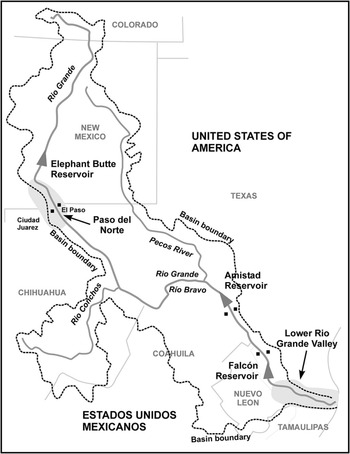
Under EPA grant R824799, HARC convened a Mexican–US team for an interdisciplinary study of water supply and demand in the Lower Rio Grande, the 1,200 km river segment on the US–Mexico border that is replenished by two tributaries – the Conchos from Mexico (two-thirds of flow) and the Pecos from the United States (one-third). Amistad and Falcón reservoirs supply river water to the downstream impact area with thirty-one irrigation districts and multiple twin cities on both sides of the Rio Grande (Schmandt and Ward, Reference Schmandt and Ward2000; Schmandt, Reference Schmandt2002; Schmandt et al., Reference Schmandt, North and Ward2013). Figure 1.1 presents a map of the study area.
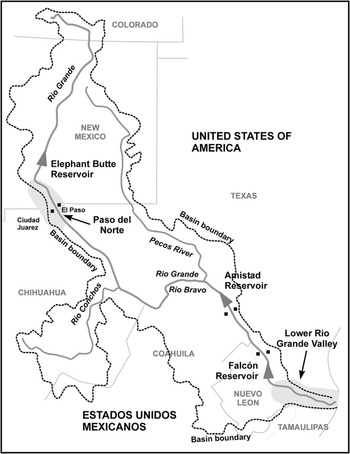
Figure 1.1 The Rio Grande / Rio Bravo region.
As part of the study, we developed and tested a water budget model to measure water supply and demand in rivers with dominant reservoir operations (BRACERO). We then calculated supply and demand under alternative assumptions about future physical and social conditions in the basin: business as usual, drought of record, drought of record plus reduced inflow from the Conchos tributary, and sustainable development. We found
Each decade Amistad and Falcón reservoirs lose 5 percent of storage to sedimentation.
The sub-basin population will double between 2000 and 2030, reaching 4.9 million.
Agriculture will lose part of its water allocation to cities.
Most groundwater in this river segment is brackish and not available for alleviating drought conditions.
In-stream flow will continue to decrease.
Historically, the Conchos, a tributary from Mexico, provided two-thirds of the main stem flow in the Lower Rio Grande. Development in the Conchos basin will decrease this contribution.
By 2030, the Lower Rio Grande will carry 30 percent less water than in the recent past.
Agriculture will be able to cope with less water if farmers practice conservation, adopt less water-intensive irrigation technology, and shift to less water demanding crops. This all-important finding is based on a case study of one of the thirty-one irrigation districts in the Lower Rio Grande sub-basin.
The second most important adaptation strategy focuses on urban demand: Water conservation and repair of leaking distribution networks will allow cities to keep water use in check.
The results of the Rio Grande study gave us pause: Were they representative of engineered rivers in drylands elsewhere? What are the prospects worldwide? Discussing our Rio Grande results with colleagues around the world we found widespread interest in using and expanding the Rio Grande methodology. We started SERIDAS to find answers to these questions.
1.1.4 SERIDAS and ARIDAS
SERIDAS stands for Sustainability of Engineered Rivers in Arid Lands. We created the abbreviation SERIDAS by looking at Projeto Áridas as our model. Projeto Áridas studies drought conditions – both historical and current – in Brazil’s northeastern state of Ceará (Ministry of Planning and Budget, 1995). The project was directed, over the course of many years, by Antônio Magalhães, a native of Ceará, an economist, a government and World Bank staffer, as well as one of the contributors to this volume. ARIDAS addresses key problems of northeast Brazil: over a hundred years of drought, widespread famine, poverty, and out-migration.
Having studied the drought-related problems of northeast Brazil, Antônio broadened the scope of his work to address problems in semi-arid drylands worldwide. In 1996, Jesse Ribot, Antônio Magalhães, and Stahis Panagides edited a book called Climate Variability, Climate Change and Social Vulnerability in the Semi-Arid Tropics. In 2011, Magalhães directed a particularly influential conference on climate, sustainability, and development in semi-arid regions. The conference led to a dryland call for action (Center for Strategic Studies and Management, 2011). By that time, I had worked with Antônio on several occasions in Fortaleza, the capital of Cearà and Brasilia. We continued our cooperation when he spent a year in Austin with me and a talented team of graduate students at UT Austin (Magalhães and Schmandt, Reference Magalhães and Schmandt1998). The focus of ARIDAS on threats to reliable water supply for irrigated agriculture, drinking water, and the environment in arid regions guided us in the development of SERIDAS.
Thus, by the time SERIDAS got underway, we had developed a good understanding of key issues that we report on in this volume: multiple approaches to the management of water resources, the link between water supply and climate change, the importance of river reservoirs for irrigated agriculture in arid regions, the impact of population growth on water availability, and, above all, the need for sustainable development to guide economic growth, environmental protection, and food production. We did not have to start from scratch!
1.2 The SERIDAS Rivers
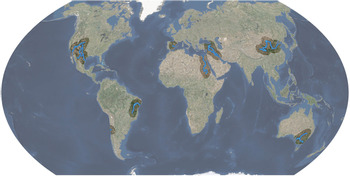
The SERIDAS team studies ten rivers from six continents: the Colorado and Rio Grande from North America, the São Francisco and Limarí from South America, the Nile from Africa, the Jucar from Europe, the Euphrates–Tigris and Yellow from Asia, and the Murray–Darling from Australia (Figure 1.2).
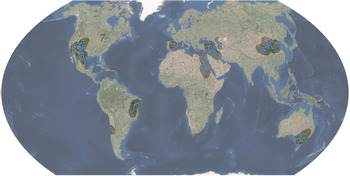
Figure 1.2 The SERIDAS rivers.
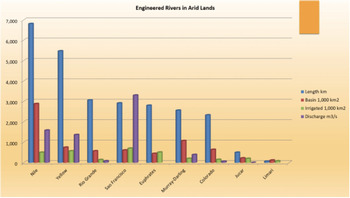
The rivers share several common features (Figure 1.3):
Nature: The main source of river water comes from upstream mountain snowpack or highland rains. Spring floods have brought sediment downstream for millions of years, creating fertile land ready for agriculture. The climate downstream is arid or semi-arid. With highly seasonal streamflow, agriculture is limited to spring and early summer.
Engineering: Modern reservoirs – large dams built with steel-reinforced concrete – are designed to catch the spring flood and release water as needed by irrigated agriculture, cities, and instream flow throughout the year. The new technology dramatically increased agricultural productivity. Yet, reservoirs catch sediment. The result: Fertile soil no longer enlarges the agricultural area of downstream sub-basins. Instead, sediment slowly but surely reduces the storage volume of the reservoir. Removing sediment is technically possible but expensive. The first modern reservoir was built in 1902, when British engineers closed the Aswan Dam – now called the Aswan Low Dam – on the Nile. In 1916 the US Corps of Engineers closed Elephant Butte reservoir on the Rio Grande, an hour’s drive north from El Paso, Texas, while simultaneously American civil engineers closed the Boquilla Dam on the Rio Conchos. Over the next several decades, all SERIDAS rivers became engineered rivers. In addition to reservoirs, often several on the same river, a network of distribution channels was built to bring river water to the farms and cities.
Social and ecological: Reservoirs control flooding, are the lifeblood of irrigated agriculture, provide water to industry and growing urban centers, are an important source of hydropower, regulate stream flow, and can be used to maintain environmental flow.
We assembled our team of river experts to project water supply and demand for the SERIDAS rivers in 2013. We also added a second group to the team – scholars who are knowledgeable about the aforementioned physical and social drivers of change. We hoped that the interaction between the two groups would allow river experts and topical experts to learn from each other as they researched new challenges and response strategies. To make this interaction work we organized three workshops, each supported by a grant from a major foundation.
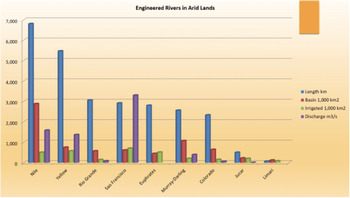
Figure 1.3 Physical characteristics of the SERIDAS rivers.
1.2.1 Research Methodology: Austin Workshop 2014
The Cynthia and George Mitchell Foundation funded the first get together of the SERIDAS team, January 13–16, 2014, in Austin, Texas. The river experts presented an overview of current conditions and problems in each basin. The topical experts reviewed current understanding of river challenges. We then discussed how to assess future water supply and demand in response to climate change, reservoir sedimentation, changes in land use, and population growth.
We agreed that our work should be a contribution to the emerging field of sustainability science. Sustainability science aims at “understanding … the interaction of global processes with the ecological and social characteristics of particular places and sectors” (Kates et al., Reference Kates2001). A groundbreaking report by the National Academy of Sciences, Our Common Journey (National Research Council, 1999), defines additional characteristics of sustainability science. It must be integrative, participatory, and place-based. Policy recommendations should focus on a step-by-step approach, not a one-time blueprint. Our project uses the paradigms outlined by Robert Kates and the National Academy. We see global climate change and variability as key drivers of future conditions in river basins. Our team was formed with the express goal of being able to integrate natural and social science perspectives and methods. We work closely with stakeholders in the river basins when we ask them how more sustainable conditions can be reached in the future. We will present policy recommendations for responding to the challenges encountered in the river basins.
1.2.2 Mid-Term Review: Hanover Workshop 2015
The second SERIDAS workshop, supported by the Volkswagen Foundation, was held June 24–27, 2015, in Hanover, Germany. Team members presented drafts of river chapters and “challenge” chapters. Based on the presentations and discussion at the workshop we decided to use the following plan for projecting SERIDAS river basin futures. The plans were intended to guide the authors of the river chapters but also gave them discretion to make changes depending on availability of data and other circumstances.
1. Time frame: Each basin assessment will project changes for two timeframes: medium- and longer-term futures. The years 2040 and 2060 were mentioned. While comparability among basins is highly desirable, basin chapters use timeframes that can be addressed with available data.
2. River segments: The analysis would proceed by river segments, defined as the stretch of river from source to reservoir, reservoir to reservoir, or reservoir to mouth. Each river segment includes a hydrological and a socioeconomic (irrigated land and cities) component.
3. Change factors: Authors were to seek to quantify physical and social/economic changes due to climate variation and change, storage loss from reservoir sedimentation, groundwater/surface water connection, in-stream flow, land use (agricultural and urban), and population.
4. Future scenarios: We would use three scenarios, if possible, for each of the timeframe years. If data limitations made this impossible, authors would focus on 2040. All scenarios will combine the results of projected changes (#3 in this list) with (A) a business-as-usual scenario (current ways of using and managing water) and (B) a worst-drought-since-reservoir-closing scenario (reduced water supply).
5. Stakeholder input: Authors were encouraged to use surveys, site visits, and workshops to receive input on plans and options for using water more efficiently and sustainably. Input was desired from water users (irrigations districts, cities, industry, native populations), water management agencies, and nongovernmental organizations.
6. Integration of findings: Each basin analysis would summarize results by river segments and then by the entire river basin. Findings would be reported in four sections: water budget (quantitative analysis); water governance (qualitative analysis); environmental conservation; and policy advice on strengthening basin resilience and sustainability.
1.2.3 Policy Recommendations: Bellagio Workshop 2017
The workshop was supported by the Rockefeller Foundation, which invited us to meet at their conference site in Bellagio, Italy. After discussion we agreed that our policy recommendations would be based on these principles,
A reservoir-dominated river in arid lands is sustainable when five conditions are met,
1. Nature’s water supply, averaged over the period of the most severe drought experienced in the historical record, delivers a dependable reservoir yield sufficient to meet human and ecological needs in the sub-basins created by engineered river structures.
2. To keep within the limits of the river’s dependable yield, water managers and stakeholders jointly and proactively search for ways to use water more efficiently.
3. An ecologically prudent level of in-stream flow is maintained or restored.
4. Whenever observed or projected changes in the natural system or human actions modify river flow, the dependable yield of the reservoirs is recalculated and water management agencies, after consultation with governments and stakeholders, adjust rules for water allocations to match the new levels of dependable yield.
5. Individual reservoir impact assessments, including their dependable yield assessments, are aggregated into a basin-wide sustainability plan, which compares the results of reservoir assessments to existing water sharing agreements between upstream and downstream users as well as agricultural, urban, and industrial water right holders. If adjustments are necessary, new agreements are negotiated which should be based on equity considerations embodied in international law and the history of cooperation in the basin.
This new definition of sustainability of engineered rivers in arid lands guides the work presented in this volume. We amplify the five sustainability criteria in the chapters that follow.
1.3 Supporting Activities
In support of the SERIDAS project, teams of faculty and graduate students at the Lyndon B. Johnson School of Public Affairs conducted two studies. The first focused on two of our rivers: the Euphrates–Tigris and Rio Grande / Bravo (Kibaroglu and Schmandt, Reference Kibaroglu and Schmandt2016). The second developed detailed policy recommendations for water management in the Paso del Norte sub-basin of the Rio Grande / Bravo (Schmandt and Stolp, Reference Schmandt and Stolp2018).
We also contributed to a joint workshop organized by the US and Mexican Academies (National Academies of Sciences, Engineering and Medicine, 2018). Findings of these activities will be referred to in several chapters of the volume.