To save content items to your account,
please confirm that you agree to abide by our usage policies.
If this is the first time you use this feature, you will be asked to authorise Cambridge Core to connect with your account.
Find out more about saving content to .
To save content items to your Kindle, first ensure no-reply@cambridge.org
is added to your Approved Personal Document E-mail List under your Personal Document Settings
on the Manage Your Content and Devices page of your Amazon account. Then enter the ‘name’ part
of your Kindle email address below.
Find out more about saving to your Kindle.
Note you can select to save to either the @free.kindle.com or @kindle.com variations.
‘@free.kindle.com’ emails are free but can only be saved to your device when it is connected to wi-fi.
‘@kindle.com’ emails can be delivered even when you are not connected to wi-fi, but note that service fees apply.
The article inquires into the role of the institutional context in explaining the governance of community co-operatives. These organizations do not solely focus on a member’s advantage but act on behalf of some collective identity. To enhance our understanding of the nature of co-operative governance on the neighborhood level, we draw on theoretical concepts that are context-sensitive, helping us to catch the institutional conditions in a specific place which are enabling individuals and groups to act and organize collectively. Thus, we enrich the abstract concept of governance put forward by New Institutional Economics. Based on a systematic analysis of case studies, the paper shows that the governance of community co-operatives is based on place-bound values. However, the encounter of divergent imaginations of the neighborhood results in different co-operative practices: e.g., either a government-directed practice to “discipline” the community or a community-initiated practice of self-organization.
The paper explores donors’ efforts to promote government-NGO partnership for the purpose of improving public services. Following a brief discussion of partnership, two illustrations support a relative definition of partnership and its added value. The examples represent alternative approaches to improving public services through partnership work, the choice of which may depend on (1) the will of the partners to change—particularly government, (2) the preexistence of effective public services, and (3) depth of mobilization and social capital sought. The examples similarly reveal alternative approaches to addressing partnership challenges either bureaucratically or through behavioral norms and organization culture. Implications of donors’ participation in such partnerships are highlighted.
The third sector is poised to play a leading role in public sector innovations in the twenty-first century. The third sector can enhance, facilitate, and promote greater citizen participation in the determination, provision, and governance of social services through co-production. This article explores some crucial conceptual issues related to the co-production of public services and the role of the third sector. It also provides some brief empirical evidence of the potential of the third sector, not merely as a service provider, but also as a facilitator of the re-democratization of the European welfare state. Here, collective action and third sector provision are crucial for distinguishing between co-production heavy and light. The conclusion focuses on the ability of the public, third, and for-profit sectors to embrace greater citizen participation and co-production.
The Chinese state has never granted businesses full autonomy, even amid efforts to establish market-supporting institutions. Instead, the state and its officials view business as primarily political actors, demanding political services from firms to advance political objectives. Politicizing Business demonstrates that the politicization of firms is rooted in authoritarianism, often harming business interests and undermining China's efforts to attract and retain investment. Explaining the seemingly arbitrary state takeover of sectors and firms, this book uncovers previously overlooked forms of politicization and demonstrates how politicizing business often creates conflicts between the state and firms, particularly private firms, leading to a state-dominated market in many sectors. Combining academic rigor with exceptionally rich data and analysis, including hundreds of in-depth interviews with government officials and business leaders, original datasets and case studies, Politicizing Business offers fresh insights into China's political economy model and explores what the Party-state demands from companies, how compliance is enforced, when and where firms are politicized, and its impact on China's development.
The suboptimal size of municipalities is often a challenge for service delivery due to scale limitations. Intermunicipal cooperation (IMC) has expanded as an alternative to top-down amalgamations, offering a more flexible and typically voluntary approach. Many studies have been devoted to understanding the driving factors of IMC, providing static empirical evidence on the characteristics of cooperating municipalities. This article contributes to the literature with a dynamic analysis of the drivers of cooperation, using a Cox proportional hazards model over a long period and a very large sample of municipalities in Catalonia. This dynamic analysis unravels the direction of the causal relationship in complex relationships such as fiscal restrictions or political legitimation with cooperation. Furthermore, as we have data from eight relevant local services, we improve both the theoretical and empirical analysis of cooperation dynamics based on the characteristics of the services.
In Colombia, there has been very little discussion about the epidemiological transition in the 20th century, therefore, there are few empirical studies, and this mainly focus on the second half of the 20th century, and on the factors associated with improvements in mortality indicators. In this paper, we define three stages of the epidemiological transition in the country during the period 1918–1998, with special emphasis on changes in mortality rates, causes of death and the contribution of different age groups. Likewise, a co-integration analysis is carried out to model the long-term relationship between the mortality rate and the variables of nutrition, public health, education and economic growth. Finally, we show the results of the structural change tests of the mortality rates for pneumonia and tuberculosis to examine the impact of the arrival of sulphonamides and penicillin in Colombia.
Among the dilemmas faced by labor, socialist, and other movements of the subaltern classes striving to change society over the past two centuries, three are discussed here: forms of ownership, bureaucracy and “big tent” formulas for both unity of the working class broadly defined, and alliances with movements of independent owners or undefined class status. Examples are drawn from various countries (France, Italy, Britain, the USA, Brazil, Korea) and from international programmatic discussions. Socialists, notably Marxists, shared the radical republican goal of a true democracy of equals, but differed on the extent of collective ownership (state, local, cooperative) needed in the economy, and the definition of privately owned personal goods that insured an individual’s dignity and independence. The rise and contraction of capitalist states with social services (“welfare states”) complicated the issue. Such movements also accumulated experiences with the growth of experts and/or bureaucrats, and the means to limit their privileges and transformation into a caste-type elite. Three environments which generate such phenomena are identified: social-democratic and big labor, post-capitalist states and, more recently, nongovernmental organizations. Finally, the author discusses alliances with broader social forces which include working-class and non-working-class interests, and the management of cross-class ideologies such as certain varieties of nationalism, feminism, environmentalism, and anti-tax movements.
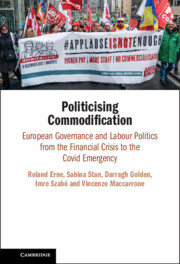
In Chapter 13, we provide a preliminary analysis of the policy orientation of the EU’s post-Covid-19 new economic governance (NEG) regime to give policymakers, unionists, and social-movement activists an idea about possible future trajectories of EU governance of employment relations and public services. We do that on the basis of not only the recently adopted EU laws in these two policy areas, such as the decommodifying Minimum Wage Directive, but also EU executives’ post-Covid-19 NEG prescriptions in two areas (employment relations, public services), three public sectors (transport services, water services, healthcare services), and four countries (Germany, Italy, Ireland, Romania). Vertical NEG interventions in national wage policies paradoxically cleared the way for the decommodifying EU Minimum Wage Directive by effectively making wage policy an EU policymaking issue, but, in the area of public services, we see an accentuation of the trend of NEG prescriptions in recent years: more public investments but also much more private sector involvement in the delivery of public services.
Chapter 7 shows that EU leaders had already started in the 1980s to steer the trajectory of national public services in a commodifying direction. The commodifying pressures from direct EU interventions reached a peak in 2004 with the Commission’s draft Services Directive, which failed to become law because of unprecedented transnational protest movements. After the financial crisis however, the EU’s shift to its new economic governance (NEG) regime empowered EU executives to pursue public service commodification by new means. Our analysis reveals that the NEG prescriptions on public services for Germany, Italy, Ireland, and Romania consistently pointed in a commodifying direction, by demanding both a curtailment of public resources for public services and the marketisation of public services. Although our analysis uncovers some decommodifying prescriptions, namely, quantitative ones calling for more investment at the end of the 2010s, they were usually justified with policy rationales subordinated to NEG’s commodification script.
Chapter 4 first reviews earlier studies of the EU’s new economic governance (NEG) regime and discusses the methodological challenges that they pose for the assessment of NEG documents. Earlier studies of NEG policy prescriptions flattened the semantic relationships between the different terms used in them and the power relations between the actors involved in their production. We therefore outline a novel research design that accounts for the links between the policy orientation of NEG prescriptions and the material interests of concrete social groups as well as the hierarchical ordering of NEG prescriptions in larger policy scripts unevenly deployed across countries, time, and policy areas. We address the first point in Chapter 4 and the second in Chapter 5. In 4.2, we identify commodification as the most relevant dimension for analysing the nexus between EU economic governance and labour politics. In 4.3, we operationalise the concepts of commodification and decommodification in employment relations and public services and outline the analytical framework against which we assess the policy orientation of the EU’s NEG prescriptions in the policy areas of employment relations and public services.
This book examines the new economic governance (NEG) regime that the EU adopted after 2008. Its novel research design captures the supranational formulation of NEG prescriptions and their uneven deployment across countries (Germany, Italy, Ireland, Romania), policy areas (employment relations, public services), and sectors (transport, water, healthcare). NEG led to a much more vertical mode of EU integration, and its commodification agenda unleashed a plethora of union and social-movement protests, including transnationally. The book presents findings that are crucial for the prospects of European democracy, as labour politics is essential in framing the struggles about the direction of NEG along a commodification–decommodification axis rather than a national–EU axis. To shed light on corresponding processes at EU level, it upscales insights on the historical role that labour movements have played in the development of democracy and welfare states. This title is also available as Open Access on Cambridge Core.
Public service reform in the shape of collaborative governance is consistently promoted by statutory actors in Scotland and other high-income countries to help develop high-quality and efficient public services, responsive to peoples needs, but this notion contains a number of weaknesses. This chapter explores the potential of the capabilities approach (CA), conversion factors in particular, to achieve a more effective model for conceptualizing, driving and evaluating how public services operate, drawing on empirical work conducted by What Works Scotland. It argues that the CA provides an ethical framework for evaluating the role and function of public services in safeguarding peoples well-being and social justice, especially for those with fewest resources. Employing data from two research projects in areas of multiple deprivation, the impact of public service interventions is evaluated in terms of conversion factors, and how these shape outcomes for citizens and communities. The concept of structural conversion factors is an innovative response to criticism of the CA, and the chapter argues that this modification allows it to better confront the drivers of social injustice.
We explore the heterogeneous effect of migrant remittances on citizens' support for taxation using a sample comprising 45,000 individuals from the Afrobarometer survey round 7 [2016–2018] across 34 African countries. To correct for unobserved heterogeneity, we endogenously identify latent classes/subtypes of individuals that share similar patterns on how their support for taxation is affected by their unobserved and observed characteristics, including remittance dependency. We apply the finite multilevel mixture of regressions approach, a supervised machine learning method to detect hidden classes in the data without imposing a priori assumptions on class membership. Our data are best generated by an econometric model with two classes/subtypes of individuals. In class 1 where more than two-thirds of the citizens belong, we do not find any significant evidence that remittance dependence affects support for taxation. However, in class 2 where the remaining one-third of the citizens belong, we find a significant negative effect of remittance dependence on support for taxation. Furthermore, we find that citizens who have a positive appraisal of the quality of the public service delivery have a lower probability of belonging to the class in which depending on remittance reduces support for taxation. The findings emphasize the need for efficient public services provisioning to counteract the adverse effect of remittances on tax morale.
Living life on a poverty income remains commonplace in most modern welfare states. A growing literature highlights the impact on individuals, families, and communities of poverty, costs that are both current to the experience and reflecting its scarring effects. A further cost, one that is frequently hidden, is the cumulative and recurring public expenditure associated with policy responses to poverty. These costs derive from the identification of poverty as a determining factor in the need for, and demand for, a wide range of public services. Estimating the nominal value of these costs, based on an assessment of public expenditure in one EU-15 state, Ireland, is the focus of this article. The findings establish annual costs of between €3bn-€7bn and highlight for all members of society, whether above or below the poverty line, the recurring public expenditure costs incurred by society as a result of poverty.
The digitalisation of public services brought challenges for their access and use. This article looks at the migrants as claimants of the public services to analyse the problems with the digital delivery of public services. The previous research recognised the various resources, such as digital skills and administrative literacy, needed for the successful use of digital services. However, the role of administrative literacy has not been studied in linguistically and culturally diverse contexts, such as migration. This article draws on the qualitative study of Russian-speaking migrants in Finland. By analysing the perspective of the service users, it describes in detail the requirements that people with migrant backgrounds try to meet to gain access to social protection. Findings demonstrate the multiple obstacles that burden or prevent access to entitlements.
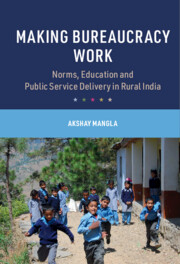
Chapter 1 introduces the central puzzle of implementing primary education in northern India, a least likely setting for programmatic service delivery. Despite having the same formal institutions and national policy framework for primary education, implementation varies remarkably across northern Indian states. After reviewing existing explanations, the chapter outlines the main argument, anchored around variation in informal bureaucratic norms, and foreshadows the theoretical contributions to comparative politics and development. It then presents the research design and methods, based on multilevel comparisons in four Indian states (Uttar Pradesh, Himachal Pradesh, Uttarakhand and Bihar). Using multiple field research methods, I trace the implementation process from state capitals down to the village primary schools, drawing on two and a half years of field research: participant observation inside bureaucracies; village ethnography; and 853 interviews and 103 focus group discussions. I conclude with an overview of the book’s remaining chapters.
Chapter 2 presents the book’s theory connecting differences in bureaucratic norms to variation in the implementation of primary schooling. I first define implementation and operationalize it for the primary education domain. I then present comparative education indicators, showcasing differences in performance across four Indian states. Next, I develop a theory anchored around the ideal types of legalistic and deliberative bureaucracy. I argue that deliberative bureaucracies, which promote flexibility and problem-solving, are more effective since they can adapt policies to local needs and activate participation from marginalized communities. By contrast, legalistic states, which adhere strictly to rules and procedures, implement policies unevenly and tend to benefit privileged groups in society, weakening the engagement of poor communities. I elucidate two mechanisms: collective understanding and behavior of state officials, and societal feedback, which together yield varied mentation patterns and outcomes. I explore the political origins behind the differences in bureaucratic norms. I scope conditions of my theory and contrast it with alternative political explanations for the implementation of public services.
What makes bureaucracy work for the least advantaged? Across the world, countries have adopted policies for universal primary education. Yet, policy implementation is uneven and not well understood. Making Bureaucracy Work investigates when and how public agencies deliver primary education across rural India. Through a multi-level comparative analysis and more than two years of ethnographic field research, Mangla opens the 'black box' of Indian bureaucracy to demonstrate how differences in bureaucratic norms - informal rules that guide public officials and their everyday relations with citizens - generate divergent implementation patterns and outcomes. While some public agencies operate in a legalistic manner and promote compliance with policy rules, others engage in deliberation and encourage flexible problem-solving with local communities, thereby enhancing the quality of education services. This book reveals the complex ways bureaucratic norms interact with socioeconomic inequalities on the ground, illuminating the possibilities and obstacles for bureaucracy to promote inclusive development.
What do frontline social service providers do during client interactions when they lack adequate formal organizational resources to respond to clients' needs? To answer this question, this Element presents two large-scale qualitative studies of Israeli frontline providers of social services. Drawing on interviews of public-sector workers (Study 1, N=214), it introduces a widespread phenomenon, where the vast majority of frontline workers regularly provide a large range of informal personal resources (IFRs) to clients. Study 2 (N=84) then compares IFR provision between workers from the public, nonprofit and private sectors. The comparative analysis demonstrates how workers' rationale for providing personal resources to clients is shaped by particular role perceptions embedded in values, norms and behavioral expectations that vary by employment sector. The Element concludes by presenting ramifications of the phenomenon of IFR provision in terms of citizens' wellbeing, social inequality, gender relations and the future of work in public administration.