Refine search
Actions for selected content:
47 results
Families of twists of tuples of hyperelliptic curves
- Part of
-
- Journal:
- Glasgow Mathematical Journal , First View
- Published online by Cambridge University Press:
- 02 February 2026, pp. 1-7
-
- Article
-
- You have access
- Open access
- HTML
- Export citation
-
Let $f \in \mathbb{Q}[x]$ be a square-free polynomial of degree at least $3$,
$3$,  $m_i$, $i=1,2,3$, odd positive integers, and $a_i$, $i=1,2,3$, non-zero rational numbers. We show the existence of a rational function $D\in \mathbb{Q}(v_1,v_2,v_3,v_4)$ such that the Jacobian of the quadratic twist of $y^2=f(x)$ and the Jacobian of the $m_i$-twist, respectively, $2m_i$-twist, of $y^2=x^{m_i}+a_i^2$, $i=1,2,3$, by $D$ are all of positive Mordell–Weil ranks. As an application, we present families of hyperelliptic curves with large Mordell–Weil rank.


On the L-polynomials of curves over finite fields
- Part of
-
- Journal:
- Proceedings of the Royal Society of Edinburgh. Section A: Mathematics , First View
- Published online by Cambridge University Press:
- 06 February 2025, pp. 1-49
-
- Article
-
- You have access
- Open access
- HTML
- Export citation
-
We discuss, in a non-Archimedean setting, the distribution of the coefficients of L-polynomials of curves of genus g over $\mathbb{F}_q$. Among other results, this allows us to prove that the $\mathbb{Q}$-vector space spanned by such characteristic polynomials has dimension g + 1. We also state a conjecture about the Archimedean distribution of the number of rational points of curves over finite fields.


KOBAYASHI-OCHIAI’S FINITENESS THEOREM FOR ORBIFOLD PAIRS OF GENERAL TYPE
- Part of
-
- Journal:
- Journal of the Institute of Mathematics of Jussieu / Volume 23 / Issue 6 / November 2024
- Published online by Cambridge University Press:
- 17 April 2024, pp. 2713-2732
- Print publication:
- November 2024
-
- Article
-
- You have access
- Open access
- HTML
- Export citation
LOCAL SECTIONS OF ARITHMETIC FUNDAMENTAL GROUPS OF p-ADIC CURVES
- Part of
-
- Journal:
- Nagoya Mathematical Journal / Volume 254 / June 2024
- Published online by Cambridge University Press:
- 20 December 2023, pp. 462-487
-
- Article
-
- You have access
- Open access
- HTML
- Export citation
-
We investigate sections of the arithmetic fundamental group $\pi _1(X)$ where X is either a smooth affinoid p-adic curve, or a formal germ of a p-adic curve, and prove that they can be lifted (unconditionally) to sections of cuspidally abelian Galois groups. As a consequence, if X admits a compactification Y, and the exact sequence of $\pi _1(X)$ splits, then $\text {index} (Y)=1$. We also exhibit a necessary and sufficient condition for a section of $\pi _1(X)$ to arise from a rational point of Y. One of the key ingredients in our investigation is the fact, we prove in this paper in case X is affinoid, that the Picard group of X is finite.


Perfect points of abelian varieties
- Part of
-
- Journal:
- Compositio Mathematica / Volume 159 / Issue 11 / November 2023
- Published online by Cambridge University Press:
- 08 September 2023, pp. 2261-2278
- Print publication:
- November 2023
-
- Article
- Export citation
-
Let $p$ be a prime number, $k$ a finite field of characteristic $p>0$ and $K/k$ a finitely generated extension of fields. Let $A$ be a $K$-abelian variety such that all the isogeny factors are neither isotrivial nor of $p$-rank zero. We give a necessary and sufficient condition for the finite generation of $A(K^{\mathrm {perf}})$ in terms of the action of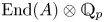 $\mathrm {End}(A)\otimes \mathbb {Q}_p$ on the $p$-divisible group $A[p^{\infty }]$ of $A$. In particular, we prove that if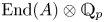 $\mathrm {End}(A)\otimes \mathbb {Q}_p$ is a division algebra, then $A(K^{\mathrm {perf}})$ is finitely generated. This implies the ‘full’ Mordell–Lang conjecture for these abelian varieties. In addition, we prove that all the infinitely $p$-divisible elements in $A(K^{\mathrm {perf}})$ are torsion. These reprove and extend previous results to the non-ordinary case.


Weight filtrations on Selmer schemes and the effective Chabauty–Kim method
- Part of
-
- Journal:
- Compositio Mathematica / Volume 159 / Issue 7 / July 2023
- Published online by Cambridge University Press:
- 20 June 2023, pp. 1531-1605
- Print publication:
- July 2023
-
- Article
- Export citation
-
We develop an effective version of the Chabauty–Kim method which gives explicit upper bounds on the number of $S$-integral points on a hyperbolic curve in terms of dimensions of certain Bloch–Kato Selmer groups. Using this, we give a new ‘motivic’ proof that the number of solutions to the $S$-unit equation is bounded uniformly in terms of $\#S$.


Quadratic Chabauty for modular curves: algorithms and examples
- Part of
-
- Journal:
- Compositio Mathematica / Volume 159 / Issue 6 / June 2023
- Published online by Cambridge University Press:
- 15 May 2023, pp. 1111-1152
- Print publication:
- June 2023
-
- Article
-
- You have access
- Open access
- HTML
- Export citation
-
We describe how the quadratic Chabauty method may be applied to determine the set of rational points on modular curves of genus $g>1$ whose Jacobians have Mordell–Weil rank $g$. This extends our previous work on the split Cartan curve of level 13 and allows us to consider modular curves that may have few known rational points or non-trivial local height contributions at primes of bad reduction. We illustrate our algorithms with a number of examples where we determine the set of rational points on several modular curves of genus 2 and 3: this includes Atkin–Lehner quotients $X_0^+(N)$ of prime level $N$, the curve $X_{S_4}(13)$, as well as a few other curves relevant to Mazur's Program B. We also compute the set of rational points on the genus 6 non-split Cartan modular curve $X_{\scriptstyle \mathrm { ns}} ^+ (17)$.


Diagonal quartic surfaces with a Brauer–Manin obstruction
- Part of
-
- Journal:
- Compositio Mathematica / Volume 159 / Issue 4 / April 2023
- Published online by Cambridge University Press:
- 17 March 2023, pp. 659-710
- Print publication:
- April 2023
-
- Article
- Export citation
-
In this paper we investigate the quantity of diagonal quartic surfaces $a_0 X_0^4 + a_1 X_1^4 + a_2 X_2^4 +a_3 X_3^4 = 0$ which have a Brauer–Manin obstruction to the Hasse principle. We are able to find an asymptotic formula for the quantity of such surfaces ordered by height. The proof uses a generalization of a method of Heath-Brown on sums over linked variables. We also show that there exists no uniform formula for a generic generator in this family.
On the distribution of rational points on ramified covers of abelian varieties
- Part of
-
- Journal:
- Compositio Mathematica / Volume 158 / Issue 11 / November 2022
- Published online by Cambridge University Press:
- 07 December 2022, pp. 2109-2155
- Print publication:
- November 2022
-
- Article
-
- You have access
- Open access
- HTML
- Export citation
-
We prove new results on the distribution of rational points on ramified covers of abelian varieties over finitely generated fields $k$ of characteristic zero. For example, given a ramified cover $\pi : X \to A$, where $A$ is an abelian variety over $k$ with a dense set of $k$-rational points, we prove that there is a finite-index coset $C \subset A(k)$ such that $\pi (X(k))$ is disjoint from $C$. Our results do not seem to be in the range of other methods available at present; they confirm predictions coming from Lang's conjectures on rational points, and also go in the direction of an issue raised by Serre regarding possible applications to the inverse Galois problem. Finally, the conclusions of our work may be seen as a sharp version of Hilbert's irreducibility theorem for abelian varieties.


Average-case complexity of the Euclidean algorithm with a fixed polynomial over a finite field
- Part of
-
- Journal:
- Combinatorics, Probability and Computing / Volume 31 / Issue 1 / January 2022
- Published online by Cambridge University Press:
- 06 July 2021, pp. 166-183
-
- Article
- Export citation
-
We analyse the behaviour of the Euclidean algorithm applied to pairs (g,f) of univariate nonconstant polynomials over a finite field $\mathbb{F}_{q}$ of q elements when the highest degree polynomial g is fixed. Considering all the elements f of fixed degree, we establish asymptotically optimal bounds in terms of q for the number of elements f that are relatively prime with g and for the average degree of $\gcd(g,f)$. We also exhibit asymptotically optimal bounds for the average-case complexity of the Euclidean algorithm applied to pairs (g,f) as above.


GEOMETRIC QUADRATIC CHABAUTY
- Part of
-
- Journal:
- Journal of the Institute of Mathematics of Jussieu / Volume 22 / Issue 1 / January 2023
- Published online by Cambridge University Press:
- 17 June 2021, pp. 279-333
- Print publication:
- January 2023
-
- Article
-
- You have access
- Open access
- Export citation
-
Since Faltings proved Mordell’s conjecture in [16] in 1983, we have known that the sets of rational points on curves of genus at least $2$ are finite. Determining these sets in individual cases is still an unsolved problem. Chabauty’s method (1941) [10] is to intersect, for a prime number p, in the p-adic Lie group of p-adic points of the Jacobian, the closure of the Mordell–Weil group with the p-adic points of the curve. Under the condition that the Mordell–Weil rank is less than the genus, Chabauty’s method, in combination with other methods such as the Mordell–Weil sieve, has been applied successfully to determine all rational points in many cases.
Minhyong Kim’s nonabelian Chabauty programme aims to remove the condition on the rank. The simplest case, called quadratic Chabauty, was developed by Balakrishnan, Besser, Dogra, Müller, Tuitman and Vonk, and applied in a tour de force to the so-called cursed curve (rank and genus both $3$).
$3$).This article aims to make the quadratic Chabauty method small and geometric again, by describing it in terms of only ‘simple algebraic geometry’ (line bundles over the Jacobian and models over the integers).


Rational points and derived equivalence
- Part of
-
- Journal:
- Compositio Mathematica / Volume 157 / Issue 5 / May 2021
- Published online by Cambridge University Press:
- 30 April 2021, pp. 1036-1050
- Print publication:
- May 2021
-
- Article
- Export citation
-
We give the first examples of derived equivalences between varieties defined over non-closed fields where one has a rational point and the other does not. We begin with torsors over Jacobians of curves over $\mathbb {Q}$ and $\mathbb {F}_q(t)$, and conclude with a pair of hyperkähler 4-folds over $\mathbb {Q}$. The latter is independently interesting as a new example of a transcendental Brauer–Manin obstruction to the Hasse principle. The source code for the various computations is supplied as supplementary material with the online version of this article.


On Single-Distance Graphs on the Rational Points in Euclidean Spaces
- Part of
-
- Journal:
- Canadian Mathematical Bulletin / Volume 64 / Issue 1 / March 2021
- Published online by Cambridge University Press:
- 29 July 2020, pp. 13-24
- Print publication:
- March 2021
-
- Article
- Export citation
-
For positive integers n and d > 0, let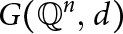 $G(\mathbb {Q}^n,\; d)$ denote the graph whose vertices are the set of rational points $\mathbb {Q}^n$, with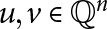 $u,v \in \mathbb {Q}^n$ being adjacent if and only if the Euclidean distance between u and v is equal to d. Such a graph is deemed “non-trivial” if d is actually realized as a distance between points of $\mathbb {Q}^n$. In this paper, we show that a space $\mathbb {Q}^n$ has the property that all pairs of non-trivial distance graphs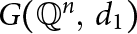 $G(\mathbb {Q}^n,\; d_1)$ and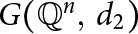 $G(\mathbb {Q}^n,\; d_2)$ are isomorphic if and only if n is equal to 1, 2, or a multiple of 4. Along the way, we make a number of observations concerning the clique number of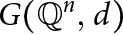 $G(\mathbb {Q}^n,\; d)$.


The size of the primes obstructing the existence of rational points
- Part of
-
- Journal:
- Proceedings of the Royal Society of Edinburgh. Section A: Mathematics / Volume 151 / Issue 2 / April 2021
- Published online by Cambridge University Press:
- 15 May 2020, pp. 652-704
- Print publication:
- April 2021
-
- Article
- Export citation
A Witt Nadel vanishing theorem for threefolds
- Part of
-
- Journal:
- Compositio Mathematica / Volume 156 / Issue 3 / March 2020
- Published online by Cambridge University Press:
- 13 January 2020, pp. 435-475
- Print publication:
- March 2020
-
- Article
- Export citation
-
In this paper, we establish a vanishing theorem of Nadel type for the Witt multiplier ideals on threefolds over perfect fields of characteristic larger than five. As an application, if a projective normal threefold over $\mathbb{F}_{q}$ is not klt and its canonical divisor is anti-ample, then the number of the rational points on the klt-locus is divisible by $q$.
$q$.


The generalized Fermat equation with exponents 2, 3, $n$
$n$
- Part of
-
- Journal:
- Compositio Mathematica / Volume 156 / Issue 1 / January 2020
- Published online by Cambridge University Press:
- 26 November 2019, pp. 77-113
- Print publication:
- January 2020
-
- Article
- Export citation
-
We study the generalized Fermat equation $x^{2}+y^{3}=z^{p}$, to be solved in coprime integers, where $p\geqslant 7$ is prime. Modularity and level-lowering techniques reduce the problem to the determination of the sets of rational points satisfying certain 2-adic and 3-adic conditions on a finite set of twists of the modular curve $X(p)$. We develop new local criteria to decide if two elliptic curves with certain types of potentially good reduction at 2 and 3 can have symplectically or anti-symplectically isomorphic $p$-torsion modules. Using these criteria we produce the minimal list of twists of $X(p)$ that have to be considered, based on local information at 2 and 3; this list depends on $p\hspace{0.2em}{\rm mod}\hspace{0.2em}24$. We solve the equation completely when $p=11$, which previously was the smallest unresolved $p$. One new ingredient is the use of the ‘Selmer group Chabauty’ method introduced by the third author, applied in an elliptic curve Chabauty context, to determine relevant points on $X_{0}(11)$ defined over certain number fields of degree 12. This result is conditional on the generalized Riemann hypothesis, which is needed to show correctness of the computation of the class groups of five specific number fields of degree 36. We also give some partial results for the case $p=13$. The source code for the various computations is supplied as supplementary material with the online version of this article.


DENSITY RESULTS FOR SPECIALIZATION SETS OF GALOIS COVERS
- Part of
-
- Journal:
- Journal of the Institute of Mathematics of Jussieu / Volume 20 / Issue 5 / September 2021
- Published online by Cambridge University Press:
- 25 October 2019, pp. 1455-1496
- Print publication:
- September 2021
-
- Article
-
- You have access
- Open access
- Export citation
-
We provide evidence for this conclusion: given a finite Galois cover $f:X\rightarrow \mathbb{P}_{\mathbb{Q}}^{1}$ of group $G$, almost all (in a density sense) realizations of $G$ over $\mathbb{Q}$ do not occur as specializations of $f$. We show that this holds if the number of branch points of $f$ is sufficiently large, under the abc-conjecture and, possibly, the lower bound predicted by the Malle conjecture for the number of Galois extensions of $\mathbb{Q}$ of given group and bounded discriminant. This widely extends a result of Granville on the lack of $\mathbb{Q}$-rational points on quadratic twists of hyperelliptic curves over $\mathbb{Q}$ with large genus, under the abc-conjecture (a diophantine reformulation of the case $G=\mathbb{Z}/2\mathbb{Z}$ of our result). As a further evidence, we exhibit a few finite groups $G$ for which the above conclusion holds unconditionally for almost all covers of $\mathbb{P}_{\mathbb{Q}}^{1}$ of group $G$. We also introduce a local–global principle for specializations of Galois covers $f:X\rightarrow \mathbb{P}_{\mathbb{Q}}^{1}$ and show that it often fails if $f$ has abelian Galois group and sufficiently many branch points, under the abc-conjecture. On the one hand, such a local–global conclusion underscores the ‘smallness’ of the specialization set of a Galois cover of $\mathbb{P}_{\mathbb{Q}}^{1}$. On the other hand, it allows to generate conditionally ‘many’ curves over $\mathbb{Q}$ failing the Hasse principle, thus generalizing a recent result of Clark and Watson devoted to the hyperelliptic case.


An effective Chabauty–Kim theorem
- Part of
-
- Journal:
- Compositio Mathematica / Volume 155 / Issue 6 / June 2019
- Published online by Cambridge University Press:
- 14 May 2019, pp. 1057-1075
- Print publication:
- June 2019
-
- Article
- Export citation
Corrigendum: Torsion points on abelian varieties of CM-type
- Part of
-
- Journal:
- Compositio Mathematica / Volume 154 / Issue 3 / March 2018
- Published online by Cambridge University Press:
- 26 December 2017, p. 594
- Print publication:
- March 2018
-
- Article
-
- You have access
- HTML
- Export citation
The Pila–Wilkie theorem for subanalytic families: a complex analytic approach
- Part of
-
- Journal:
- Compositio Mathematica / Volume 153 / Issue 10 / October 2017
- Published online by Cambridge University Press:
- 27 July 2017, pp. 2171-2194
- Print publication:
- October 2017
-
- Article
- Export citation
-
We present a complex analytic proof of the Pila–Wilkie theorem for subanalytic sets. In particular, we replace the use of $C^{r}$ -smooth parametrizations by a variant of Weierstrass division. As a consequence we are able to apply the Bombieri–Pila determinant method directly to analytic families without limiting the order of smoothness by a $C^{r}$ parametrization. This technique provides the key inductive step for our recent proof (in a closely related preprint) of the Wilkie conjecture for sets definable using restricted elementary functions. As an illustration of our approach we prove that the rational points of height $H$ in a compact piece of a complex-analytic set of dimension $k$ in $\mathbb{C}^{m}$ are contained in $O(1)$ complex-algebraic hypersurfaces of degree $(\log H)^{k/(m-k)}$ . This is a complex-analytic analog of a recent result of Cluckers, Pila, and Wilkie for real subanalytic sets.