To save content items to your account,
please confirm that you agree to abide by our usage policies.
If this is the first time you use this feature, you will be asked to authorise Cambridge Core to connect with your account.
Find out more about saving content to .
To save content items to your Kindle, first ensure no-reply@cambridge.org
is added to your Approved Personal Document E-mail List under your Personal Document Settings
on the Manage Your Content and Devices page of your Amazon account. Then enter the ‘name’ part
of your Kindle email address below.
Find out more about saving to your Kindle.
Note you can select to save to either the @free.kindle.com or @kindle.com variations.
‘@free.kindle.com’ emails are free but can only be saved to your device when it is connected to wi-fi.
‘@kindle.com’ emails can be delivered even when you are not connected to wi-fi, but note that service fees apply.
This research addresses the question of how the institutional frame of “nonprofitness” shapes the civic activities pursued by community-based nonprofit organizations (CBOs). Specifically, we study how an organizational commitment and orientation to traditional nonprofit values affect activities that foster collective civic action. We draw on the theoretical frame of institutionalism to examine the role of CBOs as organizational actors that foster civic health through their collective civic action. Our research employs a structural equation model to test associations among several constructs, highlighting the interaction of key variables and activities. Based on our analysis of original survey data, we argue that nonprofits develop a civic capacity through the praxis of nonprofit values, civic health activities, and collective civic action. Our findings extend existing research through new measurement tools that capture the institutional orientation of community-based nonprofits that shapes the nature of their involvement in civil society and collective civic action.
This article examines elite European discourses during the Greek financial crisis from its pre‐history in September 2008 up to the arrival of the SYRIZA government in January 2015. The article employs the conceptual literature on Discursive Institutionalism (DI) and Historical Institutionalism (HI). Having coded 1,153 unique quotes drawn from a dataset of 15,354 news wires from Reuters, the authors argue that the communicative discourse of 63 senior European (and IMF) officials on the Greek crisis during that period demonstrates significant volatility. Four distinct narrative frames are identified: ‘neglect’, ‘suspicious cooperation’, ‘blame’ and ‘reluctant redemption’, punctuated by three discursive junctures in 2010, 2011 and 2012, which reflect the content of the changing communicative discourse of the Greek crisis. The article's contribution is twofold: empirically, it is the first to provide a systematic analysis of the protagonists’ communication of the Greek crisis; and theoretically, it combines DI and HI in an effort to conceptualise an important part of our understanding of ‘bail‐out politics’ throughout the Eurozone crisis.
This article offers an institutionalist assessment of the more recent chapters of political opposition in Erdoğan’s Turkey. There is good reason to suppose that the institutional features of a given regime can explain the performance of opposition parties to a significant extent. That said, the case of Turkey provides impressive evidence that there are striking limits to institutionalizing political predominance, to undermining political oppositions by institutional means, and to explaining the performance of opposition parties with the prevailing institutional resources and constraints. Specifically, attempts at institutionalizing a predominant power status carry particular risks of generating inverse effects, including increased political vulnerability. However, there are no automatic effects. Rather, as the Turkish experience suggests, reasonably vigorous actors to become politically relevant must seize the particular (if usually limited) opportunities arising from advanced institutional autocratization.
What explains variation in tax outcomes between European states? Previous studies emphasise the role played by political institutions, but focus mostly on the input side of politics – how access to power and policy making is structured – and the institutions of relatively recent times. It is argued in this article that output‐side institutions related to the implementation of political decisions also matter and have deep institutional origins. As the classic literature has argued, the early modern period from 1450 to 1800 was formative for the development of fiscal capacity, but European states diverged in the stock of capacity they acquired. This article tests whether these differences still affect contemporary tax outcomes using a novel measure of fiscal capacity, based on the age, extent and quality of state‐administered cadastral records. The empirical analysis shows that, on average, countries with higher early modern fiscal capacity have higher tax revenue today, compared to countries with lower early modern fiscal capacity. This association is robust to different model specifications and alternative measurements. The findings have important policy implications as they indicate how deeply the current fiscal problems of the continent are entrenched, but also point to what needs to be prioritised within ongoing tax reforms.
This article is the result of concern about some developments in comparative politics, and it offers some points for discussion. It seems that three trends unduly confine the domain, scope and quality of research in the field. The subdiscipline (1) hardly deals with the social sources of political phenomena anymore and is disproportionally engaged with institutional analysis, (2) almost exclusively focuses on questions of (cross-national) variation and disregards important issues of similarity, and (3) too easily, and without reflection on the history of the field, produces ‘new’ theories and concepts in reaction to the charge that its central concepts (particularly the state) have become theoretically obsolete and empirically valueless.
Political science has embraced institutional analysis to the degree that it has become a truism to say that we are ‘all institutionalists now’. Yet, despite this turn towards institutional analysis, most studies have focussed on the political as opposed to the policy implications of institutions. As a result, the direct and indirect effects of institutions on concrete policy output have received scarce attention. This article outlines the developments to date and presents the overall findings of the articles in this volume.
This paper uses the edited volume To Profit or Not to Profit; The Commercial Transformation of the Nonprofit Sector as an opportunity to review the theories of the nonprofit sector based on the utility maximization behavioral model linked to neoclassical economics. The existence of a large nonprofit sector and its increasing commercialism undermines the logical sufficiency of these theories to explain organizational behavior. The book in question is an effort to solve that problem and reconcile the utility maximization model with seemingly contradicting evidence. In the end, however, these efforts are not very successful and lead to the partial acceptance of an alternative model, grounded in the neo-institutional theory of organizations.
This article argues that a within‐case analysis of the causes and patterns of the institutionalisation of rating in the German financial system offers fresh insights into change in the major socioeconomic institutions of advanced capitalism. Using the method of systematic process analysis, the article explores the expansion of credit rating in the German banking system from three perspectives: historical (power), sociological (diffusion) and behavioural institutionalism (prospect theory). It demonstrates that the proliferation of credit rating resulted from a change of preference on the part of large banks. With Germany as a least likely case for successfully implementing rating, the study's main lesson is that institutional analysis may benefit from incorporating behavioural institutionalism into the analysis of preference change because this cites economic motivations as causes of preference shifts and institutional changes.
The United States, virtually alone in the capitalist world, never used labor courts during the Interwar period; existing accounts incompletely explain why US labor policy design diverged here. In the early 1920s, the weak labor policy and incoherent labor law of the United States was a widely recognized, urgent problem. The US government was newly strong and economically interventionist. There was ideological consensus on the basic features of an acceptable labor policy, but owing in part to political support for several plausible models, and unsettled partisan and intellectual alignments, the US did not make progress on labor policy in these first post-War years. Controversy over the KCIR, founded as a provocation in this debate, helps make sense of these patterns. The intellectual, legal, and political effects of the KCIR’s failure extinguished American interest in labor courts generally. Position-taking, especially reaction against the KCIR, reveals the emerging alignments that were to be crucial to the design and political realization of the unique labor policy of the New Deal.
This chapter tacks the origin of Qiu Jun’s categories for diagnosing disorder and examining how it arose. His categories can be grouped into six ideological modules: ethicism, especially patriarchal ethics, which Confucians know as propriety and duty; Confucian Legalism, which embraces law, regulation, and punishment; moralism, which is enshrined in the category of personal virtue; rationalism, which entails both primordial principles, general trends, and fluctuating circumstances; ethnocentrism, which highlights the socio-political superiority of Chinese to non-Chinese; and finally institutionalism, which includes rites, political institutions, and social customs, a category which could be said to characterize his entire work. All these six modules were already in the statecraft toolkit by the fourteenth century for Qiu to construct a program to respond to disorder and as well to constitute discourses for that response. In this sense, Neo-Confucian learning is more than a moral philosophy focused on self-cultivation.
This chapter considers how advocacy of press freedom necessarily implicates contested political questions about desirable structures of governance and social interaction. Professor Magarian discusses two political oppositions that strongly influence how the free press functions: objectivity vs. subjectivity and institutionalism vs. populism. First, the chapter describes the late-twentieth-century news media’s heightened commitment to objective reporting. That commitment has strong political resonance with our era’s anxiety about submergence of objective truth in political debates. At the same time, the news media’s push toward objectivity fostered a stultifying homogeneity that prompted dynamic efforts, embodied imperfectly in the Fairness Doctrine, to complicate hegemonic narratives. Present advocates for press freedom must assess which truths the press should propound and which positions it should interrogate. Second, the chapter juxtaposes the institutionalized character of dominant late-twentieth-century news media with the populist fragmentation of news sources in the age of online communication. Institutionalized mass media have inculcated valuable journalistic norms of professionalism and ethics that contemporary online news sources often elide. However, populist mass media present a wider, more diverse range of voices than institutionalized media support. Present advocates for press freedom need to pursue the optimal balance between these opposing virtues.
The International Court of Justice (ICJ), often referred to as the “World Court,” plays a central role in the field of international law. Despite the significance of this court, socio-legal scholarship has not examined the ICJ’s inner workings due to limited access. Drawing from field theory and organizational theory, this study addresses this gap by using various data sources including interviews, organizational documents, and publicly available texts from insiders. Based on this data, this article explores how the ICJ’s institutional context shapes its organization and the experiences of its actors. We argue that the ICJ provides a space that tightly connects institutional myths, organizational practices, and individual action. This tight coupling effectively mediates and manages differences among ICJ actors, fostering a stable practice of international law within a field otherwise marked by conflict. This enables the ICJ to produce and sustain a specific way of doing international law which has stabilizing effects in this field. By linking the macro level of the field – an area emphasized in prior scholarship – with a microlevel organizational perspective, this article offers a nuanced understanding of the conflicts and organizational practices influencing the ICJ’s operations and development of international law.
Chapter 4 is dedicated to the concept of informality as a crucial legal concept for the understanding of trilogues. It begins from a twofold observation. First, the informal nature of trilogues is stated in black and white in a significant variety of legal instruments. Secondly, the role of legal scholarship is to make sense of that unequivocal characterization. Drawing on institutional theory, this chapter argues that informality is a full-blown concept of EU law, and it sets about defining its characteristics. To that end, it compares trilogues with two other informal bodies, namely the Euro Group and the Informal Council meetings. The core idea of this chapter is that the codification of informality translates into legal terms the intention of the institutions to protect certain spaces from an excessive penetration of legal normativity. This intention, in turn, is indicative of the desire to preserve those spaces for the emergence of powerful social frameworks where genuine exchanges among actors may occur; exchanges that should be conducive to compromise.
This chapter offers responses to the question ‘why regulate?’ and ‘why do regulatory regimes emerge in a particular form?’ by examining ‘theories of regulation’. While chapter 1 introduced the readers to the economic justifications of regulation, this chapter delves into the different theories that explain why we need regulation and how public and private actors interact to shape the content of regulation. These theories refer to a set of propositions or hypotheses about why regulation emerges, which actors contribute to that emergence, and typical patterns of interaction between regulatory actors. It discusses theories from several disciplinary approaches, classifying these theories into four kinds: public interest, private interest theories, systems and institutionalist approaches and ‘hybrid’ theories.
Advocates of institutional economics in history have pointed to the adoption of systems of rights inspired by economic liberalism as a major factor behind inequalities of development. This chapter assesses the claim’s validity in the nineteenth century, when legal reforms grounded in liberal economic theory – most importantly the securing of exclusive private property rights – swept first Europe and its colonial offshoots and then the rest of the world. It considers the intellectual origins of such legal changes, their revolutionary implementation in the European world, their enforcement often by means of empire elsewhere, and the retreat from economic liberalism at the end of the century. Theories of development based on institutional economics are right to stress the extent of legal changes ushered in by economic liberalism. But adopting a social and political perspective on the new economic rights of the nineteenth century imposes several nuances. First, outside the anglophone world, liberal economic rights were neither the product nor the precursor of liberal political institutions: the adoption of free market rules was more often the result of revolutions from above or imperial rule. Second, liberal economic rights were granted selectively. Even in the European world, those of women remained significantly restricted, while in colonial worlds a very large share of Indigenous populations was excluded. Third, when faced with some adverse effects of unfettered competition and under the influence of new nationalist and socialist ideas, lawmakers in the last decades of the century began to temper liberal economic rights to protect national producers, small business owners, and industrial or agricultural workers. Contrary to the sanguine interpretation derived from institutional economics, the triumph of liberal economic rights did not entail that of political liberty, it chiefly benefited wealthy European males, and it lasted only a few decades. Private property may not have been theft, but nor was it the infallible elixir of economic development.
This chapter gives an overview of the theory and practice of global climate politics. First, it provides a brief history of the politics of climate change as they play out in the international negotiations on the issue overseen by the United Nations . Second, it looks at the formal organisational and institutional structures that exist to manage the international community’s response to climate change. Third, it reviews the ways in which different theories of International Relations have been applied to climate change, assessing both their potential and their limitations. Finally, the conclusion offers some thoughts on the evolving nature of the ‘global’ governance of climate change.
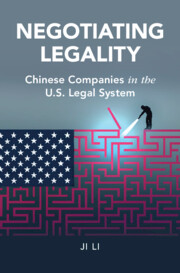
Despite escalating geopolitical rivalry, the US and China continue to be economically intertwined. Numerous Chinese companies have made substantial investments in the US and are reluctant to exit this strategically important market. While the global expansion of Chinese companies has ignited intense policy and academic debates, their interactions with complex host-state legal systems have largely escaped systematic examination. To fill this knowledge gap, Negotiating Legality introduces a dual institutional framework and applies it to analyzing extensive interviews and multi-year survey data, thereby shedding light on how Chinese companies develop in-house legal capacities, engage with US legal professionals, and navigate litigation in US courts. As the first comprehensive investigation of these crucial topics, this book is indispensable for anyone interested in China's rise, its global impacts-especially on legal systems of developed nations like the US-and the intricate dynamics of US-China relations.
Chapter 1 sets out the main questions and contentions in the book. It explores the concept of freedom and identifies it as a central concept in Athenian democratic ideology in both the private and public spheres. Scholarly debates on the concept of freedom are outlined, with an especial emphasis on Isaiah Berlin’s notion of positive and negative freedom and its application to Athens in subsequent scholarship. Distinguishing democratic freedom from negative and republican versions, I argue that Athenians understood freedom as the ability to do “whatever one wished,” which I classify as a modified version of positive freedom. The focus on citizen agency in accomplishing his will differentiates Athenian democracy from other constitution types and affects its institutional features. The chapter closes with a brief overview of the rest of the chapters.
In Chapter 1, I frame the book. First, I identify the questions that motivate my book. For example, to whom do we have obligations? On what terms? And why? Second, I rehearse scriptural sources that may guide religious ethicists when thinking about our obligations to severely poor people. Third, given the various intradisciplinary debates in religious ethics about definitions and distinctions, I lead the reader through important definitions in contemporary normative and practical ethics, for example, doing and allowing, agent-neutrality and agent-relativity, and institutionalism and interpersonalism. And fourth, I comment on my methodology, highlighting my commitments to contractualist deontology and the use of thought experiments in ethics.
Chapter 11 turns to a discussion of the competing arguments concerning the new public nuisance law advanced by practicing attorneys, interest group allies, judges, scholars, and law-and-economics professors. Almost all criticisms of the new public nuisance law have been negative, characterizing expansion of public nuisance law as illegitimate and dysfunctional. These critiques are examined through the lens of various categories of criticism: (1) traditional, (2) formal, (3) institutional, (4) rule of law, (5) democratic theory, and (5) law and economics. The critics all draw on negative examples from the mass tort public nuisance cases in the 21st century (lead paint, firearms, opioids, vaping, climate change). At least one commentator, however, has offered tempered praise for the new public nuisance law as the second best solution to community-wide harms. She believes that the development of the new public nuisance law is in the finest traditon of a flexible, developing common law to meet changed circumsatnces. This commentator would permit continued development of the new public nuisance law, enhanced with several guardrails and transparency in proceedings.