To save content items to your account,
please confirm that you agree to abide by our usage policies.
If this is the first time you use this feature, you will be asked to authorise Cambridge Core to connect with your account.
Find out more about saving content to .
To save content items to your Kindle, first ensure no-reply@cambridge.org
is added to your Approved Personal Document E-mail List under your Personal Document Settings
on the Manage Your Content and Devices page of your Amazon account. Then enter the ‘name’ part
of your Kindle email address below.
Find out more about saving to your Kindle.
Note you can select to save to either the @free.kindle.com or @kindle.com variations.
‘@free.kindle.com’ emails are free but can only be saved to your device when it is connected to wi-fi.
‘@kindle.com’ emails can be delivered even when you are not connected to wi-fi, but note that service fees apply.
When IPE textbooks discuss the pre-1945 roots of the field, they usually focus only on the ideas of European and American thinkers who helped to pioneer the three distinct perspectives of economic liberalism, neomercantilism, and Marxism. But the pre-1945 intellectual history of IPE can be told in a more global manner that reveals many important intellectual contributions made by thinkers from elsewhere. These contributions can be divided into four broad types: (1) those that “localized” the three well-studied European and American perspectives in creative ways; (2) those that endogenously developed similar perspectives as those three Euro-American ones; (3) those that developed quite different perspectives; and (4) those that influenced Euro-American thought about the world economy. This chapter provides examples of each of these types in order to contribute to the building of a kind of big picture analysis that not only deepens IPE’s intellectual roots temporally into the pre-1945 period but also widens those deep roots spatially to promote a more global understanding of them. This more global understanding helps to provide a more comprehensive history of IPE thought and to build the historical foundation for a more “Global IPE” today.
The afterword offers a coda to the volume, without addressing individual essays’ achievements individually. Rather, it reflects on how the essays reconceive the problem of Cold War liberalism as a category less in Atlantic intellectual history or political theory than in the history of the foreign relations of the American hegemon after World War II. The contemporary renaissance of Cold War liberalism suggests that pondering how it arose and dominated in the first place will continue to teach useful lessons about its senescent phase, which is unlikely to end soon. Someday geopolitical transformations will bring into being a different enough world than the Cold War liberal one that emerged in the middle of the twentieth century. Until then, the meanings and outcomes of Cold War liberalism will demand investigation, and this volume will play a pivotal role in an ongoing referendum on how contemporary politics came about, and on what should happen next.
This editorial considers how scholars interested in issues of global constitutionalism should approach the questions that have concerned those interested in enlightenment. Reflecting on the relocation of the journal’s editorial offices to Edinburgh, we foreground discussions from the historiography of the long eighteenth century that should be of interest to scholars of international relations, international law and political theory. Two main contributions are emphasized. First, a contextualist and political approach to enlightenment invites us to see global constitutionalism as a strategic response to crisis, aiming to combat fanaticism. Second, a global approach to enlightenment invites us to continue enlarging the world of global constitutionalism. Taken together, the contributions support the journal’s ongoing efforts to decolonize global constitutionalism by enjoining readers and contributors to attend to neglected sides and sites of global constitutional processes.
In the mid-twentieth century, Cold War liberalism exerted a profound influence on the US state, US foreign policy, and liberal thought across the North Atlantic world. The essays in this volume examine the history of this important ideology from a variety of perspectives. Whereas most prior works that analyze Cold War liberalism have focused on small groupings of canonical intellectuals, this book explores how the ideology transformed politics, society, and culture writ large. From impacting US foreign policy in the Middle East, to influencing the ideological contours of industrial society, to shaping the urban landscape of Los Angeles, Cold War liberalism left an indelible mark on modern history. This collection also illuminates the degree to which Cold War liberalism continues to shape how intellectuals and policymakers understand and approach the world.
This book benefits from weaving together intellectual history and political and legal history, illuminating legal practices through the lens of philosophical ideas and re-examining philosophical ideals within the tapestry of historical experience. As the title From Utopia to Serfdom suggests, this approach uncovers profound paradoxes within the political and legal practices of early Chinese empires. Contemporaries keenly observed the hardships these legal practices imposed on the population and called for change. However, reforms either were never initiated or failed to fundamentally alter the core practices. The legal practices of early Chinese empires, which often distorted the concept of justice, were not arbitrarily devised to serve the absolute power of the throne, as some scholars have claimed. Rather, they were frequently grounded in a utopia complex and perfectionism in classical Chinese thought. A deeper exploration of these ideals, along with the evolving notions of justice and sovereignty, is essential to fully grasp their impact on Chinese history, particularly on its political and legal culture and practices.
The Epilogue discusses how the narrative and arguments of the book can help us revisit the debates in Ottoman intellectual historiography over the concept of order (nizam), underlining how labor history and class perspectives can expand the scope of questions and offer new agendas for Ottoman and global histories of the modern era. It offers a conceptual discussion of reform, and highlights the distinctive characteristics of Ottoman Reform in the long nineteenth century, by focusing on its connections with modern capitalism. It emphasizes the capitalist characteristic of the order which the reformist elites struggled to institute throughout the nineteenth century. It underlines how focusing on a specific worksite, and, in particular, studying relations of production within an Ottoman military-industrial site, could help us to reveal these capitalist patterns and class dynamics in Ottoman reform processes. It points to the necessity of the dialogue between labor/social history and intellectual history to better understand how these capitalist practices shaped or were shaped by the mentalities and ideas of Ottoman state elites during this period.
An entire forgotten corpus of US writing on the Nazi German enemy boomed in a matter of a few years, peaked during World War II, and collapsed within months of the war ending. For a fleeting moment in history, significant parts of the intellectual world in the United States converged to provide a cool-headed analysis of the Nazi threat and a clear identification of the enemy. Starting in 1944, these writers also offered an elaborate plan for a postwar re-education that would transform the National Socialist German nation into a democratic ally. Readers alarmed by the current resurgence of authoritarianism will learn from the work of those activists who analyzed Nazi Germany during World War II. This book, the first monographic study of this literature, provides pointed introductions to the main intellectual projects, their unique collaborative spirit, and their epochal results.
This article examines the work of Emil Schlagintweit (1835–1904), one of Germany's most prominent nineteenth-century Tibetologists in order to challenge some common assumptions regarding Orientalist scholarship and its relationship to nineteenth-century nationalism and imperialism. Schlagintweit began to work on Tibetan religion and language in the wake of an expedition led by three of his brothers in the 1850s, and his work can provide important nuances to existing understandings of German Orientalism in the second half of the nineteenth century. It demonstrates that German scholars did indeed emphasize rigorous analysis in line with the notion of Wissenschaftlichkeit, yet it also demonstrates that their work could go beyond this and rely on a wider array of methodologies and traditions. Interpretations which treat German Orientalists as fundamentally different from other European scholars should therefore be treated with caution. At the same time, the relationship between Orientalist knowledge and imperial realities remained ambivalent for scholars such as Schlagintweit.
For a plant as renowned and beloved in China as the plum blossom (meihua 梅花), there is conspicuously little written in English about eating it. However, without understanding the historical affection for consuming plum blossoms, our comprehension of it as a cultural icon misses an important dimension. This article explores the intriguing discourse surrounding plum blossom consumption in three sections. The first section introduces the key concept of qing 清 (“purity”) and its relation to the “poet’s spleen” (shiren pi 詩人脾), which provides a theoretical framework for a relationship between eating it and writing poetry. The second section examines Song-dynasty poems on this eating practice, particularly those by Yang Wanli 楊萬里 (1127–1206) and the Rivers and Lakes poets (jianghu shiren 江湖詩人). Their poetry was closely tied to new developments in the notion of qi 氣 and “poetic spleen” (shipi 詩脾). The third section turns to culinary recipes, primarily from the Rivers and Lakes poet Lin Hong 林洪 (fl. 1224–1263), who promotes qing aesthetics in plum blossom dishes. I argue that the discovery of culinary value in a flower long regarded as more symbolic than edible marks a significant development in Song-dynasty (960–1279) literati culture, aesthetics, intellectual history, and medicine.
Samuel Moyn provides insight into how the history of democracy can continue its globalization. There is a growing belief that the currently acceptable fund of ideas has not served the recent past well which is why an expansion, a planetary one, of democracy's ideas is necessary – especially now as we move deeper into the shadow of declining American/Western imperialism and ideology. Deciding which of democracy's intellectual traditions to privilege is driven by a mix of forced necessity and choice: finding salient ground for democracy is likely only possible in poisoned traditions including European ones.
Hannah Arendt did not live to complete her anticipated work on judgment, a faculty she considered essential for resuscitating political life against the threat of totalitarianism. Scholars have attempted to reconstitute it, primarily through her Lectures on Kant’s Political Philosophy. Yet when discussing her turn to judgment, Arendt cites the ancient Greek historian Herodotus as a model, claiming that recovering the ancient sense of histor (judge) is crucial to reclaiming human dignity. Herodotus is in fact central to her depiction of the Greeks throughout her work. Excavating his influence not only helps clarify her theory of judgment; it also reveals how she both distances herself from Heidegger and yet retains certain core agreements. Her reading of Herodotus thus helps delineate the intellectual relationship between two of the twentieth century’s foremost thinkers, while inviting us to reflect on how and why to read the Greeks today.
This article traces the history of how two generations of US archaeologists navigated their relationship with the Guatemalan government, from the Jorge Ubico dictatorship in the 1930s through the democratic opening of the 1940s and 1950s and the subsequent CIA-sponsored coup. Critiques of modern archaeology have focused on the discipline’s history of ideological and material collusion with different projects of US and European imperialism in the Global South. While the archaeologists discussed here benefited from US hegemony in the region, their own correspondence reflects an ambivalent relationship to formal frameworks of international law and a desire to function as autonomous nonstate actors. Rather than reflecting the political context of a given moment, the archaeologists’ behavior was often determined by a generations-old professional culture based on pragmatism and collective entitlement to the control of antiquities.
The introductory Chapter 1 sketches an outline of the book’s object of study: the gray literature produced by American and European intellectuals during World War II in the study of Nazi Germany. I point to two unexpected protagonists, who rose to the challenge of the moment during World War II: Librarian of Congress Archibald MacLeish and cultural anthropologist Margaret Mead. I describe the improvised intellectual networks, funded by government institutions, universities, as well as philanthropies and point to Hans Kohn’s career to spell out some of the complexities one encounters while studying the European-American encounter during World War II. The second part of the introductory chapter approaches the memorandum through its fictional rendering in Sinclair Lewis’ Gideon Planish, before diving into the making of one of its most famous texts, the “American Century” by Henry Luce.
This article examines women’s storytelling and nanga (harp) performances in nineteenth- and twentiethcentury western Uganda to investigate how these songs shaped community identity and norms. Drawing on musical recordings, archival sources, and interviews, this article demonstrates that these performances functioned as important public histories, teaching audiences about past famines, droughts, climate change, and cattle events. These narratives both chronicled regional histories and provided the shared intellectual material from which community norms and a shared identity could be articulated. Extant scholarship has focused overwhelmingly on how male intellectuals contributed to ideas of race, nation, or ethnicity. This article thus provides an important alternative by showing how women produced histories that contributed to group identity—yet this historical production occurred through musical performances rather than in books, tracts, or petitions. In doing so, this article reintegrates western Ugandan women into narratives of imperial encounters and intellectual history.
This chapter analyzes discourses on universal economic and social human rights and social democracy in connection with intellectuals discussing the American and British war aims of World War II. It was an age of major societal transformations: the socialization of work due to industrial capitalism; experiences of authoritarian ideologies emerging out of, inter alia, extreme inequality; and nascent uproars against racism and imperialism. Human rights were part of moral discourses on equality and social justice in the aftermath of the Great Depression and critiques of laissez-faire capitalism. The chapter details how Ralph Bunche and George Herbert Wells championed a vision of social democracy and human rights. Bunche and Wells intervened in wartime when many intellectuals across the political and religious spectrum would write of human rights. Key intellectual actors increasingly referred to a new political “space” of “the world,” and some were redefining “democracy” as a “world” and a “social” democracy. Revisiting their thinking allows for a more detailed reconstruction of their argumentation, including on how, specifically, they defended economic and social human rights.
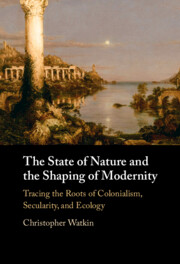
The state of nature is a powerful idea at the heart of the fragmented and sometimes conflicting stories the modern West tells about itself. It also makes sense of foundational Western commitments to equality and accumulation, freedom and property, universality and the individual. By exploring the social and cultural imaginaries that emerge from the distinct and often contradictory accounts of the state of nature in the writing of Hobbes, Locke and Rousseau, The State of Nature and the Shaping of Modernity offers a fresh perspective on some of the most pressing debates of our time, showing how the state of nature idea provides a powerful lens through which to focus the complex forces shaping today's political and cultural landscape. It also explores how ideas about human nature and origins drive today's debates about colonialism, secularism, and the environment, and how they can shed new light on some of society's most heated debates.
Breaking new ground in the intellectual history of economic and social human rights, Christian Olaf Christiansen traces their justification from the outset of World War II until the present day. Featuring a series of fascinating thinkers, from political scientists to Popes, this is the first book to comprehensively map the key arguments made in defense of human rights and how they connect to ideas of social and redistributive justice. Christiansen traces this intellectual history from a first phase devoted to internationalizing these rights, a second phase of their unprecedented legitimacy deployed to criticize global inequality, to a third phase of a continued quest to secure their legitimacy once and for all. Engaging with the newest scholarship and building a bridge to political philosophy as well as global inequality studies, it facilitates a much-needed novel and nuanced history of rights-rights we should still consider defending today.
This article examines multi-vector pro-life exchanges between Poland and two American countries: the United States and Chile. We make the case that the 1970s through 1990s represent a significant historical moment that yielded both transplantable templates and direct longitudinal consequences for transnational social activism in the twenty-first century. We argue that during this time Poland acted as an incubation site for pro-life transnationalism, where “right to life” became the rallying cry of new generations of Catholic Far Right thinkers and activists like the politician Marek Jurek and journalists and social activists Ewa Kowalewska and Lech Kowalewski. The transnational entanglements that empowered Jurek, Kowalewska, and Kowalewski assumed intellectual and political forms, while also producing direct contact and active exchange of tactics, ideas, and know-how with the leaders of the U.S. pro-life movement such as John Willke or Father Paul Marx. Our study, situated at the intersection of intellectual history and social movement studies, highlights the importance of examining transnationalism with full attention to its local rootedness, and makes a case for incorporating non-progressive social activism into the post-1989 story of civic and social mobilization.
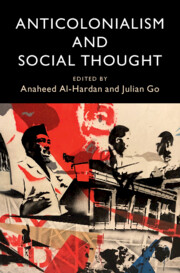
Not only did the anticolonial movements of the past two centuries help bring down the global order of colonial empires, they also produced novel, innovative and vital social thought. Anticolonialism has been largely ignored in conventional Europe-centered social thought and theory, but this book shows how our sociological imagination can be expanded by taking challenges to colonialism and imperialism seriously. Amidst their struggles to change the world, anticolonial actors offer devastating critiques of it, challenging the racism, economic exploitation, political exclusions and social inequalities central to imperialism and colonialism. Anticolonial thinkers and activists thereby seek to understand the world they are struggling against and, in the process, develop new concepts and theorize the world in new ways. Chapters by leading scholars help uncover this dissident tradition of social thought as the authors discuss an array of anticolonial thinkers, activists and movements from Palestine, India, South Africa, Brazil, Algeria and beyond.
The introduction engages scholarly debates around the topics of Tanzanian nationalism, African identity, pan-Africanism, and global intellectual history to indicate its contributions to those fields. It introduces the main question: How did an African identity come to have any personal or political purchase in East Africa in the twentieth century? The main case study focuses on the African Association (AA), a politically minded pan-African group with ideational connections to several streams of black thought. The members who chose this group, which promoted an African identity, usually did so for two reasons. They were either inspired by the redemptive pan-Africanism of some of its visionary leaders who engaged with the ideas of Ethiopianism surrounding Africa’s future and past and/or they were drawn to the strand of practical pan-Africanism cultivated by the leadership of the AA who sought to build African unity and open chapters all throughout the continent and even the globe.