To save content items to your account,
please confirm that you agree to abide by our usage policies.
If this is the first time you use this feature, you will be asked to authorise Cambridge Core to connect with your account.
Find out more about saving content to .
To save content items to your Kindle, first ensure no-reply@cambridge.org
is added to your Approved Personal Document E-mail List under your Personal Document Settings
on the Manage Your Content and Devices page of your Amazon account. Then enter the ‘name’ part
of your Kindle email address below.
Find out more about saving to your Kindle.
Note you can select to save to either the @free.kindle.com or @kindle.com variations.
‘@free.kindle.com’ emails are free but can only be saved to your device when it is connected to wi-fi.
‘@kindle.com’ emails can be delivered even when you are not connected to wi-fi, but note that service fees apply.
Several authors have connected Hegel’s view on action with Elizabeth’s Anscombe’s notion of practical knowledge. This chapter first develops the notion of practical knowledge in Kant and Fichte, noting their similarity to Anscombe’s view. Practical knowledge is a knowing of what one is doing in acting. Yet Hegel’s idea of absolute knowledge in the Phenomenology of Spirit goes beyond this. Practical knowledge yields products or “works” (Werke), which are also products of concepts. Conceptual knowledge of such works, which often stem from institutional histories, is what Hegel calls “absolute knowledge.” It is argued that Hegel’s idea of absolute knowledge is qualitative rather than quantitative: it concerns a transparent form of knowing rather than a certain massive extent or even finality of knowing. The constellation between the topics of concepts, artifacts, and social-historical realities present in the Phenomenology becomes a precedent for the more abstract argument for concrete conceptual truth in the Logic.
Contract and consent had important roles in early modern English labor relationships. The scholarship in social and economic history and legal studies has rarely tried to reconcile the legal framework of voluntariness with the practical unfreedom of early modern work. The Introduction proposes that the foundations of freedom of contract and the sanctity of an individual’s consent developed in the sixteenth to seventeenth centuries, in part, from the exploitative labor systems of parish apprenticeship, transatlantic indentured servitude, military impressment, and prisoner of war labor. Charity, colonization, and war were the key factors that drove masters and middlemen to reach for consent as a tool to bind people into labor. The ideology of "natural laborers" justified presuming consent in people of appropriate profiles. Moments of consenting were fraught with power imbalances, and they reinscribed social hierarchies. Contemporary examples of coerced consent show an ongoing acceptance of this pairing. The legal context, chapter summaries, and a consideration of the method of historicizing consent complete the Introduction.
The Conclusion reviews the argument that English masters and brokers wielded consent as a tool of labor coercion in the early modern period. Presumptions, shaped by people’s age, gender, and social status, determined if consent had been given or not. While the subjects of this book largely aimed to stabilize their social worlds, their use of consent in labor relationships often had the opposite effect. In the discourse of enticement, individuals bore the burden of choosing correctly in a labor market where structural inequalities exposed some people to jobs that most would never accept. The conclusion further considers methods and sources for the history of consent. The connected study of charity, colonization, and war has allowed the identification of trends in contract labor coercion that might otherwise be seen as aberrations. The book ends by considering how captured consent was meaningful in the past and continues to have a significant legacy.
Abraham Lincoln entered onto the presidency even as the breakaway southern confederacy was in the process of detaching itself from the union. Lincoln undestood this as a defiance of the constitution and an undermining of democracy (as represented by the election of 1860) and he initiated war measures to suppress what he would recognize only as a rebellion. He was careful not to agitate public opposition by billing this suppression as an abolition campaign. Nevertheless, union forces met with repeated defeats, and Lincoln was frustrated by over-mighty generals who believed that they knew better than he what was at stake. This frustration nudged him further toward incorporating some form of abolition into his war plans.
What explains the contested conditions for migrant worker citizenship under socialism? Migration scholarship often elides socialist contexts, tracing migrant deservingness to the neoliberal rise of labor-based conditionality for legal status across Western states in the late twentieth century. However, a broader historiography suggests that socialist states, despite their institutional differences, conditioned migrant inclusion on labor performance throughout the twentieth century. To explain how this form of civic conditionality operated under socialism, this paper draws on the case of migrant “limit” worker management in Moscow from the early 1960s to 1987. Using archival materials, I show that state-owned enterprises operated as migration intermediaries, establishing and enforcing a labor-based conditionality for local citizenship even as the state pursued additional civic aims. I find that civic campaigns initiated in the early 1960s provided an ideological framework and material base for enterprises to govern migrant workers at their dormitories. Managers and officials at the dormitory redirected resources intended for social activism and cultural tutelage toward ensuring baseline productivity and compliance. Enterprise managers and union officials additionally substituted the material conditions at the dormitory for the assessments of individual migrants’ moral and productive status. This paper extends the literature on migrant deservingness to a socialist context, showing how conditionality for civic inclusion develops beyond the neoliberal shifts in contemporary citizenship.
Chapter 5 compares laws of employment protection, compensation, and labor unions in the three countries, and describes how the different laws affect incentive bargaining of the firm and corporate governance. The US employment-at-will rule gives employers almost complete discretion to dismiss employees unless there are either contractual protections or discrimination. The Japanese abusive dismissal rule strictly restricts employers’ discretion in dismissing employees even in business downturns. Relative to Japanese companies, the US companies rely heavily on performance-based pay, which includes generous stock options. Among the compensation packages in China, the portion of payment for social insurance and welfare benefits is large. Performance-based bonuses play a significant role in privately owned enterprises (POEs). The US labor unions are basically industry unions and adversarial to management, while Japanese labor unions are company unions and are rather agreeable to management. All labor unions in China are government-backed, organized only on individual enterprises, and expected to mitigate labor disputes.
In this chapter, a new Lockean argument for intellectual property rights is offered, emphasizing self-defense, self-preservation, and the moral significance of investment. It is argued that creators and inventors have defensible claims to the values and income streams derived from their intellectual efforts, akin to their rights to protect their physical capacities and powers. These claims are grounded in two arguments: (1) the right to defend created values against unjustified interference, supported by Lockean principles of self-preservation and respect for persons; and (2) the moral asymmetry between creators, who invest time, labor, and resources, and copiers, who do not. Addressing challenges such as the non-rivalrous nature of intellectual works and the balance of societal needs, it is argued that intellectual property rights are morally justified to protect the autonomy and livelihoods of creators.
Management of broadleaf weeds in chile pepper may be improved by including a rotation with sorghum treated with selective, non-residual herbicides. However, herbicides applied to sorghum specifically for managing weeds in subsequent chile pepper crops have not been evaluated. This study evaluated two herbicide treatments applied to sorghum for their effects on broadleaf weed density and hand hoeing time in chile pepper crops the following year, and compared the treatments for their net economic benefits across sorghum and chile pepper growing seasons. Treatments included 1) a sorghum nontreated control; 2) one herbicide application, which was a premix combination of 2,4-D (0.35 kg ai ha−1), bromoxynil (0.35 kg ai ha−1), and fluroxypyr (0.14 kg ai ha−1) applied at the 4-leaf stage of sorghum; 3) two herbicide applications, which included the aforementioned premix combination followed by bromoxynil (0.28 kg ai ha−1) applied at the 6-leaf stage of sorghum; and 4) weed-free sorghum using hand hoeing. Results indicated that broadleaf weeds covered less than 10% of the ground where sorghum had been treated with herbicides. The two-application treatment resulted in 24% fewer broadleaf weeds in chile pepper than in sorghum that had been hoed by hand, and 63% fewer than the one-application treatment. Hand hoeing time for chile pepper was similar among the two-application treatment, one-application treatment, and weed-free sorghum. A partial budget analysis indicated that the one-application treatment provided greater net economic benefit than the two-application treatment (US$6,550 ha−1 vs. US$5,894 ha−1), due to lower input costs and greater overall gross revenue. These findings indicate that a two-application treatment maximizes reductions of broadleaf weeds in chile pepper caused by rotational sorghum; however, the one-application treatment may be a cost-effective approach to reducing broadleaf weeds in chile pepper.
This article is an environmental history of Anaconda Copper Company’s disposal of hundreds of thousands of tons of toxic waste from its Potrerillos and El Salvador mines into Chile’s Río Salado and Bahía de Chañaral. First, it uncovers a long history of disputes between copper companies and workers who panned the river for tailings. This early water war in Chile was shaped by competing understandings of water’s legal status. While workers claimed rights under the water law’s definition of water as a bien nacional de uso común, mining companies invoked the mining code and contended that the river’s water and waste were private property under civil law. Mining companies claimed rivers’ water by treating rivers in legal terms as mines and property of the state, bienes fiscales, that could be conceded as private property. They argued that human engineering of rivers in dams and canals, and through pollution, made rivers into a commodity and a form of property akin to subsoil minerals. Second, the article describes how, during the social reformist government of Eduardo Frei (1964–1970) and the revolutionary government of Salvador Allende (1970–1973), the state asserted control over Chile’s waterways while balancing centralized state management of water in the name of development with local users’ claims of long-standing riparian use rights. Third, the article traces the long history of the state and mining companies treating water as an economic commodity, often superseding local use rights, and argues that this history built the foundation for the later privatization of water during the Pinochet dictatorship. The article demonstrates that the privatization of water in Chile under Pinochet had its origins in the resolution of the tension between water and civil law in favor of extending property rights to water and building as a subsidy to transnational mining companies. This meant rolling back state management of rivers and often eroding local users’ water rights. Finally, the article concludes by examining the town of Chañaral’s successful 1987 lawsuit against the El Salvador mine to win an injunction against further pollution of the Salado as part of a moment of broader Latin American “environmental constitutionalism” during the 1980s. While this legal victory reflected a significant change in environmental law and an emergent environmentalist movement in Chile and across Latin America, it struck a blow to hundreds of workers who depended on extracting tailings from the river for their livelihood and who responded with unsuccessful protests.
In the 1940s and 1950s, the concepts of surplus labor, disguised unemployment, and underemployment emerged as key tools for thinking about economic development in the emerging “Third World.” This article examines how these concepts were developed and debated in Egypt, a country that was at the forefront of postcolonial planning efforts internationally. To this end, the article examines the statistical construction of the “labor problem” and the way it shaped competing visions of economic development among national, colonial, and international actors. Using a variety of sources—including Egyptian government archives, documents from the British Foreign Office, and the International Labour Organization—the article contributes to the global history of development and quantification, and contributes to the scholarship on Nasserism in Egypt.
Using the library of eighteenth-century attorney and legal historian Frances Hargrave as a starting point, this chapter considers the place of law, property, and state formation in the causes and results of the American Revolution. Focusing on three related themes to the place of laws in independence – the influence and break from English legal culture, the pluralism of legal practice within North America, and the place of legal institutions in either maintaining or changing the status quo – this chapter considers how both different forms of property and the different individuals and communities involved with it played a central role in the creation of an independent United States. The governments that emerged from the Revolution each relied heavily on these varied legal threads.
Chapter 4 first examines two societal groups – labor and women – and asks two questions. How have these groups fared since the 1980s? And how have they responded to top-down changes in India’s political economy? The final part of the chapter also discusses civil society activism and social movements more generally. As with Chapter 3, Chapter 4 highlights that the story of India since the 1980s is not wholly top-down. While the state and business remain dominant actors, societal groups have challenged and continue to challenge that domination.
The American Revolution presented an unprecedented opportunity for Black women seeking freedom. The “Book of Negroes” shows that more than 900 Black women escaped the war with their freedom. The largest group of Black Loyalist women once called Virginia home. Yet, the “Book of Negroes” does not show that many Black Virginian women included in the ledger did not board the departing ships with the members of their families they had departed the Old Dominion with years before. After the British defeat, Black loyalists endured a campaign of re-enslavement and terror inflicted by white Loyalists and Patriots alike created by post-Yorktown diplomatic policy. This chapter argues that Black Loyalist women, especially from Virginia, encountered a particular gendered vulnerability to re-enslavement in New York City. This chapter recovers the urgency Black loyalist women pursued their freedom with during the final eighteen months of British occupation of New York City.
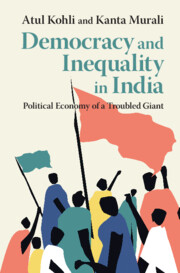
This chapter provides an introduction to the book. It sets the stage by highlighting contrasts in India’s economy, democracy, and society. It then discusses the main topics covered in the book – democracy and governance, growth and distribution, caste, labor, gender, civil society, regional diversity, and foreign policy. The chapter also outlines the three themes that comprise the main arguments of the book. First, India’s democracy has been under considerable strain over the last decade. Second, growing economic inequalities that accompanied India’s high-growth phase over the last three and a half decades are associated with the country’s democratic decline. Third, society has reacted to changes from below but there are limits to societal activism in contemporary India.
Historians long to understand how historical individuals assessed their circumstances and made decisions, whether about daily life (What will I eat? Who will I meet?) or larger geopolitical contexts (Is this an ally or enemy? What is freedom?) In most historical circumstances, household and family was the context in which such assessments and decisions were made and taken. The overwhelming importance of this most local setting can escape our notice, but it should not: Households were the essential social structures of North America and the early modern Atlantic world. This chapter looks at the ways in which historiographies of gender (especially sexuality and reproduction), economy (especially market economies including the slave trade), and law (particularly laws of inheritance and marriage) shaped the household experiences and relationships of people in British America, North America, and the Atlantic world to 1775.
What did it mean to have a national economy? The American Revolution provided the political space and the ideological impetus for institutional changes that over time fundamentally altered American economies. As policymakers developed ad hoc solutions to individual and governmental debt woes, they prompted resistance and counterresistance, and eventually created a national economy. This chapter begins with the economic possibilities and constraints created by the new Constitution in 1788 and what these meant for slavery, productivity, invention, and the development of capitalism. It explores how the expansion of land, slavery, and goods shaped the development of an integrated national economy, while also creating variation in how and for whom economic opportunities and limitations applied. Finally, because the national economy worked differently depending on where one lived, and whether one was male or female, Black, white, or brown, this chapter uses the lives of several individuals to understand its different aspects.
This chapter considers the meanings of human labor in the work of three Bloomsbury writers: John Maynard Keynes, Bertrand Russell, and Virginia Woolf. The psychological and social potential of “idleness” is discussed with reference to Keynes’ The Economic Consequences of Peace and his “Economic Possibilities for our Grandchildren,” in which he argues that in future, society will see a radical reduction in working hours. Russell’s essay “In Praise of Idleness” is also analyzed in relation to his argument that “modern methods of production have given us the possibility of ease and security for all.” These positions are contrasted with Woolf’s explorations of the increasing access of women to professional work. Woolf’s focus is not on the liberatory potential of “idleness” but rather on the continuing barriers to productive work faced by women in the period. The chapter concludes that while for Keynes and Russell “idleness” offered an opportunity to live a more meaningful and free life, for Woolf the recent entry of women to the professions offered important new opportunities for individual agency and financial autonomy through work.
This article examines how the labor and community structures of female skin-divers, the Japanese ama and Korean haenyeo, believed to exemplify the primitive ability to adapt to extreme climates, became staple research subjects for global adaptation-resilience science. In the context of development studies, adaptation-resilience discourse has been seen as reflecting the emergence of neoliberal governmentality. In contrast, this article frames adaptation-resilience as a reactionary technological response that emerges in times of scarcity and crisis. This article demonstrates how the discourse can be traced back to interwar Japanese physiologists, who saw themselves as rescuing Japan from the ills of modernity through a socio-biological development program that drew on the diver’s adaptability as a means to create subjects not only capable of surviving extreme deprivation but willing to do so in the service of the community and the state. These scientists and their research were taken up uncritically in the postwar by international science and development organizations, who found in them a shared vision of a labor-intensive and low ecological impact model of community-rooted development that offered a sustainable and healthier alternative to capitalism, one that could help humanity overcome crises of modern excess such as climate change. However, sustainability meant the valorization of absolute austerity as a development goal, ruling out relief for suffering marginalized populations. This article therefore suggests that resiliency-based development entraps its subjects in a regime of self-exploitation that forces them into a constant state of emergency, paradoxically deepening their vulnerability in the process.
Resilient Zulu moral economy compelled Natal’s sugar planters and white settler state to introduce Indian indentured workers since 1860. As concerns over productivity in a weak colonial economy informed this decision, meticulous management of labor time crucially shaped the treatment of migrant Indian indentees. Moreover, systemic violence in capital’s life processes formed the culture of work-discipline in the plantations and in other industrial sectors. Subsequently, as contract expired Indian indentees acquired relative economic mobility compared to Africans, they appeared in Zulu critiques of Natal’s settler colonial order. Ironically, dispossessed Zulus reproduced colonial logic of time management while discussing the comparative economic success of Indian “newcomers.” Zulu critiques of colonial labor management also complemented the racial exclusivity of migrant Indians. Analyzing the complex workings of capital, labor, and race in nineteenth-century Natal, this article explains how capital’s life processes shaped violent conflicts in the intimate domestic space of working-class lifeworld.
Contemporary India provides a giant and complex panorama that deserves to be understood. Through in-depth analysis of democracy, economic growth and distribution, caste, labour, gender, and foreign policy, Atul Kohli and Kanta Murali provide a framework for understanding recent political and economic developments. They make three key arguments. Firstly, that India's well-established democracy is currently under considerable strain. Secondly, that the roots of this decline can be attributed to the growing inequalities accompanying growth since the 1990s. Growing inequalities led to the decline of the Congress party and the rise of the BJP under Narendra Modi. In turn, the BJP and its Hindu-nationalist affiliates have used state power to undermine democracy and to target Indian Muslims. Finally, they highlight how various social groups reacted to macro-level changes, although the results of their activism have not always been substantial. Essential reading for anyone wishing to understand democracy in India today.