To save content items to your account,
please confirm that you agree to abide by our usage policies.
If this is the first time you use this feature, you will be asked to authorise Cambridge Core to connect with your account.
Find out more about saving content to .
To save content items to your Kindle, first ensure no-reply@cambridge.org
is added to your Approved Personal Document E-mail List under your Personal Document Settings
on the Manage Your Content and Devices page of your Amazon account. Then enter the ‘name’ part
of your Kindle email address below.
Find out more about saving to your Kindle.
Note you can select to save to either the @free.kindle.com or @kindle.com variations.
‘@free.kindle.com’ emails are free but can only be saved to your device when it is connected to wi-fi.
‘@kindle.com’ emails can be delivered even when you are not connected to wi-fi, but note that service fees apply.
While their class natures (class essences) are fundamentally different, our agent work and the tewu work of capitalist countries differ in other principal respects as well, such as agent tactics. The roles of our security agencies differ from those of the security agencies of capitalism. While the purpose of operational activity in capitalist countries is to protect the interests of capitalism and consolidate capitalist rule (and for that purpose to employ all available means to suppress progressive figures, workers, labouring people, revolutionary elements, and all progressive organisations), the purpose in our case is to suppress all counter-revolutionary elements, protect the interests of the people, and consolidate the People’s Democracy. Our agent work, in other words, has a different essence with respect to its operational aims and tactics.
While many scholars have postulated the decline of membership influence as an important consequence of the professionalisation of civil society organisations (CSOs), other analysts have argued that traditional membership-driven CSOs are resilient and that hiring professionals does not necessarily diminish membership influence. This study sheds light on this issue by analysing membership influence in a representative sample of approximately 2000 CSOs from five European countries and the European level. As members generally have a strong influence on CSOs’ policy positions, our analysis demonstrates that the pessimistic tone in much contemporary scholarly work is largely unwarranted. On the contrary, hiring professionals does not invariably decrease membership influence and can, when members are closely engaged in advocacy work, even facilitate it.
A discipline cannot pretend to be such if political borders are reflected in its organisation, methodologies or practices. While pluralistic approaches are highly desirable, it is crucial for any discipline worthy of the name to professionalise itself. This article argues that in spite of imperfections, drawbacks and differentiated development, huge progress has been made towards this goal through the setting up of common standards, improved Ph.D. and post-doctoral training and international mobility. Cross-national organisations or pan-European programmes have played a major role in this (incomplete) transformation.
This chapter sets the scene for the remainder of the volume. It establishes the conceptual foundations of English language teaching as a profession and highlights its complexity. Professional teaching needs to be regarded as a multidimensional process that combines issues pertinent to the classroom context and teaching–learning with institutional and general pedagogical factors. The process of becoming a professional teacher therefore implies an ongoing commitment to educational change and growth. By adopting a broader perspective, practitioners will be able to teach in a manner that is beneficial to students and society alike. This chapter also elucidates the fact that professional language teaching entails the use of culturally and socially embedded communication and an ability to connect pedagogy with language learning. To address these issues successfully, teachers need to engage in ongoing processes of reflection and theorisation of their practice. To conclude the chapter, a synopsis of all the chapters in this book is provided, highlighting the key themes that emerge from each.
Edited by
Randall Lesaffer, KU Leuven & Tilburg University,Anne Peters, Max Planck Institute for Comparative Public Law and International Law, Heidelberg
This chapter periodises the British historiography of international law in five parts. Its first period extends from Robert Ward’s Enquiry into the Foundation and History of the Law of Nations in Europe (1795) to Thomas Erskine Holland’s Oxford inaugural lecture on Alberico Gentili (1874), and traces the gradual professionalisation of the discipline and its historical strain. The second part examines the entanglement of empire and historicism in British international legal historiography from around 1870 to roughly 1920. The third part treats the symbolic coming of age of British international legal historiography, between the founding of the British Yearbook of International Law in 1920, and Hersch Lauterpacht’s pivotal enunciation of the so-called ‘Grotian’ tradition of international law after the Second World War. The fourth part explores the history of international law in the succeeding ‘age of Lauterpacht’ up to c. 1960, when historiographical advances came increasingly from the semi-periphery rather than the centre and from disciplines other than international law. The fifth part takes stock of the transdisciplinary ‘turn’ to the history of international law in the British world and the chapter concludes with reflections on the nascent field of comparative international legal history in the light of British developments over the longue durée.
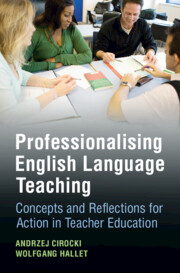
The issue of professionalisation of English Language Teaching (ELT) remains underexplored in academic discourse. Written by experienced teacher educators, this book presents a timely guide to professional teacher development in ELT, showing how teacher educators and classroom practitioners can develop their practice. It scrutinises key topic areas for teacher education, detailing the specific competences that professional teachers need to demonstrate in the 21st century, including transforming English language classrooms, engaging in ongoing debates that examine theory, research and practice, responding to managerial and policy discourses on English language instruction, and playing a leading role in regulating the entire teaching profession. It highlights how meaningful, impactful, transformative, and sustainable language education requires high-quality teachers who are lifelong learners, classroom ethnographers, and educational leaders. It is essential reading for pre- and in-service teachers, teacher educators and professional development providers, educational researchers, as well as policy makers in the field of ELT.
This chapter explores the range of essayistic writing in nineteenth-century newspapers: leaders (political and topical in focus and the principal genre of the Victorian daily and weekly press), middles (a shorter version of the leader and characteristic of some weeklies), correspondence columns from journalists at home and abroad, and reviews of both books and theatre. It charts the expansion of the press at mid-century following the abolition of the ‘Taxes on Knowledge’ and an influx of literary talent that raised the quality of newspapers, and it notes the transformation of newspapers at the end of the century with the creation of literary pages, supplements, and special features (following the demise of many quarterly reviews and monthly magazines). The second half of the chapter examines the newspaper writing of John Stuart Mill, Charles Dickens, and George Eliot, and argues that each made a unique contribution to the newspapers of their day.
This chapter considers the role of the essay in debates over the ‘rise of English’ in the nineteenth century. It firstly explores the crossover between academia and publishing, focusing on David Masson and George Saintsbury, whose well-regarded literary essays led to professorial appointments at London and Edinburgh. It then considers how University Extension lecturer John Churton Collins turned to periodical essays to garner support for the introduction of English literature at Oxford and Cambridge. Collins’s diatribes argued that the literary essay itself was at risk of extinction if journalists and critics continued to be deprived of professional training. Finally, this chapter considers the inclusion of essayists on English literature syllabuses during the fin de siècle. Figures such as Joseph Addison, William Hazlitt, and John Dryden, along with later writers including Matthew Arnold, Walter Pater, and Charles Lamb were prominently featured, suggesting that essayists were regarded as the sine qua non of literary study at that time.
This chapter shows the essay’s troubled evolution as an academic genre in the nineteenth century, from the norms of classical rhetoric taught in English schools to the professionalising educational practices of Scottish universities and their American counterparts. Aimed to introduce meritocracy to Oxford and Cambridge’s class preferment system, the rise of essay-based public examinations in the 1850s reshaped the academic essay to sustain an informational mastery of the complexities of British imperial rule. Professors of English reacted to the new public-exam essay regime with one of two tactics. One was to strip the essay down to a managerial model that came to be known as the five-paragraph essay, shorn of classical figurality and stressing correct usage. Meanwhile, advocates of liberal education revived the teaching of the literary essay based on Victorian models, setting up a lengthy dispute in the twentieth century between literary and social-scientific protocols of essay writing.
In the early nineteenth century, medical schools became a growing means of regulating medicine in the British Empire, both in the metropole and in two colonies: India and Canada. By examining the establishment of medical schools in Calcutta, Bombay, Madras, Quebec City, Montreal and Toronto between the end of the Seven Years’ War and the beginning of the Victorian era, this article argues that the rise of the British Empire was a key factor in the gradual replacement of private medical apprenticeships with institutional medical education. Although the imperial state did not implement a uniform medical policy across the British Empire, the medical schools established under its jurisdiction were instrumental in devising a curriculum that emphasised human dissection, bedside training in hospitals and organic chemistry as criteria of medical competence.
This chapter investigates how the idea of ‘service’ narrates the shifting (and sometimes consistent) ways in which actors have been understood on and off the British stage since the Second World War. ‘Service’ is a word often used casually by critics and theatre workers alike, but it contains a multitude of sometimes contradictory meanings, revealing of the peculiar social status of actors in Britain. The chapter argues that the combination of an idealist sense of service, inherited from the nineteenth century stage with the rhetoric of national duty during the war, promoted the increasing professionalisation among actors in Britain since 1945. The idea of the actor as public servant or member of the professional classes was complicated, however, by the longstanding association of actors with bohemianism, producing an ambiguous class identity for the acting profession. It is this class anxiety and ambivalence, complicated by post-war ideas of national service, that is the concern of this chapter. Finally, the chapter proposes that the rhetoric of service and the cultures of bohemianism have functioned as forms of mystification that disavow the actor’s status as a waged worker.
This chapter focuses on how the European integration process affects the role and function of the legal profession. The chapter starts from a number of observations on transformations in the legal profession, from the growth of the legal profession to the increasing tension between local and national lawyers versus those working in European and global settings. The overall development culminates in the European expert rhetoric, which is driven and promoted by the European Commission. Experts are expected to fill spaces in the endless numbers of European committees, and the whole inner machinery of the EU is dependent on self-named and EU certified experts. What then is a European legal expert? How does a legal expert differ from other experts? This chapter uses the professionalisation theory by Oevermann to test whether and to what extent legal professionalism is replaced by a legal expertise rhetoric and what it could mean for legal professionalism and the European legal profession.
Chapter 6 explores the efforts to institutionalise a new book-based expertise through the professionalisation of agriculture. First, it considers the reimagining of agriculture as a learned profession through contemporary analogies with medicine. Second, it examines how books were envisioned as part of a new system of learning by analysing proposals for educational reform. Third, it examines the development of the estate or land steward as an example of an agricultural profession that came to be defined by possession of universal book-based knowledge, through an analysis of manuals for stewards. It argues that while the vision of professionalised agriculture was only partly achieved, it reveals the scope of ambition of agricultural authors in their determination to monopolise knowledge.
New circus/nouveau cirque is an artistic movement that circus historian Martine Maléval locates between 1968 and the 1990s. It can be described as both an aesthetic and a political revolution that was rooted in the dynamics of the social and cultural revolutions of the 1970s. For numerous reasons this period can be identified as the source of a renewed institutionalisation of the circus that is still ongoing. Commencing with the professional careers of circus artists who were active in the 1970s and the 1980s, this chapter examines how these artists progressively defined themselves as ‘circus authors’, how they promoted innovation in the aesthetics and practices of the circus, and how they generated a long-term impact on local cultural policies and the social status of contemporary circus artists in Europe. The process through which new circus emerged and evolved can be understood using the concept of ‘artification’ (becoming an art form), a term used by the French sociologist Nathalie Heinich and subsequently applied to circus studies by Magali Sizorn. Using Maléval’s foundational research on the French nouveau cirque as its point of departure, this chapter adopts a European-wide perspective to examine the influence of new circus from the 1990s until today.
The Victorian period was the most formative era for professional nursing and for cultural concepts of the nurse. The most prominent representative figures of nursing from the period were the disreputable Sairey Gamp – the infamous character from Charles Dickens’s Martin Chuzzlewitt – and the very real and very proper Florence Nightingale. The Victorian cultural perception of nursing was more complex than these polar opposites might suggest, however. The influences that cumulatively fashioned the popular figure of the nurse were legion and contradictory, ranging from camp follower to proselytising nun to heroic martyr.
The evolution of nursing practice from menial to professional work was widely examined and debated in the media and through fictional representations of nurses. As these treatments reveal, there was marked cultural ambiguity about the entrance of refined women into nursing, which, even in its most professional form, entailed a level of intimacy with both male and female bodies and bodily fluids that was disturbing to Victorian sensibilities. What emerges in both the media and fiction is a curious and very Victorian fixation on sexuality that was explicitly or implicitly directed at the women who practised nursing.
This chapter examines the ‘servant problem’ from the servant’s point of view through a history of the Domestic Workers’ Union of Great Britain and Ireland (est. 1909–1910). It is the first ever in-depth history of this or any other servants’ trade union in Britain. It provides an important new perspective on both class relations in the suffrage movement and the gender politics of labour organising in the years leading up to the First World War. My account relies upon the correspondence pages of the Woman Worker and the Glasgow Herald, and on press cuttings from the local and radical press. These letters provide an unusual opportunity for the voices of rank-and-file domestic workers to be heard discussing working conditions and the possibility of self-organisation. The DWU aimed to be a union run ‘by servants for servants’. It sought to reconfigure the mistress–maid relationship as a formal employment contract, and did not shy away from the potential for class antagonism between these two groups of women despite also having its roots in the suffrage movement.
Despite facing manifold social and educational barriers, British asylum nurses across the long nineteenth century articulated distinctive professional identities as a means of leveraging their position in the medical hierarchy. This article draws upon a corpus of previously unattributed contributions to the Asylum News (1897–1919) – one of the first journals produced for the edification of asylum workers – to illustrate the diversity of medical personae developed and disseminated by these employees in the Edwardian era. Through scientific and creative works, nurses engaged with the pressing social and medical debates of the day, in the process exposing a heterogeneous intellectual culture. Moreover, as their writings attest, for some ambitious nurses these pretensions to intellectual authority prompted claims for medical autonomy, driving agitation on the hospital wards. The article thus strengthens claims for the ‘cultural agency’ of asylum workers and offers new insights into the cultural antecedents of professionalisation and trade unionism.
The article assesses the role of the military in the global dissemination and exchange of music in the long nineteenth century. It shows that, first, Western military music and its instrumentation were influenced by cross-cultural encounters, primarily with the Ottoman Empire. Second, I argue that educational professionalization and instrumental standardization were important vehicles for the global rise of the military band beyond its original purpose. Third, tracing the transnational careers of some German military musicians will make evident that competition with respect to national prestige, rising imperialism, and the increasing commercialization of musical life were crucial features of the spread of military musicians all over the world, making them cultural brokers not only of military music.
The fundamental role played by good nutrition in enabling personal, social and economic development is now widely recognised as presenting a fundamental global challenge that has to be addressed if major national and international problems are to be resolved in the coming decades. The recent focus provided by the Millennium Development Goals and the Scaling-Up-Nutrition (SUN) movement has been towards reducing the extent of nutrition-related malnutrition in high-burden countries. This has served to emphasise that there is a problem of inadequate professional capacity in nutrition that is sufficiently widespread to severely limit all attempts at the effective delivery and sustainability of nutrition-related and nutrition-enabling interventions that have impact at scale. Many high-burden countries are in sub-Saharan Africa where there is a high dependency on external technical support to address nutrition-related problems. We have sought to explore the nature and magnitude of the capacity needs with a particular focus on achieving levels of competency within standardised professional pre-service training which is fit-for-purpose to meet the objectives within the SUN movement in Africa. We review our experience of engaging with stakeholders through workshops, a gap analysis of the extent of the problem to be addressed, and a review of current efforts in Africa to move the agenda forward. We conclude that there are high aspirations but severely limited human resource and capacity for training that is fit-for-purpose at all skill levels in nutrition-related subjects in Africa. There are no structured or collaborative plans within professional groups to address the wide gap between what is currently available, the ongoing needs and the future expectations for meeting local technical and professional capability. Programmatic initiatives encouraged by agencies and other external players, will need to be matched by improved local capabilities to address the serious efforts required to meet the needs for sustained improvements related to SUN in high-burden countries. Importantly, there are pockets of effort which need to be encouraged within a context in which experience can be shared and mutual support provided.
The service sector has been referred to as the 'Cinderella sector' because it is one of the least understood sectors of the economy. This chapter reviews the pattern of growth and places the Australian experience within the context of broader worldwide trends. Services may range from high-skilled, knowledge-driven activities to low-skilled and low-paid occupations. The diversified nature of the service sector not only creates definitional problems, but it also makes classification for evaluation purposes difficult. The history of service development in the 19th century was one of response to the transformation of colonial agricultural economies into industrial and urban states. The pattern of employment growth, particularly in the latter half of the 20th century, reflected that of other western economies. Finally, the chapter investigates three themes, such as professionalisation, innovation and regulatory influences, all reveal more of the significance of the service sector to the economy.