To save content items to your account,
please confirm that you agree to abide by our usage policies.
If this is the first time you use this feature, you will be asked to authorise Cambridge Core to connect with your account.
Find out more about saving content to .
To save content items to your Kindle, first ensure no-reply@cambridge.org
is added to your Approved Personal Document E-mail List under your Personal Document Settings
on the Manage Your Content and Devices page of your Amazon account. Then enter the ‘name’ part
of your Kindle email address below.
Find out more about saving to your Kindle.
Note you can select to save to either the @free.kindle.com or @kindle.com variations.
‘@free.kindle.com’ emails are free but can only be saved to your device when it is connected to wi-fi.
‘@kindle.com’ emails can be delivered even when you are not connected to wi-fi, but note that service fees apply.
Reading Friedrich Hayek's late work as a neoliberal myth of the state of nature, this article finds neoliberalism's hostilities to democracy to be animated in part by a romantic demand for belonging. Hayek's theory of spontaneous order expresses this desire for belonging as it pretends the market is capable of harmonizing differences so long as the state is prevented from interfering. Approaching Hayek's work in this way helps to explain why his conceptions of both pluralism and democracy are so thin. It also suggests that neoliberalism's assaults upon democracy are intimately linked to its relentless extractivism. Yet the romantic elements in Hayek's work might have led him toward a more radical democratic project and ecological politics had he affirmed plurality for what it enables. I conclude with the suggestion that democratic theory can benefit from learning to listen to what Hayek heard but failed to affirm: nature's active voice.
Previous scholarship has shown evidence of a positive relationship between volunteering and improved measures of mental and physical wellbeing. It has also been suggested that volunteering may help individuals navigate transitions between different life stages by encouraging them to become more involved in their communities, thereby building new social connections and improving networks of social support. Using Waves 2 and 3 of panel data from the Midlife in the United States Survey, we examined whether volunteering can buffer against the negative effects of low self-esteem on correlates of psychosocial wellbeing in adults from mid- to later-life. Results indicated that participation in volunteering mitigates the negative effects of adults’ low self-esteem on their sense of belonging and life satisfaction. In particular, we determined the adverse effect of negative self-esteem at time T1 on our wellbeing measures (belonging to the community and life satisfaction) at T2 above and beyond the effects of the same measures at T1 and the covariates. Furthermore, we found positive evidence for the moderating influence of volunteering on the relationship between negative self-esteem and both measures of wellbeing, although the effect was stronger for life satisfaction than for belonging. These conclusions suggest that volunteering acts as a buffer for ageing adults, with possible public health implications.
Despite the benefits of volunteering to the individual, organization and community, the retention of volunteers within volunteer and not-for-profit organizations remains a significant challenge. Examining the motivations of individuals who have ceased their engagement in a volunteer organization may provide insights to improve retention rates. The perceptions of 64 volunteers formerly involved in an international volunteer organization were examined through community telephone interviews and online surveys. Results show that while volunteers valued their participation in the volunteer organization, their decision to cease engagement in the organization was driven by five major themes: ‘Work overload and burnout,’ ‘Lack of autonomy and voice,’ ‘Alienation and cliques,’ ‘Disconnect between volunteer and organization’ and ‘Lack of faith in leadership.’ Strategies to improve and refine organizational practice and culture may contribute to a strengthened membership and retention.
This article examines the little-known experiences of children born of Chinese mothers and Japanese fathers who had consensual relationships during and after the Second Sino-Japanese War in China, with a specific focus on those who migrated to Japan after 1972. To understand how and why they—in their own words—“returned” to their “homeland,” this article analyzes historical circumstances as well as Sino-Japanese children’s experiences, identities, and belonging in comparison with other groups of “children born of war” in different historical and geopolitical settings. Their long-neglected stories point to a missing part in narratives of the 8-year war.
This chapter investigates how belonging is constructed through language in Belize. Inspecting linguistic landscapes, interviews, and ethnographic observations, the study reveals the sometimes paradoxical ways languages are ideologically positioned within local, national and transnational contexts. Kriol is central to constructing national belonging and serves as a unifying symbol of a diverse population. It is also tied to racial and transnational belonging, connecting to Afro-Caribbean cultural spaces. Conversely, Spanish is associated with immigration and Guatemala, despite its historical presence and ongoing use. This tension results in contradictory discourses, where Spanish is simultaneously seen as ‘foreign’ and as a home language. English occupies a dual role as both a foreign and national language. While it indexes Belize’s colonial ties and distinguishes Belizeans from their Hispanic neighbours, it is also regarded as essential for education and economic mobility. The chapter concludes that language ideologies and practices do not always align, reflecting the coexistence of diverse historical, social, and political discourses in shaping linguistic belonging in Belize.
The term “school adjustment” refers not only to the state or phenomenological description of a student at a given point in time; it also refers to the process that newcomers experience once they start to make the transition from home to early childhood care or kindergarten; from kindergarten to elementary school; from elementary school to secondary or junior high-school; from secondary school to high school; from any one school to another (e.g., due to parental divorce or immigration); and from high school to institutions of higher education. The state of school adjustment refers to students’ exhibition of expected academic outcomes, expected interpersonal outcomes, a general motivation to learn, and personal outcomes (e.g., positive self-esteem, lack of depressive symptoms). The process of school adjustment is the advancing process by which the students’ readiness and even eagerness to meet the aforementioned criteria of a state of school adjustment gradually emerge. As one of the life-course transitional events, adjustment too school can be articulated by the Stress and Adjustment Model (STA; Israelashvili, 2023).
This paper explores the theoretical and analytic possibilities of the concept of gharīb to offer a new understanding of regional displacement in what we know as the modern Middle East. The concept of gharīb (pl. ghurabāʾ) has accrued a wide range of meanings across time and space, including stranger, outcast, and exile, as well as pauper. By occupying the space between estrangement and poverty, the gharīb allows for an intersectional understanding of inequality, experienced by a growing number of marginalized and displaced communities in the Middle East. This paper honors the gharīb while making an analytic shift away from the category of the “refugee,” which has long been the dominant framework for personhood in the study of displacement. Combining genealogical analysis of the word gharīb with ethnographic accounts of displaced and impoverished communities in post-2011 Lebanon, I argue that legal binaries such as refugee versus citizen, and internal versus external displacement, have been further blurred against the backdrop of ongoing and interlocking forms of structural violence, inequality, and lack of protection for marginalized groups. The right to belong, therefore, is less about citizenry and more about a mode of social and economic poverty. This is particularly the case in the margins, where the repercussions of the ongoing crises are first and foremost felt. The gharīb, in contrast to such legal binaries, can be an analytic tool that allows us to delve deeper into the complexities of belonging, futurity, and rights without falling into the traps of methodological nationalism and top-down regional demarcations.
One of life’s most fundamental revelations is change. Presenting the fascinating view that pattern is the manifestation of change, this unique book explores the science, mathematics, and philosophy of change and the ways in which they have come to inform our understanding of the world. Through discussions on chance and determinism, symmetry and invariance, information and entropy, quantum theory and paradox, the authors trace the history of science and bridge the gaps between mathematical, physical, and philosophical perspectives. Change as a foundational concept is deeply rooted in ancient Chinese thought, and this perspective is integrated into the narrative throughout, providing philosophical counterpoints to customary Western thought. Ultimately, this is a book about ideas. Intended for a wide audience, not so much as a book of answers, but rather an introduction to new ways of viewing the world.
This chapter explores adolescent involvement in cults. Adolescence is a time in which many individuals engage in group-like activity. However, this chapter defines cult-like behavior as beyond the range of normal group-like activity expected during the transitional time of adolescence. The biological, social, and psychological factors of adolescent development increase their susceptibility to peer pressure, predispose them to self-exploration, and contribute to characteristics that attract adolescents to cults. This chapter describes the characteristics of normal adolescent life that predispose adolescents to cult recruitment, characteristics of adolescents who are likely to join cults, and characteristics of the leaders of cults that attract adolescents. Important regarding adolescents in particular, the increased access to technology, the internet, and social media is redefining adolescent membership in cults and future considerations may offer an updated lens through which to define and consider adolescent involvement in cults.
Development is complex. Individual meaning systems are dynamic, and change can happen at any age. But even change is lawful and is conditioned by one’s history of meaning making. Self-fulfilling processes are part of the nature of adaptation. Those that bring positive expectations to social encounters often have new positive social experiences. As argued in the beginning, meaning lies at the center of a rich life. Those who have a sense of belonging, a sense of purpose, and a coherent, integrated life story have what can be described as meaningful lives.
Infants and toddlers are immersed in the social culture of their family, community and society from before they are born. Every family has distinct social practices and ways of interacting which shape very young children’s holistic physiological, cognitive and emotional learning, development and wellbeing. These practices reflect the values, beliefs, norms and expectations of their community and culture. Over time, through repeated social encounters and experiences, the social culture of their family and community is passed on as infants and toddlers become socialised into these specific ways of engaging with others. Social practices and interactions thus form the basis of the relationships that infants and toddlers form with significant others. As a result, the social opportunities that very young children experience and participate in during their everyday existence have far-reaching consequences for their sense of identify and belonging.
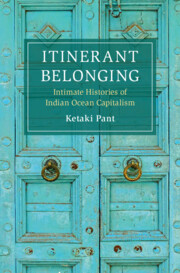
The introduction situates the old merchant homes of Gujarat between the Indian Ocean region and South Asia. Setting the stage for the rest of the book, the introduction demonstrates that havelis were embedded within British free-trade capitalism across the Indian Ocean in the nineteenth and twentieth centuries. Though havelis were framed as domestic and private sites outside of the colonial economy, they were linked to slavery and indentured labor, plantation agriculture, and the mass production of commodities. The rich and unsettled grounds of Gujarat’s havelis reveal that the dislocations of colonial capitalism impacted merchant communities’ sense of place and belonging. While Indian Ocean histories of capitalism have placed an inordinate emphasis on paper records, this book argues that old houses suggest that space was not the background of capital’s history but a primary site of its articulation. Drawing the spaces of homes into relation with a range of textual colonial and vernacular archives, this book challenges our static ideas of belonging and argues for reimagining Gujarat through Muslim and Parsi mercantile communities, their itineraries, and their histories.
Along the coast of Gujarat, nineteenth-century merchant houses or havelis still stand in historic cities, connecting ports from Durban to Rangoon. In this ambitious and multifaceted work, Ketaki Pant uses these old spaces as a lens through which to view not only the vibrant stories of their occupants, but also the complex entanglements of Indian Ocean capitalism. These homes reveal new perspectives from colonized communities who were also major merchants, signifying ideas of family, race, gender, and religion, as well as representing ties to land. Employing concepts from feminist studies, colonial studies, and history, Pant argues that havelis provide a model for understanding colonial capitalism in the Indian Ocean as a spatial project. This is a rich exploration of both belonging and unbelonging and the ways they continue to shape individual and social identities today.
Organizations and managers often implement workplace training programs aimed at fostering collaboration, belonging, and respect among employees. However, the effectiveness of these programs can be undermined when they are framed in ways that only resonate with some participants while alienating others. We propose that moral reframing can enhance the success of such initiatives by aligning messaging with a broader range of moral perspectives. Drawing on moral foundations theory, we identify five key dimensions, care, fairness, loyalty, authority, and purity, that shape how individuals interpret and respond to workplace training efforts. Although many programs emphasize care and fairness, individuals who prioritize loyalty, authority, and purity may perceive them differently, leading to disengagement, skepticism, or resistance. We argue that strategically framing training initiatives across multiple moral frameworks can foster greater engagement, buy-in, and overall effectiveness. Additionally, we offer practical recommendations for organizations to implement moral reframing strategies, ensuring that training efforts resonate with a wider audience and contribute to a more cohesive and productive workplace.
This article provides foundations for how our God-talk can inform the way we think about and live out belonging. It resorts to three key Christian doctrines: the Trinity, creatio ex nihilo and the incarnation. This exploration begins with some brief observations about the issues Karen Kilby and Kathryn Tanner raised regarding social trinitarianism. It then explores the concept of participation as understood by Tanner as another way of conceptualising theocentric belonging rooted in creation and the incarnation. From this emerges the idea of an expansive theocentric theology of belonging, understood as participation in the divine life through creation and the incarnation. This expansiveness is explored further through the concepts of kinship and deep incarnation.
This chapter focusses on ubiquitous plant presences in some of the literatures of southern Africa, essentially of South Africa and Zimbabwe. Both Indigenous societies and incursive colonial regimes depended fundamentally on plant life for shelter, food, materials, and aesthetics of belonging. Colonials imported numerous alien species, both deliberately cultivated and inadvertently ‘released’, with incalculable impacts on the subcontinent’s variegated local environments. The governing divide between ‘indigenous’ and ‘alien’, however, is complicated by sundry blurrings and ironic cross-overs. These dynamics, affecting commercial, societal, and emotional dimensions alike, are explored through some selected nodes, particularly the iconography of Eden or Arcadia; the complex aesthetic ecology of the suburban garden; and the treatment of trees, especially the native yellowwood and the alien jacaranda.
The Inclusuem is a collaborative project established in 2012 with international reach and global impact. The three co-directors, Aletheia Whitman, Dr. Rose Paquet, and Dr. Porchia Moore share a mission to “advance new ways of being a museum through dialogue, community building, and collaborative practice related to inclusive practice in museums.” We have provided a platform for over a decade which prompts arts and cultural heritage professionals to push the bounds of museum work to be as expansive and inclusive as possible while enacting structural change. In this piece, we focus on museums as sites where the humanities are made public. Our manifesto proposes a vision for the public humanities in a changing political landscape and will introduce new perspectives for both an emerging museum and an emergent new understanding for the public humanities within museums faced with an antagonistic intellectual and cultural ecosystem.