Refine search
Actions for selected content:
18 results
Wine Stars & Bars: The combinatorics of critic consensus and the usefulness of order preference models
-
- Journal:
- Journal of Wine Economics , First View
- Published online by Cambridge University Press:
- 03 November 2025, pp. 1-14
-
- Article
-
- You have access
- Open access
- HTML
- Export citation
An update on the coin-moving game on the square grid
-
-
- Book:
- Games of No Chance 6
- Published online:
- 18 May 2025
- Print publication:
- 05 June 2025, pp 369-404
-
- Chapter
- Export citation
3 - Geometric Rigidity Theory
- from Part I - Maxwell and Structural Mechanics
-
-
- Book:
- The Geometry of Equilibrium
- Published online:
- 03 May 2025
- Print publication:
- 22 May 2025, pp 29-44
-
- Chapter
- Export citation
A NOTE ON THE STRONG ERDŐS–HAJNAL PROPERTY FOR GRAPHS WITH BOUNDED VC-MINIMAL COMPLEXITY
- Part of
-
- Journal:
- The Journal of Symbolic Logic , First View
- Published online by Cambridge University Press:
- 15 November 2024, pp. 1-7
-
- Article
-
- You have access
- Open access
- HTML
- Export citation
-
Inspired by Adler’s idea on VC minimal theories [1], we introduce VC-minimal complexity. We show that for any $N\in \mathbb {N}^{>0}$, there is $k_N>0$ such that for any finite bipartite graph $(X,Y;E)$ with VC-minimal complexity $< N$, there exist $X'\subseteq X$, $Y'\subseteq Y$ with $|X'|\geq k_N |X|$, $|Y'|\geq k_N |Y|$ such that $X'\times Y' \subseteq E$ or $X'\times Y'\cap E=\emptyset $.






COMBINATORIAL BOUNDS IN DISTAL STRUCTURES
- Part of
-
- Journal:
- The Journal of Symbolic Logic , First View
- Published online by Cambridge University Press:
- 13 October 2023, pp. 1-33
-
- Article
- Export citation
A note on grid homology in lens spaces: $\mathbb{Z}$ coefficients and computations
-
- Journal:
- Glasgow Mathematical Journal / Volume 65 / Issue 2 / May 2023
- Published online by Cambridge University Press:
- 31 March 2023, pp. 457-479
- Print publication:
- May 2023
-
- Article
-
- You have access
- Open access
- HTML
- Export citation
-
We present a combinatorial proof for the existence of the sign-refined grid homology in lens spaces and a self-contained proof that $\partial _{\mathbb{Z}}^2 = 0$. We also present a Sage programme that computes $\widehat{\mathrm{GH}} (L(p,q),K;\mathbb{Z})$ and provide empirical evidence supporting the absence of torsion in these groups.



5 - Probability Theory
-
- Book:
- The Failures of Mathematical Anti-Evolutionism
- Published online:
- 28 April 2022
- Print publication:
- 12 May 2022, pp 110-162
-
- Chapter
- Export citation
SUBSHIFTS OF FINITE TYPE WITH A HOLE
- Part of
-
- Journal:
- Journal of the Australian Mathematical Society / Volume 115 / Issue 1 / August 2023
- Published online by Cambridge University Press:
- 22 March 2022, pp. 73-98
- Print publication:
- August 2023
-
- Article
- Export citation
-
We consider a subshift of finite type on q symbols with a union of t cylinders based at words of identical length p as the hole. We explore the relationship between the escape rate into the hole and a rational function, $r(z)$, of correlations between forbidden words in the subshift with the hole. In particular, we prove that there exists a constant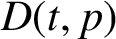 $D(t,p)$ such that if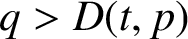 $q>D(t,p)$, then the escape rate is faster into the hole when the value of the corresponding rational function $r(z)$ evaluated at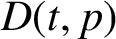 $D(t,p)$ is larger. Further, we consider holes which are unions of cylinders based at words of identical length, having zero cross-correlations, and prove that the escape rate is faster into the hole with larger Poincaré recurrence time. Our results are more general than the existing ones known for maps conjugate to a full shift with a single cylinder as the hole.





A blurred view of Van der Waerden type theorems
- Part of
-
- Journal:
- Combinatorics, Probability and Computing / Volume 31 / Issue 4 / July 2022
- Published online by Cambridge University Press:
- 26 November 2021, pp. 684-701
-
- Article
- Export citation
-
Let $\mathrm{AP}_k=\{a,a+d,\ldots,a+(k-1)d\}$ be an arithmetic progression. For $\varepsilon>0$ we call a set $\mathrm{AP}_k(\varepsilon)=\{x_0,\ldots,x_{k-1}\}$ an $\varepsilon$-approximate arithmetic progression if for some a and d, $|x_i-(a+id)|<\varepsilon d$ holds for all $i\in\{0,1\ldots,k-1\}$. Complementing earlier results of Dumitrescu (2011, J. Comput. Geom. 2(1) 16–29), in this paper we study numerical aspects of Van der Waerden, Szemerédi and Furstenberg–Katznelson like results in which arithmetic progressions and their higher dimensional extensions are replaced by their $\varepsilon$-approximation.







5 - Combinatorics of Orthogonal Polynomials and their Moments
-
-
- Book:
- Lectures on Orthogonal Polynomials and Special Functions
- Published online:
- 07 October 2020
- Print publication:
- 15 October 2020, pp 280-334
-
- Chapter
- Export citation
5 - Flat Vertex Folds: Local Properties
- from Part II - The Combinatorial Geometry of Flat Origami
-
- Book:
- Origametry
- Published online:
- 06 October 2020
- Print publication:
- 08 October 2020, pp 75-106
-
- Chapter
- Export citation
7 - Counting Flat Folds
- from Part II - The Combinatorial Geometry of Flat Origami
-
- Book:
- Origametry
- Published online:
- 06 October 2020
- Print publication:
- 08 October 2020, pp 137-158
-
- Chapter
- Export citation

Origametry
- Mathematical Methods in Paper Folding
-
- Published online:
- 06 October 2020
- Print publication:
- 08 October 2020
Surveys in Combinatorics 2019
-
- Published online:
- 17 June 2019
- Print publication:
- 27 June 2019
Semidefinite Programming BasedAlgorithms for the Sparsest Cut Problem
-
- Journal:
- RAIRO - Operations Research / Volume 45 / Issue 2 / April 2011
- Published online by Cambridge University Press:
- 17 June 2011, pp. 75-100
- Print publication:
- April 2011
-
- Article
- Export citation
-
In this paper we analyze a known relaxation for the Sparsest Cut problem based on positive semidefinite constraints, and we present a branch and bound algorithm and heuristics based on this relaxation. The relaxed formulation and the algorithms were tested on small and moderate sized instances. It leads to values very close to the optimum solution values. The exact algorithm could obtain solutions for small and moderate sized instances, and the best heuristics obtained optimum or near optimum solutions for all testedinstances. The semidefinite relaxation gives a lower bound $\frac{C}{W}$
 and each heuristic produces a cut S with a ratio $\frac{c_S}{w_S}$
 , where either cS is at most a factor of C or wS is at least a factor of W. We solved the semidefinite relaxation using a semi-infinite cut generation with a commercial linear programming package adapted to the sparsest cut problem. We showed that the proposed strategy leads to a better performance compared to the use of a known semidefinite programming solver.


ON A COMBINATORIAL PROOF FOR AN IDENTITY INVOLVING THE TRIANGULAR NUMBERS
- Part of
-
- Journal:
- Bulletin of the Australian Mathematical Society / Volume 83 / Issue 1 / February 2011
- Published online by Cambridge University Press:
- 27 September 2010, pp. 46-49
- Print publication:
- February 2011
-
- Article
-
- You have access
- Export citation
Duration of a secretary problem
- Part of
-
- Journal:
- Journal of Applied Probability / Volume 34 / Issue 2 / June 1997
- Published online by Cambridge University Press:
- 14 July 2016, pp. 556-558
- Print publication:
- June 1997
-
- Article
- Export citation