To save content items to your account,
please confirm that you agree to abide by our usage policies.
If this is the first time you use this feature, you will be asked to authorise Cambridge Core to connect with your account.
Find out more about saving content to .
To save content items to your Kindle, first ensure no-reply@cambridge.org
is added to your Approved Personal Document E-mail List under your Personal Document Settings
on the Manage Your Content and Devices page of your Amazon account. Then enter the ‘name’ part
of your Kindle email address below.
Find out more about saving to your Kindle.
Note you can select to save to either the @free.kindle.com or @kindle.com variations.
‘@free.kindle.com’ emails are free but can only be saved to your device when it is connected to wi-fi.
‘@kindle.com’ emails can be delivered even when you are not connected to wi-fi, but note that service fees apply.
The venture capital ecosystem in Africa is thriving. With multiple large investor rounds and exits in the 2020s, the continent transitioned from having not a single unicorn in 2016 to seven start-ups worth over US$1 billion in less than a decade, while five unicorns were born in 2021 alone. Even though many start-ups on the continent gain traction organically, the current paradigm is no substitute for finding a competitive regional strategy that offers a sustainable flow of successful scale ups that then obtain unicorn status. There is a vast difference in institutional structure, resources and capabilities between African countries and what is found elsewhere. Africa faces different sets of challenges that require a unique approach to venture creation. Reforms capable of strengthening existing policy frameworks, skills development initiatives and a financing architecture that supports entrepreneurship along the entire value chain will be critical in the African context. This chapter situates policy innovation in the context of Africa’s bubbling venture capital ecosystem as a key contributor to unicorn emergence.
The middle class is considered the most relevant group for formal volunteering. However, the middle class is shrinking, raising the question of the consequences for volunteering in general. Based on four samples of the Swiss Volunteering Survey from 2006, 2010, 2014, and 2019 containing over 5′000 individual responses, we test whether the intensity of middle-class volunteering changes over time. Our results show that the middle class is an essential source for formal volunteering compared to other parts of society, especially those with lower income. The relationship between the middle class and volunteering is positive, though non-significant in our samples. We found no significant changes over time in the volunteering development of the middle class.
Using data from the 2008 General Social Survey of Canada, this study examines the factors associated with individuals’ propensity to engage in formal and informal volunteering. The results show that social networks increase the likelihood of both formal and informal volunteering, but social trust and human capital increase only the likelihood of formal volunteering and not of informal care. The findings also reveal interesting cultural influences and regional differences in the propensity to engage in formal and informal volunteering, especially between French-speaking Canadians and English-speaking Canadians, and those living in Quebec and outside of Quebec. Native-born Canadians are more likely to volunteer than their immigrant counterparts, but they are similar to immigrants in the propensity to provide informal care. Additionally, women are found to be more likely to engage in formal volunteering and informal care than men. Theoretical and practical implications of the findings are discussed.
We examine the relationship between likelihood to volunteer and a range of human capital, social capital, religious capital and ubuntu variables in South Africa seven years after the official end of apartheid. Using the 2001 World Values Survey we find that education is positively associated with volunteering, but employment has a negative association with volunteering when including controls for wealth and income. Religiosity has a strong positive association with volunteering and a broad base, cutting across the socio-economic and racial divides. This suggest that religious congregations in collaboration with other sectors could be a vehicle to increase access to volunteer opportunities for those who lack the status to take part in other volunteering activities.
Empirical evidence from single-country studies on the relation between volunteering and wages is mixed. This paper uses an international framework to show that the relation between activities in voluntary associations and wages differs depending on country-specific factors. In particular, we argue that participating in voluntary associations serves as a signal in collectivistic (as opposed to individualistic) countries and is therefore positively related to wages. In countries with a low (as opposed to high) formal educational level, the human capital effects of participating are strong; therefore, activities in voluntary associations correlate with wages positively. Using data on 9295 individuals from 17 countries, we confirm that the relation between participating in voluntary associations and wage is positive but declines (1) as individualism increases and (2) as formal educational levels increase. In countries with high values for individualism or very high formal education levels, the relation between activities in voluntary associations and wage becomes negative.
This study uses an asset-based approach to examine the ways social and human capital accessed through civic engagement may serve as a pathway toward economic opportunity for low-income individuals. Using a qualitative approach, this study draws on interviews with 31 low-income individuals who are civically engaged in a range of activities, including community organizing, giving money, informal engagement, religious participation, and volunteering. Findings contribute to the literature suggesting that study participants were often able to mobilize and deploy the social and human capital assets accumulated through different types of civic engagement into employment and education opportunities. However, embedded within social and human capital assets are also examples of the ways structural factors influenced whether study participants could transfer social and human capital assets acquired through civic engagement into economic opportunities.
In Central Europe, people trust each other less than in Western European countries. According to the common approach to volunteering, this should also mean fewer volunteers available. Our research examines whether two forms of volunteering—formal and informal—compete for engaged individuals in Central Europe. On a sample of 2,034 respondents from Czechia, Hungary, Poland, and Slovakia, we analyzed by structural equation model on how social capital and human capital influence wealth and time availability in relation to formal and informal volunteering. Our findings show that the two forms of volunteering do not compete but rather complement each other. Additionally, income has a stronger influence on both formal and informal volunteering than time availability. Furthermore, formal volunteering appears to be more sensitive to fluctuations in the availability of financial resources and time among potential volunteers, confirming resource theory.
Both skill-biased and routine-biased technological changes risk disrupting employment in Australia, particularly through persistent effects after an economic downturn. Soft skills are considered valuable for employees to reduce unemployment risk from these technological biases, as these skills contribute to employment in skilled and non-routine jobs that are difficult to automate. We investigate how soft skills affected the risk of unemployment from the Global Financial Crisis (GFC) using the Household, Income and Labour Dynamics in Australia (HILDA) longitudinal dataset to understand whether these skills could reduce unemployment risk and similar negative employment outcomes for workers during economic disruptions, including the following years during the recovery. We find that the soft skill measures of social capital and low task repetitiveness are associated with lower unemployment, overskilling, and underutilisation risk. The association between social capital and underemployment also strengthened after the downturn. This did not begin immediately after the GFC but instead from 2013 onwards, after the end of the mining boom that had supported Australia during the GFC.
This article examines the intellectual and interventionist trajectory of American popular writer and commentator Robert Reich from his early 1980s advocacy of “industrial policy” to his time as US Secretary of Labor in the 1990s. It argues that Reich is an interesting figure to consider through the lens of “interventionist knowledges” because, although he draws selectively on social scientific data and knowledge, his syntheses of these things are more rooted in mythic thinking than in disciplined analysis. This article recounts the history of a failed bill, the Reemployment Act of 1994, to examine how Reich and those around him drew on and interpreted existing social scientific data to construct an idea of “the New Economy” and what, they claimed, it meant for national human capital policy. This article suggests that mythic visions of society and economy possibly play a large role in policy-making and issues advocacy.
The “demographic dividend” refers to the boost to GDP per capita growth countries experience during the part of the demographic transition when age dependency ratios plummet. The size and the source of the dividend are debated in the literature. Using newly constructed age-specific population data by country from the beginning of the demographic transition to the present day, this paper estimates the contribution of changing age structure to GDP per capita growth during the demographic transition. A quantitative overlapping-generations model is used to produce country-specific estimates of the dividend and to disentangle its drivers. Model simulations for 101 countries suggest a global average boost of 0.40 percentage points per annum to GDP per capita growth during the dividend period. Changing age structure explains 9.5% of total growth during the period of the demographic dividend on average. Countries with more rapid and more extreme changes in age structure experience larger dividends.
While conventional technologies like Zoom have limitations in interpersonal communication and a risk-free training environment in delivering comprehensive corporate training, the Metaverse provides immersive, face-to-face, interactive, and simulated learning opportunities. However, the literature highlights significant Metaverse adoption barriers and emphasises the need for interdisciplinary research-driven competency integration solutions. Furthermore, the present study investigates essential competencies human resource development professionals need to develop to implement Metaverse-based training, as a literature research gap. Anchored in the Critical Success Factor theory, the study has utilised the Spherical Fuzzy-Bayesian Best Worst Method and Grey Influence Analysis to prioritise and analyse the influential relations of the identified competencies. The findings highlight the significance of technical and gamification competency categories and competencies related to privacy and security, content loss, scripting, playability, and ethical and social responsibility. These findings signify the competencies for implementing the Metaverse for training by the human resource development professionals.
Summarising how economists have historically studied families from the nineteenth century to the present, we recall that economists developed methodologies in response to how they imagined and constituted the problem of family poverty in different periods. In contemporary times, concerns for poverty-alleviation have increasingly featured concerns for justice across gender, race, and ethnicity. We also recall how family economists prioritised some social and political problems over others, leaving significant injustices uncontested. These findings encourage reflection on how we define the social problems of families today. Describing the small body of economics on the relation between family behaviour and a sustainable biosphere, the book closes with a provocation. If each period of family economics has relied on an act of imagination to formulate the family-relevant social problems worthy of consideration, how might we constitute the problem of family poverty today, consistent with justice across gender, race, and ethnicity, while also tackling the very urgent need for a biosphere capable of supporting human life? How might we imagine living well and dying well today, on a damaged planet undergoing ecosystem collapse? And how might economists assist families to tackle this problem, today?
From the 1960s onwards, New Household economists like Theodore Schultz and Gary Becker shifted focus onto the poverty-alleviating impacts of family investment in human capital. This move was informed, first, by increased cultural and political awareness of what Becker referred to as an impoverished ‘underclass’ (1964/1993); second, by the social movements, including civil rights challenges to racial discrimination in schools and labour markets; and third, by government debates during the War on Poverty about the causes of Black family instability. Becker explained family instability as a rational response to price changes in the goods – including children – that families wanted. Given a set of preferences for basic commodities, and facing a defined range of choices, families were conceptualised as maximising utility, subject to constraints of income and time. This permitted hypotheses about how wages and human capital investment affected the cost of children, with effects on family formation and dissolution, fertility, and care-provision by women. As for poverty-alleviation, Becker favoured low-interest education loans. He rejected progressive income taxation and family welfare for incentivising underinvestment in education. Compensatory education programmes would fail by being offset. These policy positions were described by Nancy Folbre and Randy Albelda as a War on the Poor.
I study the effect of educational policy in the host economy on human capital accumulation and growth. The analysis is performed in a two-country growth model with endogenous fertility. I show that providing additional free educational services for immigrant children can increase the attractiveness of migration for less skilled individuals, which can outweigh the positive effect of this policy on the acquisition of human capital. In contrast, imposing taxes on immigrants in the host country reduces low-skilled immigration flows and has the potential to promote human capital accumulation if the resulting revenues are channeled into educational subsidies.
This study examines the heterogeneous effects of economic freedom on human capital accumulation across 83 developing countries between 2000 and 2018. Employing a range of econometric techniques including quantiles via moments regression, the analysis explores both average and distributional impacts of economic freedom on human capital, disaggregated by gender and employment status. The findings reveal that economic freedom positively influences human capital development, with stronger effects in countries with lower human capital levels. Among the five dimensions of economic freedom, freedom to trade internationally, legal systems, and property rights are most strongly associated with human capital accumulation. The results also indicate that women and employed individuals benefit more from economic freedom, highlighting its potential to reduce gender disparities and enhance labour productivity. These findings underscore the importance of institutional reforms promoting economic freedom as a pathway to human capital development in developing economies.
We assess how an economy’s wealth distribution shapes its labor market dynamics. We do so in a quantitative job-ladder model featuring directed search, incomplete markets, aggregate shocks, and endogenous on-the-job human capital accumulation. Poorer workers apply for lower-wage jobs when unemployed and under-accumulate human capital when employed to self-insure against unemployment risk. In response to an aggregate downturn, poorer workers reduce their human capital accumulation, all else equal, while richer workers increase it. The wealth distribution therefore matters for the response of aggregate human capital. In the calibrated model, we show that a negative aggregate productivity shock leads to a persistent decline in aggregate human capital, and a more dispersed wealth distribution would amplify this decline.
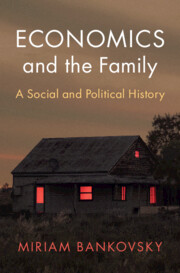
Most economists think family economics began in the 1960s when price theory was applied to family behaviour. Instead, this book focuses on enduring concerns with family poverty across the last two centuries. In nineteenth-century Britain and Europe, economists debated the effects of poverty relief and sought to improve family productivity. In the US, interwar household consumer economists studied how to rationalise family consumption, because factories were producing goods for low-income families. From the 1960s onwards, 'New' household economists attributed family poverty to inadequate human capital investment in predominantly non-white families. Even when feminist, development, and queer economists problematised gendered injustices, they recentred family poverty, targeting the 'pauperisation' of motherhood and the marginalisation of 'families we choose.' Economics and the Family does not simply reconstruct this alternate history, it also shows how economists in all these periods overlooked injustices which must be shouldered today.
This chapter reviews information about the demographic and democratic imperatives prompting K-16 educators to reconsider what they do not know about their students’ cultural backgrounds in urban schools and minority serving institutions (MSIs). It highlights the connection between the student–teacher racial mismatch characterizing K-16 contexts in the United States and a coexistent cultural mismatch. It makes an argument that these demographic characteristics present a human capital challenge that ultimately diminishes teacher effectiveness at learning across cultural differences between themselves and their students in urban schools and MSIs. It concludes by modeling this human capital challenge as a knowing–doing gap using a framework from the organizational literature.
This research examines whether high temperatures and exposure to childhood rainfall and heat shocks are a cognitive drag on children in Uganda. First, it asks whether students perform worse on a test on hotter days. Second, it examines whether previous longer-term exposure to high temperatures and unusual rainfall influences current test scores and educational outcomes. The analysis shows that high temperatures on test dates harm test performance, especially for girls and children younger than ten, implying additional temperature control considerations for particular demographics. The analysis of childhood climate shocks, which employs within-parish distributions of rainfall and heat, shows that children who experience rain or heat above the $80^{th}$ percentile of the parish distribution from birth until age 4 have worse learning outcomes in math, English, or local language literacy.
The formation of human capital is important for a society's welfare and economic success. Recent literature shows that child health can provide an important explanation for disparities in children's human capital development across different socio-economic groups. While this literature focuses on cognitive skills as determinants of human capital, it neglects non-cognitive skills. We analyze data from economic experiments with preschoolers and their mothers to investigate whether child health can explain developmental gaps in children's non-cognitive skills. Our measure for children's non-cognitive skills is their willingness to compete with others. Our findings suggest that health problems are negatively related to children's willingness to compete and that the effect of health on competitiveness differs with socioeconomic background. Health has a strongly negative effect in our sub-sample with low socio-economic background, whereas there is no effect in our sub-sample with high socio-economic background.