To save content items to your account,
please confirm that you agree to abide by our usage policies.
If this is the first time you use this feature, you will be asked to authorise Cambridge Core to connect with your account.
Find out more about saving content to .
To save content items to your Kindle, first ensure no-reply@cambridge.org
is added to your Approved Personal Document E-mail List under your Personal Document Settings
on the Manage Your Content and Devices page of your Amazon account. Then enter the ‘name’ part
of your Kindle email address below.
Find out more about saving to your Kindle.
Note you can select to save to either the @free.kindle.com or @kindle.com variations.
‘@free.kindle.com’ emails are free but can only be saved to your device when it is connected to wi-fi.
‘@kindle.com’ emails can be delivered even when you are not connected to wi-fi, but note that service fees apply.
Only two complete works on the philosophy of mathematics survive from Antiquity, Iamblichus’ De communi mathematica scientia and Proclus’ commentary on Euclid’s Elements Book I. Chapter 21 lists works by Proclus concerning mathematics and the sources he used in these works. Concentrating on Proclus’ commentary on Euclid, I describe his conception of the ontological status of the objects with which mathematics is concerned: these objects are originally concepts innate in human soul, forming part of its very nature, concepts which the mathematician then seeks to articulate, project, construct through various methods so as to constitute an elaborated science. I present also the distinctions made between the mathematical sciences and their methods, the importance of mathematics for other sciences (both superior and inferior to it), and Proclus’ relations with other mathematicians of his time.
Chapter 2 describes the Resilience Alliance, resilience theory, and the data and methods on which this investigation is based. It starts by detailing the discovery of resilience as narrated to me by C. S. “Buzz” Holling, RA’s charismatic leader and one of the twentieth century’s most influential ecologists. I then discuss Holling’s early collaborations where he developed, tested, and honed his own theory of group interaction and refined a set of socio-emotional practices for fostering creative group work – methods that he continued to use in RA. The chapter traces RA’s evolution from its beginning as the Resilience Network to becoming one of the main theory groups in sustainability science. Key aspects of resilience theory are outlined, and RA’s intellectual contributions and the immense influence of their ideas are highlighted to demonstrate their impact on sustainability science and how their theory and creative vision diverged from previous scientific understanding. The chapter closes by outlining the methods used in this study, the five longitudinal datasets underpinning this book, and discussing my relationship with RA.
In this chapter I explore theories, models, and methods. The narrative turn in the social sciences and in the analysis of world politics has been fostered by and drawn attention to McCloskey’s work and the importance of story-telling (section 1). Theories and models tell stories that are created by acts of individual imagination and that exist as collective imaginaries (section 2). Experiments and experimentation are different ways of testing and test-driving scientific theories and models in a world that is both risky and uncertain (section 3). And the simplicity or complexity of the stories told by theories and models always grapples with the risk-uncertainty conundrum (section 4).
This chapter outlines the basic principles of qualitative research in the context of mental health. We begin by discussing the philosophy of reality and knowledge production, demonstrating how these discussions filter through to every aspect of qualitative research. We then explain the fundamental elements of qualitative research, including how to formulate a research question, different methodological approaches, the application of qualitative methods in clinical trials, data collection, sampling, and analysis. This chapter also focuses on how qualitative research can make a change, providing unique insights on how to influence policy and engage government. We devote a substantial part of the chapter to research ethics and reflexivity, summarising not only basic bioethical principles, but thinking about ethics from an anti-colonial perspective. We end the chapter by exploring what constitutes high quality qualitative research, laying out some guiding principles and practices for promoting quality. Our aim with this chapter is not to provide an exhaustive account of qualitative research, rather to offer guidance and inspiration to fledgling researchers who would like to find out more.
This chapter takes a perspective on Shakespeare’s language that is more in tune with linguistics than literary criticism. Hence, it covers areas of language typically and traditionally discussed within linguistics, including phonology, grammar, lexis and semantics, but also includes pragmatics and, briefly, Conversation Analysis. It begins with a consideration of the label ‘Shakespeare’s language’ and what exactly that might encompass; the role of Shakespeare’s language in the study of the history of English; and popular myths that have arisen around Shakespeare’s language. It concludes with a reflection on methods of study, especially digital methods. It strives not only to acknowledge key research, but also to give the flavour of some of the findings of that research.
Chapter 1 sets out the methodology of the work-task approach in more detail before providing an overview of the findings. It introduces the sources used, the challenges they present, and the methods adopted to mitigate those challenges, as well as presenting the overall results of our research.
The green tree python is quite a favorite pet for sale on the international market. The species is therefore protected by the Convention on International Trade in Endangered Species of Wild Flora and Fauna (CITES). Since the illegal poaching of large numbers of specimens in the wild might lead to the detriment of native populations, and wildlife breeding farms were found to be serving as conduits to funnel wild-caught green tree pythons out of Indonesia, a forensic tool to distinguish wild-caught from captive-bred specimens could support the enforcement of CITES protections. To disrupt the illegal trade of green tree pythons, we have developed an effective tool to distinguish the animals supposedly bred in captivity from those caught in the wild, based on the strontium isotope composition in conjunction with trace element data. Like in human hair, 87Sr/86Sr values seem to vary according to the relative contribution of endogenous and exogenous sources. Thus, we infer that if there is enough sustainable strontium available for the analysis, it might be possible to use the 87Sr/86Sr values in parallel with trace elements to distinguish wild-originated specimens from the in captivity-bred ones. Indeed, our pilot study on the shed skins of animals where the geographic origin was either the Czech Republic or Indonesia, confirms that shed skins can be effectively used for further forensic Sr radiogenic isotope analyses.
The final section of the book is structured to provide pathways forward for other researchers, practitioners, and scientists to use conceptualized peace. In this chapter, I detail the methodological approaches that can guide a study of meaning making, identity, and young people’s development. The chapter begins with a deeper dive into meaning making and ecological validity, as well as how to approach studying them. Then, I argue that the SAGE and MOVE models provide both theoretical and practical insights to study the complex nuance of everyday lived experiences and their role in cognition and psychosocial processes. To do this, I show how these two models connect to conceptualized peace and discuss how they directly informed the research studies from the previous two chapters. The methodological similarities and differences in these two studies also motivates a discussion about the flexibility and broad applicability of conceptualized peace.
The opening chapter sets the stage for the book. It starts with a recount of the author’s first day at The Villages and her motivation to explore the aging experience in this "city for seniors." The second part details the study that forms the book’s foundation, including the research questions, methods, and participant descriptions. The third part outlines the book’s structure, providing a brief overview of each chapter.
The National Institute for Health and Care Excellence (NICE) in England introduced early value assessments (EVAs) as an evidence-based method of accelerating access to promising health technologies that could address unmet needs and contribute to the National Health Service’s Long Term Plan. However, there are currently no published works considering differences and commonalities in methods used between Assessment Reports for EVAs.
Methods
This rapid scoping review included all completed EVAs published on the NICE website up to 23 July 2024. One reviewer screened potentially relevant records for eligibility, checked by a second reviewer. Pairs of independent reviewers extracted information on the methods used in included EVAs using a prepiloted form; these were checked for accuracy. Data were described in graphical or tabular format with an accompanying narrative summary.
Results
In total, seventeen EVA Reports of sixteen EVAs were included in this scoping review. Five Reports did not specify how many reviewers undertook screening, whereas five did not report data extraction methods. Five EVAs planned to conduct meta-analyses, nine planned narrative syntheses, and seven planned narrative summaries. Eleven conceptual decision models were presented, with available evidence used to construct cost-utility analyses (N = 5); cost-effectiveness analyses (CEAs; N = 4); a mix of CEAs and cost-consequence analyses (CCA; N = 2); one CCA; and one cost-comparison.
Conclusion
Future EVA Reports should enhance the transparency of the methods used. Furthermore, EVAs could provide opportunities for the adoption of innovative methodological approaches and more flexible communication between EVA authors and key stakeholders, including patients and clinicians, companies, and NICE.
This chapter outlines the ethnographic and qualitative methodology employed in this study. The methodological choices focus on understanding language ideologies in a multilingual setting. The study does not engage in a linguistic focus on speech patterns and instead emphasizes the cultural and social meanings that speakers attach to language. It challenges monolingual, Western-centric assumptions by exploring complex links between language and social structures. Data collection included interviews, field notes, observations, classroom recordings, and surveys on language use. The study uses grounded theory to analyse data, and it prioritizes speakers’ perspectives as experts of their own language culture. The chapter argues that decolonising research practices have to treat local language ideologies as legitimate frameworks rather than folk beliefs. A linguistic analysis examines public English, inspecting its variability and influence from both local and external norms. By integrating linguistic, cultural, and social data, the methodological approach provides a holistic view of how language ideologies emerge and intersect with broader social discourses.
This article is an introduction and guide to investigating past relationships between climate and human behavior. Improving understanding of these relationships is essential as humanity confronts the challenges of our warming world. However, how to investigate potential climatic influences on human behavior in the past is rarely presented or discussed as a distinct mode of inquiry. This article aims to fill this gap by providing a practical tool kit for students, archaeologists, anthropologists, and other historically focused social scientists. It is structured as a series of seven key steps to creating a research design for a climate and human behavior study, from identifying research questions to presenting results. Most of the conceptual models, methods, data, and examples provided have worldwide relevance and are informed by the long history of climate and human behavior studies in the North American Southwest. By expanding competence in this domain, we can enrich documentation and interpretations of the past and insights will emerge that will contribute to preparing for and responding to our warming world.
Legal research is a repeat offender – in the best sense of the term – when it comes to making use of empirical and experimental methods borrowed from other disciplines. We anticipate that the field’s response to developments in eye-tracking research will be no different. Our aim is to aid legal researchers in the uptake of eye-tracking as a method to address questions related to cognitive processes involved in matters of law abidance, legal intervention, and the generation of new legal rules. We discuss methodological challenges of empirically studying thinking and reasoning as the mechanisms underlying behavior and introduce eye-tracking as our method of choice for obtaining high-resolution traces of visual attention. We delineate advantages and challenges of this methodological approach, and outline which concepts legal researchers can hope to measure with a toy example. We conclude by outlining some of the various research avenues in legal research for which we predict a benefit from adopting eye-tracking to their methodological toolbox.
Critical Race Theory (CRT) can be understood as an attempt to examine how race and racism are central rather than peripheral to law and legal thinking. Rather than viewing the long and ongoing story of race in American law as a series of unfortunate aberrations to an otherwise fair and impartial legal system, CRT sees racial subordination and the marginalization of other disempowered groups as foundational to how law and democracy are organized and function in society. With this intervention comes other commitments such as rejecting law’s presumed neutrality; a dissatisfaction with traditional Civil Rights approaches to racial equality; understanding how identity traits such as race and sex intersect and constitute one another; and taking the inherently political nature of legal scholarship seriously (Crenshaw et al. 1995). This framework has been both widely celebrated and consistently attacked since its emergence in the 1980s by people both inside and outside the academy (Rosen 1996). In many ways, CRT is the proverbial millennial that seems forever young but, in reality, is now middle aged.
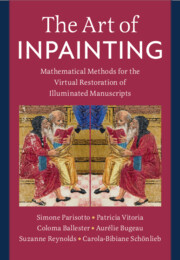
The art of image restoration and completion has entered a new phase thanks to digital technology. Indeed, virtual restoration is sometimes the only feasible option available to us, and it has, under the name 'inpainting', grown, from methods developed in the mathematics and computer vision communities, to the creation of tools used routinely by conservators and historians working in the worlds of fine art and cinema. The aim of this book is to provide, for a broad audience, a thorough description of imaging inpainting techniques. The book has a two-layer structure. In one layer, there is a general and more conceptual description of inpainting; in the other, there are boxed descriptions of the essentials of the mathematical and computational details. The idea is that readers can easily skip those boxes without disrupting the narrative. Examples of how the tools can be used are drawn from the Fitzwilliam Museum, Cambridge collections.
The imposition and execution of the death penalty are not per se violations of general international law and thus may amount to lawful sanctions in certain circumstances. This is so, even though the global trend towards the ending of capital punishment continues. As of August 2024, 53 States retained the death penalty for ordinary criminal offences. This chapter discusses the legality of capital punishment and its different forms. Certain categories of person may never be executed.
Epidemiology is the study of patterns and determinants of disease and other health states in populations. It primarily uses quantitative methods (those methods dealing with counting, measuring and comparing things) that definitely use statistics and include statistical methods, but in this book we will not be talking about performing any statistical acrobatics more complicated than completing a sudoku puzzle.
The Hippoboscidae are ectoparasites of birds and mammals, which, as a group, are known to vector multiple diseases. Avipoxvirus (APV) is mechanically vectored by various arthropods and causes seasonal disease in wild birds in the United Kingdom (UK). Signs of APV and the presence of louse flies (Hippoboscidae) on Dunnocks Prunella modularis were recorded over a 16·5-year period in a rural garden in Somerset, UK. Louse flies collected from this site and other sites in England were tested for the presence of APV DNA and RNA sequences. Louse flies on Dunnocks were seen to peak seasonally three weeks prior to the peak of APV lesions, an interval consistent with the previously estimated incubation period of APV in Dunnocks. APV DNA was detected on 13/25 louse flies, Ornithomya avicularia and Ornithomya fringillina, taken from Dunnocks, both with and without lesions consistent with APV, at multiple sites in England. Collectively these data support the premise that louse flies may vector APV. The detection of APV in louse flies, from apparently healthy birds, and from sites where disease has not been observed in any host species, suggests that the Hippoboscidae could provide a non-invasive and relatively cheap method of monitoring avian diseases. This could provide advanced warnings of disease, including zoonoses, before they become clinically apparent.
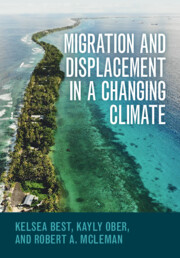
This book provides insight into the impact of climate change on human mobility - including both migration and displacement - by synthesizing key concepts, research, methodology, policy, and emerging issues surrounding the topic. It illuminates the connections between climate change and its implications for voluntary migration, involuntary displacement, and immobility by providing examples from around the world. The chapters use the latest findings from the natural and social sciences to identify key interactions shaping current climate-related migration, displacement, and immobility; predict future changes in those patterns and methods used to model them; summarize key policy and governance instruments available to us to manage the movements of people in a changing climate; and offer directions for future research and opportunities. This book will be valuable for students, researchers, and policy makers of geography, environmental science, climate and sustainability studies, demography, sociology, public policy, and political science.
This chapter begins by highlighting three ways in which K-12 urban educators and college faculty working in MSIs experience similar challenges managing cultural differences between themselves and their students from low-income and other minoritized communities. It then segues into the empirical portion of the book, by introducing the study context, as well as methods and materials used to collect the data analyzed in-depth across the following four chapters.